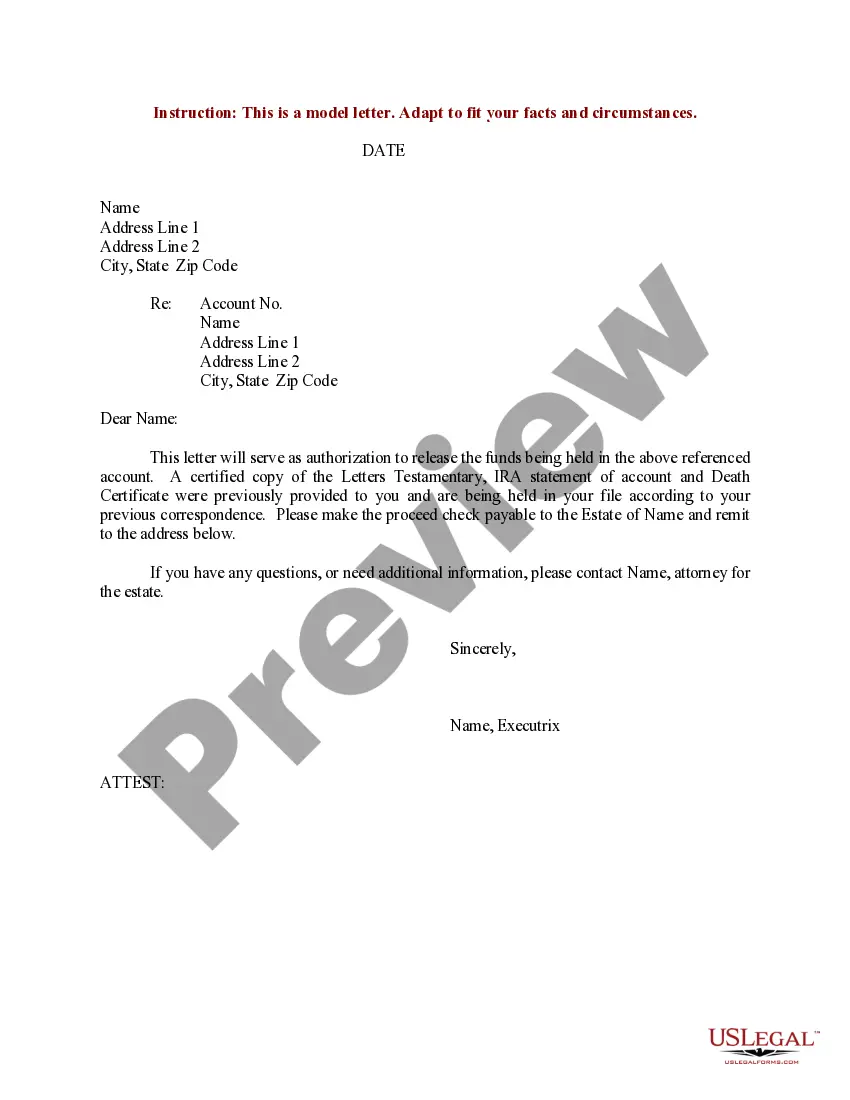
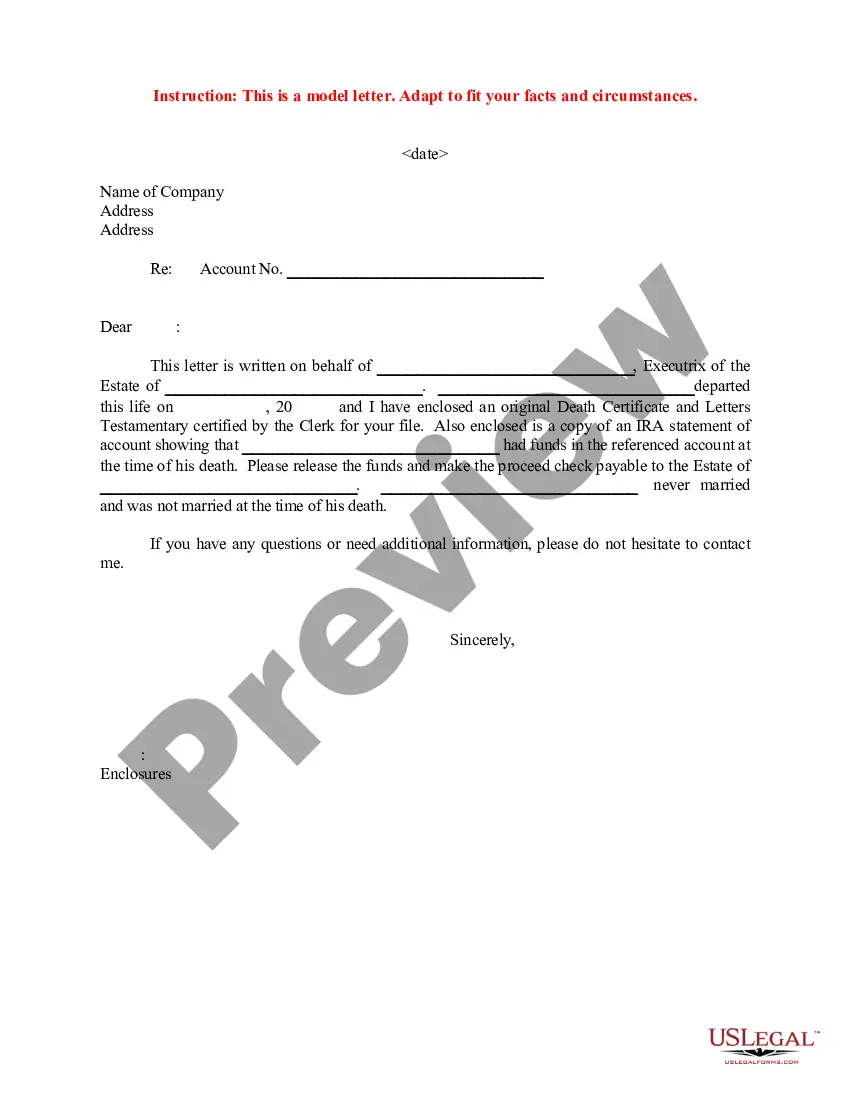
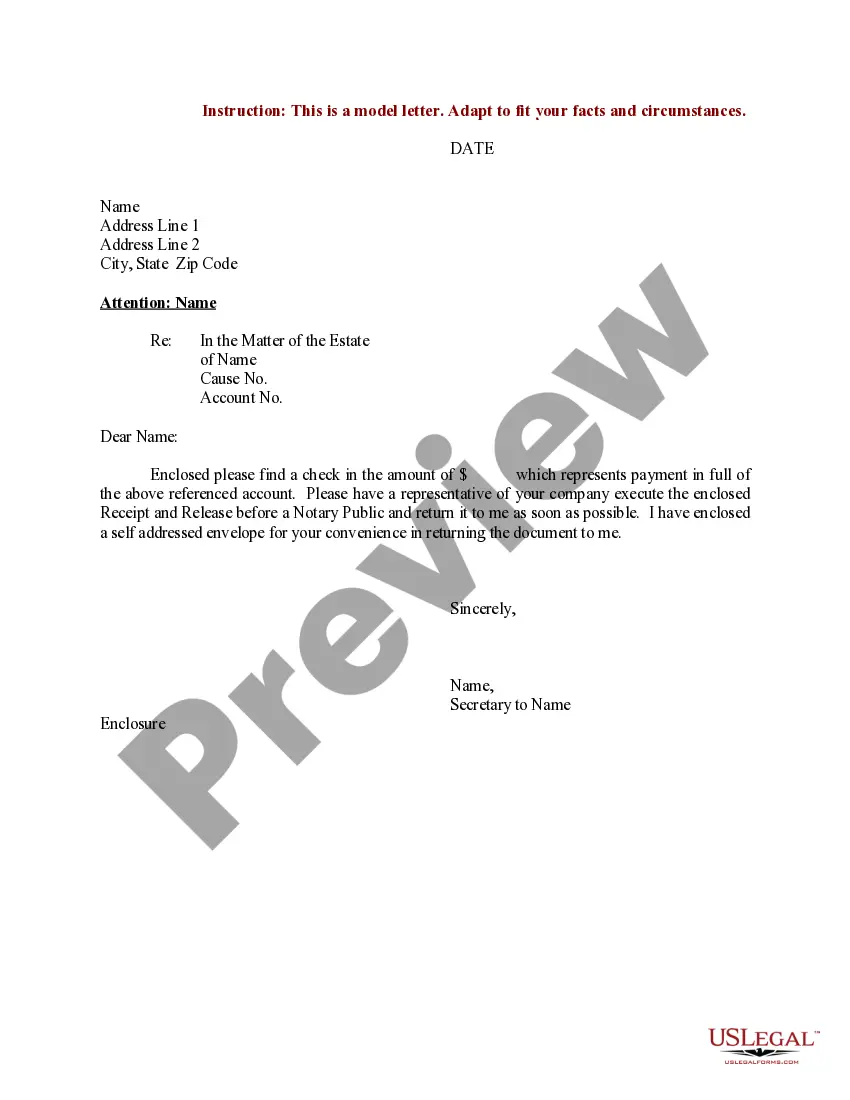
Release Funds From Bank
Description
Get your form ready online
Our built-in tools help you complete, sign, share, and store your documents in one place.
Make edits, fill in missing information, and update formatting in US Legal Forms—just like you would in MS Word.
Download a copy, print it, send it by email, or mail it via USPS—whatever works best for your next step.
Sign and collect signatures with our SignNow integration. Send to multiple recipients, set reminders, and more. Go Premium to unlock E-Sign.
If this form requires notarization, complete it online through a secure video call—no need to meet a notary in person or wait for an appointment.
We protect your documents and personal data by following strict security and privacy standards.

Make edits, fill in missing information, and update formatting in US Legal Forms—just like you would in MS Word.

Download a copy, print it, send it by email, or mail it via USPS—whatever works best for your next step.

Sign and collect signatures with our SignNow integration. Send to multiple recipients, set reminders, and more. Go Premium to unlock E-Sign.

If this form requires notarization, complete it online through a secure video call—no need to meet a notary in person or wait for an appointment.

We protect your documents and personal data by following strict security and privacy standards.
Looking for another form?
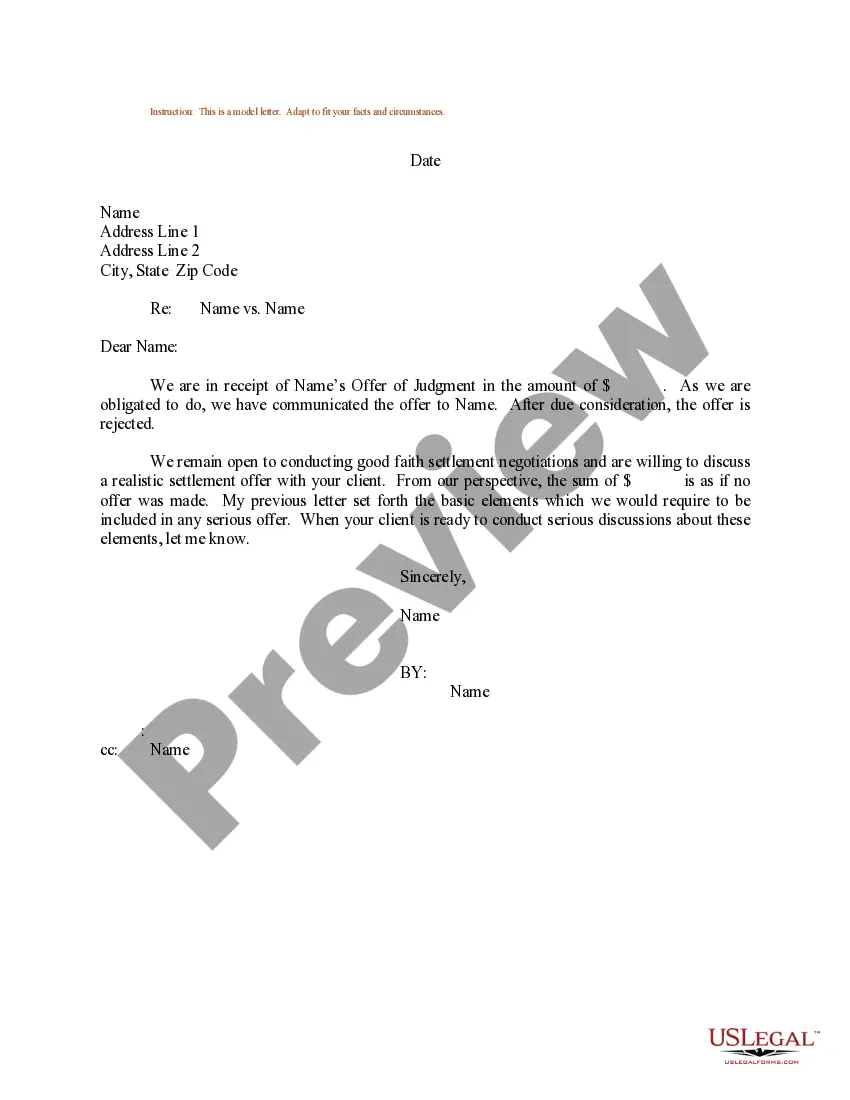
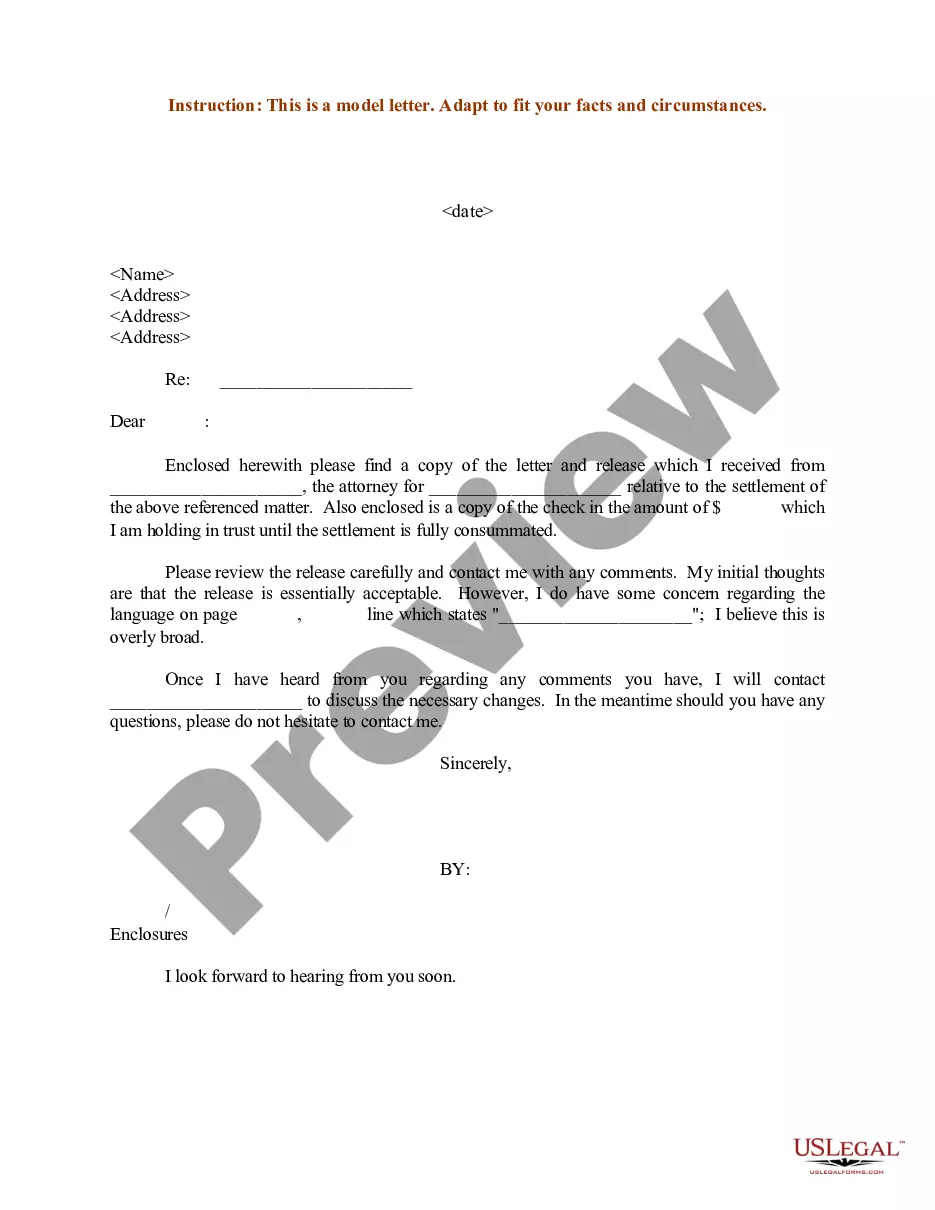
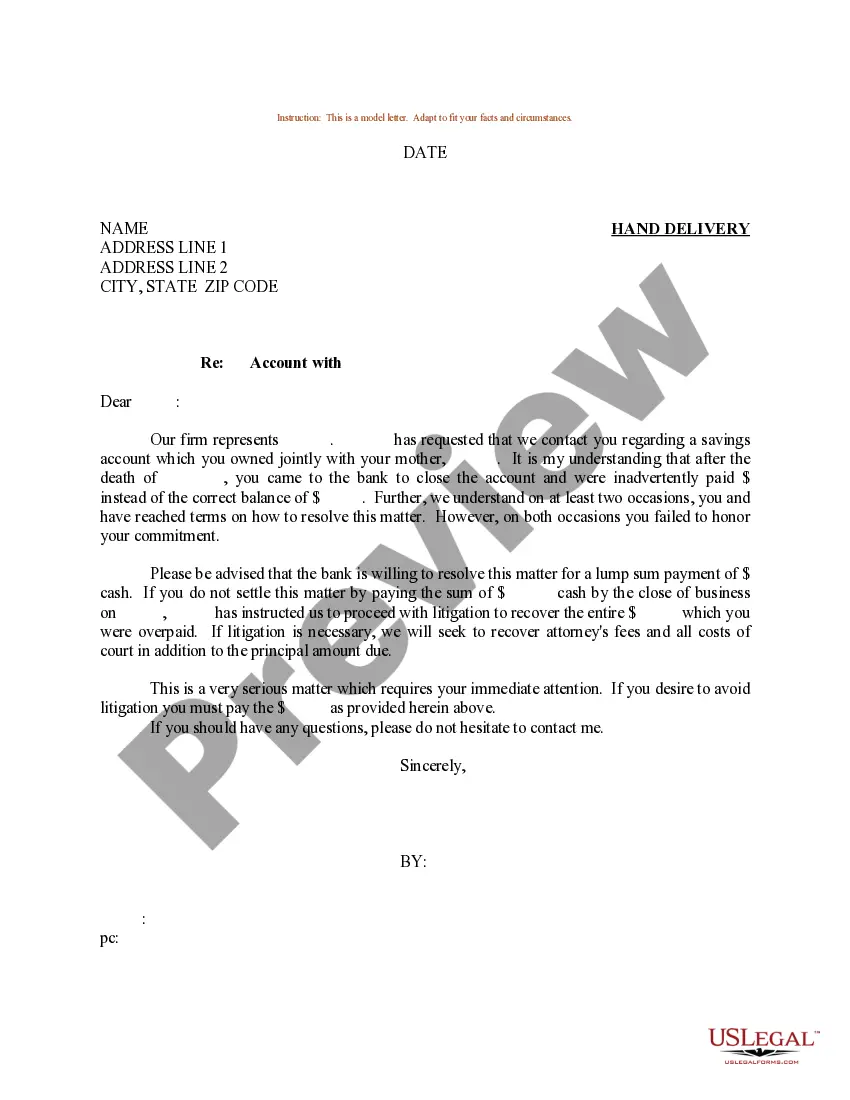
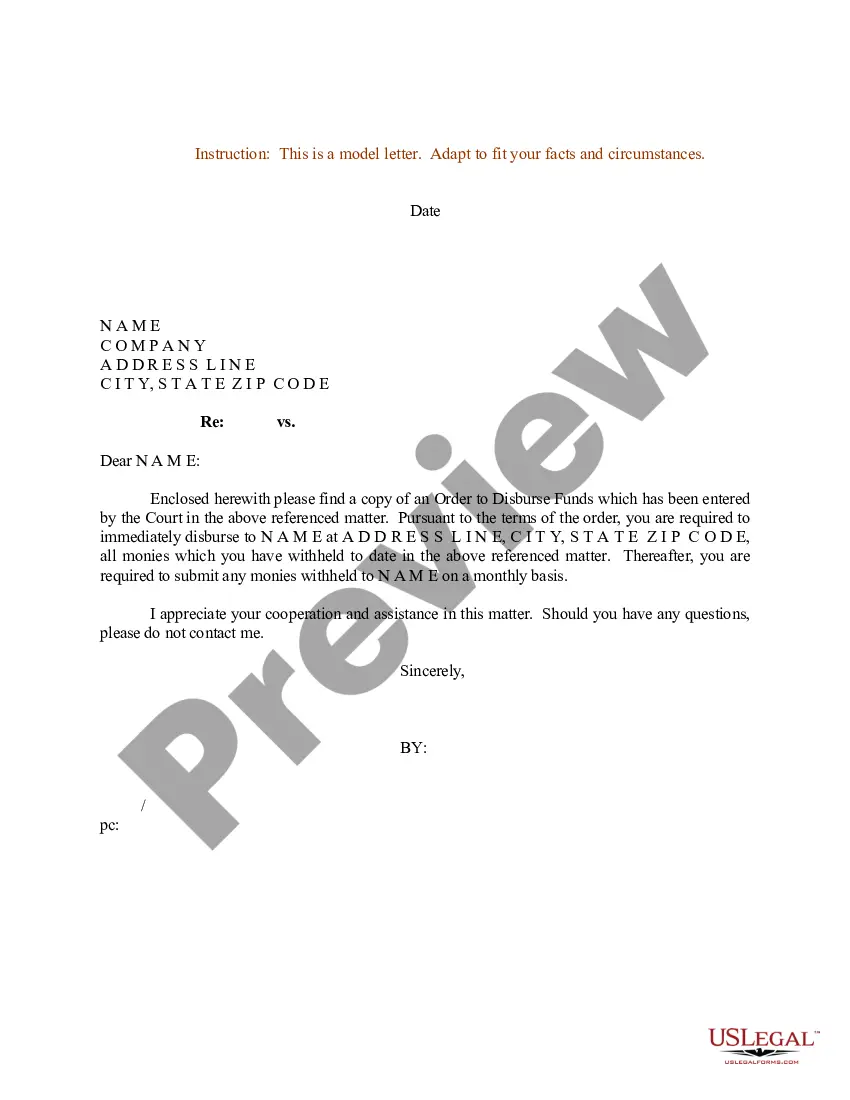
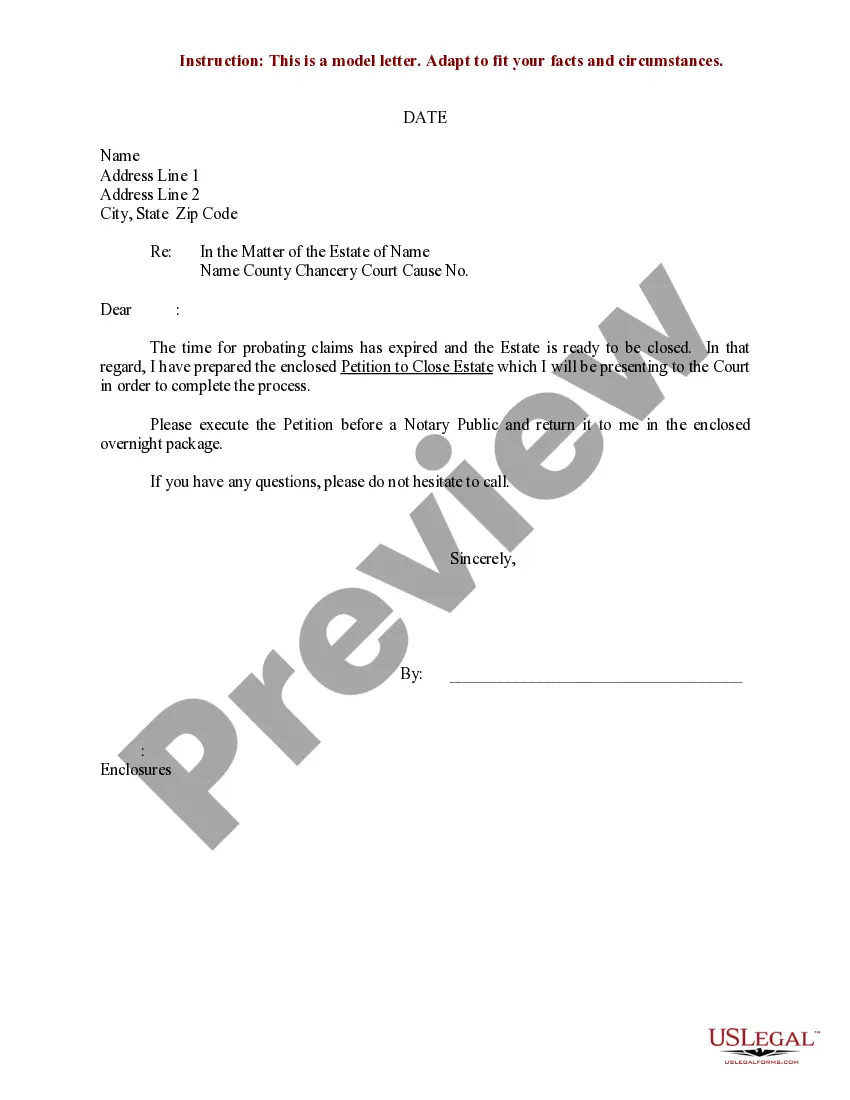
How to fill out Sample Letter For Request For Authorization To Release Funds?
It’s evident that you cannot transform into a legal expert instantly, nor can you swiftly grasp how to prepare Release Funds From Bank without possessing a distinct skill set.
Compiling legal documentation is a lengthy process that necessitates specific education and expertise.
So why not entrust the preparation of the Release Funds From Bank to the experts.
You can regain access to your documents from the My documents section at any time.
If you’re a current client, you can simply Log In and locate and download the template from the same section.
- Begin by locating the form you require using the search feature at the top of the page.
- Preview it (if this option is available) and review the accompanying description to verify if Release Funds From Bank is what you’re looking for.
- Restart your search if you require any additional template.
- Create a free account and select a subscription plan to purchase the form.
- Click Buy now. Once the payment is complete, you can obtain the Release Funds From Bank, fill it out, print it, and send or forward it to the specified recipients or organizations.
Form popularity
FAQ
What is a 410A form? Mortgage Proof of Claim Attachment (US Bankruptcy Court Official Form 410A) This Official Form 410A must be attached to a proof of claim in an individual debtor's bankruptcy case where the claim is secured by a security interest in the debtor's principal residence.
Most Chapter 7 bankruptcy cases take between 4 - 6 months to complete after filing the case with the court. The order erasing eligible debts can be granted as early as 90 days from the date the case was filed. No-asset cases are typically closed a couple of weeks after the discharge date.
While it may feel odd to pay fees to tell the courts you don't have enough money, you typically have to pay court fees to file for bankruptcy. The filing fee for a Chapter 7 bankruptcy is $338, while the filing fee for a Chapter 13 bankruptcy is $313.
Individuals may file Chapter 7 or Chapter 13 bankruptcy, depending on the specifics of their situation. Municipalities?cities, towns, villages, taxing districts, municipal utilities, and school districts may file under Chapter 9 to reorganize.
By limiting our services to the straightforward cases, we help more people get rid of more debt as economically as possible. There is a filing fee for a Chapter 7 of $335.00 The filing fee goes to the Clerk of the court.
More about the bankruptcy process It will cost you around $338 to file the papers in court. If you can't afford the fee, you can apply to make payments or to have the fee waived (erased). You can get the forms at a Connecticut bankruptcy court clerk's office or online at .ctb.uscourts.gov.
Collect Your Connecticut Bankruptcy Documents. ... Take a Credit Counseling Course. ... Complete the Bankruptcy Forms. ... Get Your Filing Fee. ... Print Your Bankruptcy Forms. ... File Your Forms With the Connecticut Bankruptcy Court. ... Mail Documents to Your Trustee. ... Take a Debtor Education Course.