Testamentary Trust Sample
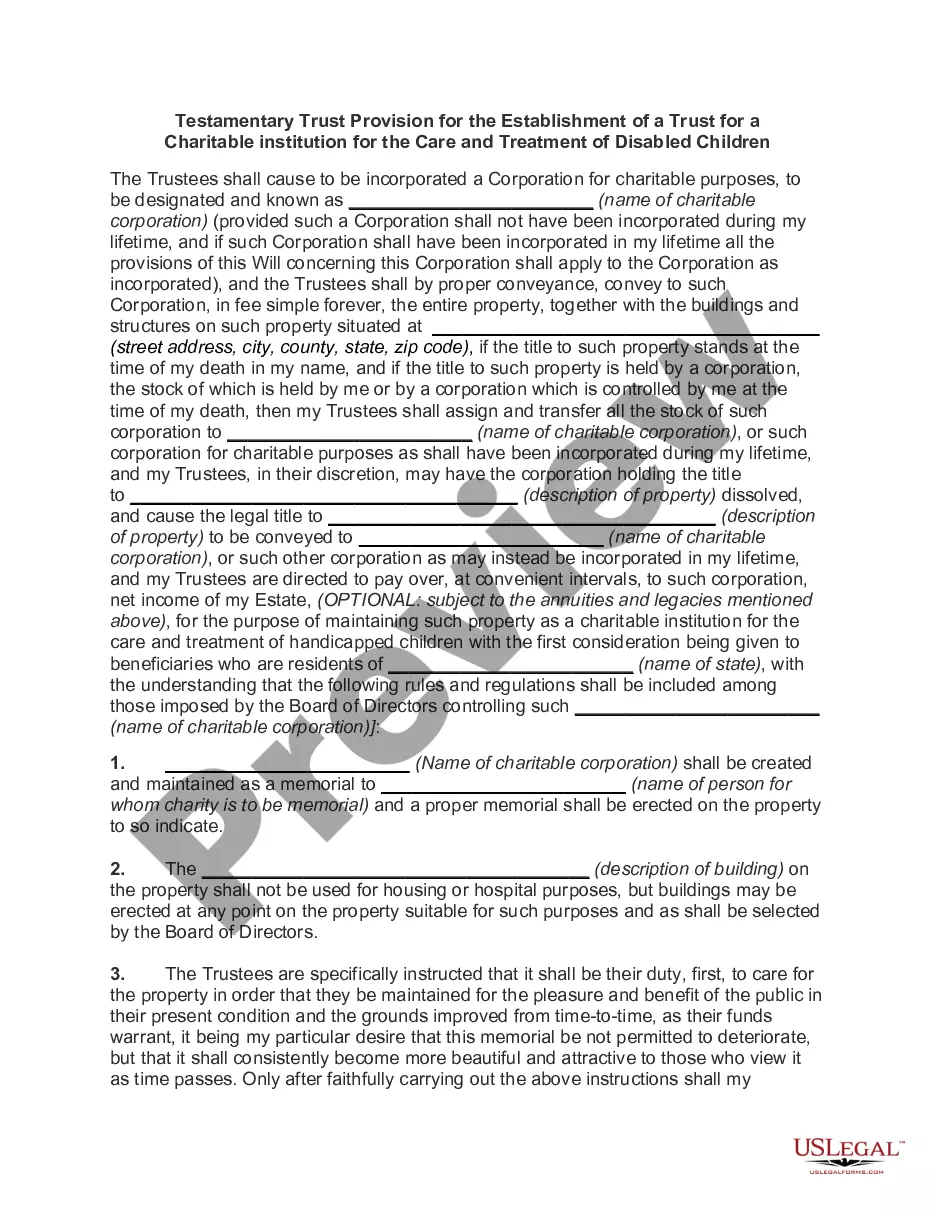
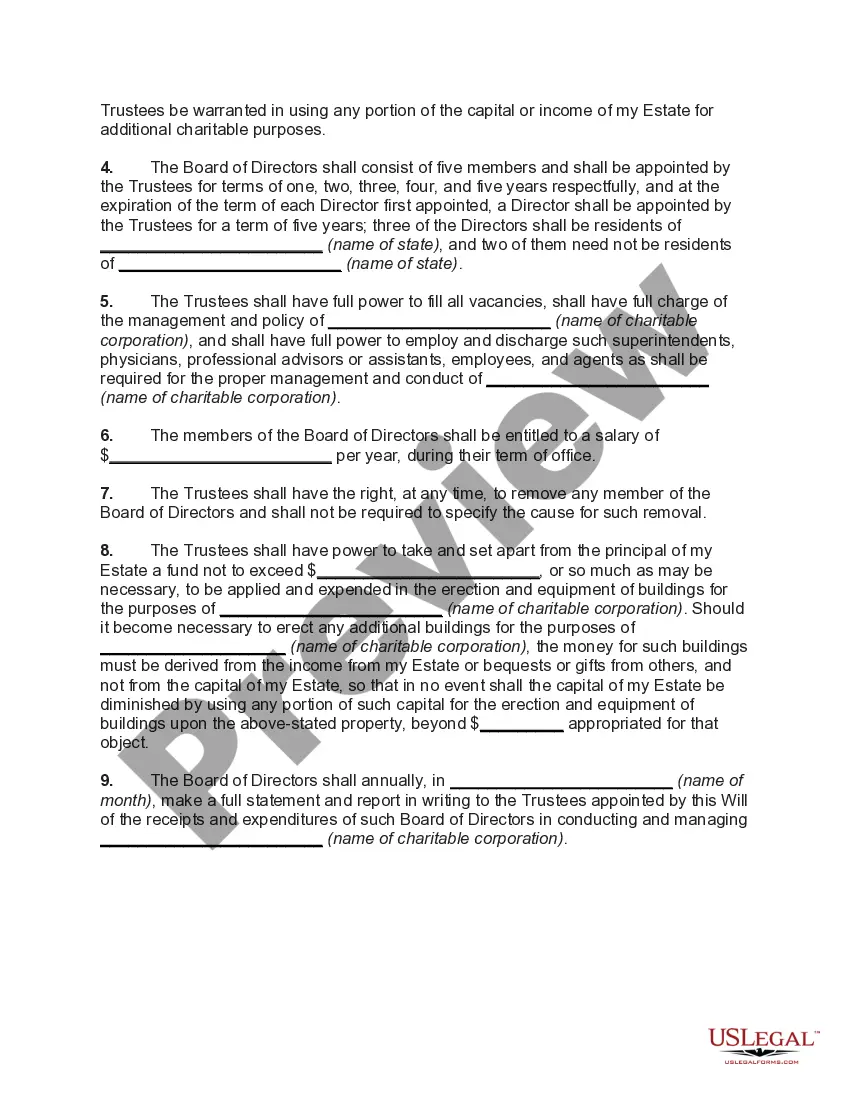
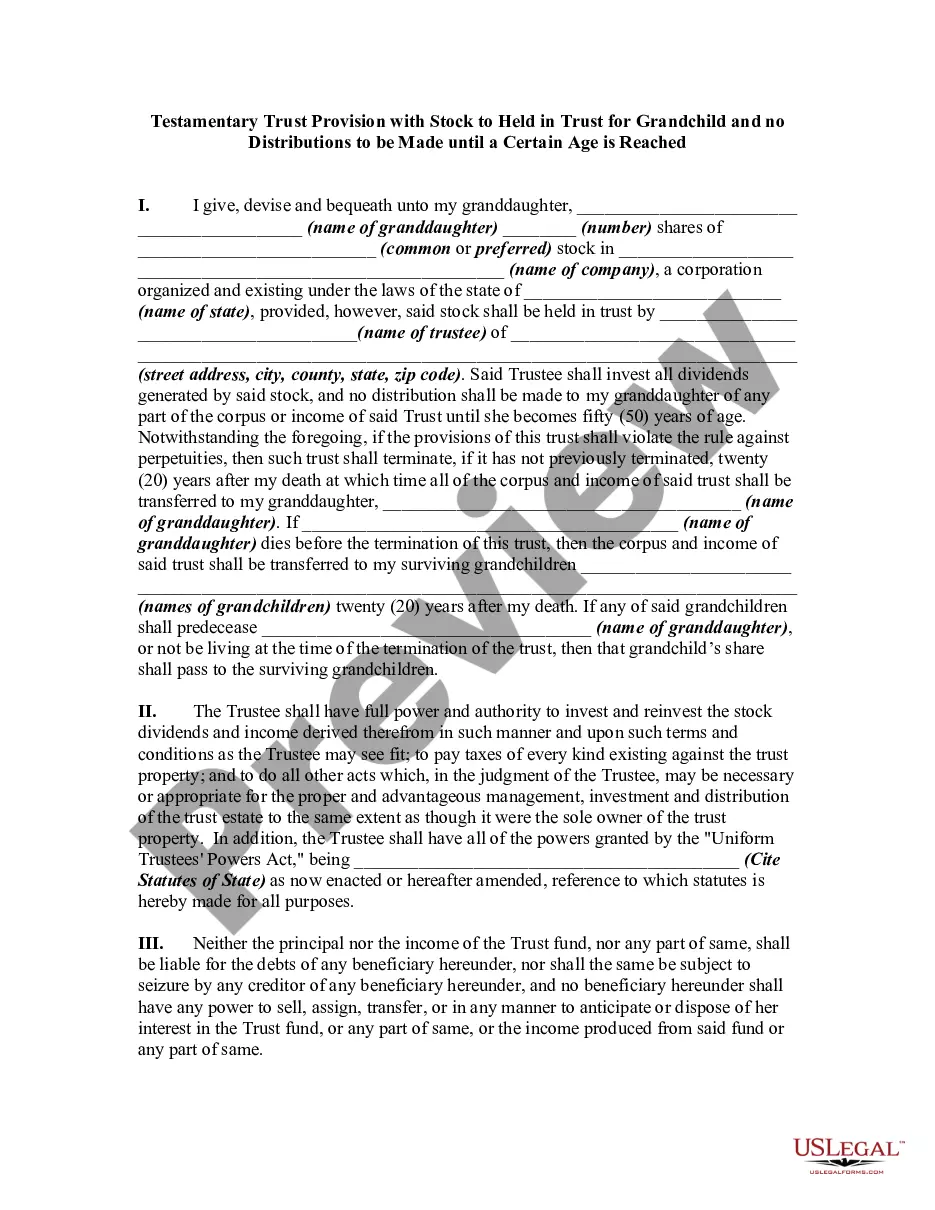
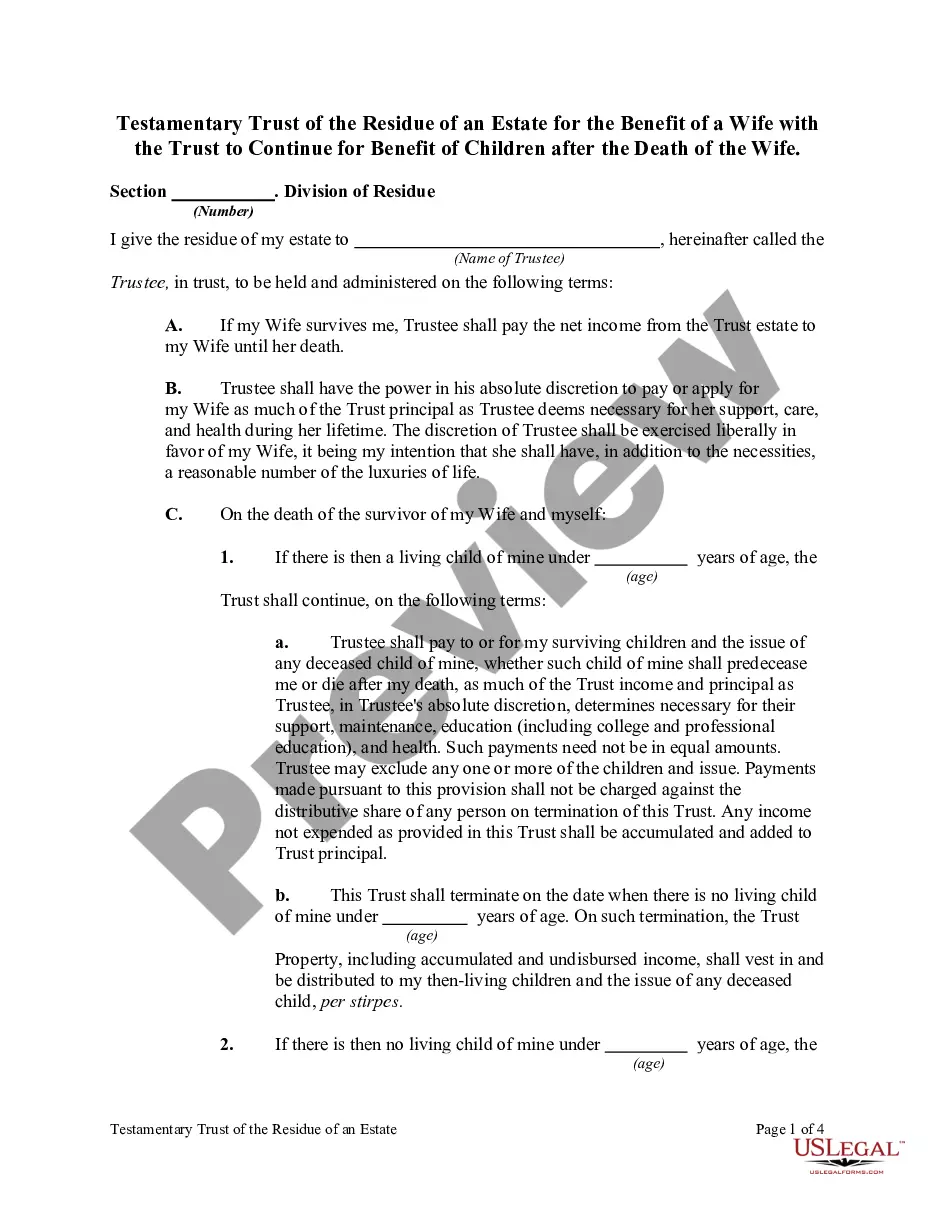
Description
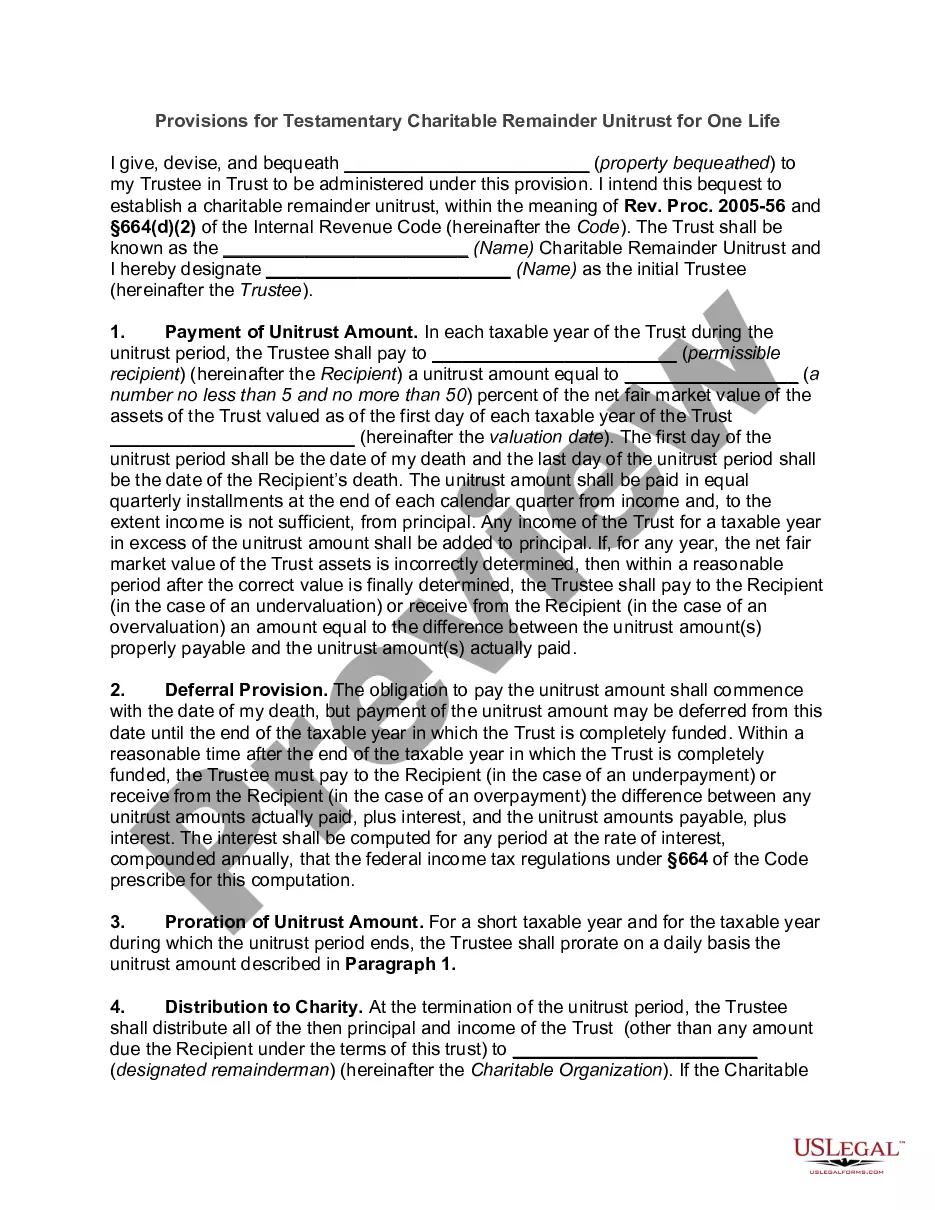
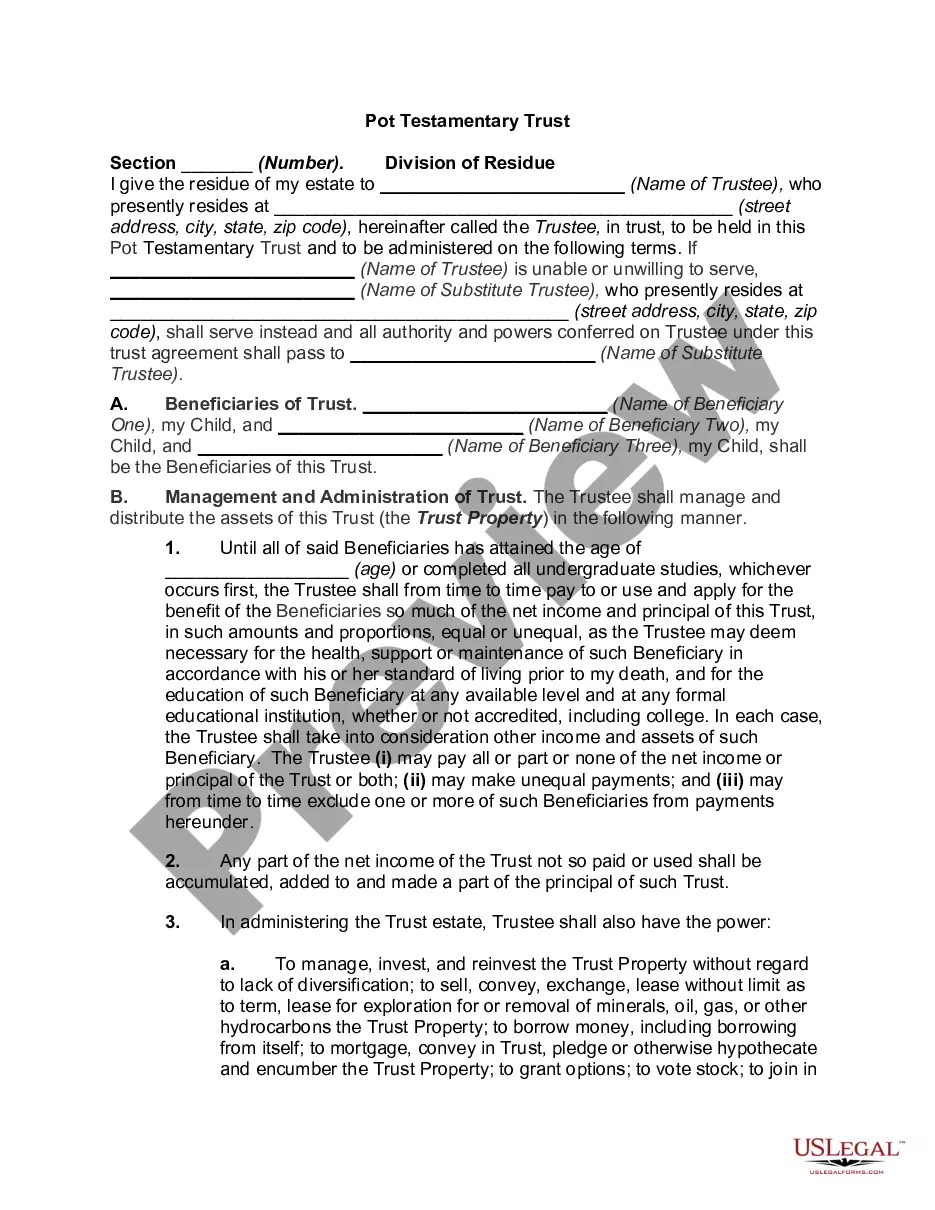
Get your form ready online
Our built-in tools help you complete, sign, share, and store your documents in one place.
Make edits, fill in missing information, and update formatting in US Legal Forms—just like you would in MS Word.
Download a copy, print it, send it by email, or mail it via USPS—whatever works best for your next step.
Sign and collect signatures with our SignNow integration. Send to multiple recipients, set reminders, and more. Go Premium to unlock E-Sign.
If this form requires notarization, complete it online through a secure video call—no need to meet a notary in person or wait for an appointment.
We protect your documents and personal data by following strict security and privacy standards.

Make edits, fill in missing information, and update formatting in US Legal Forms—just like you would in MS Word.

Download a copy, print it, send it by email, or mail it via USPS—whatever works best for your next step.

Sign and collect signatures with our SignNow integration. Send to multiple recipients, set reminders, and more. Go Premium to unlock E-Sign.

If this form requires notarization, complete it online through a secure video call—no need to meet a notary in person or wait for an appointment.

We protect your documents and personal data by following strict security and privacy standards.
Looking for another form?





How to fill out Testamentary Trust Provision For The Establishment Of A Trust For A Charitable Institution For The Care And Treatment Of Disabled Children?
- Access your account: If you're a returning user, log in to your account at US Legal Forms.
- Check form options: Review the preview mode and description of the testamentary trust sample to ensure it meets your requirements.
- Search for other templates: If the current sample doesn’t fit, utilize the search feature to find a relevant template.
- Purchase the document: Click 'Buy Now' and select your preferred subscription plan; you'll need to register for access.
- Complete your transaction: Fill in your payment details to finalize your subscription.
- Download your form: Save the template on your device, and you can access it anytime from 'My Forms' in your profile.
By following these steps, you can efficiently create a legally sound testamentary trust. US Legal Forms provides unparalleled access to a comprehensive library rich in resources to guide you.
Ready to get started? Visit US Legal Forms today and secure your testamentary trust sample to ensure your assets are managed precisely as intended.
Form popularity
FAQ
Setting up a testamentary trust begins with drafting a will that explicitly outlines the trust's conditions. You may want to consult with an attorney to ensure your will complies with state laws and effectively conveys your wishes. Using a testamentary trust sample can serve as a helpful reference to make this process smoother, while platforms like USLegalForms provide templates that guide you through every step.
The documents required for a testamentary trust primarily include your will and, in certain cases, a trust declaration that lays out the trust's terms. You might also need financial statements to help manage the trust's assets. Having a testamentary trust sample can assist you in organizing these documents correctly and ensure you meet all legal requirements.
To establish a testamentary trust, you primarily need a legally executed will that outlines the terms of the trust. Additionally, any relevant financial documents, such as information about your assets and debts, should be included to provide context for the trust's administration. A testamentary trust sample can guide you in drafting your will to incorporate these necessary details effectively.
A testamentary trust is created through a will and comes into effect after the individual passes away. For example, suppose you specify in your will that a portion of your estate should be held in trust for your minor children until they reach a specific age. This arrangement exemplifies how a testamentary trust protects your beneficiaries and ensures the funds are managed responsibly.
One notable disadvantage of a testamentary trust is that it does not avoid probate, which can prolong the distribution of assets. Additionally, this type of trust may incur ongoing administrative costs throughout its lifespan. Reviewing a testamentary trust sample can help you weigh these limitations and decide whether it aligns with your goals.
To create a testamentary trust, you will first need to draft a will that specifies the trust's terms. Clearly articulate how and when the assets will be distributed to beneficiaries. Using a testamentary trust sample as guidance can help ensure compliance with legal requirements, making this process smoother and more efficient.
The estate itself is typically responsible for taxes on a testamentary trust until the assets are distributed to beneficiaries. After distribution, beneficiaries may also be liable for taxes on any income generated by the trust assets. Understanding your obligations is crucial, and referring to a testamentary trust sample can provide insight into potential tax situations.
Creating a do-it-yourself testamentary trust can be tempting but requires caution. You must accurately complete legal documents to ensure your wishes are carried out effectively. While templates and resources can be helpful, utilizing platforms like US Legal Forms can significantly reduce errors, saving you time and stress as you draft your testamentary trust sample.
One significant mistake parents often make is failing to clearly communicate their intentions regarding the trust fund. Without a clear testamentary trust sample, beneficiaries may not understand how the trust operates or its purpose. This can lead to conflicts or mismanagement of assets, ultimately undermining the trust’s goals and your family’s harmony.
An example of testamentary would be a will that outlines the creation of a trust to care for your children after your passing. This document specifies how the funds or assets will be managed and distributed over time. Creating a clear testamentary trust sample within your will can ensure your loved ones’ needs are met, making your wishes known.