Assignment Of Beneficial Interest With Negative Capital Account
Description
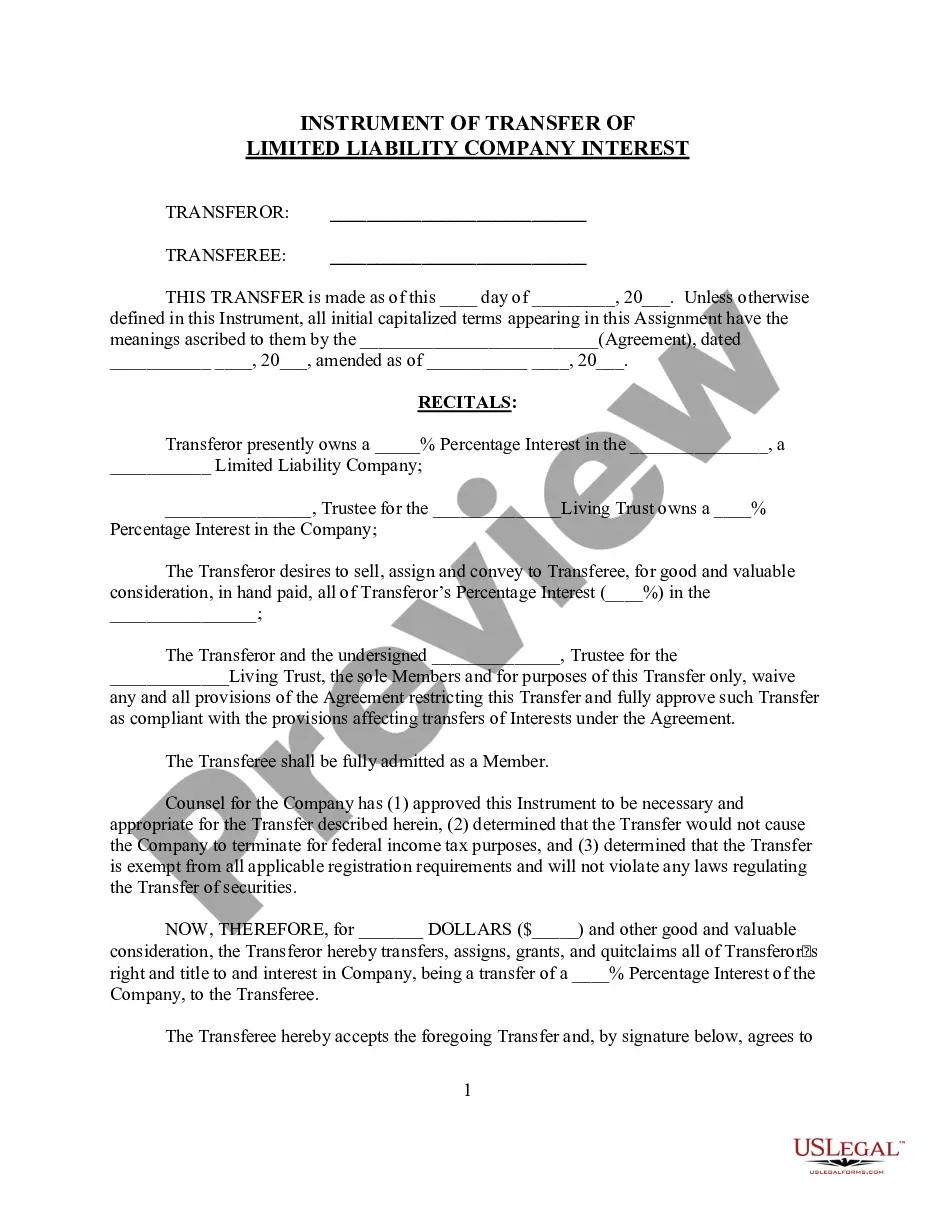
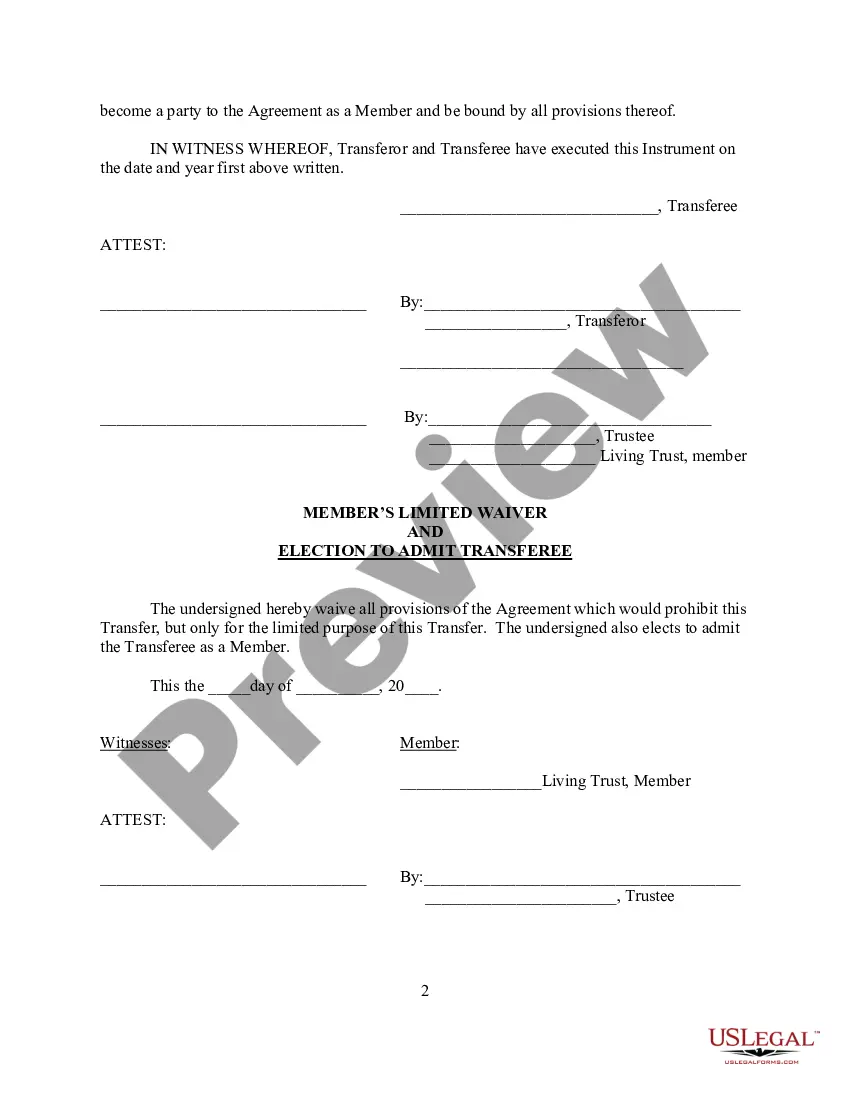
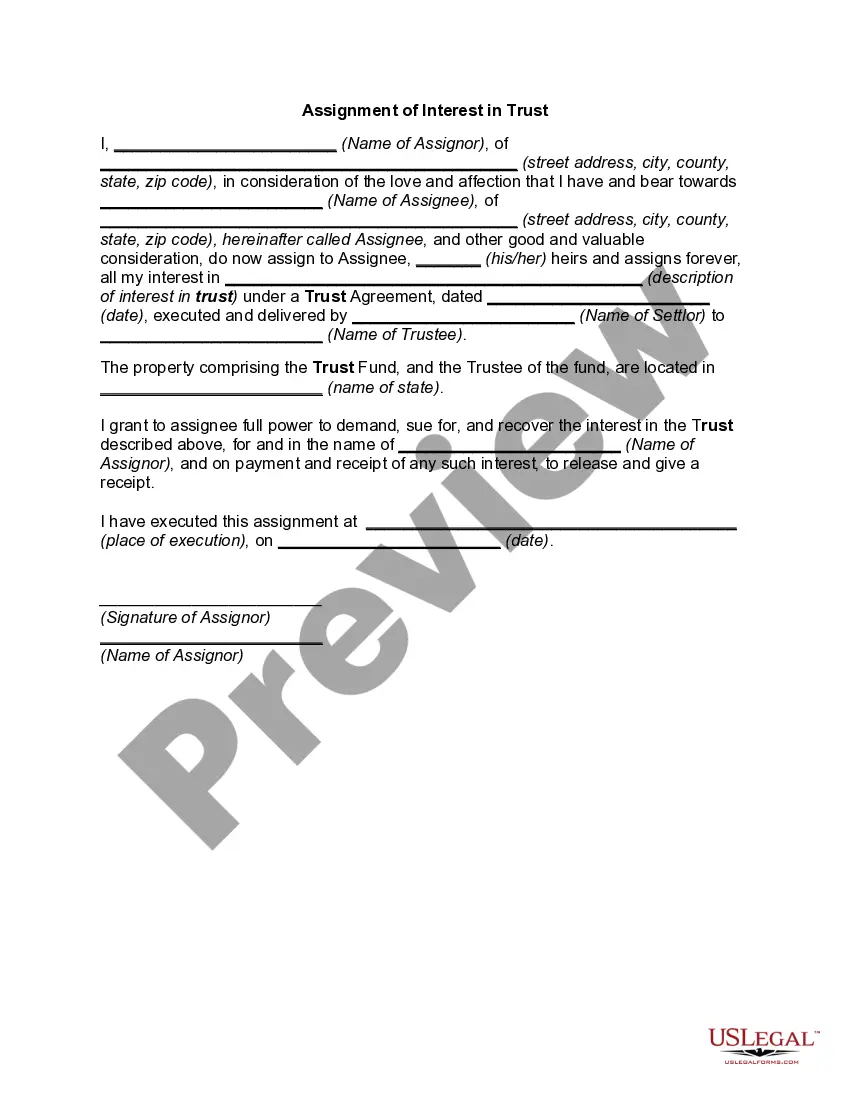
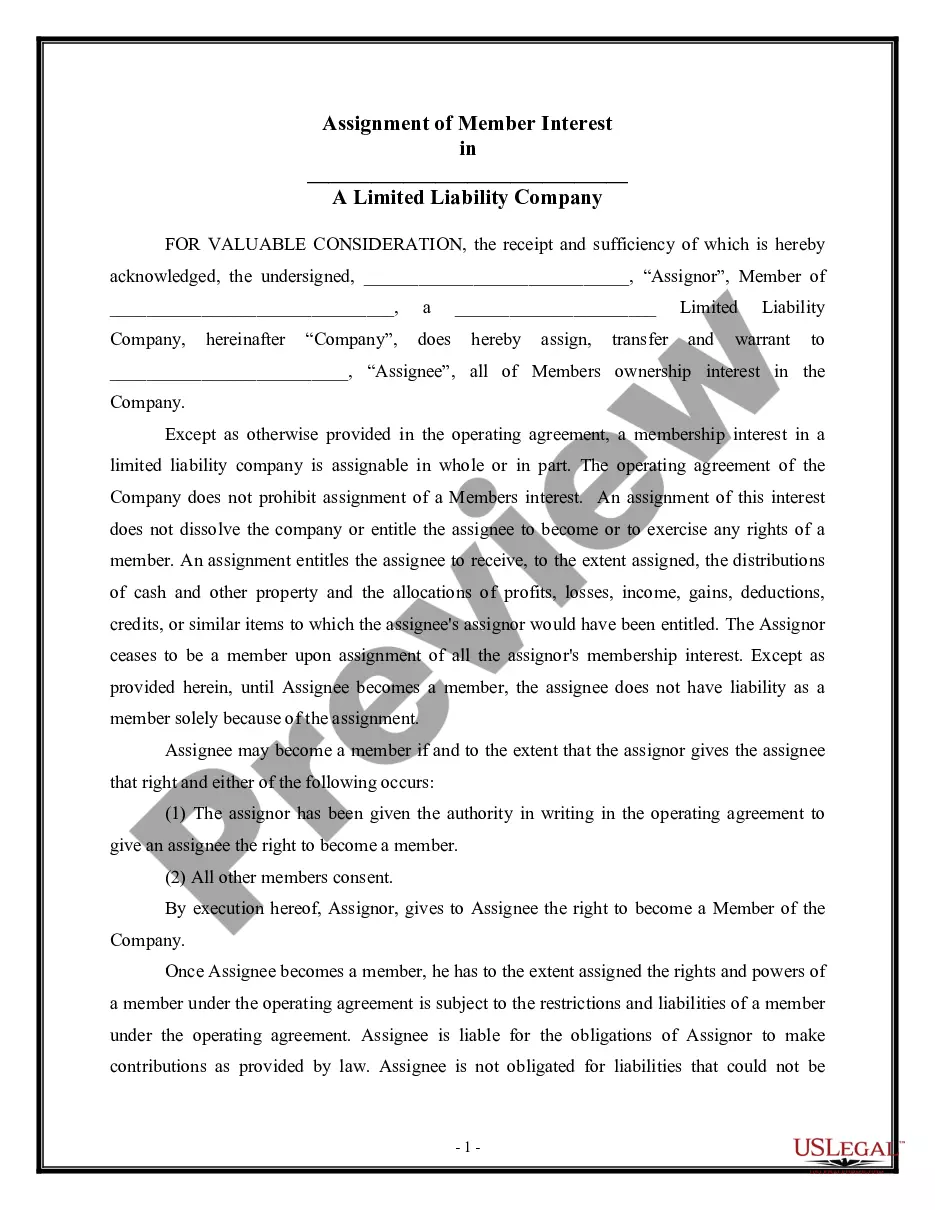
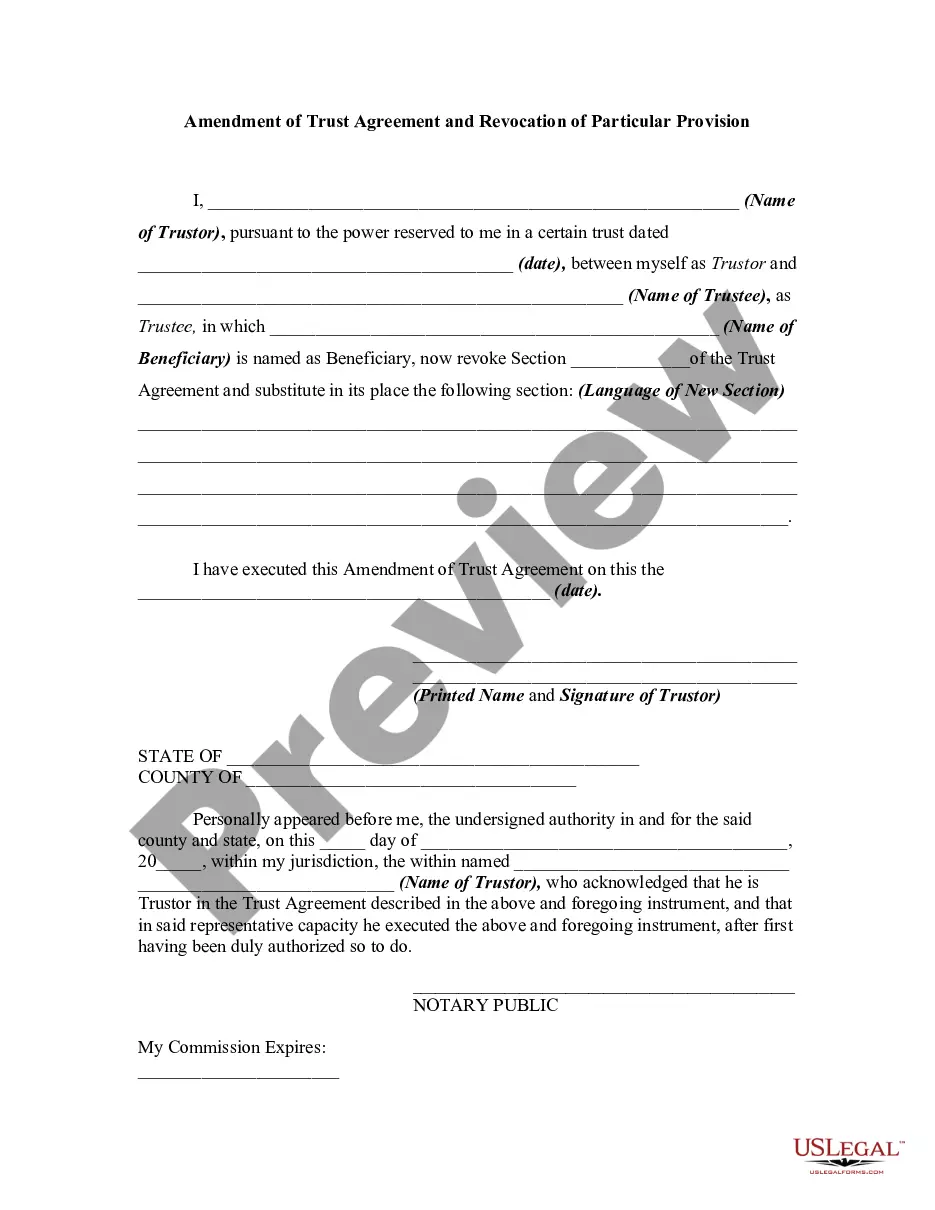
How to fill out Assignment Of LLC Company Interest To Living Trust?
Whether for business purposes or for personal matters, everyone has to manage legal situations sooner or later in their life. Completing legal papers demands careful attention, beginning from choosing the appropriate form sample. For example, if you select a wrong edition of the Assignment Of Beneficial Interest With Negative Capital Account, it will be declined when you submit it. It is therefore crucial to have a dependable source of legal papers like US Legal Forms.
If you need to get a Assignment Of Beneficial Interest With Negative Capital Account sample, follow these simple steps:
- Get the template you need by using the search field or catalog navigation.
- Check out the form’s description to make sure it suits your case, state, and county.
- Click on the form’s preview to see it.
- If it is the wrong document, get back to the search function to find the Assignment Of Beneficial Interest With Negative Capital Account sample you require.
- Download the file when it meets your requirements.
- If you already have a US Legal Forms profile, simply click Log in to gain access to previously saved templates in My Forms.
- If you do not have an account yet, you can download the form by clicking Buy now.
- Pick the appropriate pricing option.
- Finish the profile registration form.
- Choose your transaction method: you can use a bank card or PayPal account.
- Pick the document format you want and download the Assignment Of Beneficial Interest With Negative Capital Account.
- When it is downloaded, you can complete the form by using editing software or print it and finish it manually.
With a large US Legal Forms catalog at hand, you do not have to spend time searching for the right template across the internet. Use the library’s easy navigation to find the appropriate form for any occasion.
Form popularity
FAQ
Positive Capital means they can take cash/distributions out beyond the profits in future years without paying a capital gains tax; in contrast, negative capital means the shouldn't be taking any cash/distributions or they could be subject to a capital gains tax.
Working capital can be negative if current liabilities are greater than current assets. Negative working capital can come about in cases where a large cash payment decreases current assets or a large amount of credit is extended in the form of accounts payable.
A negative capital account balance indicates a predominantly outward money flow from a country to other countries. The implication of a negative capital account balance is that ownership of assets in foreign countries is increasing.
If a partnership is liquidated where a partner has a negative capital account, the partner with the negative capital account is expected to pay back the amount owed to the partnership within 90 days of the partnership termination or by the end of the year, whichever comes first.
This final capital account tabulation is a great indicator of what a partner's taxable gain would be if the interest were sold. From a tax standpoint, a negative capital account is treated as a capital gain upon sale. Conversely, a positive capital account is treated as a capital loss if the interest is sold.