Royalty And Patent Difference
Description
Get your form ready online
Our built-in tools help you complete, sign, share, and store your documents in one place.
Make edits, fill in missing information, and update formatting in US Legal Forms—just like you would in MS Word.
Download a copy, print it, send it by email, or mail it via USPS—whatever works best for your next step.
Sign and collect signatures with our SignNow integration. Send to multiple recipients, set reminders, and more. Go Premium to unlock E-Sign.
If this form requires notarization, complete it online through a secure video call—no need to meet a notary in person or wait for an appointment.
We protect your documents and personal data by following strict security and privacy standards.

Make edits, fill in missing information, and update formatting in US Legal Forms—just like you would in MS Word.

Download a copy, print it, send it by email, or mail it via USPS—whatever works best for your next step.

Sign and collect signatures with our SignNow integration. Send to multiple recipients, set reminders, and more. Go Premium to unlock E-Sign.

If this form requires notarization, complete it online through a secure video call—no need to meet a notary in person or wait for an appointment.

We protect your documents and personal data by following strict security and privacy standards.
Looking for another form?


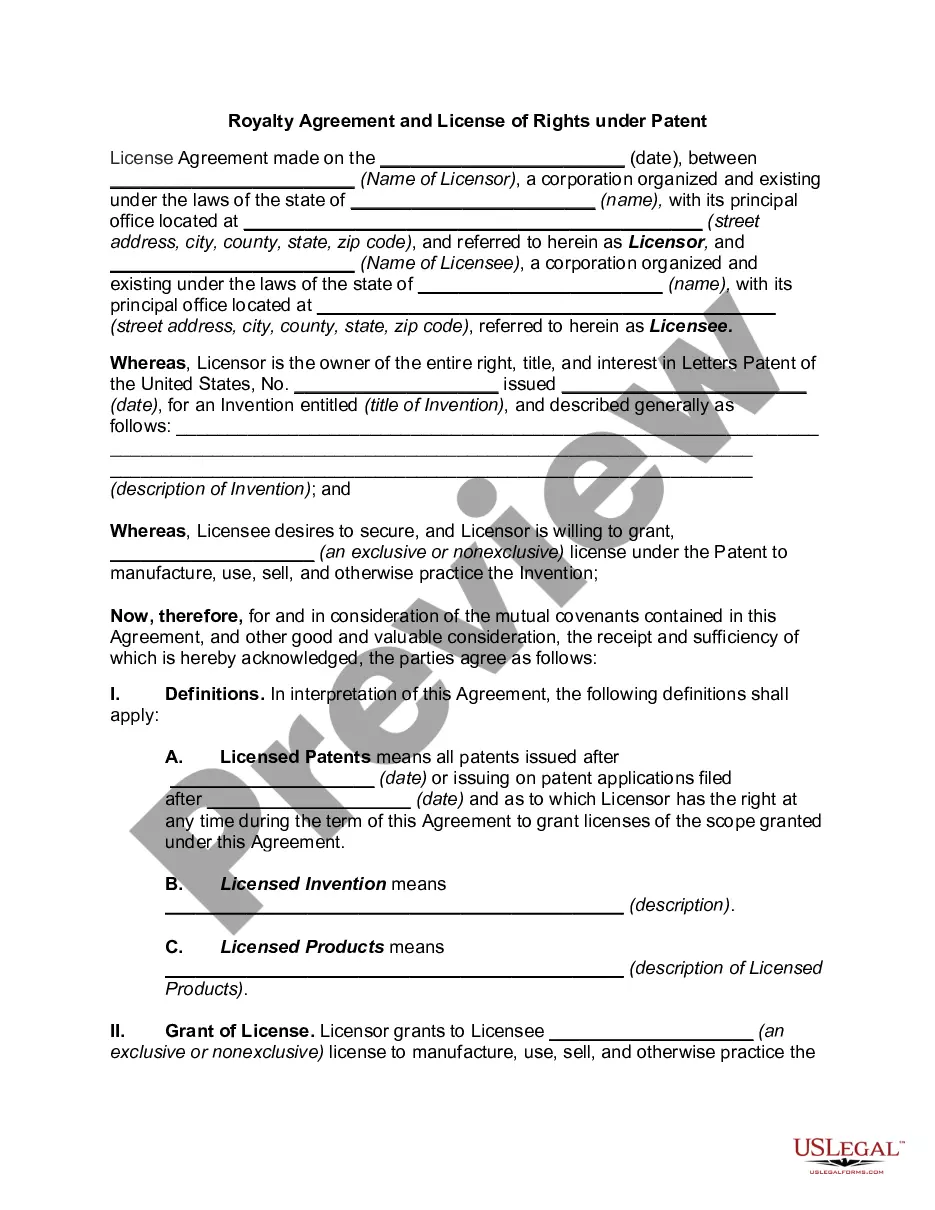
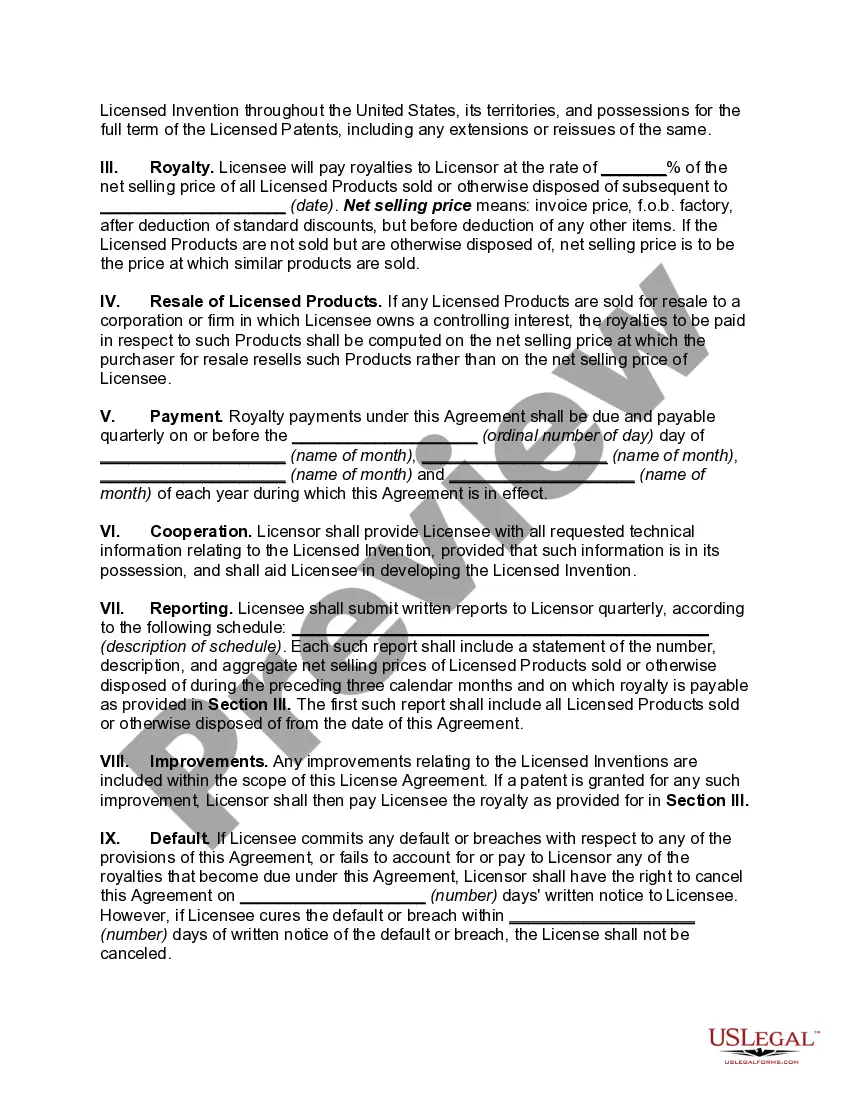
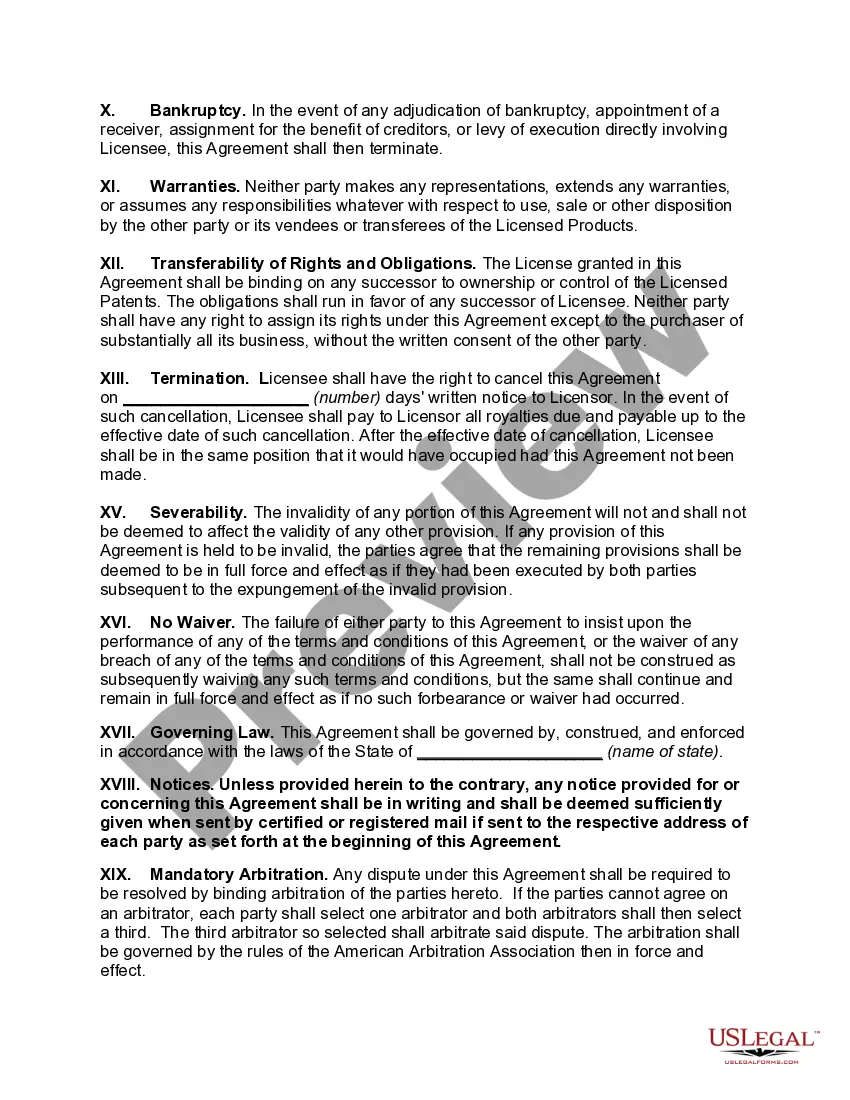
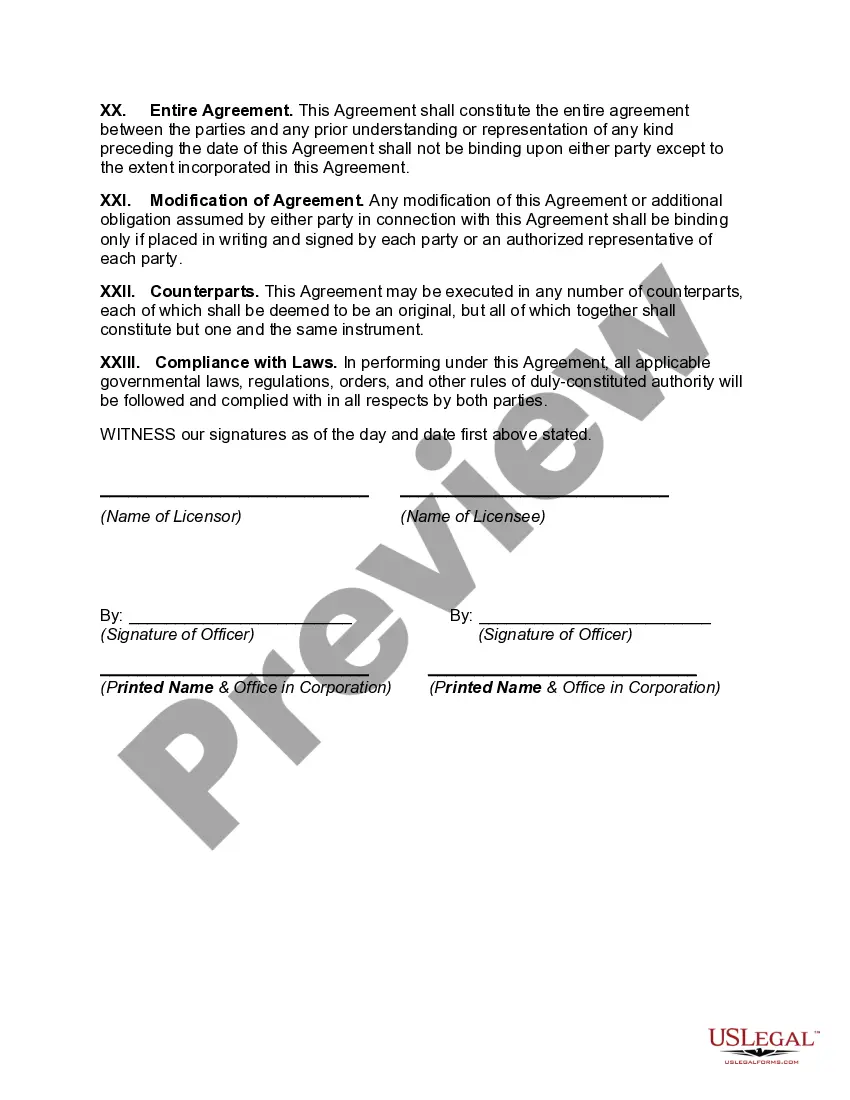
How to fill out Royalty Agreement And License Of Rights Under Patent?
Legal administration can be perplexing, even for experienced professionals.
When seeking a Royalty and Patent Distinction and lacking the time to find the accurate and current version, the process may be burdensome.
Gain access to a valuable database of articles, guides, handbooks, and resources related to your situation and requirements.
Save time and effort searching for the documents you need, and leverage US Legal Forms’ advanced search and Review feature to find the Royalty and Patent Distinction and obtain it.
Enjoy the US Legal Forms online library, backed by 25 years of expertise and reliability. Improve your daily document management in a straightforward and user-friendly way today.
- If you have a monthly subscription, Log In to your US Legal Forms account, locate the form, and download it.
- Check the My documents tab to access documents you previously saved and manage your folders as desired.
- If this is your first experience with US Legal Forms, create an account to unlock full access to the platform's features.
- Here are the steps to follow after acquiring the desired form.
- Confirm it is the correct document by previewing it and reviewing its details.
- Access state- or region-specific legal and organizational documents.
- US Legal Forms addresses any requirements you may have, ranging from personal to corporate paperwork, all in one place.
- Utilize advanced features to complete and manage your Royalty and Patent Distinction.
Form popularity
FAQ
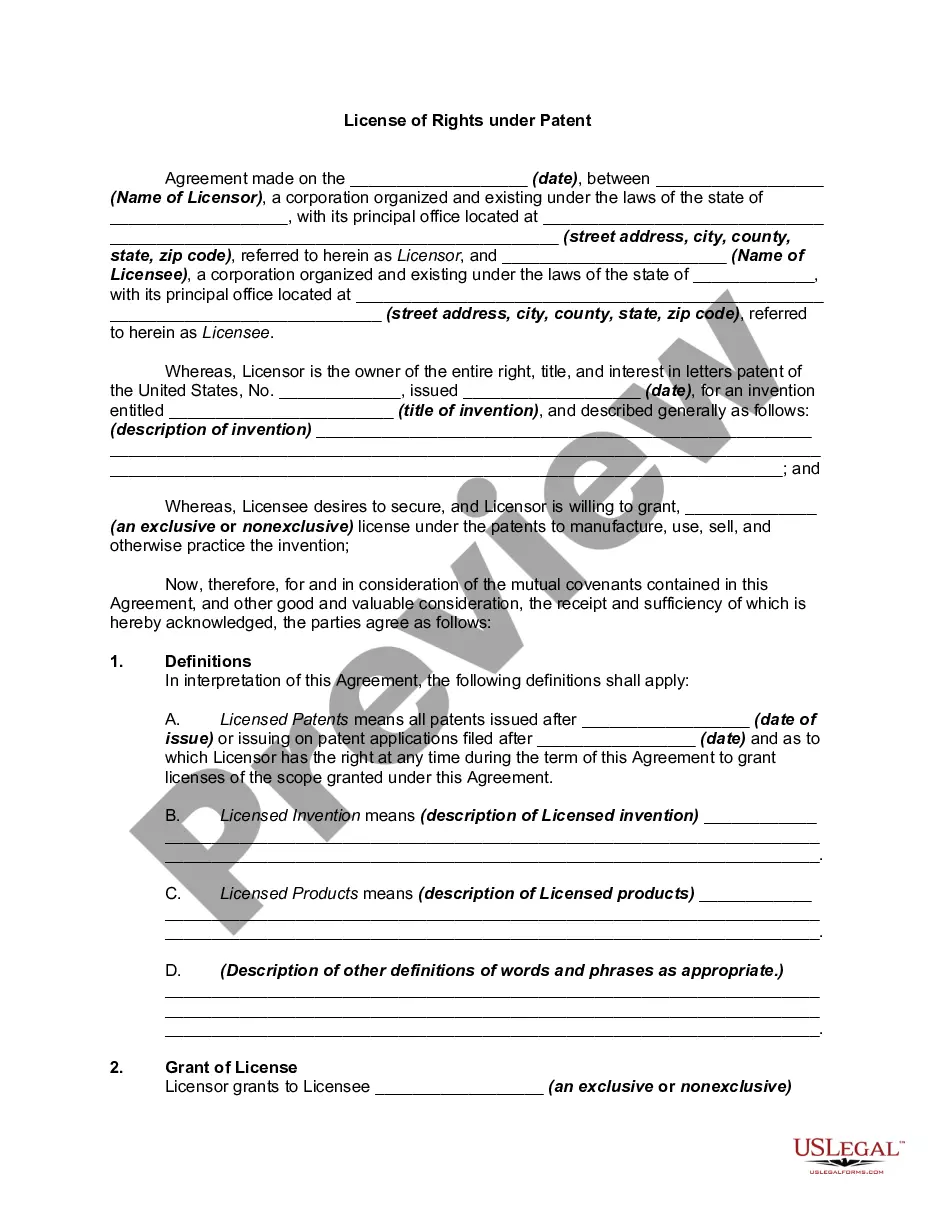
The primary difference between a royalty and a patent lies in their definitions and functions. A patent is a legal protection granted to inventors, while a royalty is a financial arrangement for using that invention. Understanding the royalty and patent difference is crucial, especially when navigating platforms like uslegalforms, which can assist you in managing your intellectual property rights effectively.
An example of a patent royalty can be seen in technology licensing agreements. For instance, a software developer may allow a company to use their patented software in exchange for a percentage of sales. This scenario illustrates the royalty and patent difference by highlighting how royalties serve as a financial incentive for inventors to license their patents.
A 12% royalty indicates that a creator receives 12% of the sales or profits generated from their invention or work. Using this figure, if a product sells for $200,000, the royalty payment would be $24,000. It's essential to grasp the royalty and patent difference to understand how these payments work in relation to your rights as a creator.
No, patents and royalties serve different purposes in the realm of intellectual property. A patent grants exclusive rights to an inventor for a specific invention, while a royalty is a payment made for the use of that invention. Recognizing the royalty and patent difference can help you navigate the complexities of licensing and monetizing your innovations.
A 5% royalty refers to a payment made based on a percentage of sales or profits. For example, if a product generates $100,000 in sales, a 5% royalty would amount to $5,000. Understanding this concept is vital when considering the royalty and patent difference, as it directly impacts how inventors and creators earn from their intellectual property.
Royalty percentages: In most licensing agreements, the royalty rate is a percentage. So, if the royalty rate is 5%, then, for the duration of the licensing agreement, the licensee must pay the licensor 5% of the net of gross revenue generated by the intellectual property.
Patent royalties are payments made by the licensee to the licensor for the use of the patent. They are usually a percentage of the revenue generated by the patent, although they can sometimes be agreed as a fixed fee.
Because of the intellectual property rights granted to you through your patent, you can transfer or ?rent? these intellectual property rights to others in the form of a license agreement. Patent licenses provide the license holder with the right to make, use, or sell a patented invention in exchange for royalties.
Unless an inventor decides to manufacture their own invention, they usually will obtain income through royalties from licensing the invention to other companies. These entities control the manufacturing, distribution, and marketing processes.