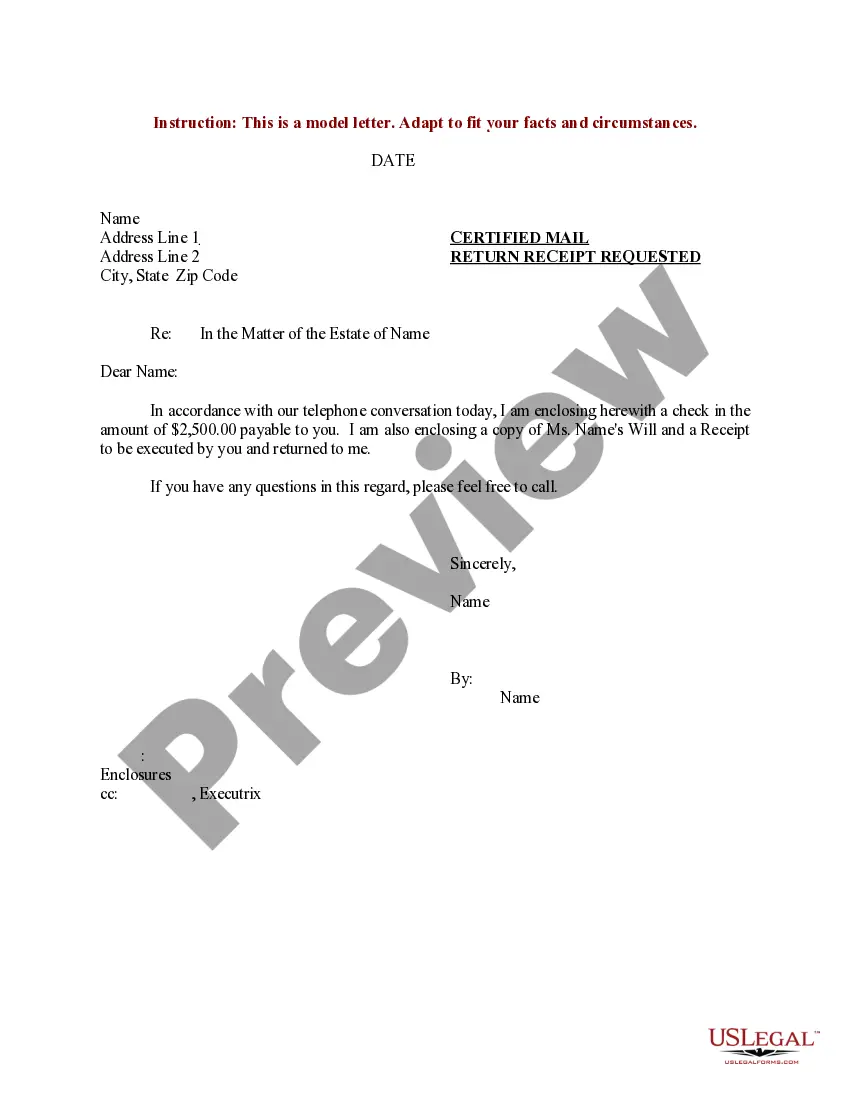
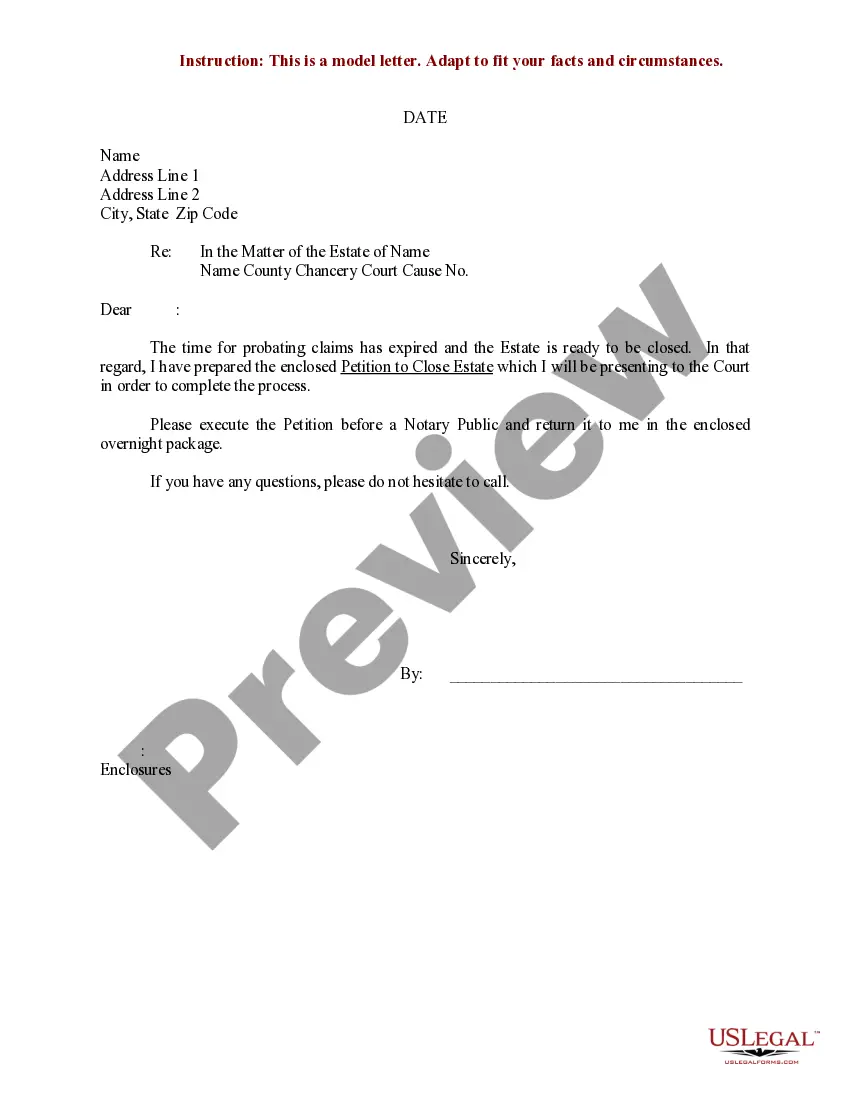
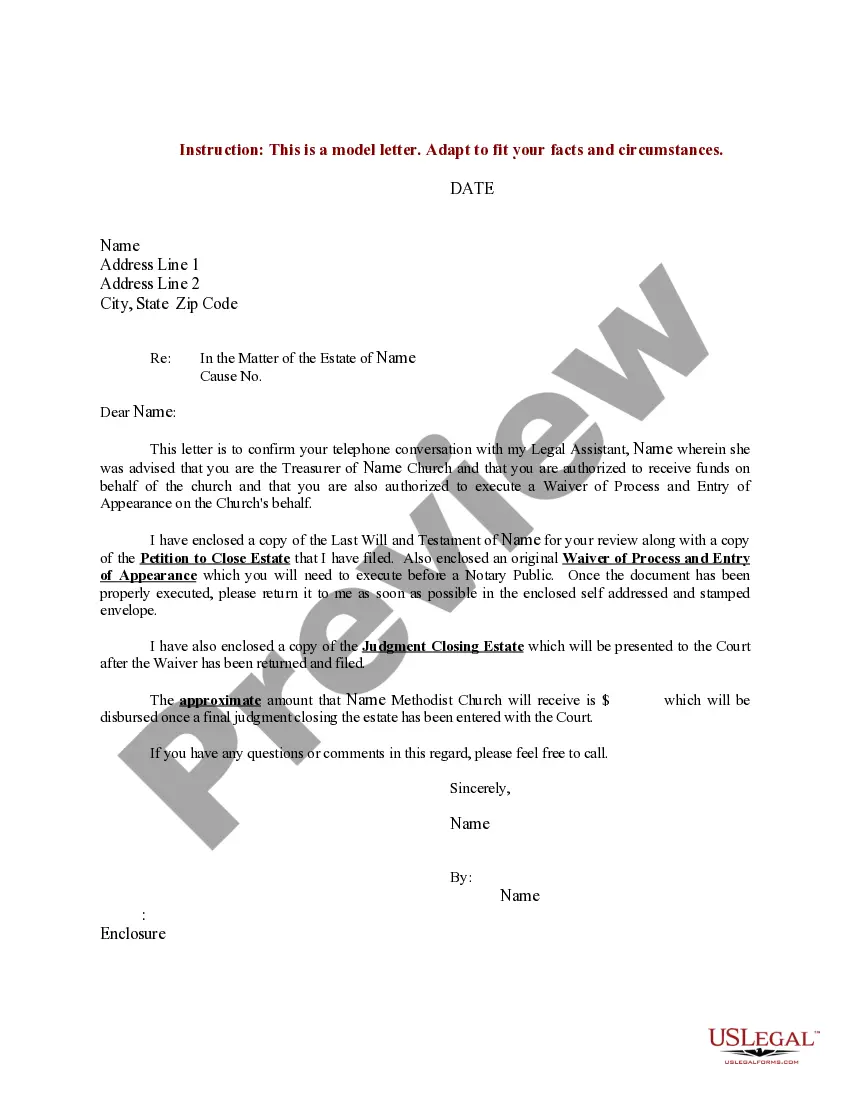
Letter For Execution
Description
Get your form ready online
Our built-in tools help you complete, sign, share, and store your documents in one place.
Make edits, fill in missing information, and update formatting in US Legal Forms—just like you would in MS Word.
Download a copy, print it, send it by email, or mail it via USPS—whatever works best for your next step.
Sign and collect signatures with our SignNow integration. Send to multiple recipients, set reminders, and more. Go Premium to unlock E-Sign.
If this form requires notarization, complete it online through a secure video call—no need to meet a notary in person or wait for an appointment.
We protect your documents and personal data by following strict security and privacy standards.

Make edits, fill in missing information, and update formatting in US Legal Forms—just like you would in MS Word.

Download a copy, print it, send it by email, or mail it via USPS—whatever works best for your next step.

Sign and collect signatures with our SignNow integration. Send to multiple recipients, set reminders, and more. Go Premium to unlock E-Sign.

If this form requires notarization, complete it online through a secure video call—no need to meet a notary in person or wait for an appointment.

We protect your documents and personal data by following strict security and privacy standards.
Looking for another form?
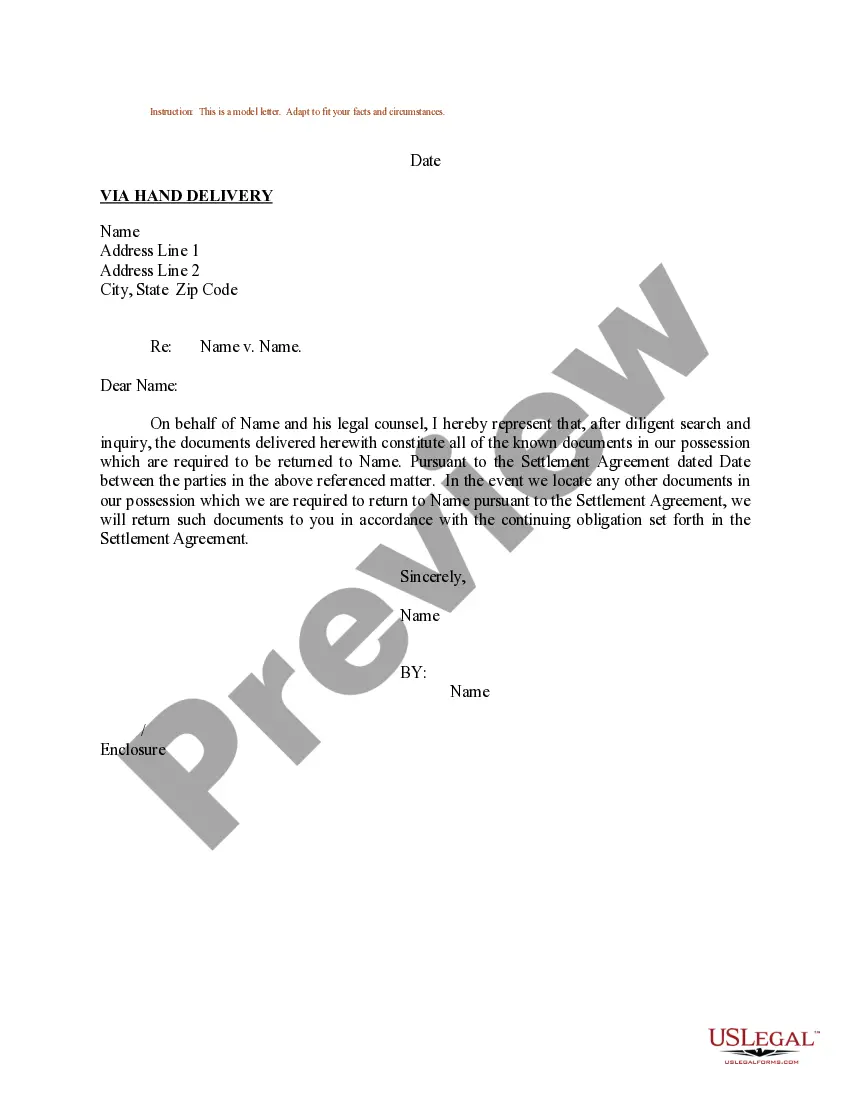
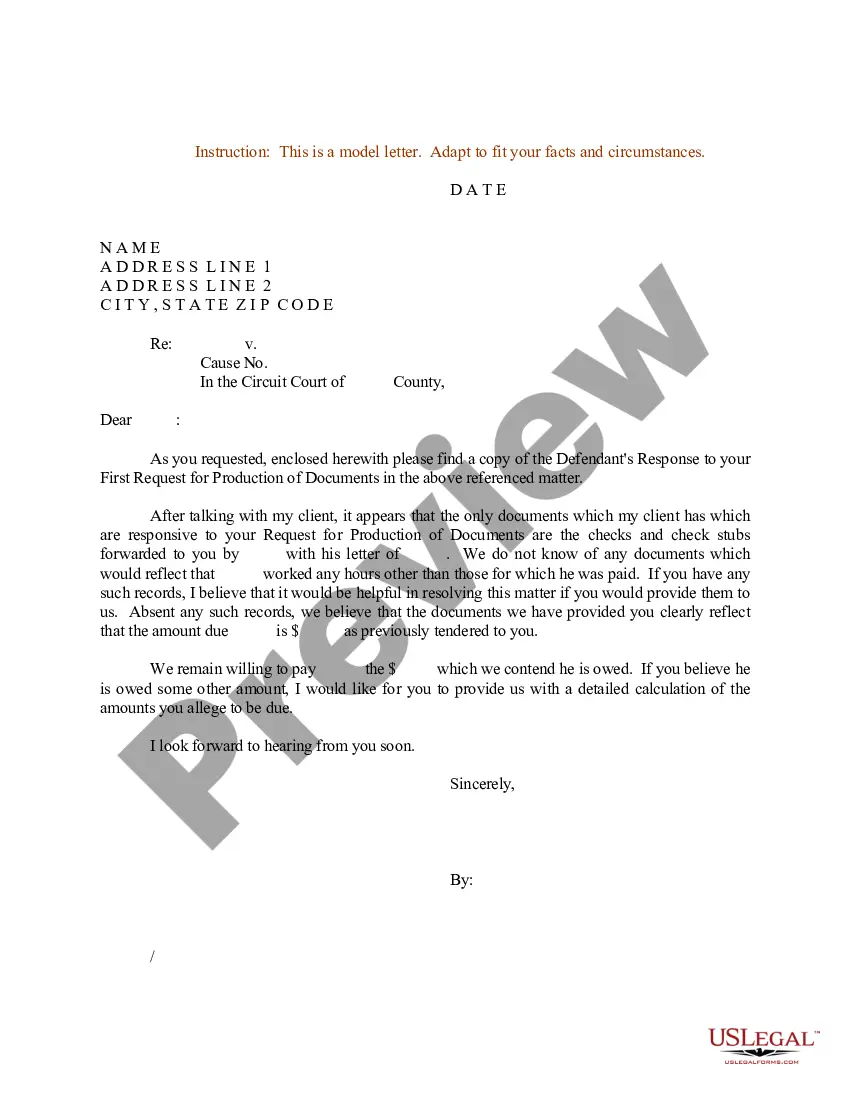
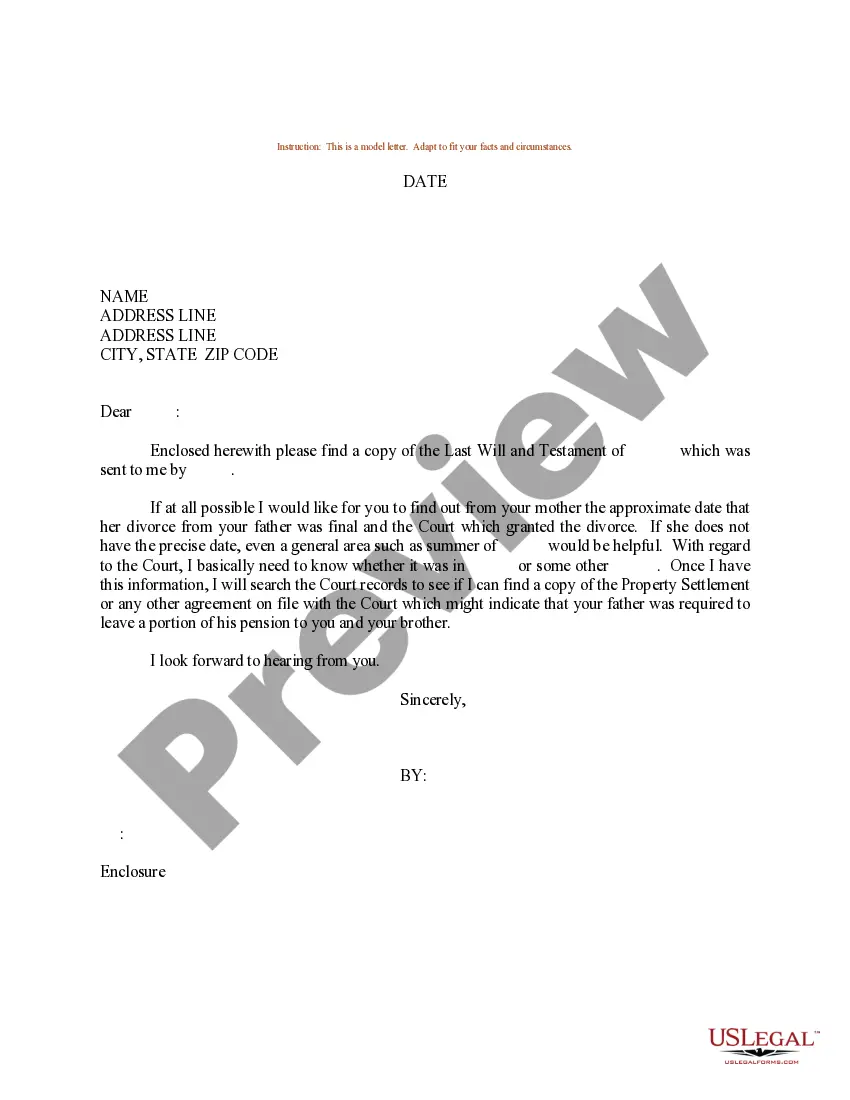
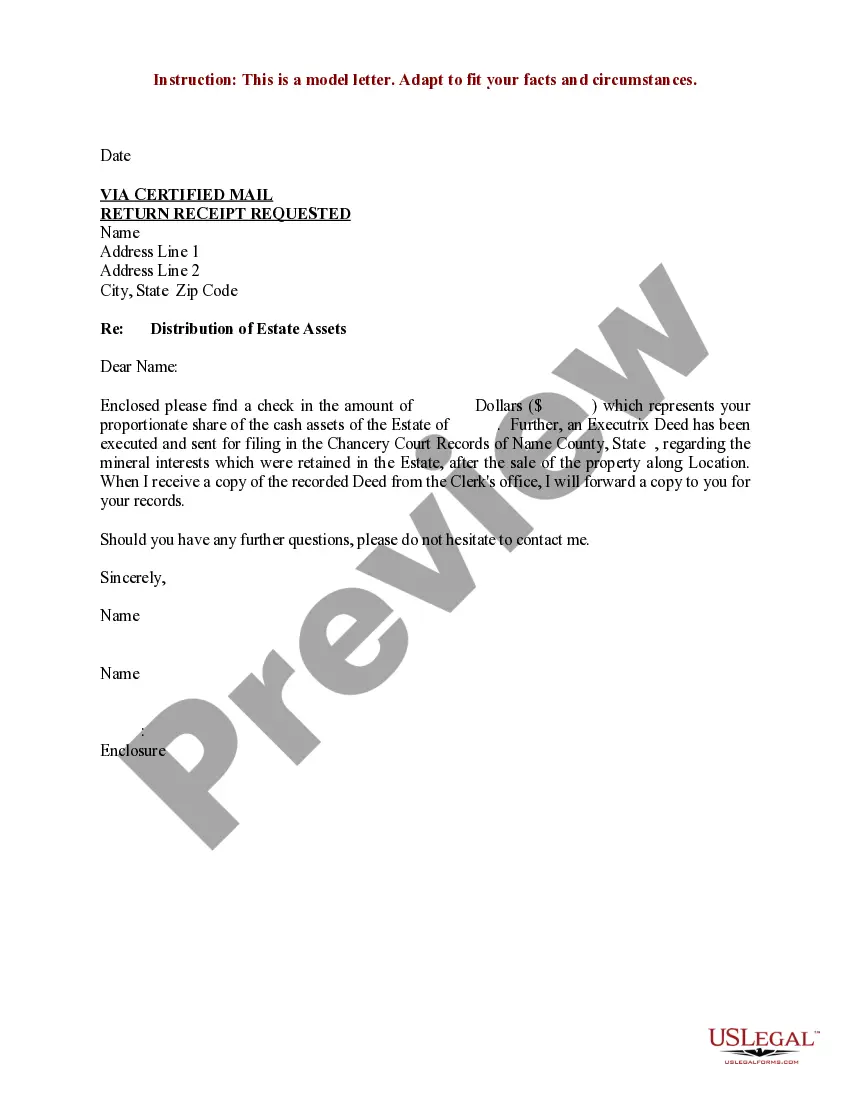
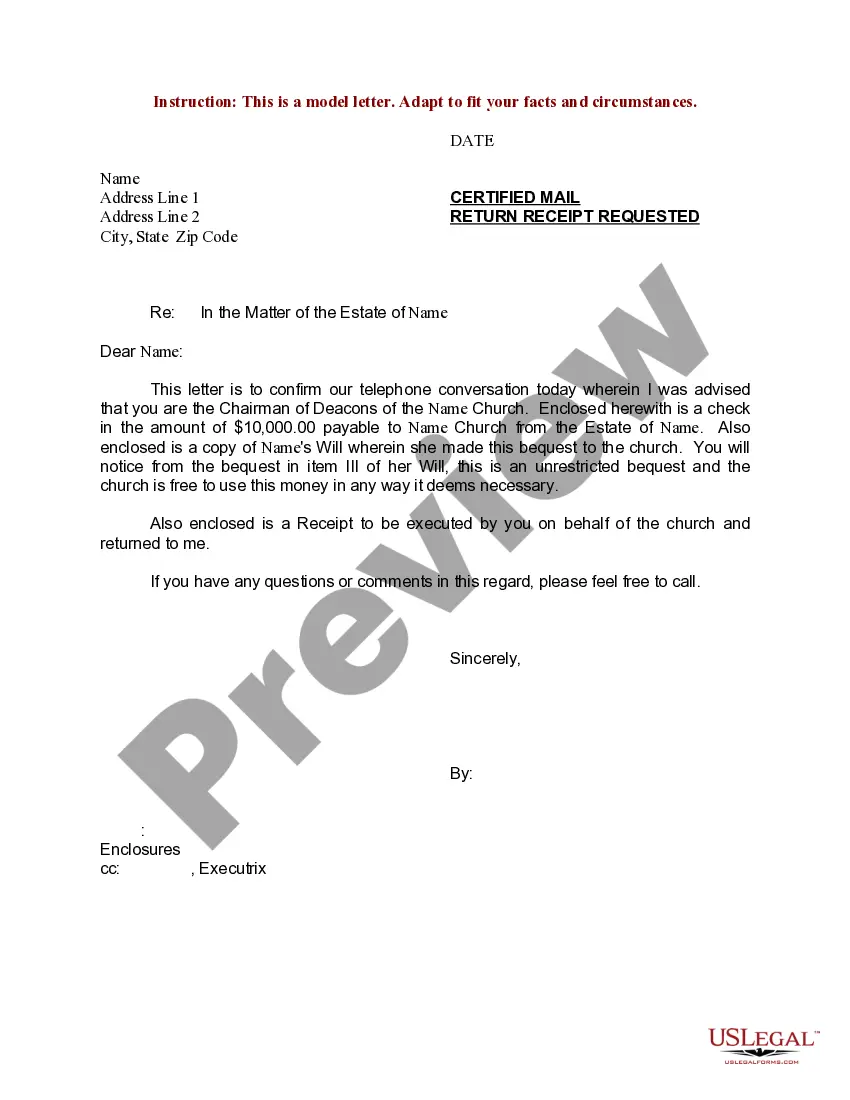
How to fill out Sample Letter For Execution - Distribution Of Will To Individual?
Regardless of whether it's for corporate needs or personal matters, everyone has to confront legal situations at some point in their lives.
When filling out legal documents, meticulous care is required, starting with selecting the right form template.
Once downloaded, you can fill out the form using editing software or print it and complete it by hand. With an extensive catalog from US Legal Forms available, you do not have to waste time searching for the correct template online. Utilize the library’s user-friendly navigation to locate the right template for any situation.
- For example, if you choose an incorrect version of a Letter For Execution, it will be rejected upon submission.
- Thus, having a reliable source of legal documents, such as US Legal Forms, is essential.
- If you wish to obtain a Letter For Execution template, follow these straightforward steps.
- Utilize the search box or catalog navigation to find the template you need.
- Review the form’s details to ensure it aligns with your case, state, and county.
- Click on the form’s preview to take a look at it.
- If it is the wrong form, return to the search function to find the specific Letter For Execution sample you require.
- Download the file if it satisfies your requirements.
- If you possess a US Legal Forms account, click Log in to retrieve previously saved documents in My documents.
- If you do not have an account yet, you can download the form by clicking Buy now.
- Choose the suitable pricing option.
- Fill out the profile registration form.
- Select your payment method: either a credit card or PayPal account.
- Choose the document format you prefer and download the Letter For Execution.
Form popularity
FAQ
Writing a letter of intent for a will involves clearly stating your desires regarding the distribution of your estate and personal belongings. Begin with a brief introduction highlighting your intentions and proceed to provide specific instructions and thoughts about your possessions and the beneficiaries. This letter for execution can act as a supplementary guide to your will, offering insight into your personal wishes. Make it heartfelt yet practical to effectively convey your message.
When a letter is said to be executed, it refers to the act of signing and formalizing the document, making it legally binding. For a letter for execution to hold weight, it typically must be signed by the relevant parties and may require witnesses depending on the context. Understanding this term is crucial if you are drafting legal documents, as it impacts how they are perceived and enforced by authorities. Always ensure compliance with local laws.
To write a letter of instruction for a will, start by outlining important information related to your estate. Include details such as account information, funeral preferences, and specific distributions of personal possessions. This letter for execution will complement your will, ensuring that your loved ones have all the information they need during a difficult time. Be clear, concise, and organized in your presentation.
Writing a powerful letter of intent begins with clear articulation of your goals and motivations. Use a strong opening to outline your purpose, then provide supportive details and relevant experiences to reinforce your commitment. A well-structured letter for execution conveys confidence and direction, allowing the recipient to understand your objectives easily. Remember to conclude with a strong statement reinforcing your enthusiasm.
To write an explanatory letter for your will, start by clearly stating your intentions regarding your assets and beneficiaries. Include details about your decisions, the reasoning behind them, and any preferences for how specific items should be distributed. This letter for execution can serve as a guide for your loved ones, promoting clarity and reducing potential conflicts. Ensure your letter is straightforward and reflective of your wishes.
A letter of intent does not always need notarization, but it can lend credibility to the letter for execution. Notarizing such a document can help confirm the identity of the signer and may be required in certain legal situations. Always consider the specific requirements relevant to the context of your letter. It is wise to consult a legal professional for personalized advice.
Writing a letter of order involves starting with a clear statement of intent, outlining the specifics of the order being placed. Be concise in describing the items or services requested, as well as any relevant terms or conditions. Utilizing a 'letter for execution' ensures that your order is not only clearly documented but also legally sound, allowing you to maintain professionalism in your communications.
An executed letter is a written document that has undergone the signing process, establishing its validity and enforceability. Typically used for various legal and business communications, an executed letter may act as a commitment or confirmation. When it comes to a 'letter for execution,' it holds particular importance, as it signifies the fulfillment of necessary legal formality.
Executing a letter means that it has been signed and acknowledged by the parties involved. This step verifies that the terms outlined in the letter are accepted and agreed upon. A properly executed letter for execution serves as a crucial element in formal agreements, offering a foundation for legal compliance and clarity.
When a document is executed, it means that all signing parties have agreed to its terms and have completed the necessary formalities. This makes the document legally binding and enforceable. Whether it’s a contract or a 'letter for execution,' the execution process ensures that all legal obligations are met, allowing parties to move forward confidently.