Workplace Policy
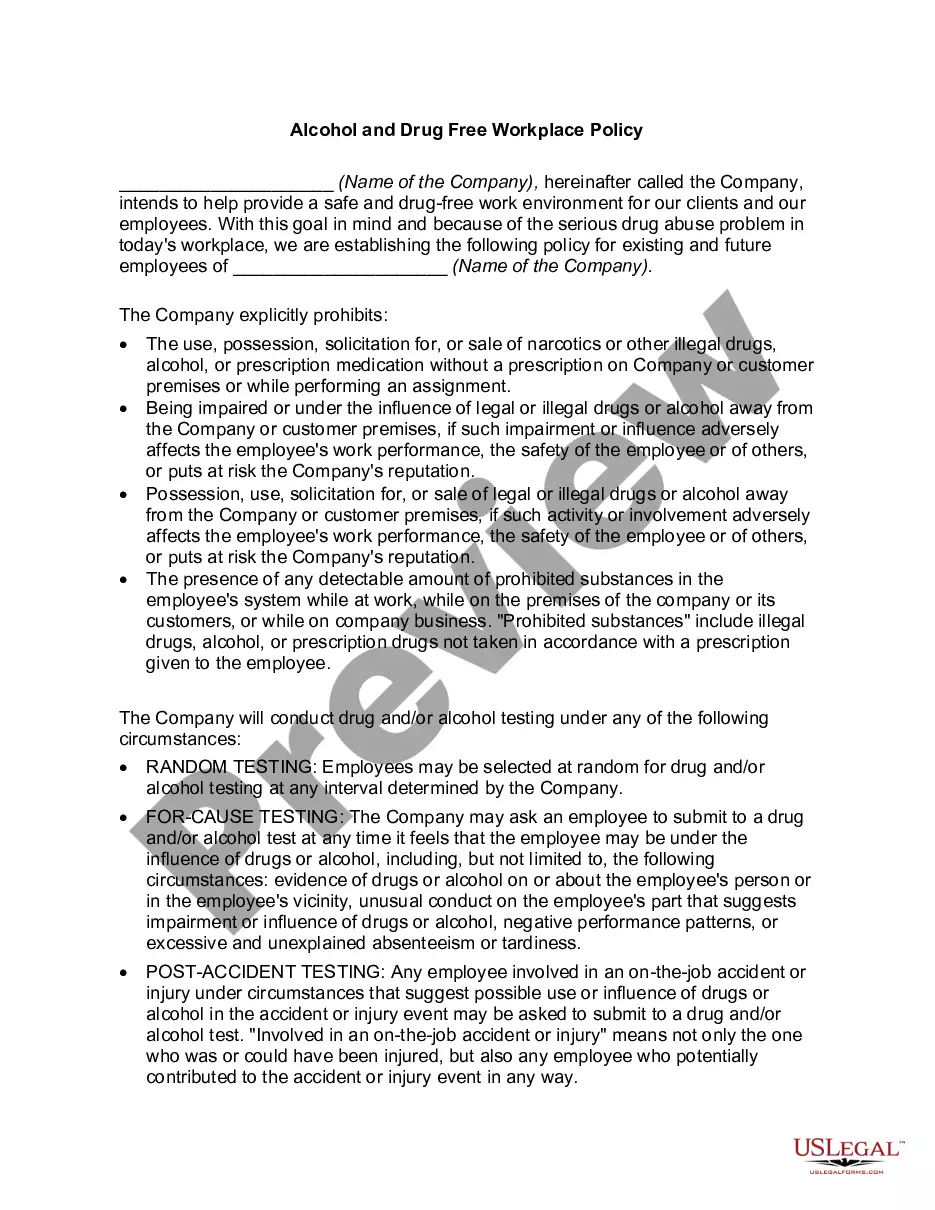
Description
Get your form ready online
Our built-in tools help you complete, sign, share, and store your documents in one place.
Make edits, fill in missing information, and update formatting in US Legal Forms—just like you would in MS Word.
Download a copy, print it, send it by email, or mail it via USPS—whatever works best for your next step.
Sign and collect signatures with our SignNow integration. Send to multiple recipients, set reminders, and more. Go Premium to unlock E-Sign.
If this form requires notarization, complete it online through a secure video call—no need to meet a notary in person or wait for an appointment.
We protect your documents and personal data by following strict security and privacy standards.

Make edits, fill in missing information, and update formatting in US Legal Forms—just like you would in MS Word.

Download a copy, print it, send it by email, or mail it via USPS—whatever works best for your next step.

Sign and collect signatures with our SignNow integration. Send to multiple recipients, set reminders, and more. Go Premium to unlock E-Sign.

If this form requires notarization, complete it online through a secure video call—no need to meet a notary in person or wait for an appointment.

We protect your documents and personal data by following strict security and privacy standards.
Looking for another form?



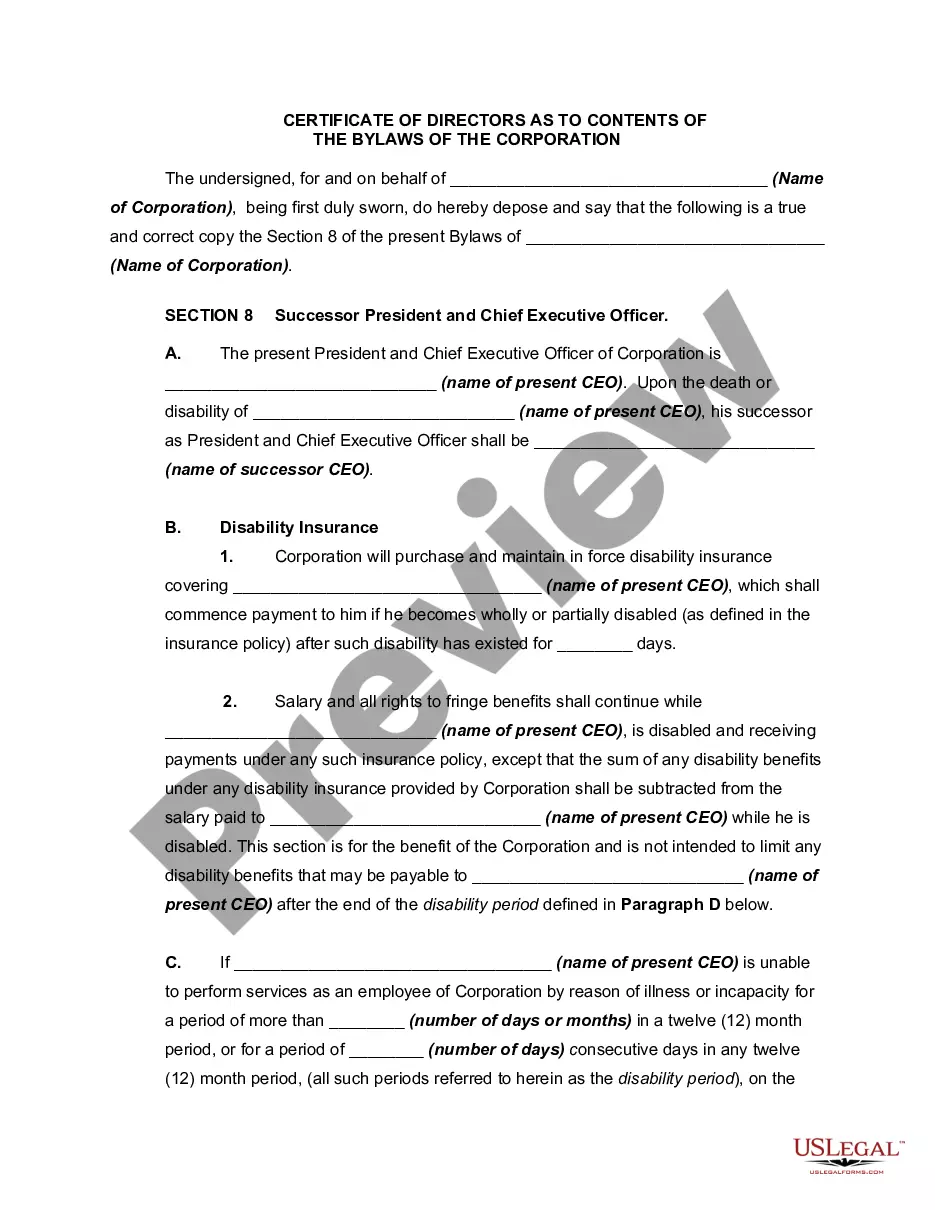


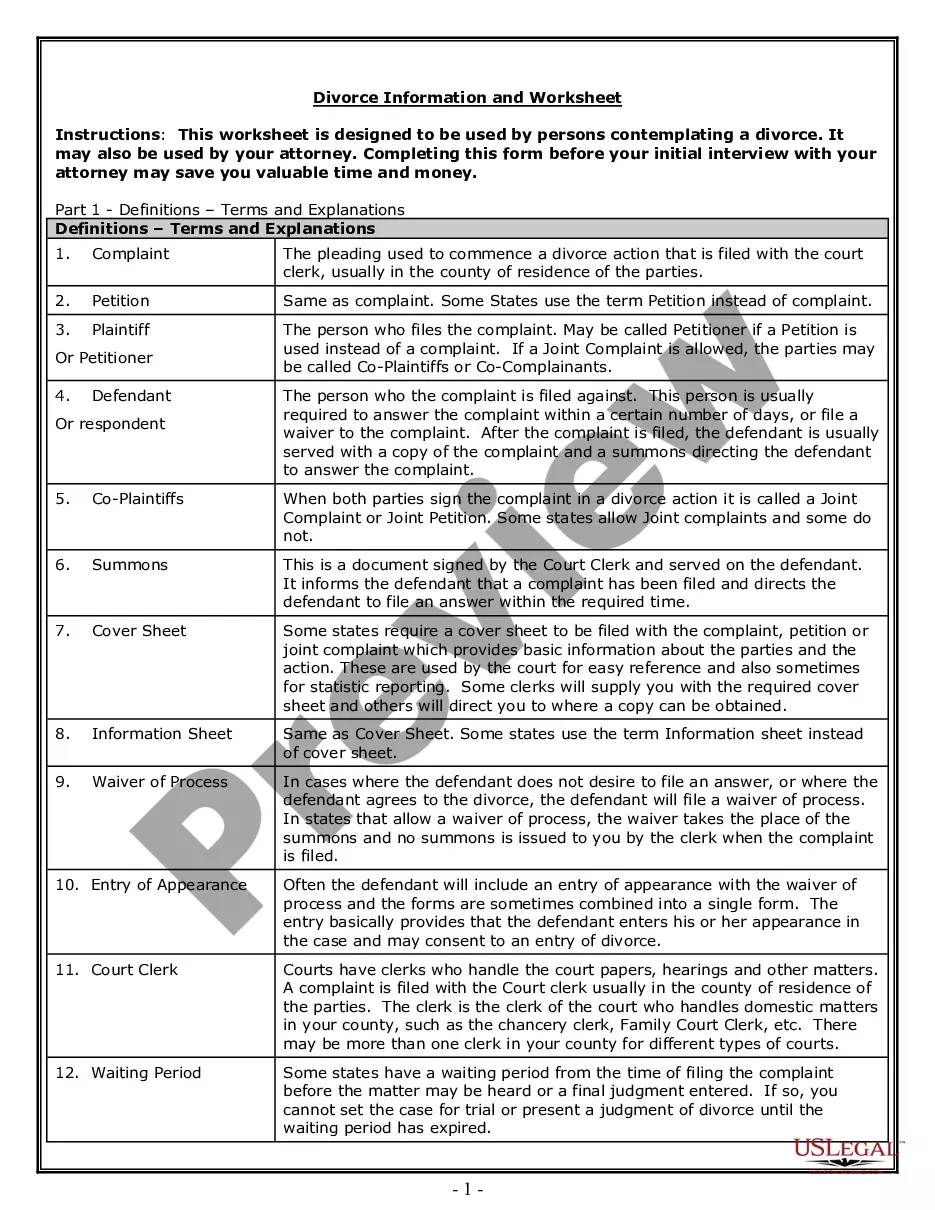
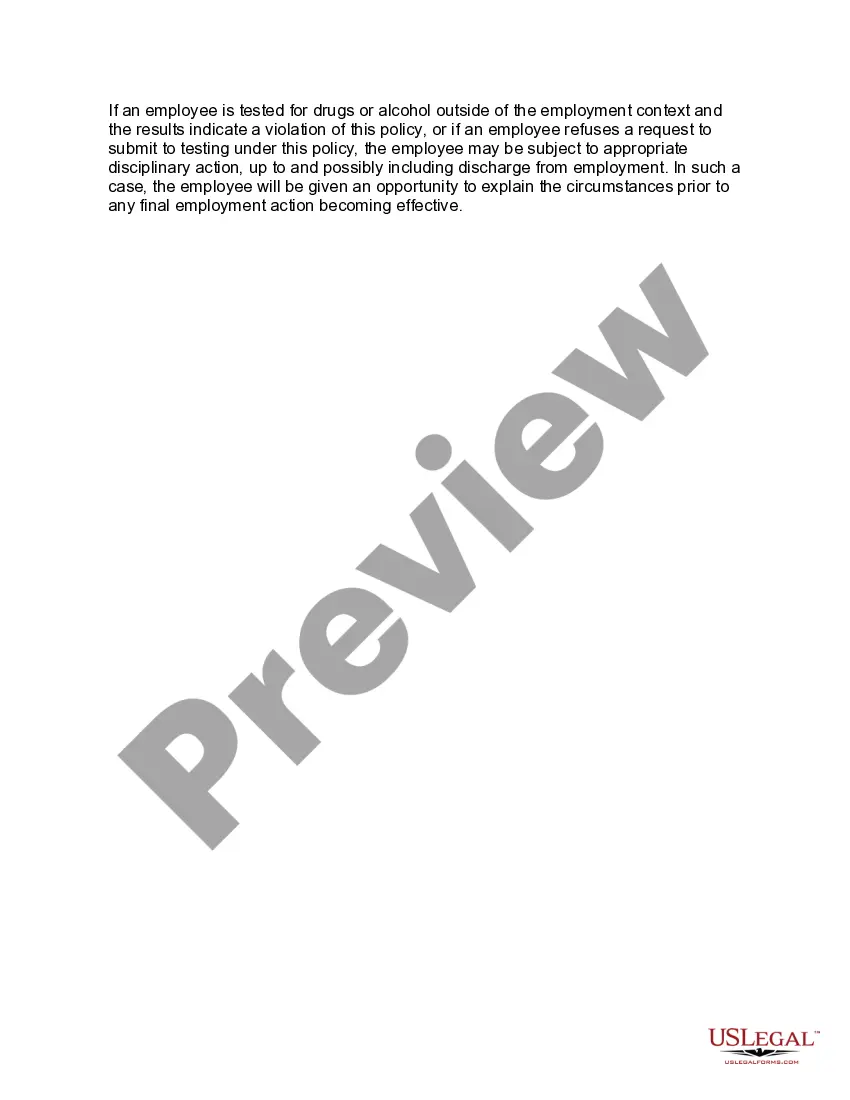
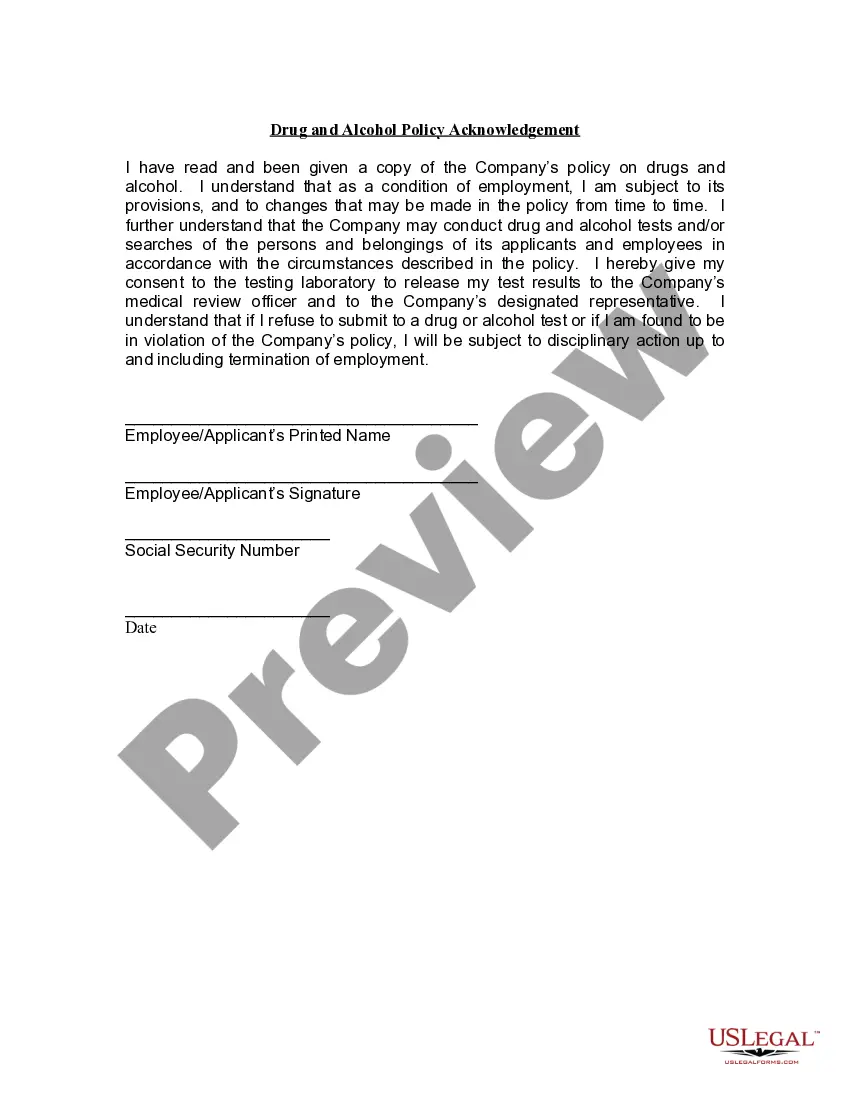
How to fill out Alcohol And Drug Free Workplace Policy?
- Log in to your US Legal Forms account. If you haven't used the service before, create an account first.
- Browse through the available templates and read the preview descriptions carefully to ensure they meet your local jurisdiction requirements.
- If necessary, utilize the Search tab to find alternative templates that better suit your needs.
- Select the desired document by clicking the 'Buy Now' button, and choose your subscription plan.
- Complete your purchase by entering your payment details via credit card or PayPal.
- Download the completed template to your device and access it anytime from the 'My Forms' section in your profile.
By following these straightforward steps, you can confidently obtain a workplace policy that aligns with your organizational requirements. US Legal Forms makes this process hassle-free, providing legal documents that are easy to fill and adapt.
Don't hesitate—visit US Legal Forms today and simplify your legal document needs!
Form popularity
FAQ
Organizing workplace policies and procedures involves creating a centralized location where employees can easily access the documents. Group similar policies together, such as safety, attendance, and conduct. Additionally, keep an updated digital repository or manual, allowing employees to find the relevant information quickly while promoting compliance and clarity.
To write a workplace policy, first identify the issue that needs addressing and research relevant laws and best practices. Clearly define the policy’s purpose and scope, then outline the specific rules and procedures that employees must follow. Review the policy with key stakeholders before finalizing to ensure it's comprehensive and aligned with corporate goals.
When formatting workplace policies and procedures, start with a title page that includes the policy name and effective date. Use a table of contents if the policy is lengthy, to guide readers. Number sections and make use of consistent fonts and sizes to maintain professionalism, making it easier for employees to reference important information.
An example of a workplace policy is an attendance policy, which details the expectations regarding employee attendance. Accompanying procedures would outline the steps employees must take when reporting absences, including notifying supervisors and documenting reasons. This example illustrates how policies set guidelines while procedures provide the actionable steps to follow.
Formatting workplace policies and procedures is crucial for readability. Use headings and subheadings to break down sections, making it easier for employees to navigate the document. Keep paragraphs concise and utilize bullet points for lists. Consistent formatting not only enhances the document’s appearance but also improves comprehension.
To structure a workplace policy effectively, begin with a clear title that identifies the focus area. Follow this with an introduction that outlines the purpose and scope of the policy. Organize the content into sections, such as procedures, responsibilities, and enforcement, to ensure clarity. This structured approach helps employees understand their roles and expectations.
A workplace policy is a formal guideline that outlines expectations for employee behavior, roles, and responsibilities within an organization. This policy helps create a structured work environment, ensuring that the organization operates smoothly. Furthermore, having clear workplace policies allows employees to understand their rights and obligations, fostering a positive workplace culture.
Workforce policies are comprehensive guidelines that govern how an organization manages its employees, including hiring, development, and evaluation processes. These policies help ensure consistency, fairness, and transparency within the workplace. By effectively defining these policies, organizations can improve employee morale and reduce turnover rates.
An example of an employee policy is the remote work policy, which provides guidelines for employees working from home. This workplace policy typically covers expectations for communication, productivity, and availability. By implementing such policies, organizations support their employees while maintaining business continuity.
A common example of a policy in the workplace is a code of conduct policy. This workplace policy outlines the expected behavior of employees and the consequences of violating these standards. By setting clear expectations, organizations protect their workforce and create a more cohesive and professional work environment.