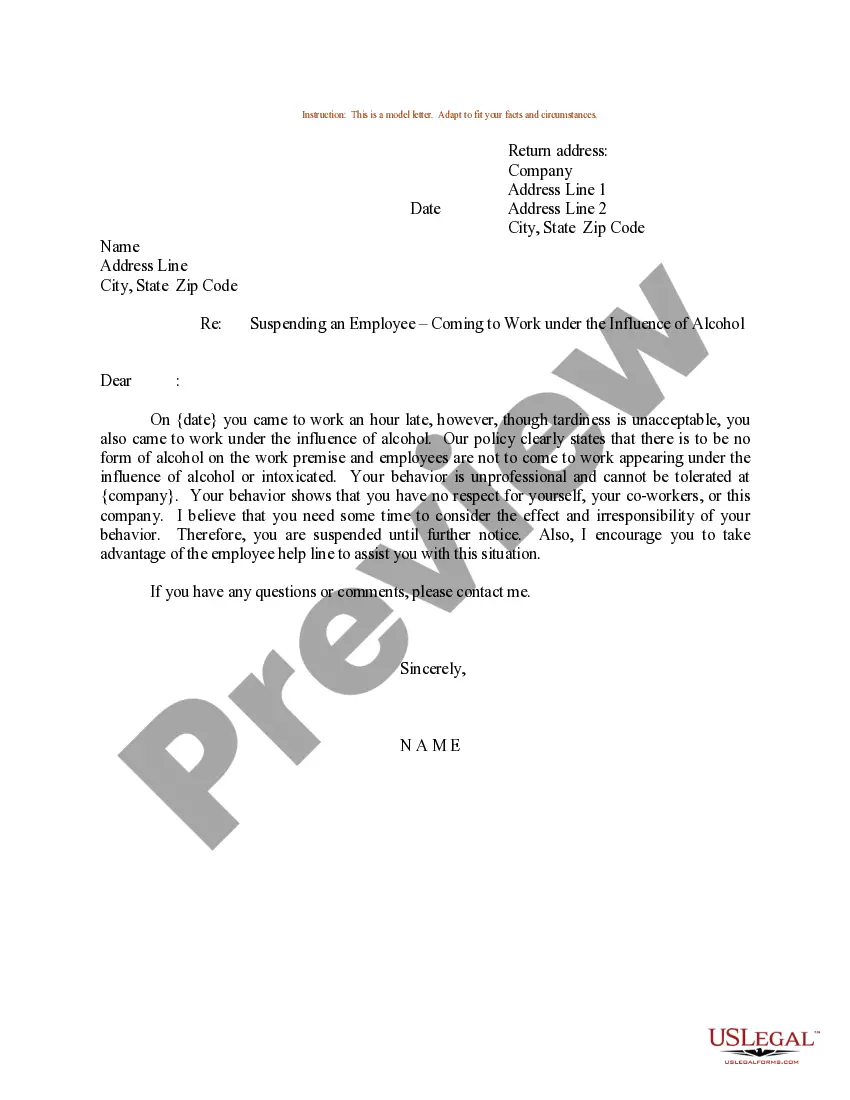
Suspension Letter To Employee For Misbehaviour
Description

Get your form ready online
Our built-in tools help you complete, sign, share, and store your documents in one place.
Make edits, fill in missing information, and update formatting in US Legal Forms—just like you would in MS Word.
Download a copy, print it, send it by email, or mail it via USPS—whatever works best for your next step.
Sign and collect signatures with our SignNow integration. Send to multiple recipients, set reminders, and more. Go Premium to unlock E-Sign.
If this form requires notarization, complete it online through a secure video call—no need to meet a notary in person or wait for an appointment.
We protect your documents and personal data by following strict security and privacy standards.

Make edits, fill in missing information, and update formatting in US Legal Forms—just like you would in MS Word.

Download a copy, print it, send it by email, or mail it via USPS—whatever works best for your next step.

Sign and collect signatures with our SignNow integration. Send to multiple recipients, set reminders, and more. Go Premium to unlock E-Sign.

If this form requires notarization, complete it online through a secure video call—no need to meet a notary in person or wait for an appointment.

We protect your documents and personal data by following strict security and privacy standards.
Looking for another form?






Form popularity
FAQ
Writing a warning letter to an employee for misbehaviour involves being direct and respectful. Begin by clearly stating the specific behavior that is unacceptable and reference any previous discussions about this issue. It's also helpful to outline the potential consequences if the behavior does not change. Resources like US Legal can provide templates to assist you in crafting an effective warning letter.
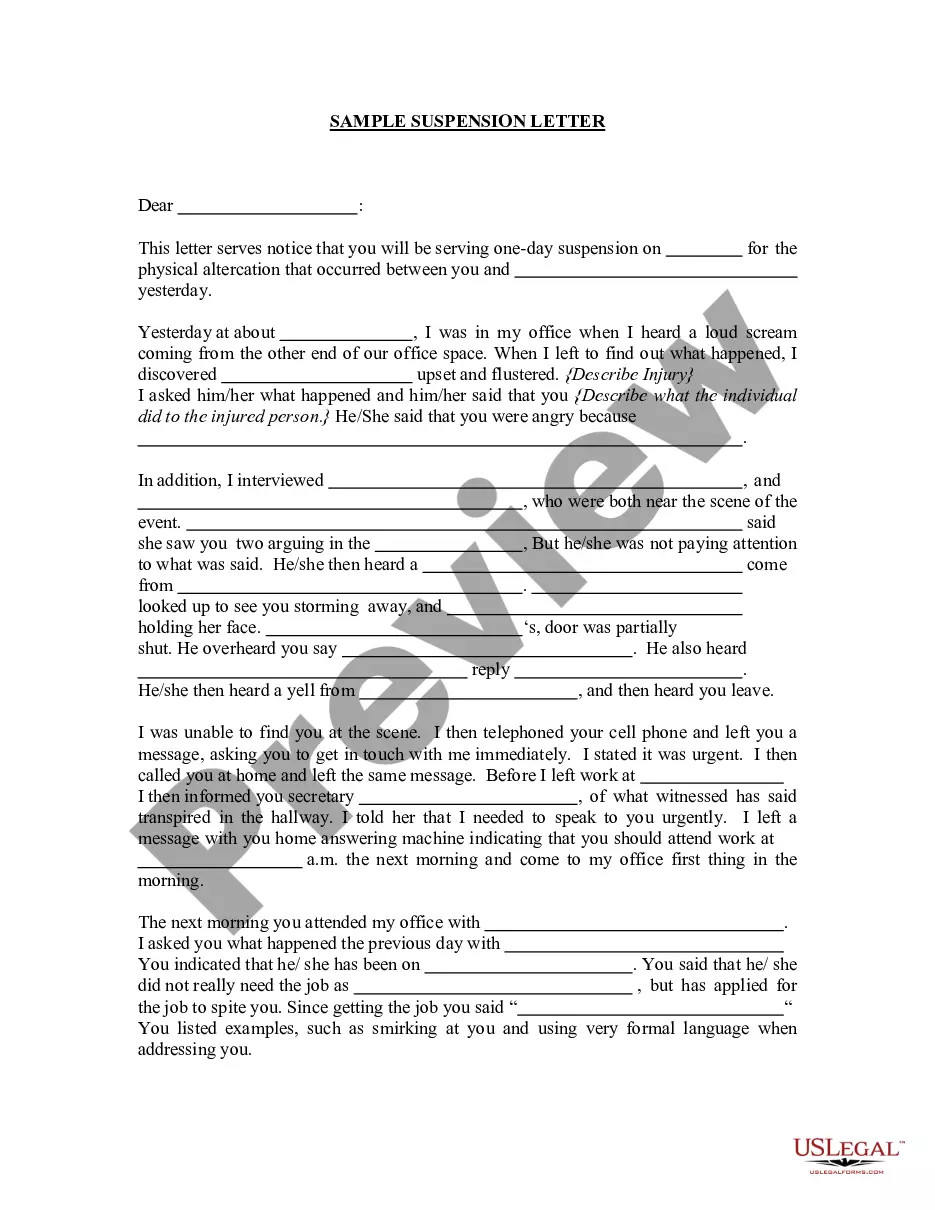
Yes, you can suspend an employee for misconduct, particularly if it violates company policies. It's crucial to follow established procedures and document all relevant incidents leading to the suspension. This helps protect the organization from potential disputes. A clear suspension letter to an employee for misbehaviour can reinforce the importance of following workplace rules.
An example of a suspension notice includes the employee's name, the effective date of suspension, and the reason for the suspension. It should also mention the duration of the suspension and any expectations during this period. This document serves as an official record and should maintain a formal tone. For detailed templates, consider checking platforms like US Legal to ensure compliance and clarity.
Informing your employee of suspension requires sensitivity and clarity. Start with a face-to-face meeting to discuss the situation, followed by providing a suspension letter for their records. This letter should outline the reasons for the suspension and may serve as a reference in future discussions. It’s essential to maintain respect and professionalism throughout the entire communication.
To write a suspension letter to an employee for misbehaviour, begin by clearly stating the reason for the suspension. Make sure to outline the duration of the suspension and any expectations during this time. It’s important to maintain a professional tone throughout the letter while ensuring that the employee understands the seriousness of their actions. Consider using resources like US Legal to find templates that streamline this process.
Writing a disciplinary letter to an employee requires clarity and professionalism. Start by stating the purpose of the letter and clearly outline the specific behavior that led to this action. Ensure you provide evidence if necessary and describe the steps taken prior to this letter. Lastly, conclude with the potential consequences and encourage the employee to improve.
To terminate an employee for serious misconduct, ensure that you follow your company’s established procedures. Document all relevant incidents and discussions that inevitably led to this decision. In your termination letter, be explicit about the reasons for the decision and the evidence supporting it. Utilizing a well-structured 'suspension letter to employee for misbehaviour' can serve as a model to ensure clarity and compliance with legal standards.
Writing a termination letter for bad behavior requires clarity and professionalism. Start by referencing previous discussions about the behavior and the impact it has had on the workplace. Specify the policy violations clearly and state the termination date. Utilize phrases that emphasize the need for accountability, incorporating the concept of a 'suspension letter to employee for misbehaviour' as a procedural guide.
When terminating an employee for inappropriate behavior, you should first document the incidents that prompted the decision. In your communication, explain why their actions do not align with company policies. It's important to provide an opportunity for the employee to respond if applicable. A properly drafted 'suspension letter to employee for misbehaviour' can help articulate these points effectively.
To write a termination letter for misconduct, begin by stating the purpose clearly. Include the employee's name, position, and specific details about the misbehavior. Use factual language to describe the incidents leading to the decision, and mention any previous warnings or disciplinary actions considered. Ensure you keep the tone professional and direct, while incorporating terms like 'suspension letter to employee for misbehaviour' where relevant.