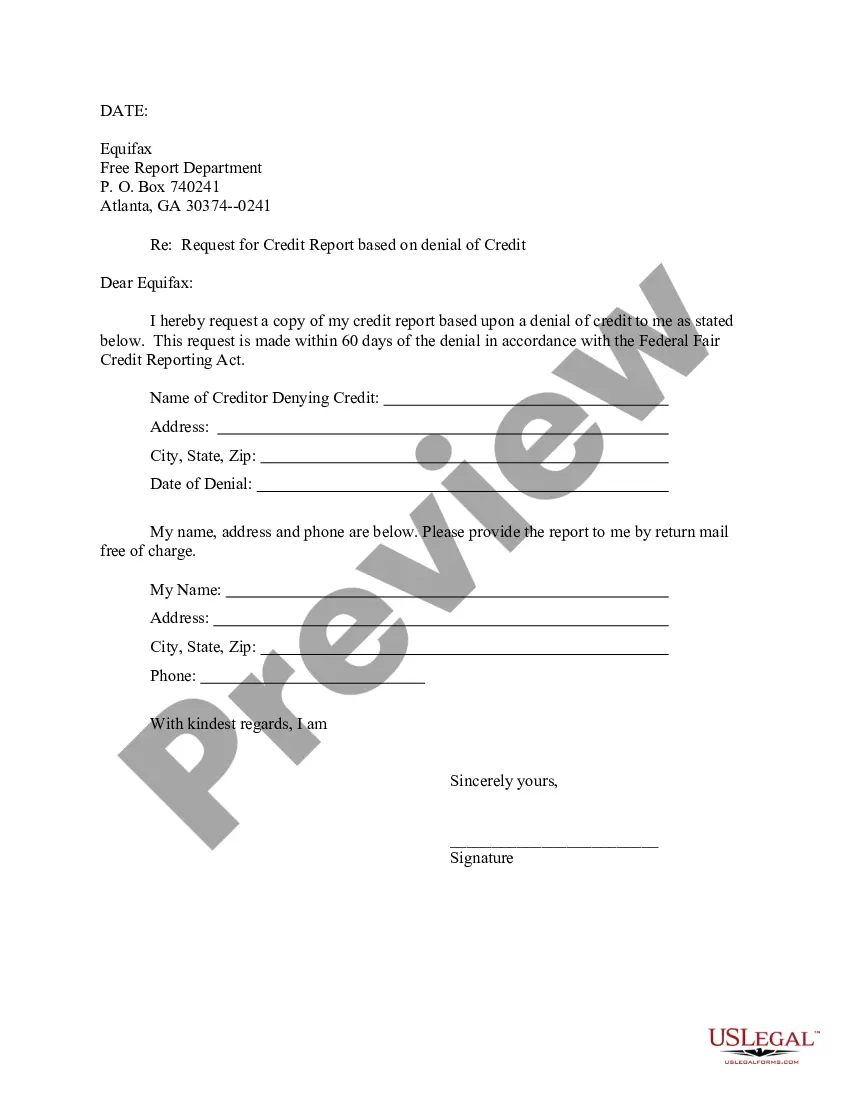
Sample Letter Without Prejudice
Description
Get your form ready online
Our built-in tools help you complete, sign, share, and store your documents in one place.
Make edits, fill in missing information, and update formatting in US Legal Forms—just like you would in MS Word.
Download a copy, print it, send it by email, or mail it via USPS—whatever works best for your next step.
Sign and collect signatures with our SignNow integration. Send to multiple recipients, set reminders, and more. Go Premium to unlock E-Sign.
If this form requires notarization, complete it online through a secure video call—no need to meet a notary in person or wait for an appointment.
We protect your documents and personal data by following strict security and privacy standards.

Make edits, fill in missing information, and update formatting in US Legal Forms—just like you would in MS Word.

Download a copy, print it, send it by email, or mail it via USPS—whatever works best for your next step.

Sign and collect signatures with our SignNow integration. Send to multiple recipients, set reminders, and more. Go Premium to unlock E-Sign.

If this form requires notarization, complete it online through a secure video call—no need to meet a notary in person or wait for an appointment.

We protect your documents and personal data by following strict security and privacy standards.
Looking for another form?





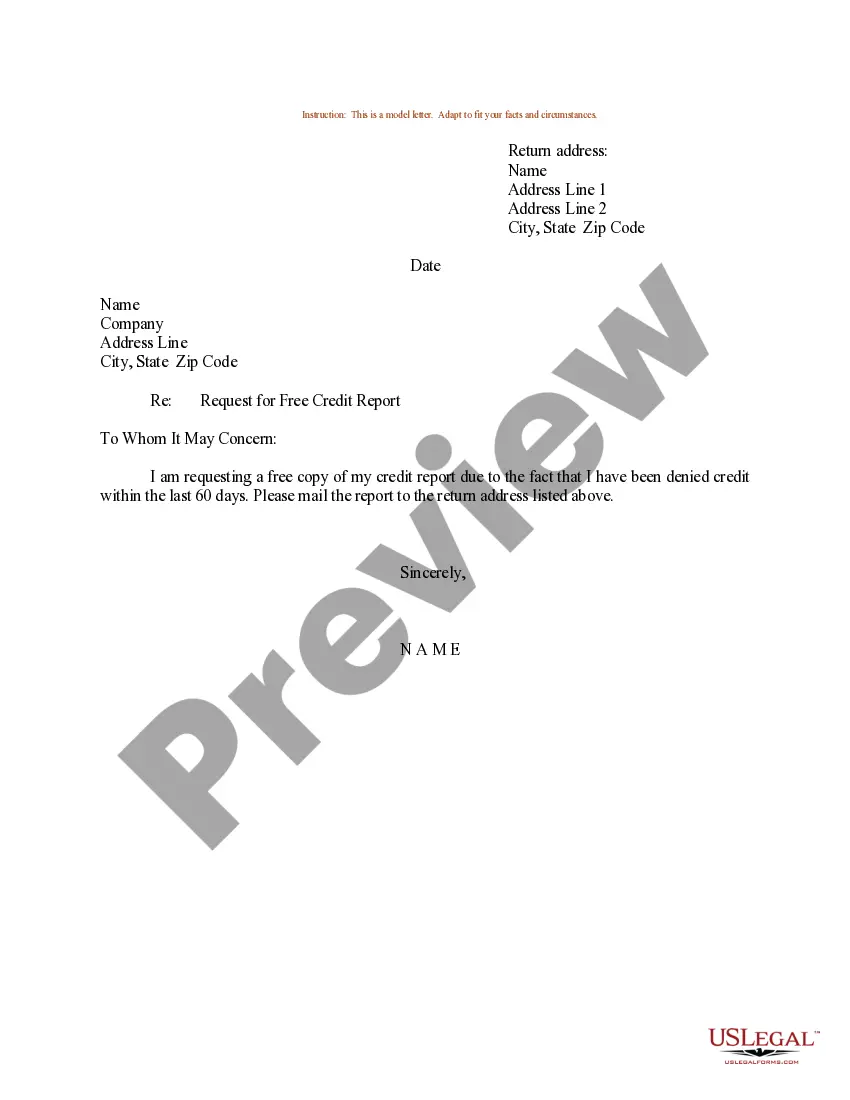
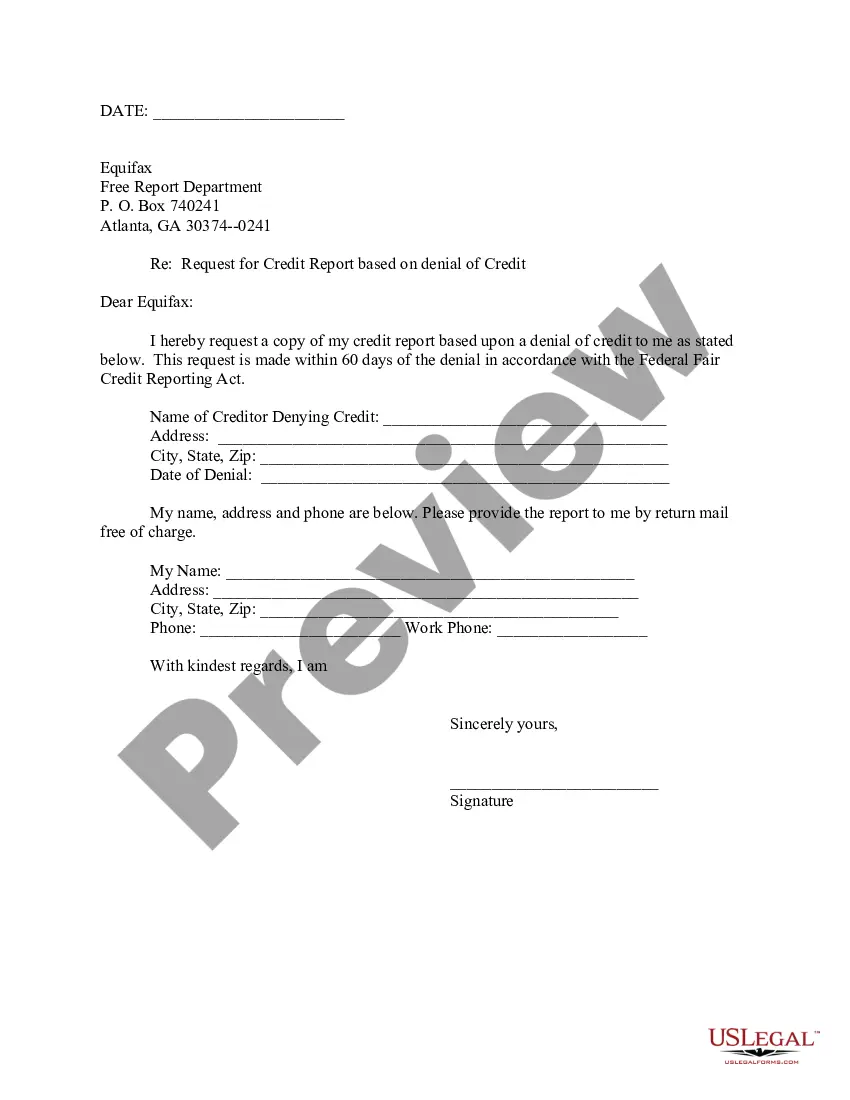
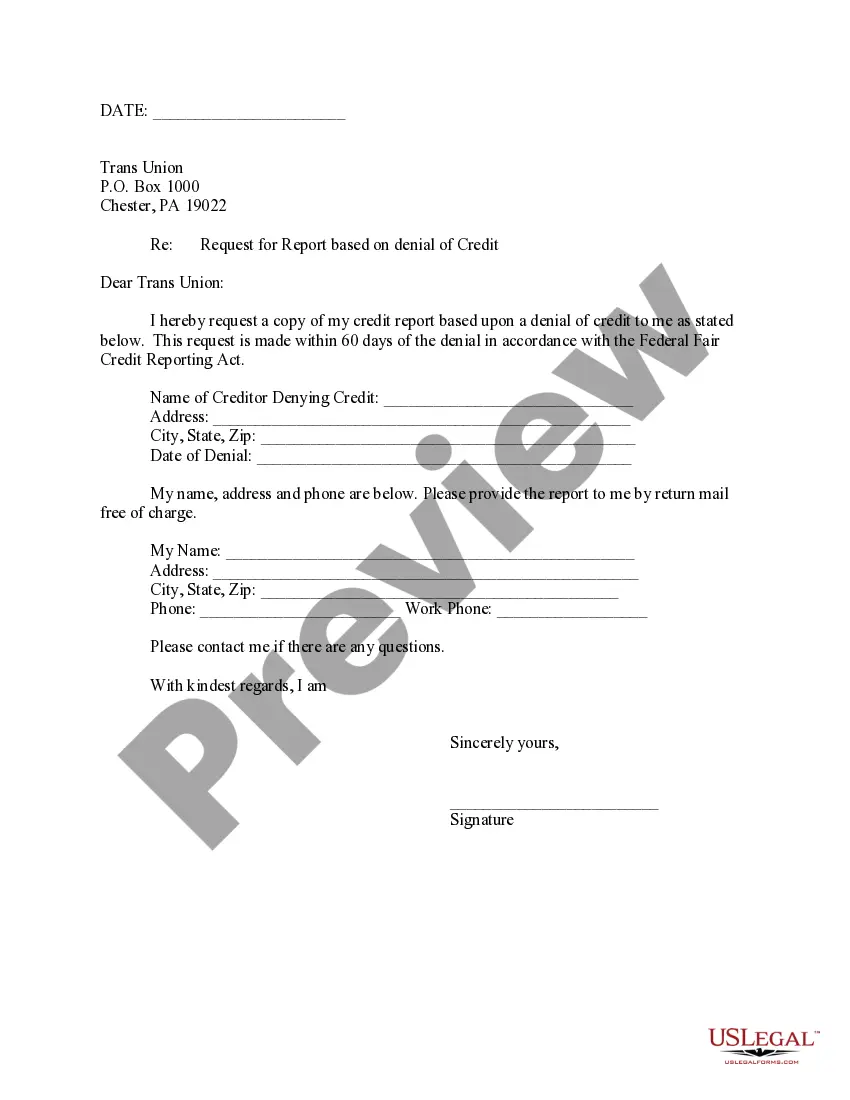
How to fill out Sample Letter To Equifax Requesting Free Copy Of Your Credit Report Based On Denial Of Credit?
Red tape necessitates meticulousness and correctness.
Unless you handle paperwork like Sample Letter Without Prejudice daily, it may lead to some confusions.
Choosing the appropriate example from the beginning will assure that your document submission proceeds seamlessly and avert any hassles of re-submitting a file or completely starting over.
If you are not a registered user, finding the sought-after sample will involve a few extra steps.
- Acquire the correct example for your documentation in US Legal Forms.
- US Legal Forms is the most extensive online forms repository that houses over 85 thousand templates for various domains.
- You can access the latest and most applicable version of the Sample Letter Without Prejudice by simply searching on the website.
- Find, store, and save templates in your account or verify with the description to ensure you have the right one available.
- With a US Legal Forms account, you can gather, keep in one place, and browse the templates you save for easy access.
- When on the webpage, click the Log In button to authenticate.
- Subsequently, go to the My documents page, where your document history is maintained.
- Review the descriptions of the forms and save the ones you require at any moment.
Form popularity
FAQ
To settle without prejudice means reaching an agreement without affecting your legal rights to pursue the matter further. This approach allows parties to compromise and finalize an arrangement without binding themselves in future disputes. It enables flexibility and maintains the option to revisit the issue, if necessary. For effective documentation, a sample letter without prejudice can help clearly outline the terms of this agreement.
'Without prejudice' in a letter indicates that the content is meant for negotiation and cannot be admitted in court as evidence. This term encourages honest discussions between parties regarding potential settlements. By using this phrase, you enable a candid exchange of ideas without jeopardizing your legal standing. If you need guidance on how to draft one, consider looking at a sample letter without prejudice.
In legal terms, 'without prejudice' means that a statement or communication cannot be used against you in future legal proceedings. When you include this phrase in a legal signature, you protect your rights and allow for open dialogue. It creates a safe space for negotiating settlements without the risk of those discussions being used as evidence later. If you're looking for a sample letter without prejudice, this ensures any proposal remains confidential.
A letter of no prejudice, also often referred to as a letter marked 'without prejudice,' communicates that certain discussions or offers are made without the intention of waiving legal rights. Such letters are crucial in maintaining clarity during negotiations, as they help prevent statements from being used against a party later. Using a sample letter without prejudice can help you draft effective correspondence that clearly states your position.
An example of 'without prejudice to' is when a party sends a letter stating they are willing to negotiate, but without prejudice to their legal rights. This means that they are not giving up any rights or claims they may have. This language can protect your interests while exploring options for resolution. Looking for an effective way to craft such communications? A sample letter without prejudice can provide a great starting point.
'Without prejudice' on a check means that the check is issued without admitting any liability or conceding any claims. This provides protection to the sender, ensuring that receiving the check does not affect their legal rights. It serves as a form of negotiation, allowing parties to resolve issues amicably. For guidance, a sample letter without prejudice can illustrate how to use this phrase correctly.
An example of without prejudice is when parties in a legal dispute exchange offer letters that are marked without prejudice. This means that any statements made in those letters cannot be used as evidence against either party if the matter proceeds to court. The goal is to encourage open communication for a potential settlement. If you need a sample letter without prejudice, you can find templates that simplify this process.
To write without prejudice on a check, simply add the phrase 'without prejudice' in the memo line or near your signature. This indicates your intention to resolve any disputes without affecting your legal rights. When using the term in a commercial or legal context, it clarifies that you are not making a concession by issuing the check. A sample letter without prejudice can help you communicate this intention more clearly.
You might say, 'The negotiations were conducted without prejudice to ensure that both parties could speak freely.' This phrase highlights the intent to protect the interests of all involved while allowing for honest discussions. If you’re drafting a Sample letter without prejudice, using this phrase correctly can emphasize the protective nature of your communication.
When a case is dismissed without prejudice, it means the plaintiff can bring the same claim again in the future. This can be beneficial as it allows room for additional consideration or new evidence. In the context of creating a Sample letter without prejudice, understanding the implications of such a dismissal can help you navigate your options cautiously.