Discovery Letter Sample With Attached Documents
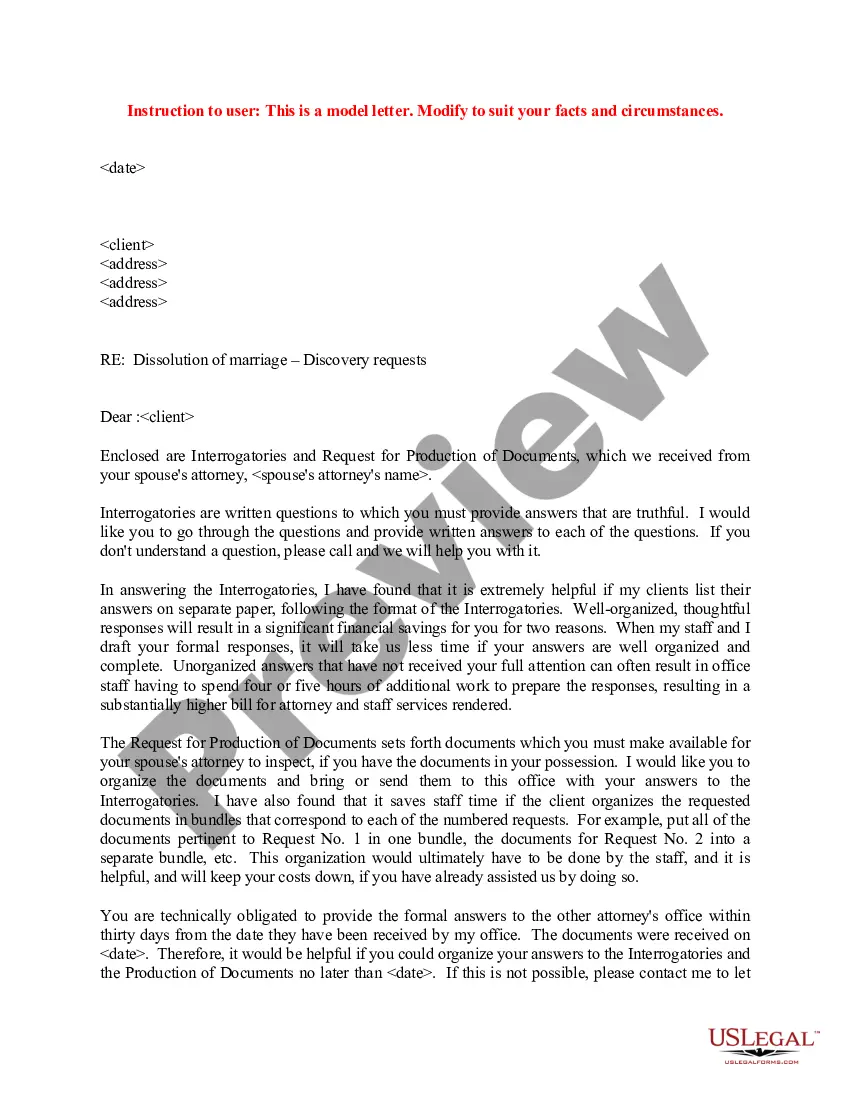
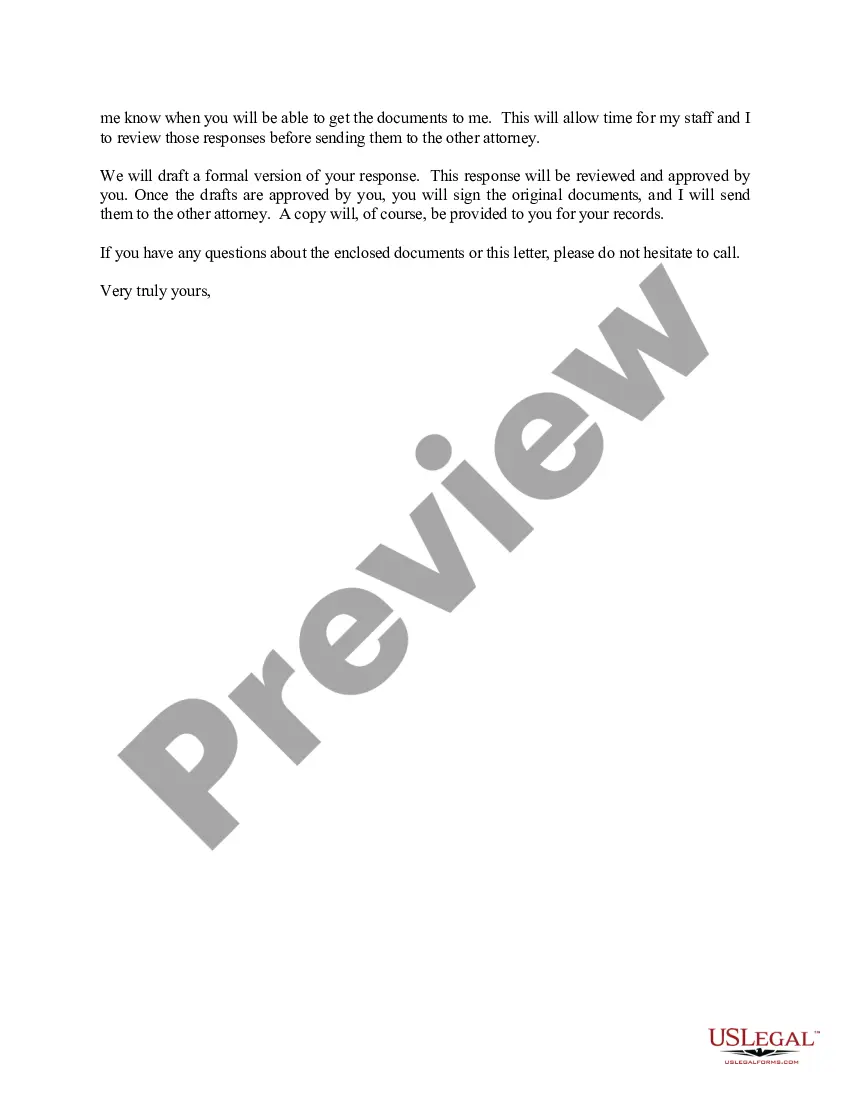
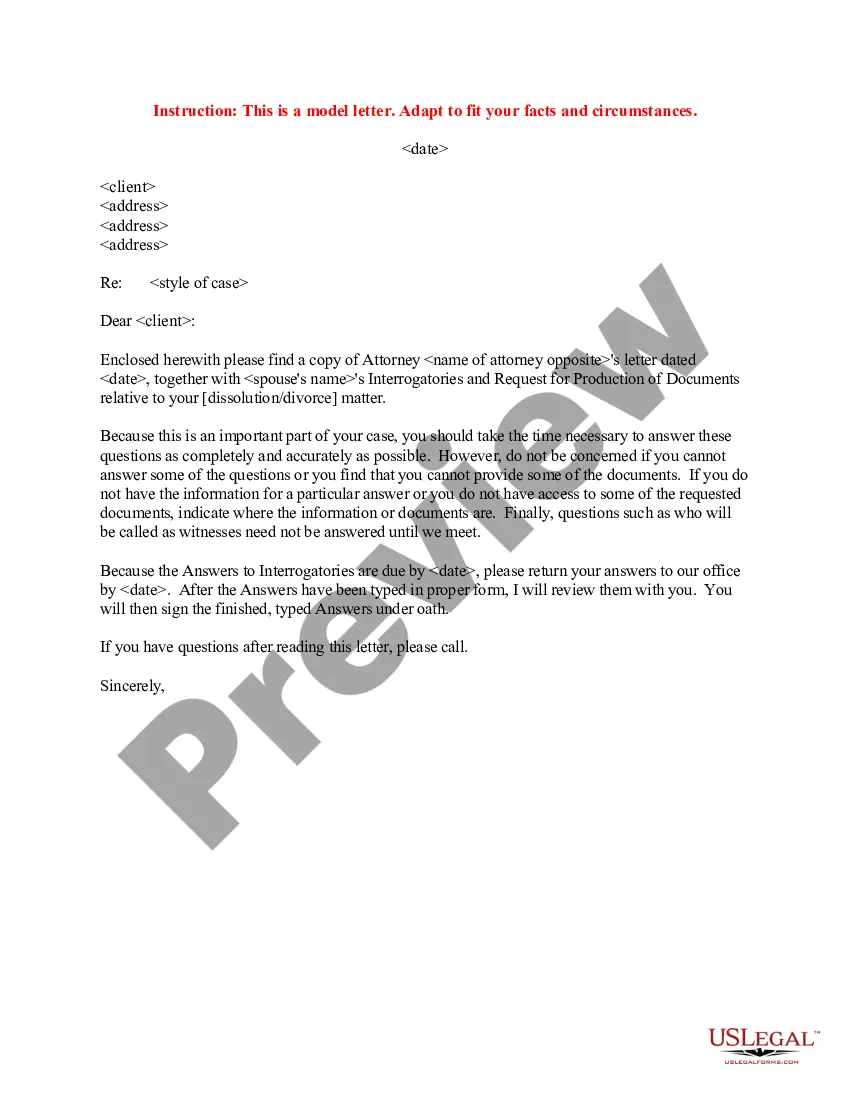
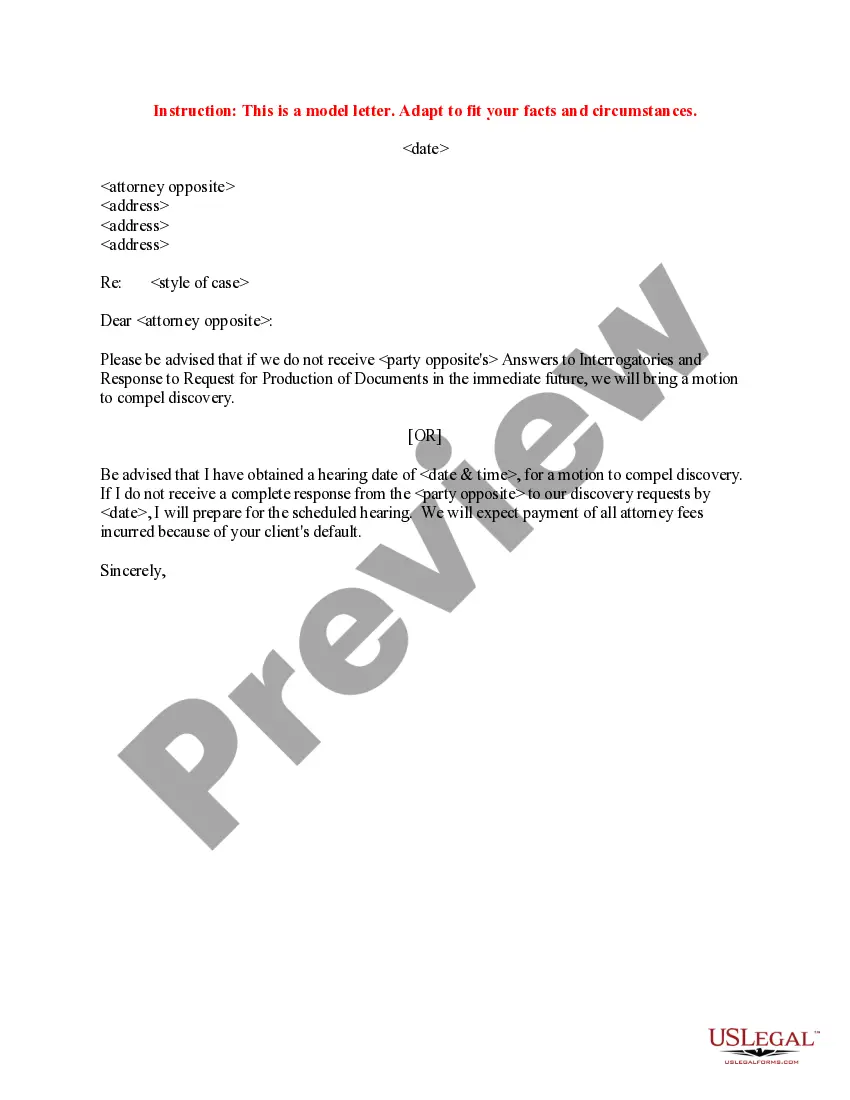
Description

Get your form ready online
Our built-in tools help you complete, sign, share, and store your documents in one place.
Make edits, fill in missing information, and update formatting in US Legal Forms—just like you would in MS Word.
Download a copy, print it, send it by email, or mail it via USPS—whatever works best for your next step.
Sign and collect signatures with our SignNow integration. Send to multiple recipients, set reminders, and more. Go Premium to unlock E-Sign.
If this form requires notarization, complete it online through a secure video call—no need to meet a notary in person or wait for an appointment.
We protect your documents and personal data by following strict security and privacy standards.

Make edits, fill in missing information, and update formatting in US Legal Forms—just like you would in MS Word.

Download a copy, print it, send it by email, or mail it via USPS—whatever works best for your next step.

Sign and collect signatures with our SignNow integration. Send to multiple recipients, set reminders, and more. Go Premium to unlock E-Sign.

If this form requires notarization, complete it online through a secure video call—no need to meet a notary in person or wait for an appointment.

We protect your documents and personal data by following strict security and privacy standards.
Looking for another form?
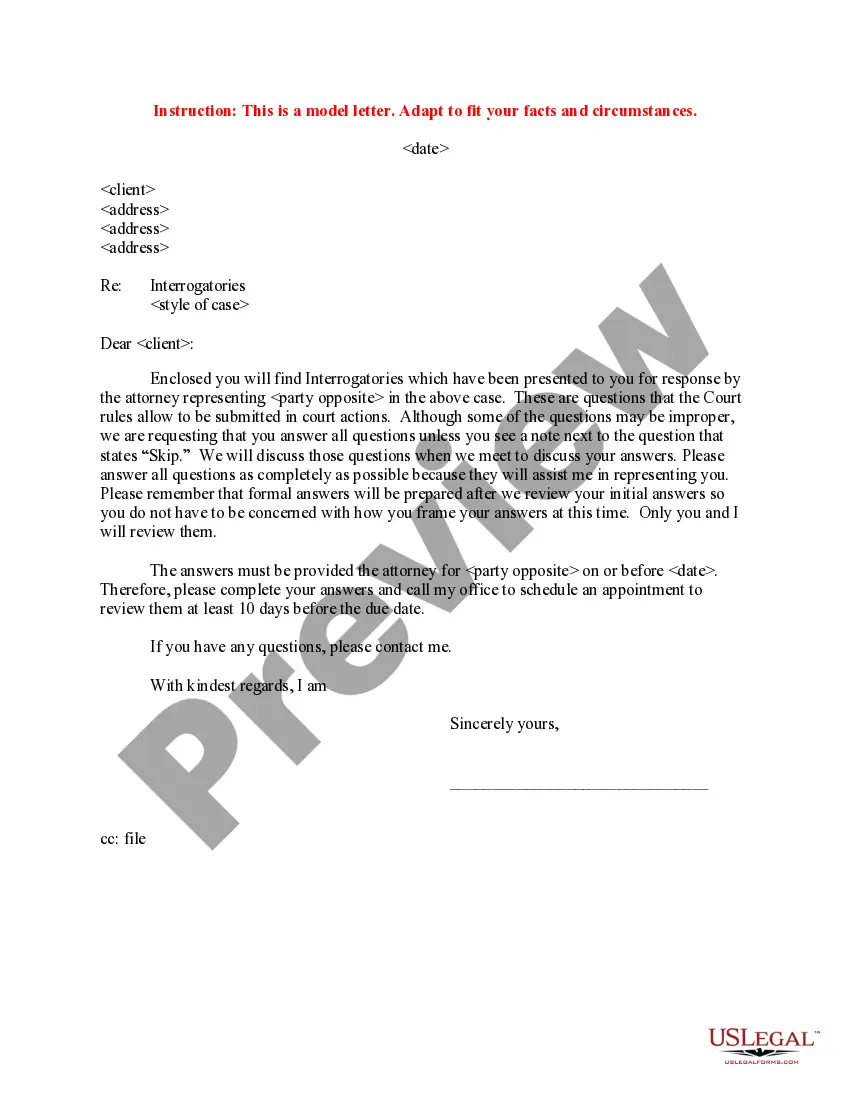
How to fill out Sample Letter To Client Instructing On Answering Discovery?
Managing legal paperwork and processes can be a lengthy addition to your entire day.
Discovery Letter Example With Attached Documents and similar items generally necessitate you to search for them and comprehend how to fill them out properly.
Therefore, whether you are handling financial, legal, or personal issues, having an exhaustive and user-friendly online directory of forms readily available will be beneficial.
US Legal Forms is the premier online platform for legal templates, providing over 85,000 state-specific forms along with various tools to help you complete your documents efficiently.
Is this your first time using US Legal Forms? Register and create an account in a few minutes to gain access to the form directory and Discovery Letter Example With Attached Documents. Then, follow the steps outlined below to fill out your form.
- Browse the array of pertinent documents accessible with just one click.
- US Legal Forms offers state- and county-specific templates available for download at all times.
- Protect your document management processes with a superior service that enables you to prepare any form in a few minutes without any additional or concealed fees.
- Simply Log In to your account, find Discovery Letter Example With Attached Documents, and obtain it instantly from the My documents section.
- You can also access previously saved forms.
Form popularity
FAQ
Examples of discovery requests include requests for medical records, financial statements, or emails relevant to the case. These documents help build a solid foundation for legal arguments and strategies. By using a discovery letter sample with attached documents, you can ensure your requests are comprehensive and organized, paving the way for a smoother legal process. Platforms like US Legal Forms offer invaluable resources to navigate this complex area efficiently.
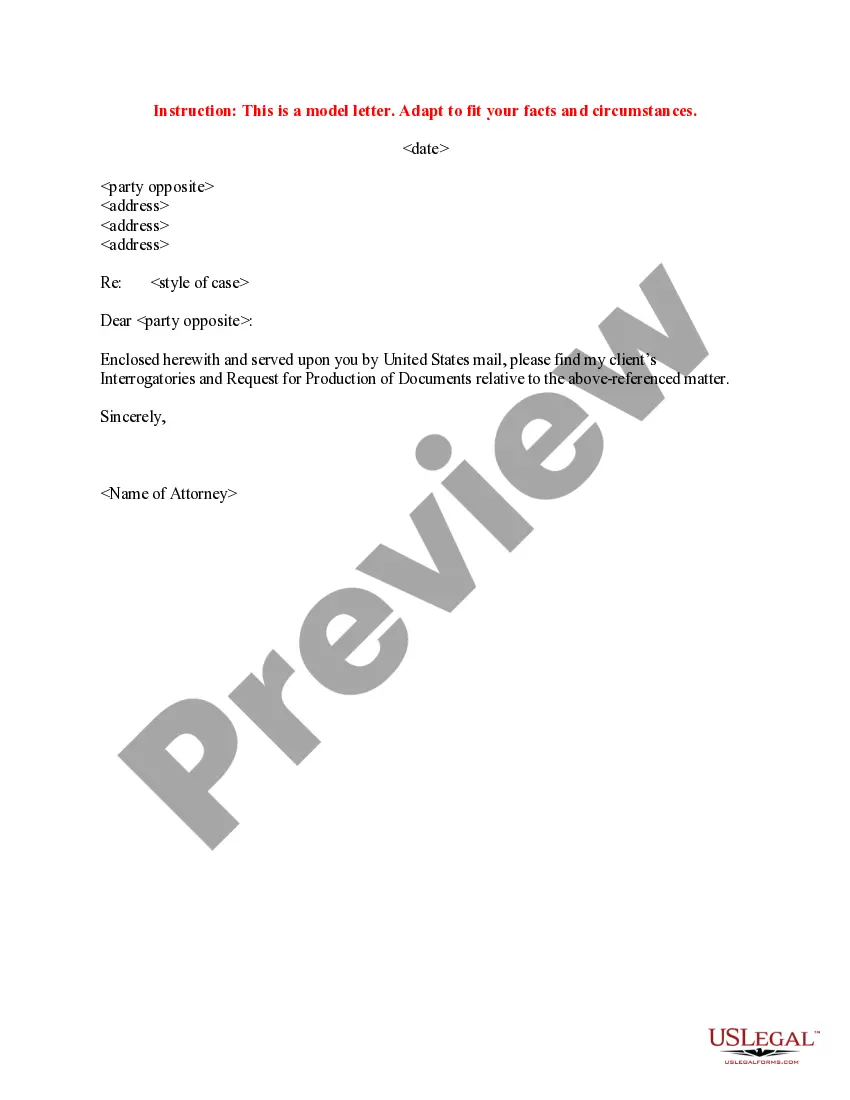
An example of a discovery letter sample with attached documents typically includes sections for the recipient's information, a clear list of requested documents, and a deadline for submission. This structured format helps both parties understand what is needed for the case. You can find effective examples on legal platforms like US Legal Forms, which simplify the process of preparing these letters.
A discovery letter sample with attached documents serves as a guide in legal proceedings. It outlines specific requests for information or evidence that one party sends to another. This template ensures clarity and organization when requesting documents relevant to a case. Utilizing a well-structured sample can streamline communication and improve compliance with requests.
Write out each fact you wish the other party to admit is true. When writing these facts, be as clear and concise as possible. Each request must be for a single fact; do not include multiple facts, compound questions, or subparts.
Follow these steps to begin discovery in justice court: Step 1: Prepare and exchange your initial disclosures. Within thirty days after the defendant files his answer, the plaintiff and defendant must exchange: ... Step 2: File the early case conference report. ... Step 3: Ask the court to allow more discovery if you want it.
Your answers to the interrogatories should usually be short, clear, and direct and should answer only the question that is being asked. This is not the time to set out your entire case or defense to the other side. Take the time to make sure your answers are correct and truthful.
Discovery may be carried out by directly asking a person questions (oral depositions), by sending a person written questions (interrogatories and depositions on written questions), and by requesting that the person provide documents (motions for production, subpoenas duces tecum).