Residuary Estate Meaning In Will
Description


Get your form ready online
Our built-in tools help you complete, sign, share, and store your documents in one place.
Make edits, fill in missing information, and update formatting in US Legal Forms—just like you would in MS Word.
Download a copy, print it, send it by email, or mail it via USPS—whatever works best for your next step.
Sign and collect signatures with our SignNow integration. Send to multiple recipients, set reminders, and more. Go Premium to unlock E-Sign.
If this form requires notarization, complete it online through a secure video call—no need to meet a notary in person or wait for an appointment.
We protect your documents and personal data by following strict security and privacy standards.

Make edits, fill in missing information, and update formatting in US Legal Forms—just like you would in MS Word.

Download a copy, print it, send it by email, or mail it via USPS—whatever works best for your next step.

Sign and collect signatures with our SignNow integration. Send to multiple recipients, set reminders, and more. Go Premium to unlock E-Sign.

If this form requires notarization, complete it online through a secure video call—no need to meet a notary in person or wait for an appointment.

We protect your documents and personal data by following strict security and privacy standards.
Looking for another form?


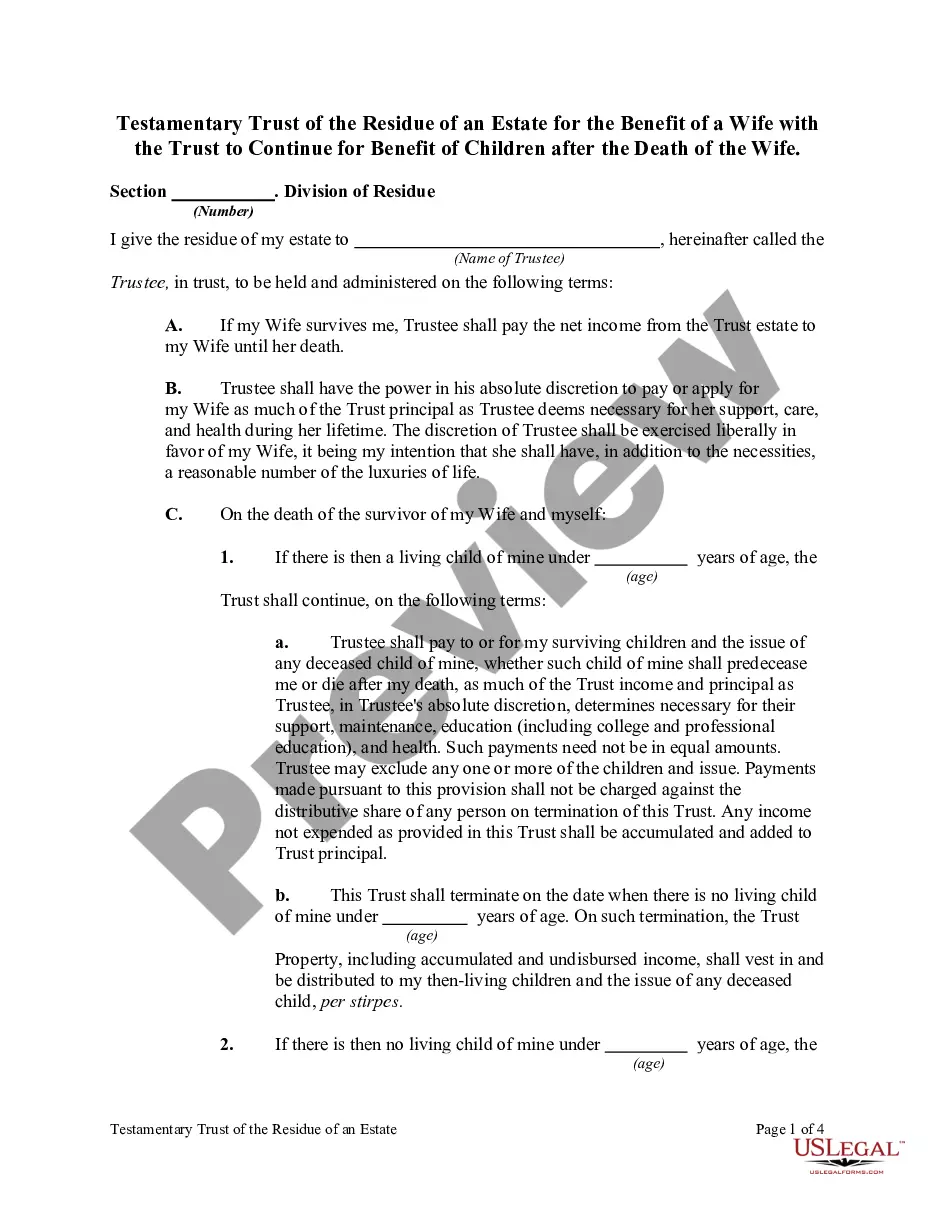
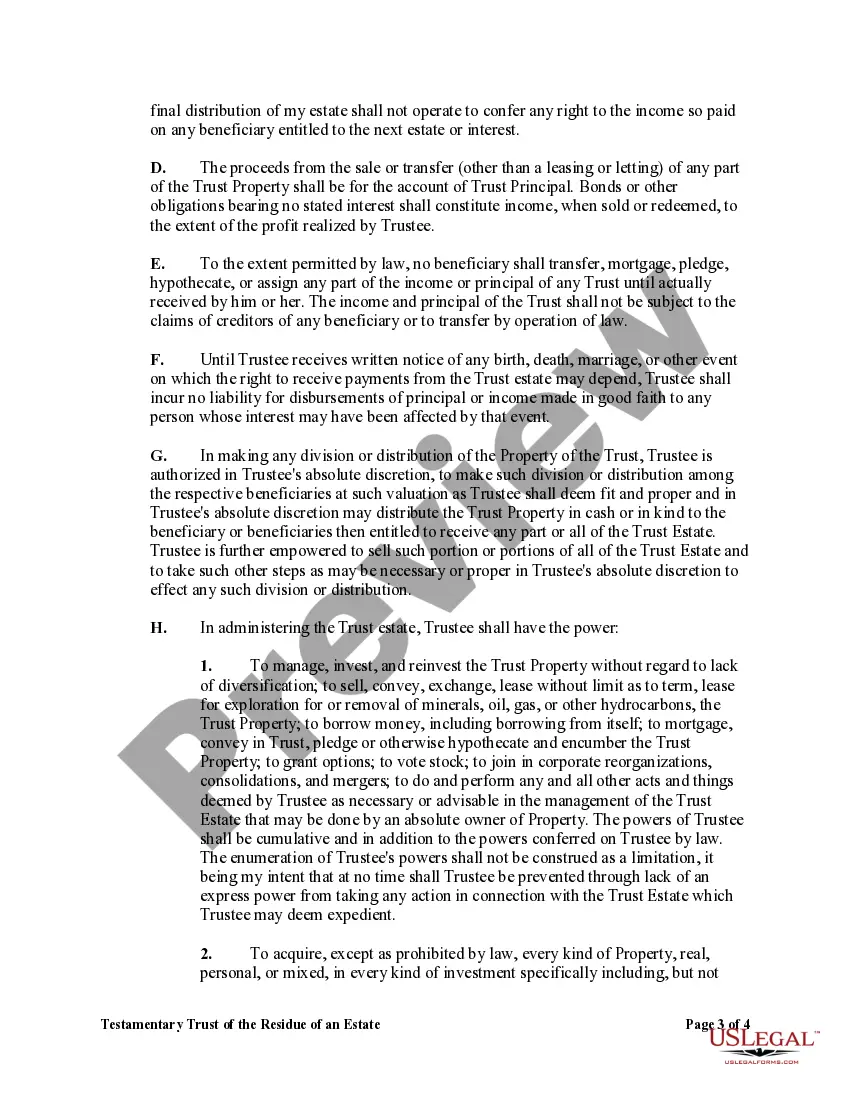
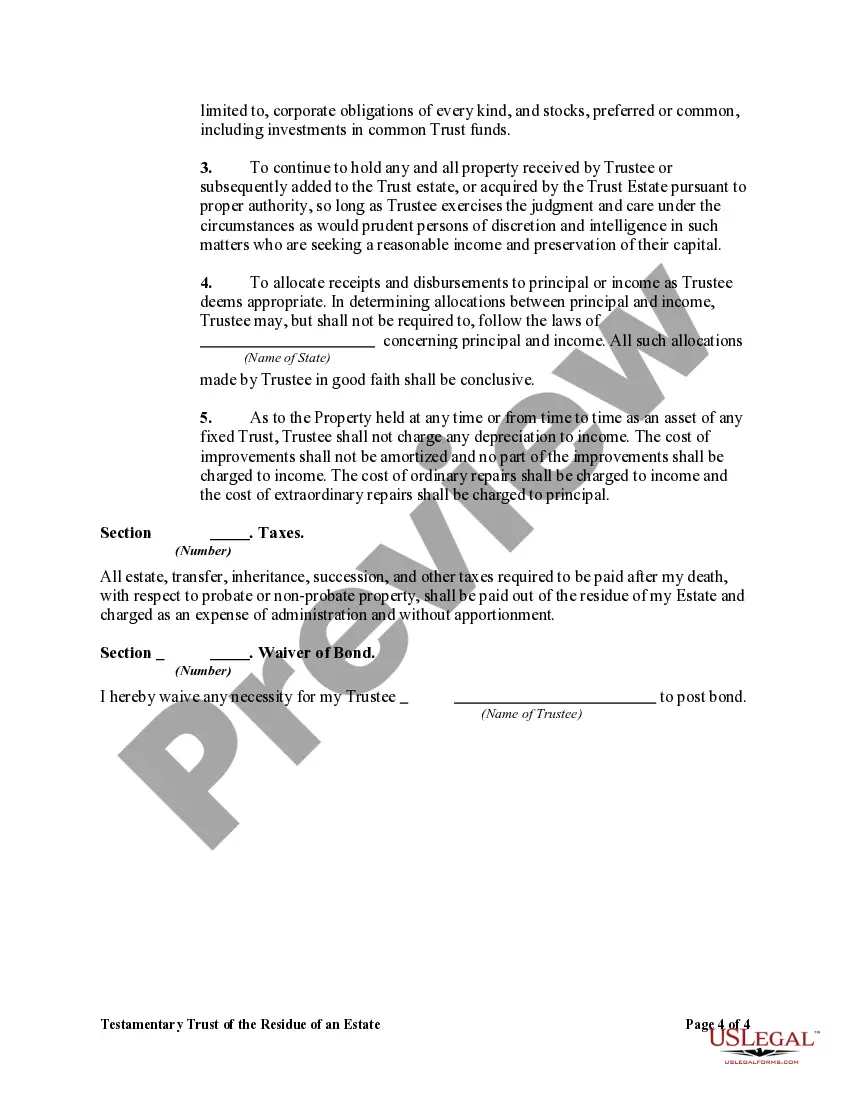
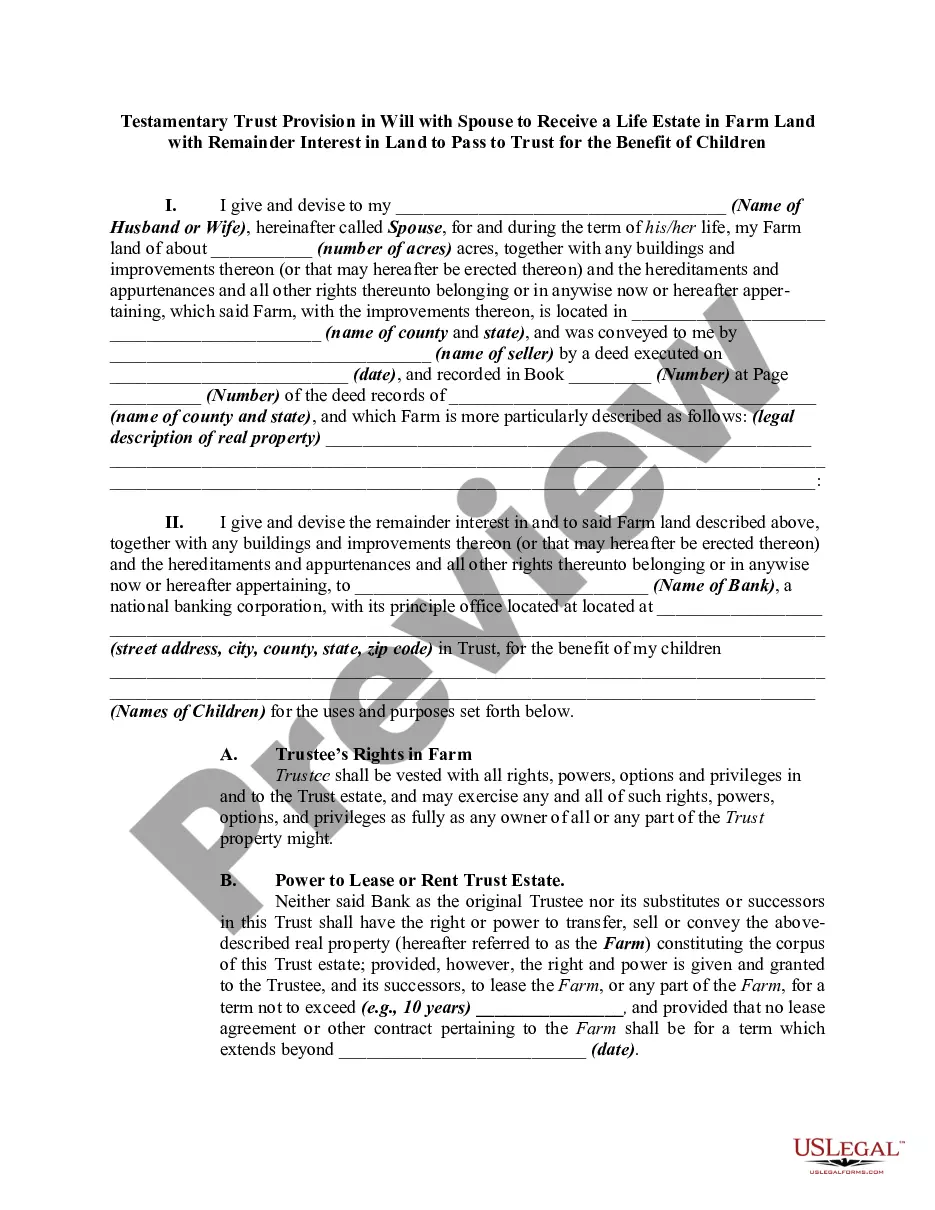
How to fill out Testamentary Trust Of The Residue Of An Estate For The Benefit Of A Wife With The Trust To Continue For Benefit Of Children After The Death Of The Wife?
The Residual Estate Definition In Will you observe on this page is a reusable legal framework crafted by experienced attorneys in compliance with federal and local statutes.
For over 25 years, US Legal Forms has supplied individuals, businesses, and legal experts with over 85,000 authenticated, state-specific documents for various business and personal circumstances. It’s the fastest, simplest, and most reliable method to acquire the paperwork you require, as the service ensures the utmost level of data protection and anti-malware security.
Subscribe to US Legal Forms to have verified legal templates for all of life’s situations readily available.
- Search for the document you require and examine it.
- Browse through the example you searched and preview it or review the form description to verify it meets your requirements. If it doesn't, utilize the search bar to find the correct one. Hit Buy Now when you have found the template you need.
- Register and Log In.
- Select the payment plan that fits you and create an account. Use PayPal or a credit card for a swift transaction. If you already possess an account, Log In and review your subscription to continue.
- Obtain the fillable template.
- Select the format you prefer for your Residual Estate Definition In Will (PDF, Word, RTF) and save the document on your device.
- Complete and sign the document.
- Print the template to finalize it manually. Alternatively, employ an online multi-functional PDF editor to quickly and accurately fill out and sign your form with a valid signature.
- Download your documents again.
- Re-use the same document anytime you need. Access the My documents tab in your profile to redownload any previously saved documents.
Form popularity
FAQ
A typical residuary clause says: I leave all the rest and residue of my property, both real and personal, of whatever nature and wherever situated, assets, including all real and personal property, tangible or intangible, to: _______________.
A residuary beneficiary is a beneficiary who has been named as the legal recipient of all assets of an estate that have not been specifically accounted for. This means they will inherit whatever is left from an estate after all debts, expenses and fees have been paid and all other inheritance gifts have been made.
There are two main ways to distribute the rest of the residue: Dividing up the residue by percentage or fractional share: If the residue is to go to more than one person or entity, the will may provide that it be divided by percentage or fractional share of the total assets. Each will have the same effect.
The clause will name the residuary beneficiary who is also sometimes known as a remainder beneficiary. For example, "I give my car to my niece, my rental property to my son, and the residue of my estate to my wife," or ".... I give the remainder of my estate, including any personal and real property, to my wife."
Example of residuary estate The residuary estate is the remaining assets after you've settled everything else in your will. So, when the executor has given away everything away or disposed of it for other purposes. In this case, it would be the house and its contents.