Residuary Estate For Life
Description

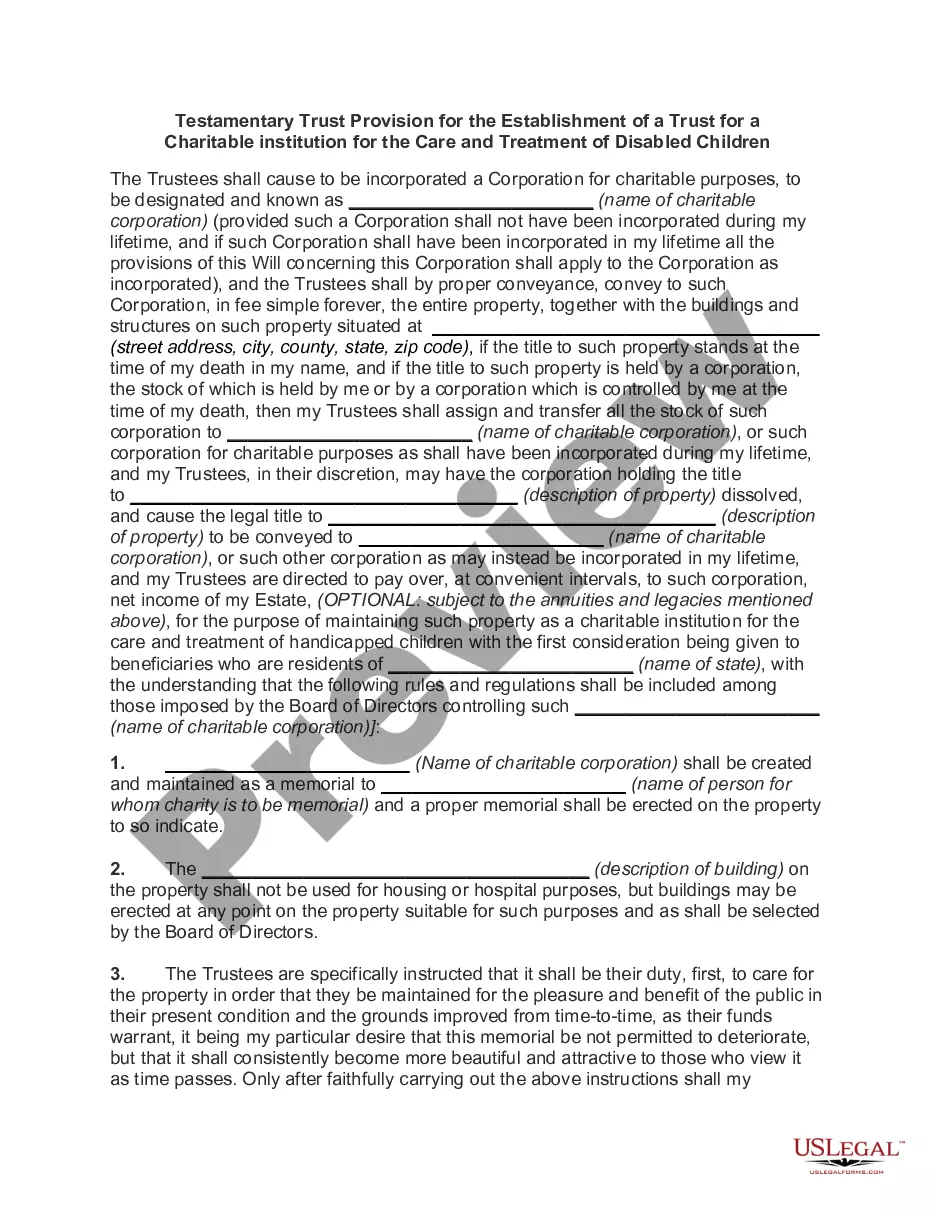
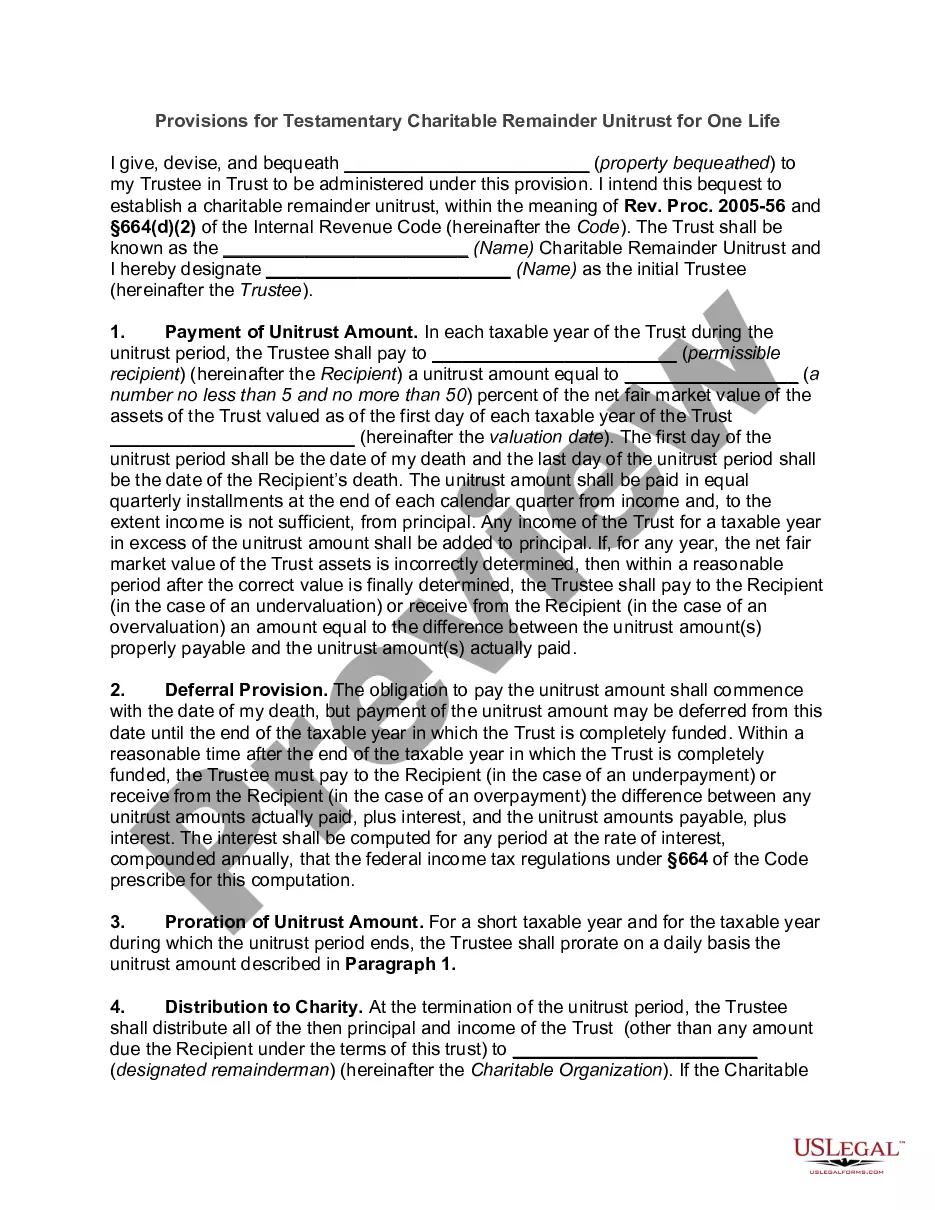
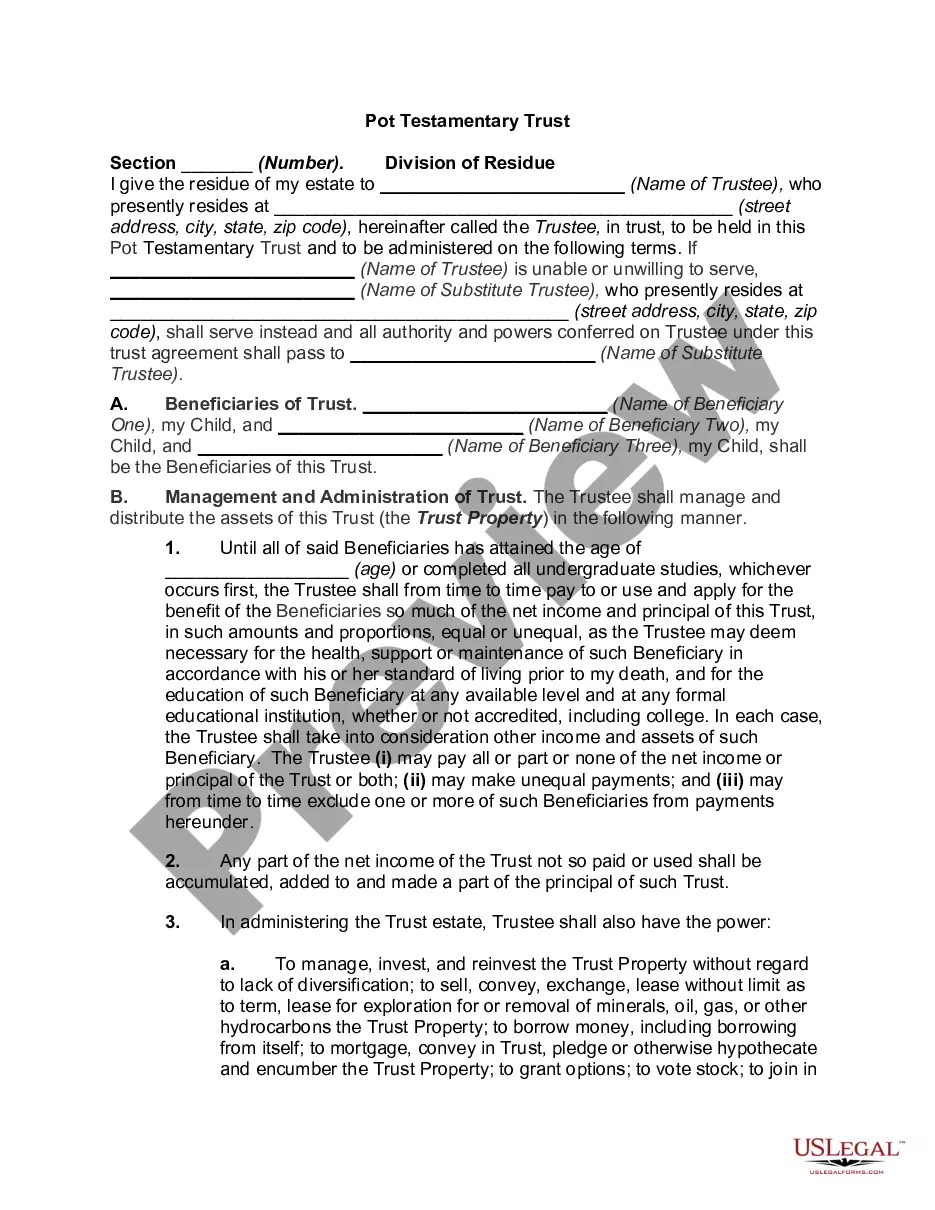
Get your form ready online
Our built-in tools help you complete, sign, share, and store your documents in one place.
Make edits, fill in missing information, and update formatting in US Legal Forms—just like you would in MS Word.
Download a copy, print it, send it by email, or mail it via USPS—whatever works best for your next step.
Sign and collect signatures with our SignNow integration. Send to multiple recipients, set reminders, and more. Go Premium to unlock E-Sign.
If this form requires notarization, complete it online through a secure video call—no need to meet a notary in person or wait for an appointment.
We protect your documents and personal data by following strict security and privacy standards.

Make edits, fill in missing information, and update formatting in US Legal Forms—just like you would in MS Word.

Download a copy, print it, send it by email, or mail it via USPS—whatever works best for your next step.

Sign and collect signatures with our SignNow integration. Send to multiple recipients, set reminders, and more. Go Premium to unlock E-Sign.

If this form requires notarization, complete it online through a secure video call—no need to meet a notary in person or wait for an appointment.

We protect your documents and personal data by following strict security and privacy standards.
Looking for another form?








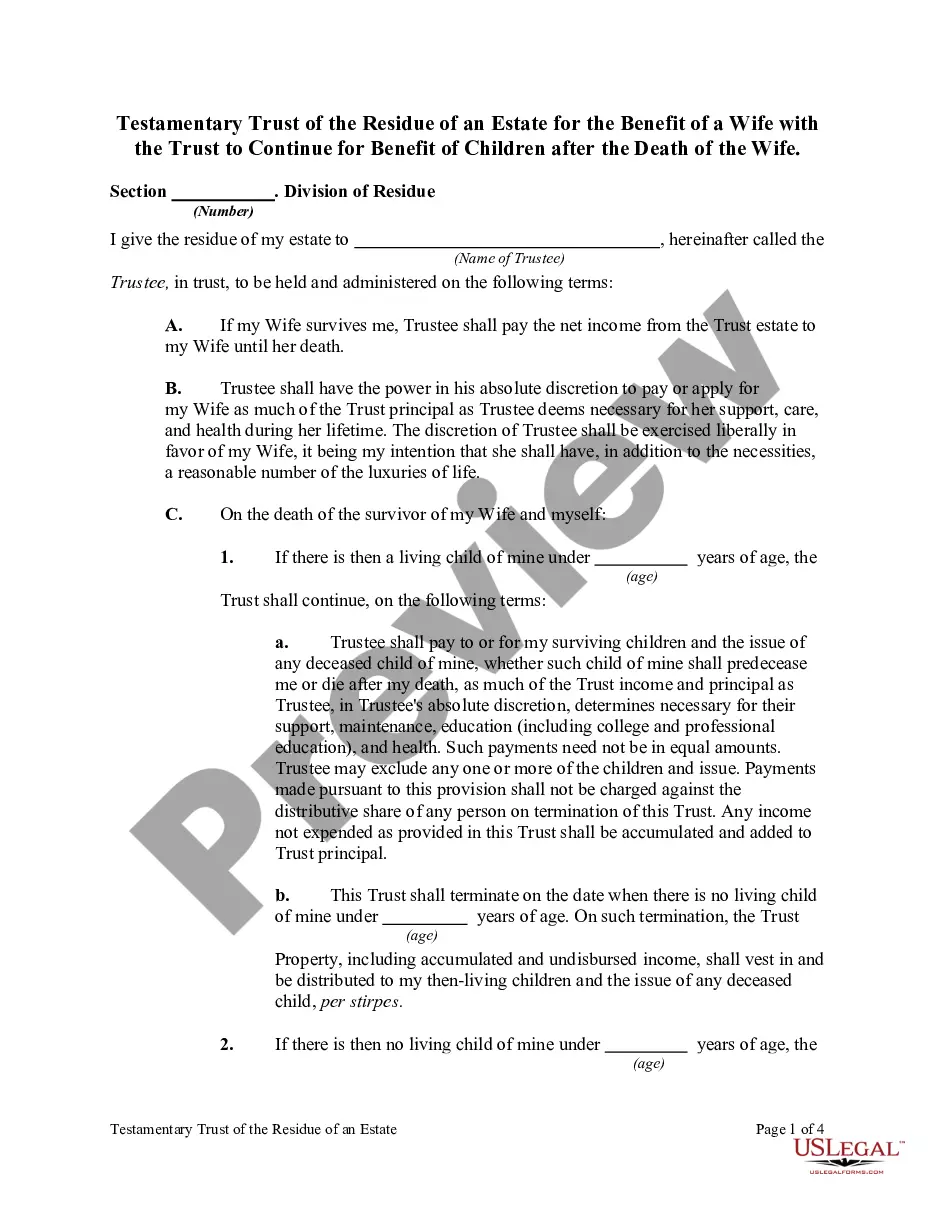
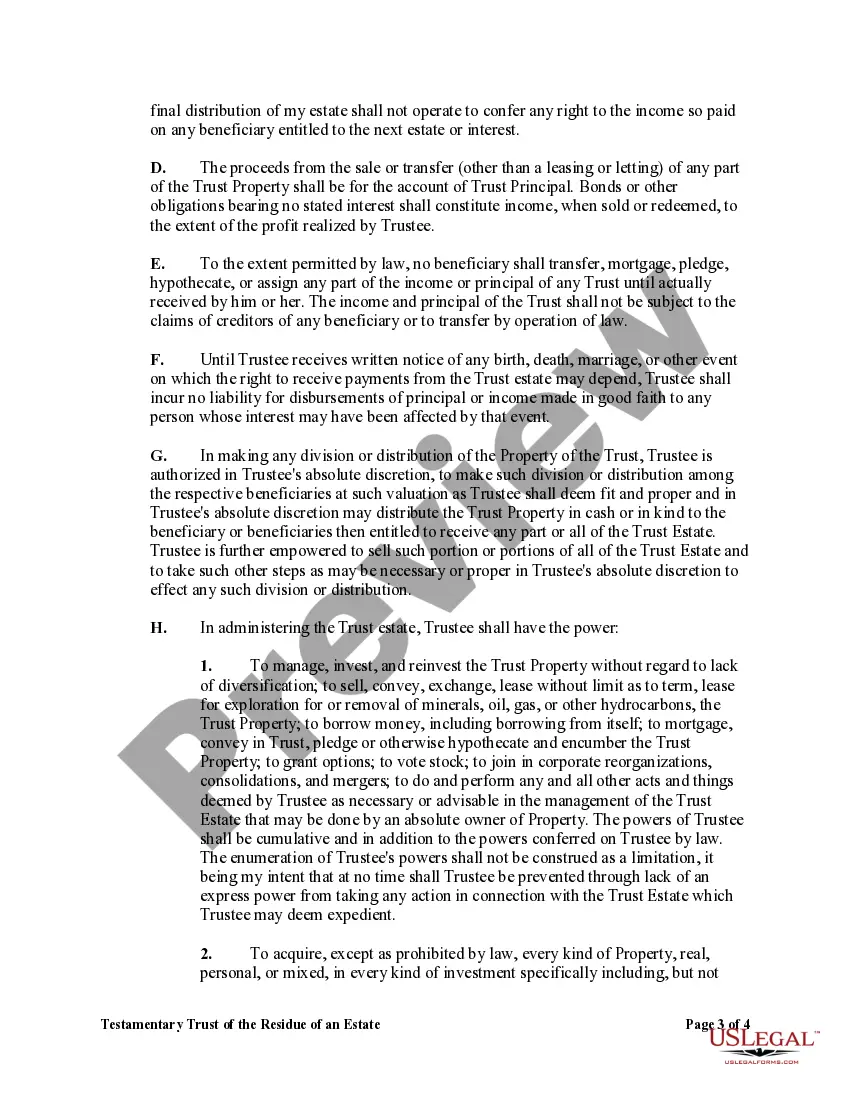
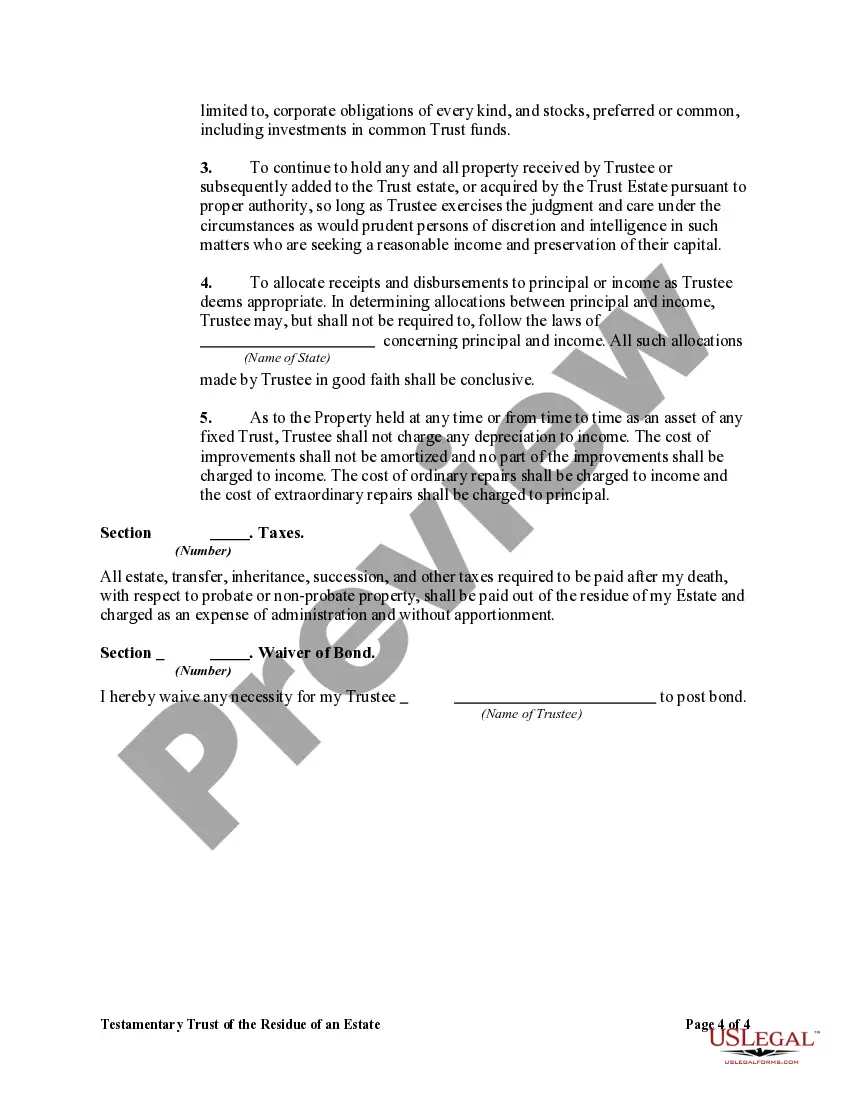
How to fill out Testamentary Trust Of The Residue Of An Estate For The Benefit Of A Wife With The Trust To Continue For Benefit Of Children After The Death Of The Wife?
It’s clear that you cannot become a legal expert in a day, nor can you quickly learn how to draft a Residuary Estate For Life without a specialized education.
Crafting legal documents is a lengthy process that necessitates specific knowledge and abilities. So why not entrust the formulation of the Residuary Estate For Life to the professionals.
With US Legal Forms, one of the most extensive collections of legal templates, you can find everything from court documents to templates for internal communication.
You can access your documents again from the My documents section at any time. If you are an existing customer, you can simply Log In, and find and download the template from the same section.
Regardless of the reason for your forms—whether financial and legal, or personal—our website has you covered. Give US Legal Forms a try now!
- Identify the document you require by utilizing the search bar at the top of the page.
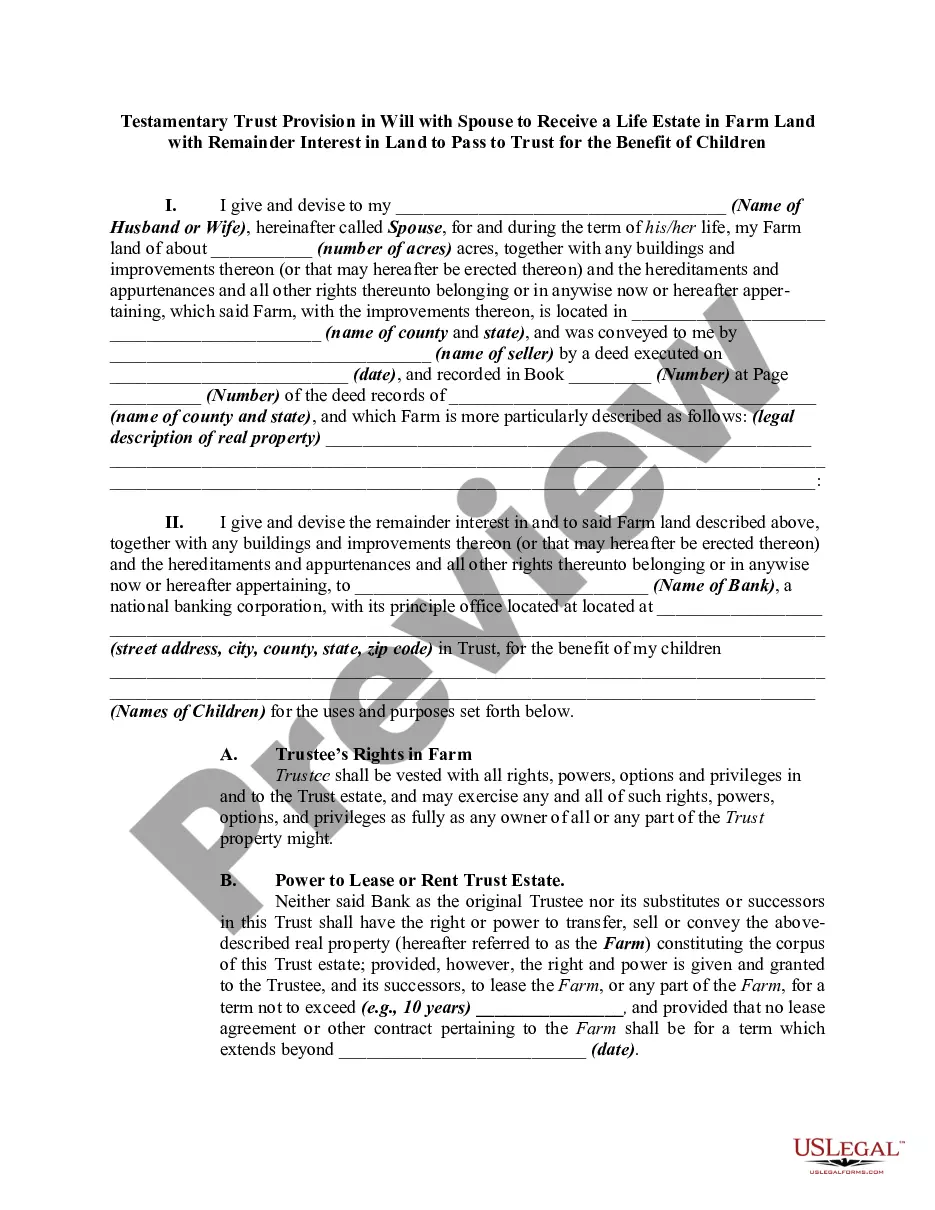
- Preview it (if this option is available) and review the accompanying description to see if Residuary Estate For Life is what you are looking for.
- If you need a different form, start your search again.
- Create a free account and select a subscription plan to purchase the template.
- Click Buy now. Once the payment is processed, you can download the Residuary Estate For Life, complete it, print it, and send it or forward it by mail to the relevant parties or organizations.
Form popularity
FAQ
A residuary estate for life refers to the remaining assets of a deceased person's estate after all debts, taxes, and specific bequests have been settled. For instance, if a person leaves their home to a family member and designates that the remainder of their financial assets go to a charity, the financial assets constitute the residuary estate. This estate can provide ongoing benefits to the designated beneficiaries or organizations for their lifetime, depending on the terms set forth in the will. Understanding how a residuary estate for life functions is crucial for effective estate planning, and platforms like US Legal Forms can help you create and manage these important documents.
The 3 year rule for estate generally refers to the timeframe within which certain claims against an estate must be filed. In various jurisdictions, this rule can affect how beneficiaries receive their share, especially concerning taxes or debts. It’s important to be aware of your state's specific regulations, as they can impact the distribution of your residuary estate for life. For assistance, platforms like US Legal Forms offer comprehensive guides to help you understand these regulations.
A residuary estate refers to the portion of an estate that remains after all debts, expenses, and specific bequests are settled. Essentially, it encompasses everything that has not been explicitly given to someone in a will. This part of the estate is crucial as it typically goes to the primary beneficiaries designated in your will. Understanding how a residuary estate for life functions can help ensure your assets are distributed according to your wishes.
Yes, an estate can be settled without probate in Alabama under certain conditions. For instance, if the total value of the estate is below a specific threshold, your heirs may directly inherit the property without going through probate. Additionally, using a residuary estate for life can simplify the transfer process. For tailored guidance, consider utilizing platforms like US Legal Forms, which provide resources to help navigate these legal options.
For example, a testator could say: ?I give all of the residue of my estate to my wife if she survives me. If my wife does not survive me, I give all of the residue of my estate to my son.? The vast majority of a decedent's assets often pass ing to the terms of a residuary clause.
A typical residuary clause says: I leave all the rest and residue of my property, both real and personal, of whatever nature and wherever situated, assets, including all real and personal property, tangible or intangible, to: _______________.
In probate law, the word ?residuary? essentially means ?everything else.? Most estate plans, including both Wills and trusts, include awards of specific property (such as the family house, heirlooms, or pets). Anything not included in these ?specific devices? falls into the residuary.
If you have a will, you should give it to the executor. The executor will distribute your residuary estate ing to your wishes. If there is no will, then an administrator will be appointed by law to make decisions about how the estate should be distributed.
EXAMPLE: In her will, Sara, a widow, leaves many different items to many different beneficiaries: books to her daughter, jewelry to a friend, a car to her nephew and so on. She doesn't name alternate beneficiaries for these specific bequests, but she names her daughter as residuary beneficiary.