Non Denominational Church Rock
Description
Get your form ready online
Our built-in tools help you complete, sign, share, and store your documents in one place.
Make edits, fill in missing information, and update formatting in US Legal Forms—just like you would in MS Word.
Download a copy, print it, send it by email, or mail it via USPS—whatever works best for your next step.
Sign and collect signatures with our SignNow integration. Send to multiple recipients, set reminders, and more. Go Premium to unlock E-Sign.
If this form requires notarization, complete it online through a secure video call—no need to meet a notary in person or wait for an appointment.
We protect your documents and personal data by following strict security and privacy standards.

Make edits, fill in missing information, and update formatting in US Legal Forms—just like you would in MS Word.

Download a copy, print it, send it by email, or mail it via USPS—whatever works best for your next step.

Sign and collect signatures with our SignNow integration. Send to multiple recipients, set reminders, and more. Go Premium to unlock E-Sign.

If this form requires notarization, complete it online through a secure video call—no need to meet a notary in person or wait for an appointment.

We protect your documents and personal data by following strict security and privacy standards.
Looking for another form?
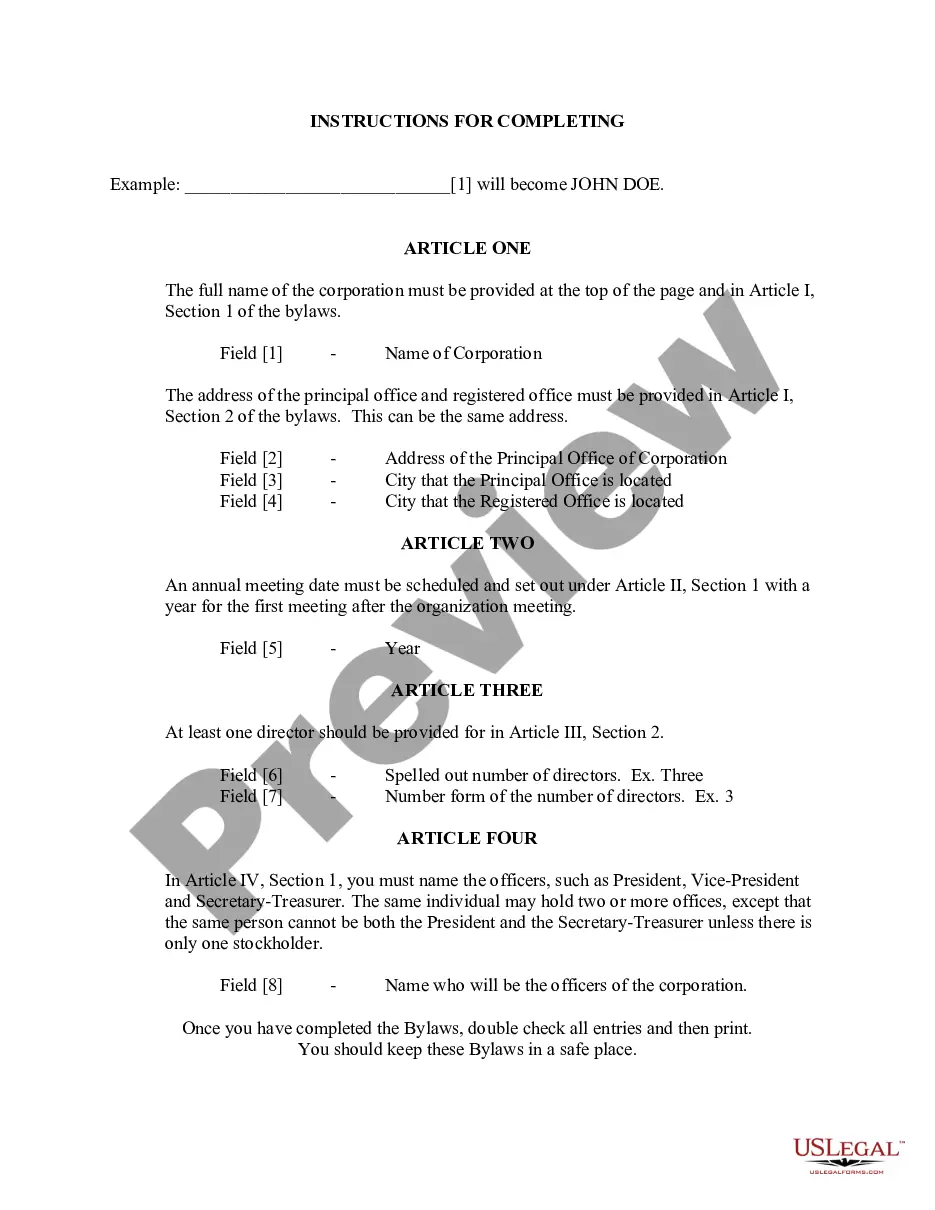
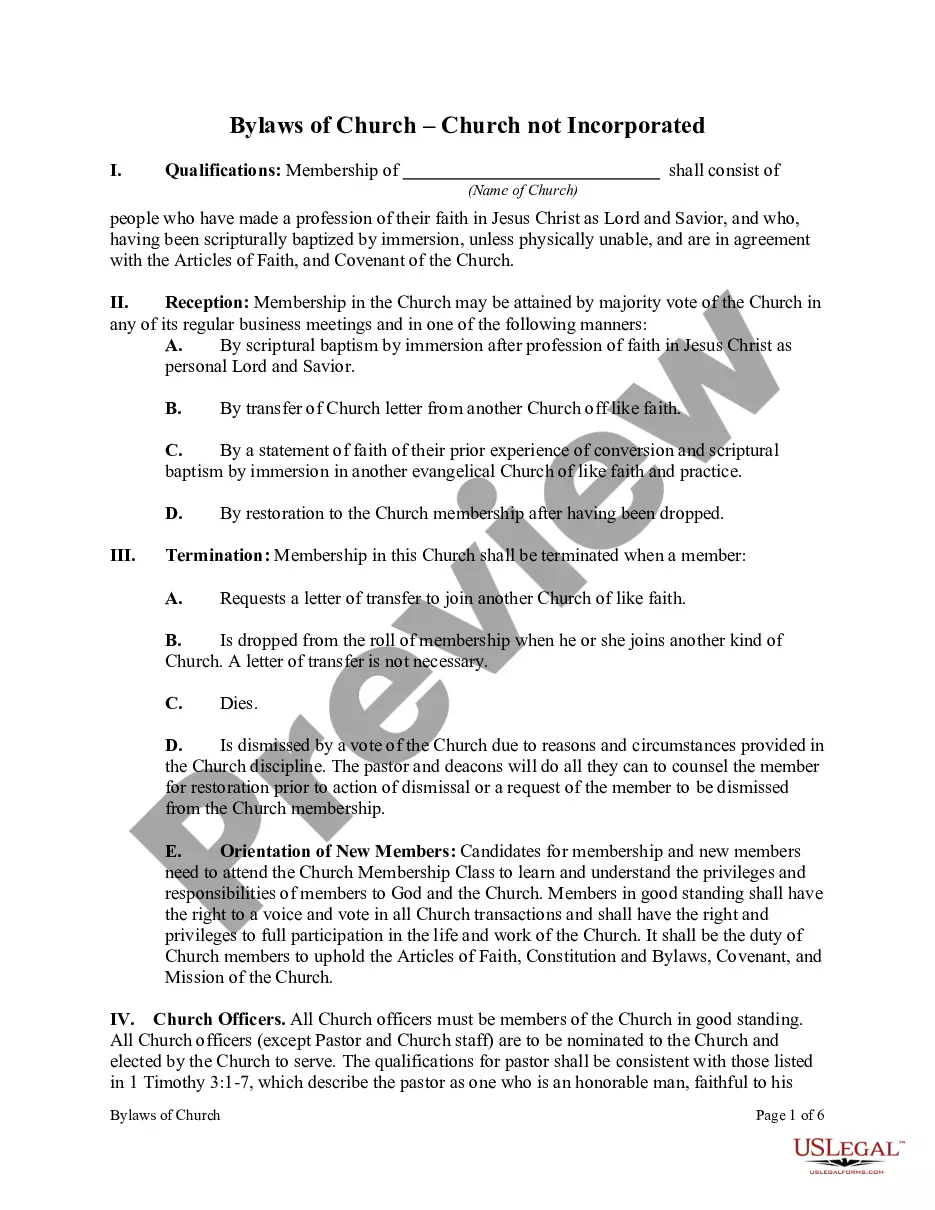
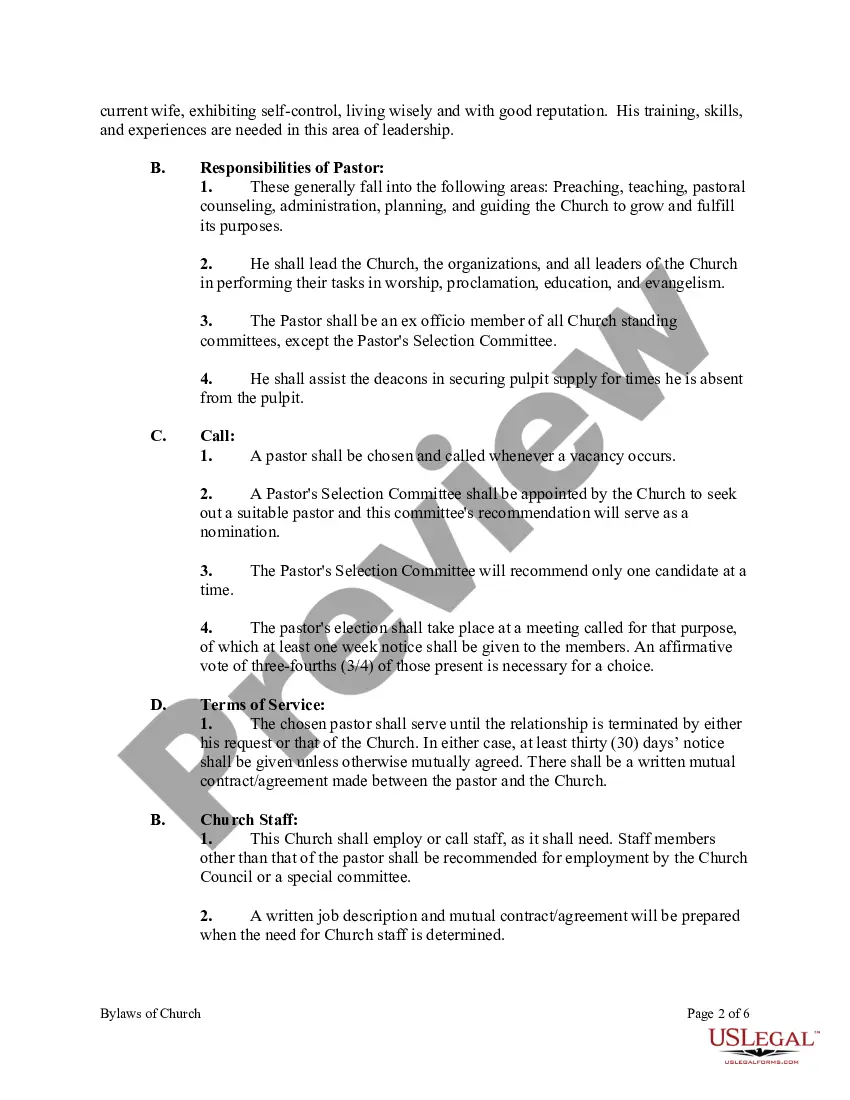
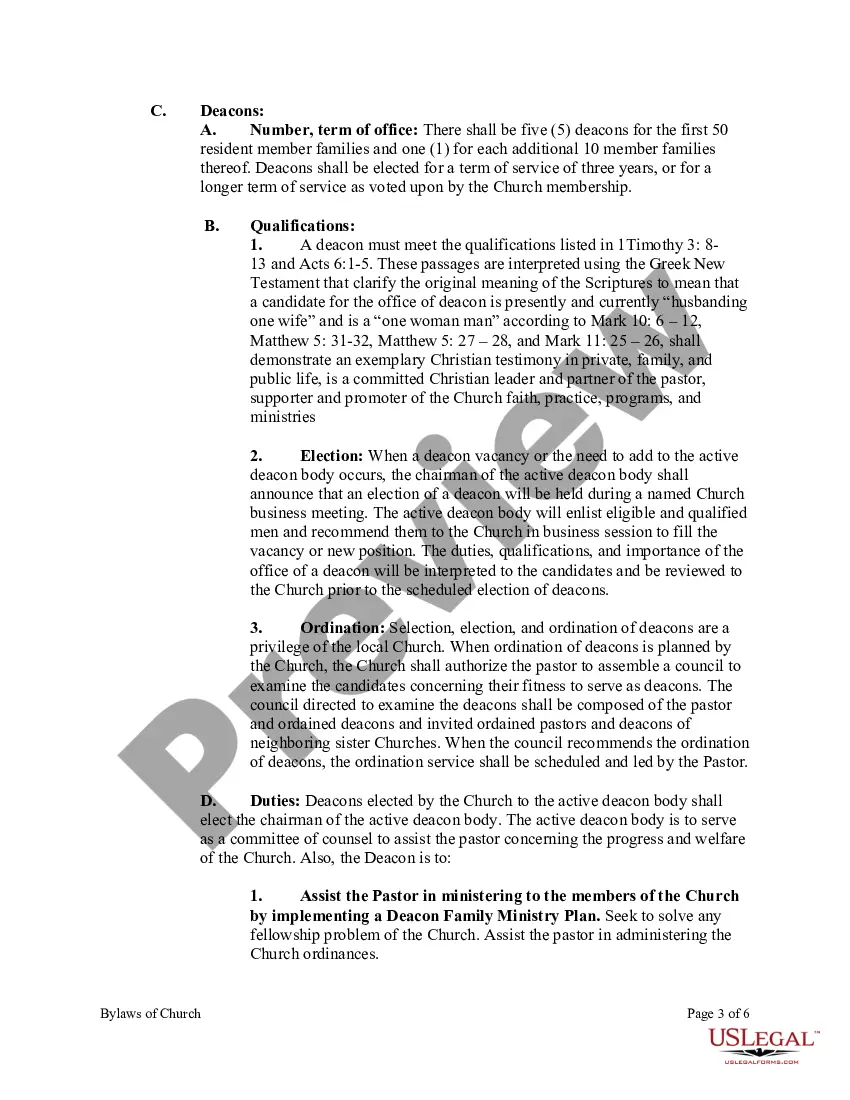
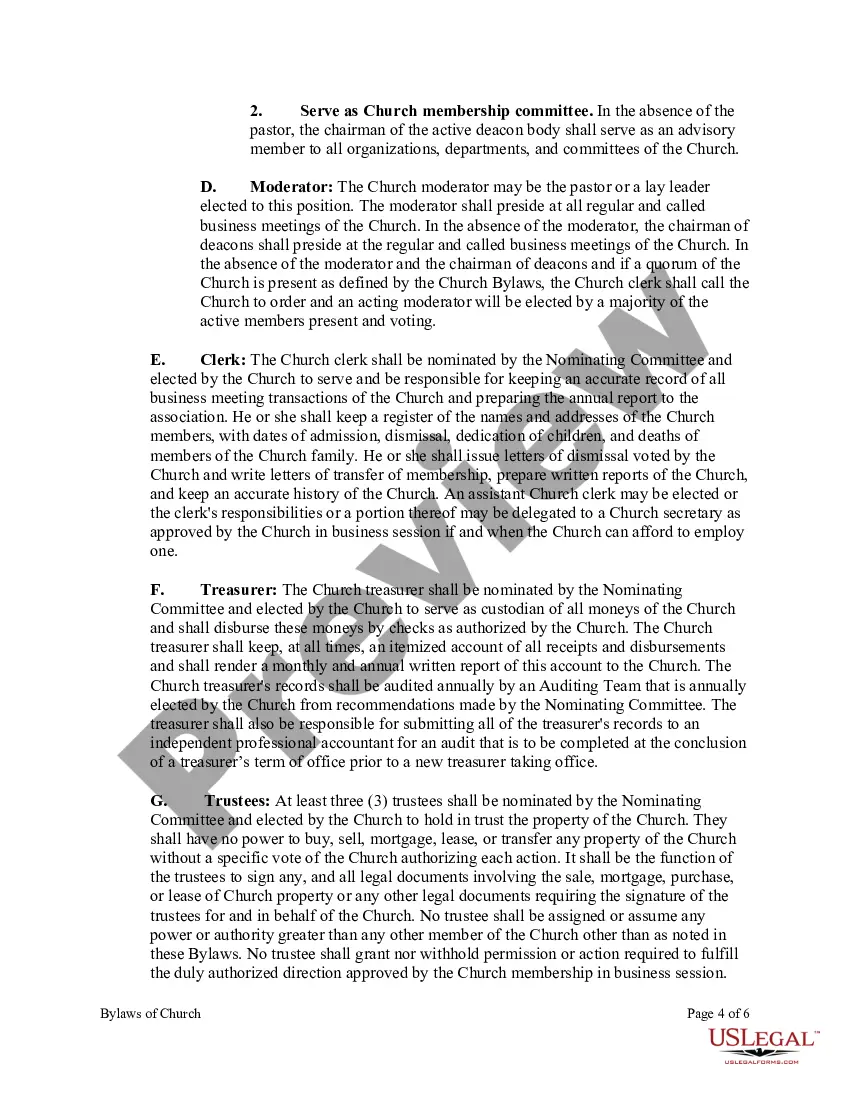
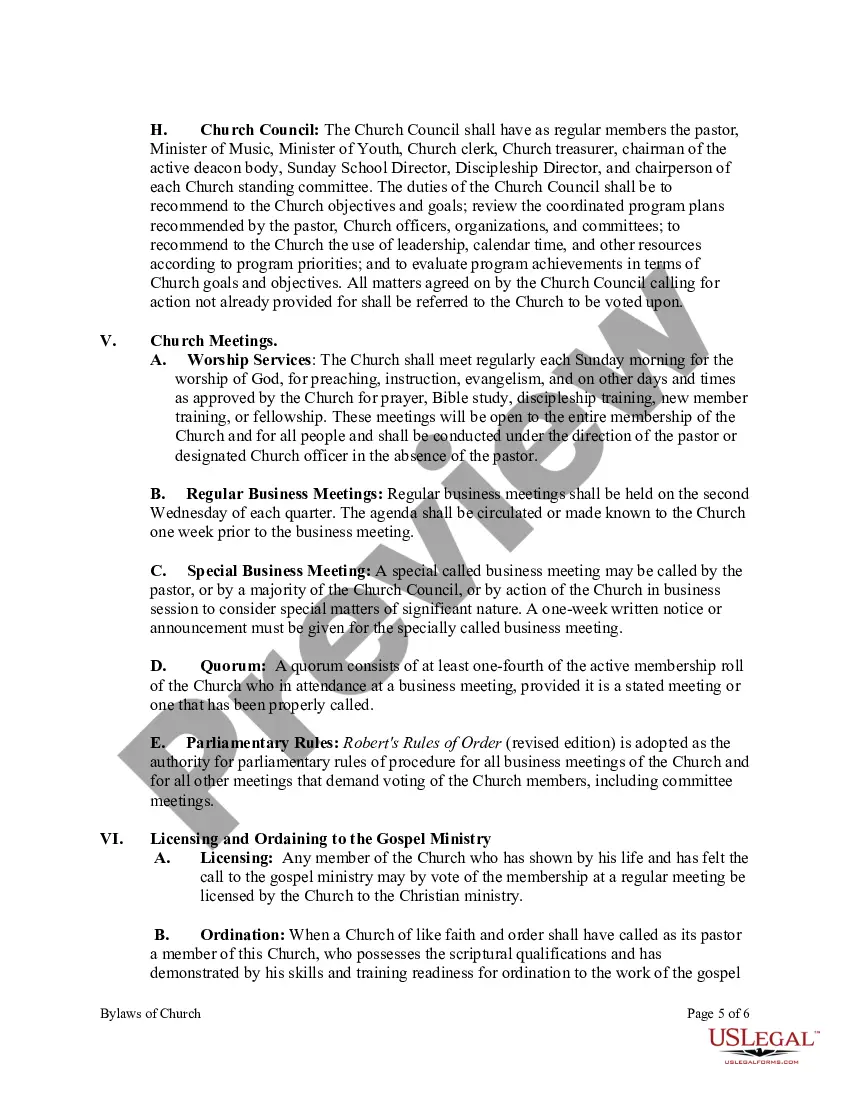
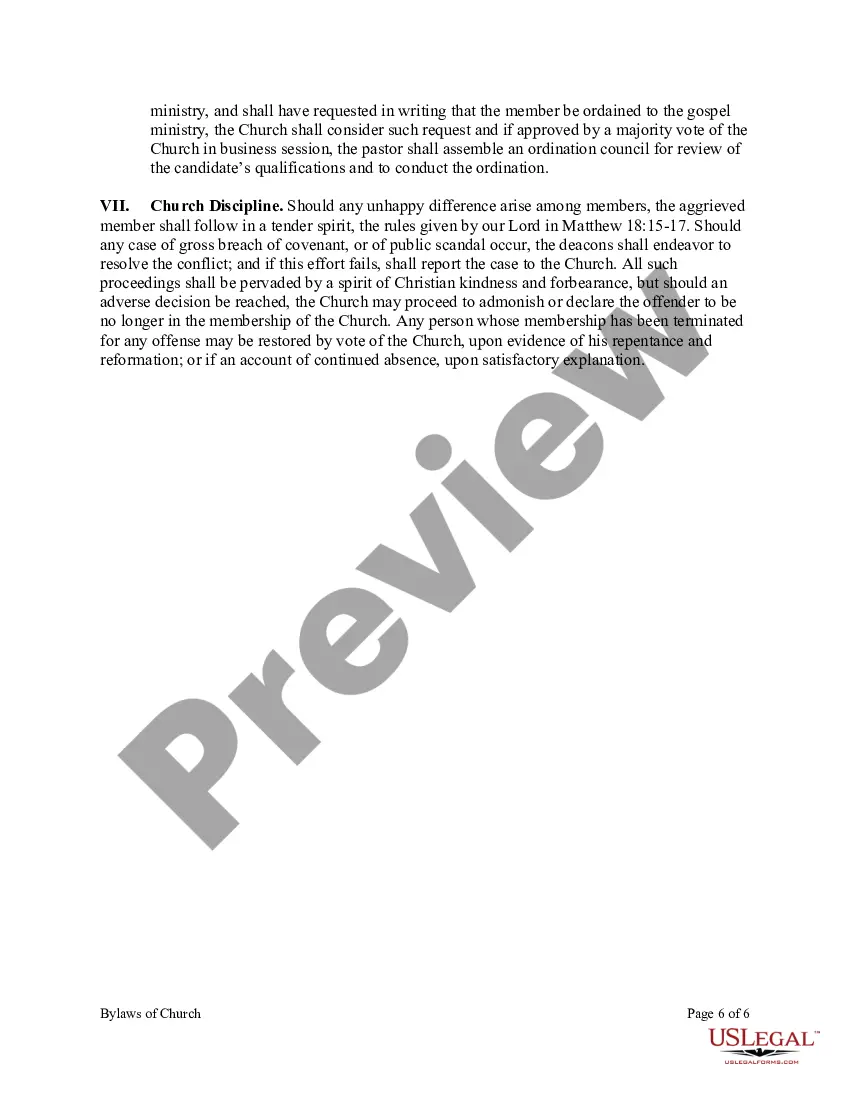
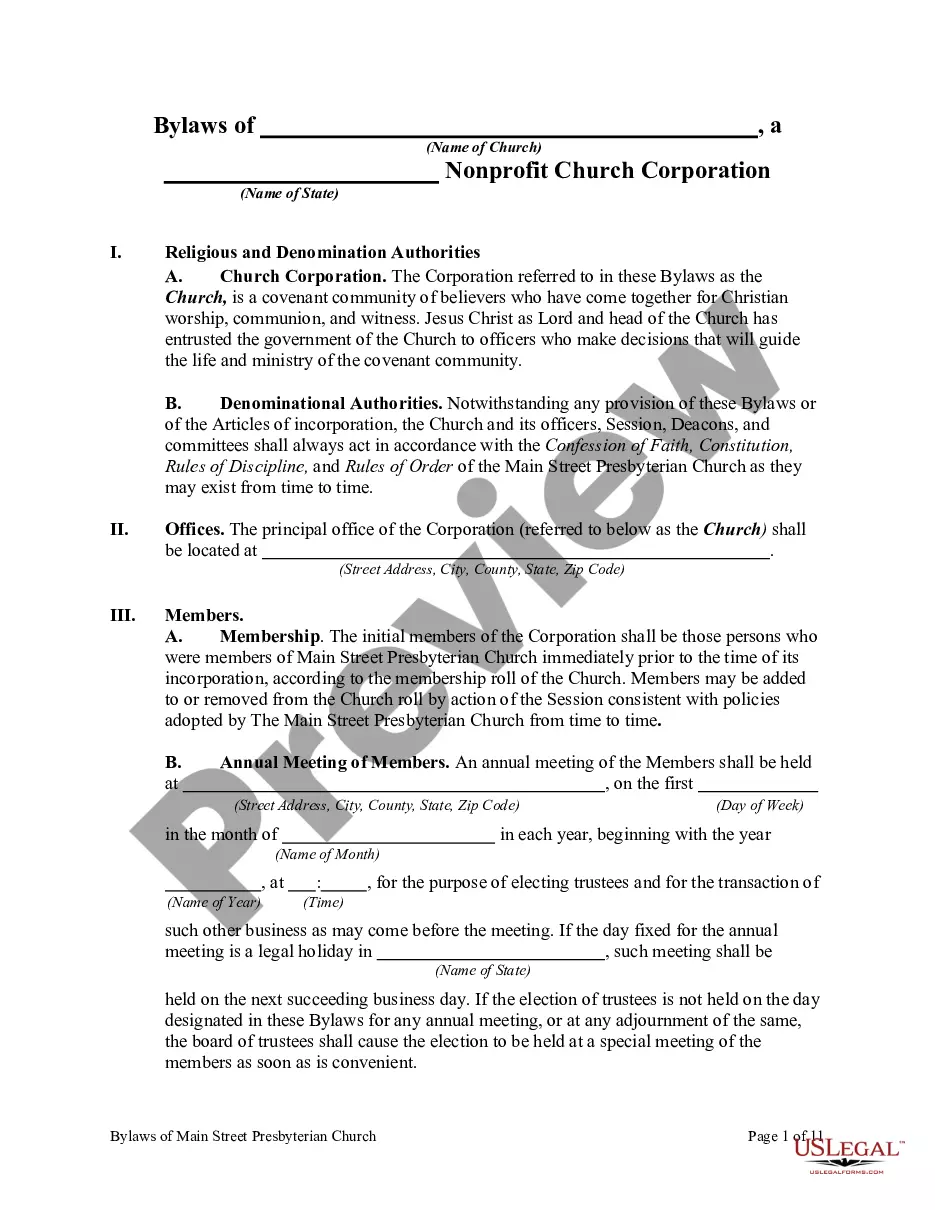
How to fill out Bylaws Of Church - Church Not Incorporated?
- Log in to your US Legal Forms account if you are a returning user, ensuring your subscription is still valid.
- For new users, begin by checking the preview and description of the required form to confirm it fits your jurisdiction needs.
- If adjustments are necessary, utilize the search function to find the correct form that meets your specifications.
- Proceed to purchase the chosen document by clicking the 'Buy Now' button and selecting your preferred subscription plan.
- Complete your transaction by entering your payment details or utilizing a PayPal account.
- Download the completed form to your device, making it easily accessible in your profile under 'My Forms' whenever you need it.
Accessing US Legal Forms is straightforward, allowing users to confidently navigate legal frameworks. This service provides unmatched support, ensuring that your documents are both accurate and legally binding.
Don’t hesitate—take the first step in securing your legal needs today! Visit US Legal Forms and start accessing necessary legal resources now.
Form popularity
FAQ
Hillsong Church began as part of the Australian Assemblies of God, which is a Pentecostal denomination. However, it has evolved into a global movement that aligns closely with the spirit of non-denominational church rock communities. While Hillsong has its roots in a specific denomination, it promotes a more contemporary and flexible approach to worship. This evolution highlights how many believers find common ground beyond traditional denominational boundaries.
The foundational belief regarding the church being built on Petros, meaning 'rock' in Greek, is pivotal to many Christian traditions. This interpretation aligns with the teachings of Jesus, where Peter is often seen as the rock upon which the church is built. In the context of a non-denominational church rock, this signifies a commitment to Christ as the ultimate cornerstone. Understanding this foundation helps believers appreciate the significance of their faith and the community they belong to.
denominational church embraces core Christian beliefs while often avoiding specific denominational doctrines. These churches focus on the teachings of the Bible and the importance of a personal relationship with Jesus Christ. Nondenominational church rock communities typically encourage worship styles that are more informal and relatable to the modern audience. This inclusive approach draws people from different backgrounds who seek a genuine and engaging faith community.
The Rock Church emphasizes a personal relationship with Jesus Christ and the importance of community among believers. This belief system resonates with the core principles of many non-denominational church rock congregations, focusing on love, acceptance, and service. They promote active involvement in outreach and ministry, urging members to express their faith actively. By building a faith-centered community, the Rock Church fosters spiritual growth and unity among its members.
No, non-denominational churches are not simply Baptist churches under a different name. While some non-denominational church rock congregations may share similar values with Baptists, they encompass a broader range of beliefs and practices. Non-denominational churches often prioritize the Bible as the sole authority and encourage diverse expressions of faith. This openness allows individuals from various backgrounds to come together, making these churches unique in their congregational composition.
Yes, Church on the Rock does embrace the practice of speaking in tongues, as it is viewed as a spiritual gift within the context of worship. This practice aligns with the beliefs of many non-denominational church rock communities, where personal experiences of faith are highly valued. Speaking in tongues is seen as a way to communicate more deeply with God, enhancing both individual and communal worship. Visitors to the church may witness this practice during services, revealing the vibrant expression of faith found in non-denominational settings.
Acquiring a 501c3 status for your non-denominational church rock can be straightforward or challenging, depending on how well you prepare your application. The process requires attention to detail, accurate financial reporting, and complete documentation. While some organizations may navigate this process easily, others might benefit from professional assistance. USLegalForms can provide essential resources to help demystify this journey and enhance your chances of success.
Non-denominational churches, including those associated with the non-denominational church rock movement, typically operate independently, without a centralized governing body. However, many establish their own organizational structure to manage various church activities. This independence allows these churches to focus on their unique missions and community goals. Nevertheless, some non-denominational churches may choose to affiliate with networks or organizations for support and resources.
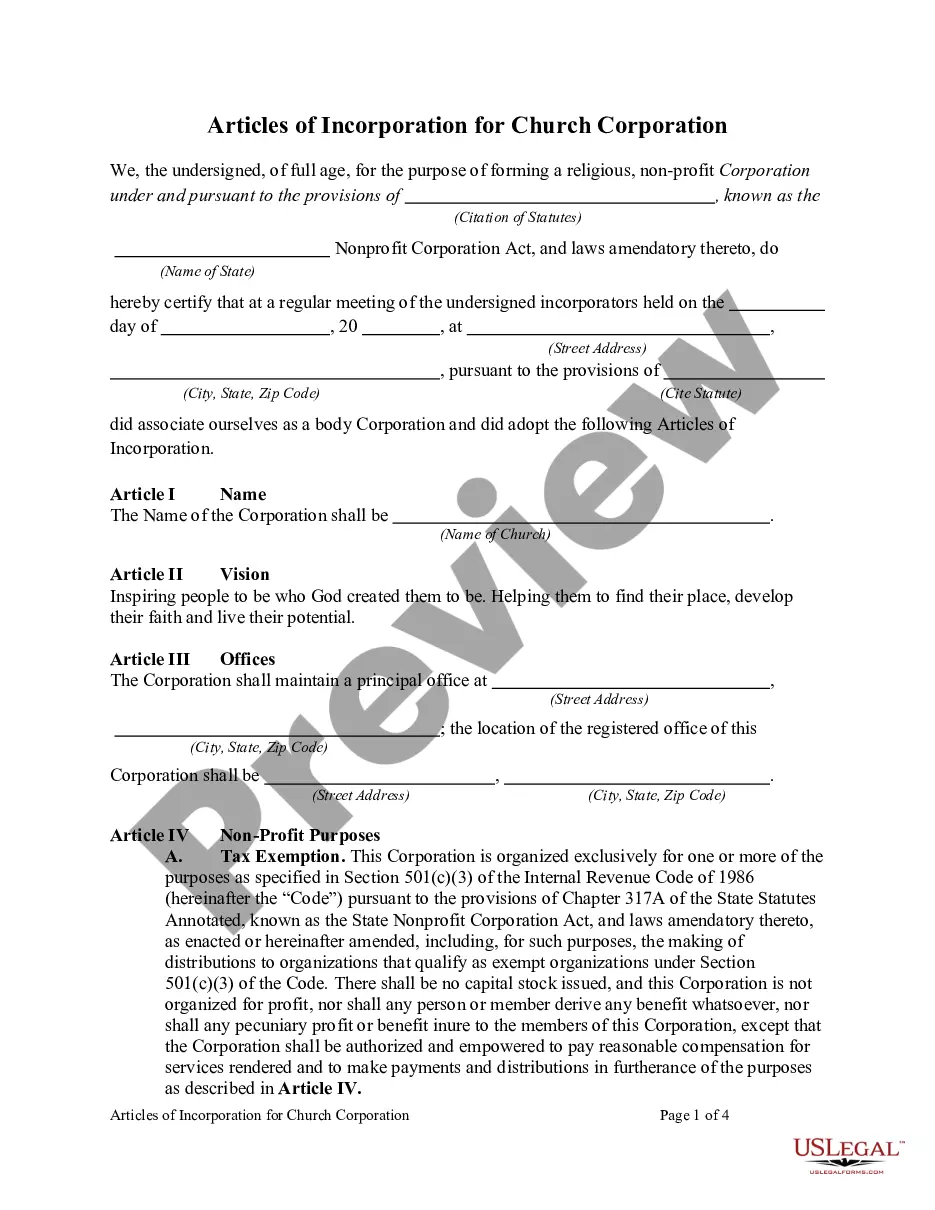
Filing for a 501c3 status for your non-denominational church rock involves several steps. First, you need to gather your church's information, including its mission, financials, and operational plans. Next, complete IRS Form 1023, ensuring to provide thorough responses to all questions. Consider using USLegalForms to help you navigate the filing process effectively, as they offer resources that can streamline your application.
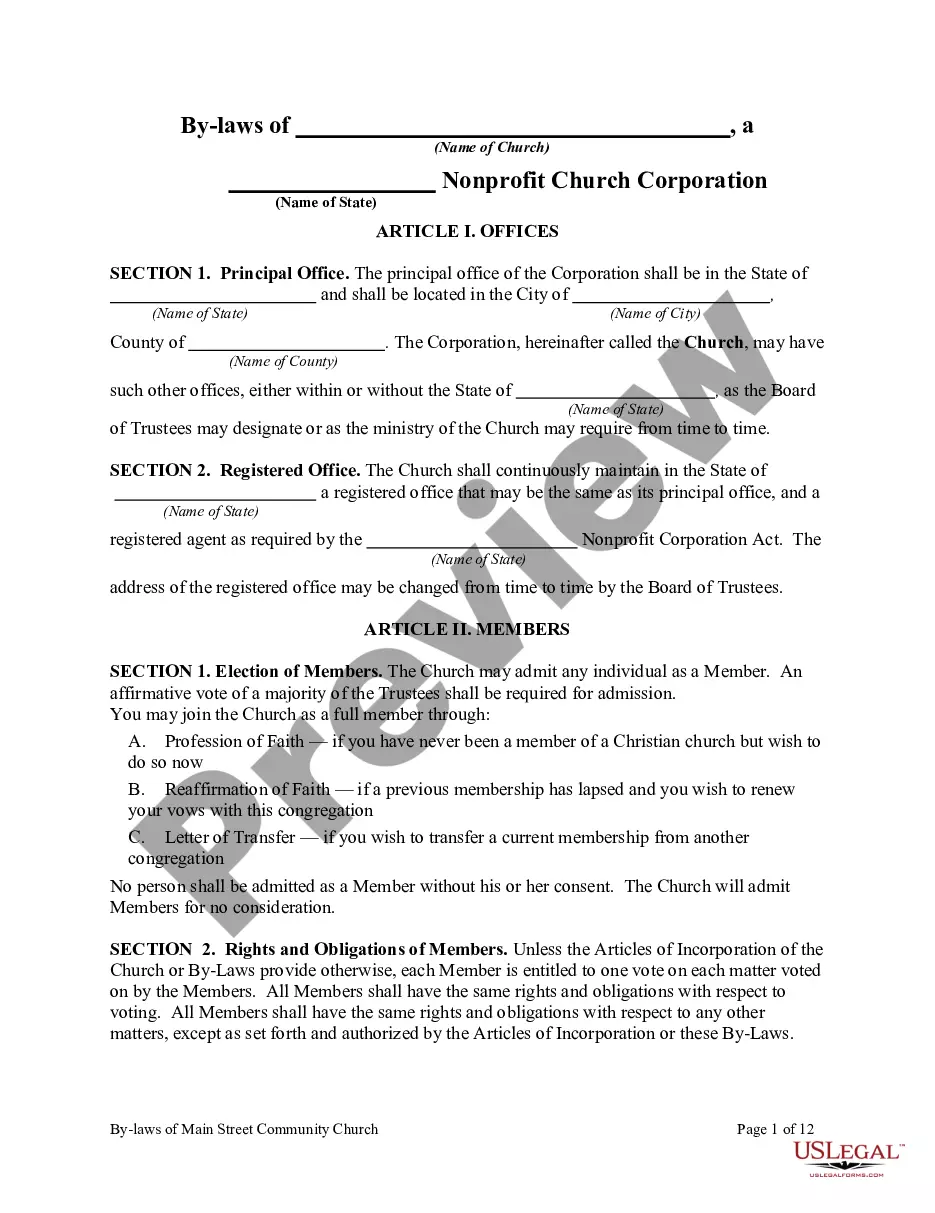
To obtain a 501c3 for your non-denominational church rock, you need to first establish your church as a legal entity. This involves drafting bylaws, choosing a board of directors, and filing articles of incorporation. After this, you must complete IRS Form 1023 and submit it along with your church's financial data and other required documents. Using platforms like USLegalForms can simplify this process by providing detailed templates and guidance.