Church Box
Description
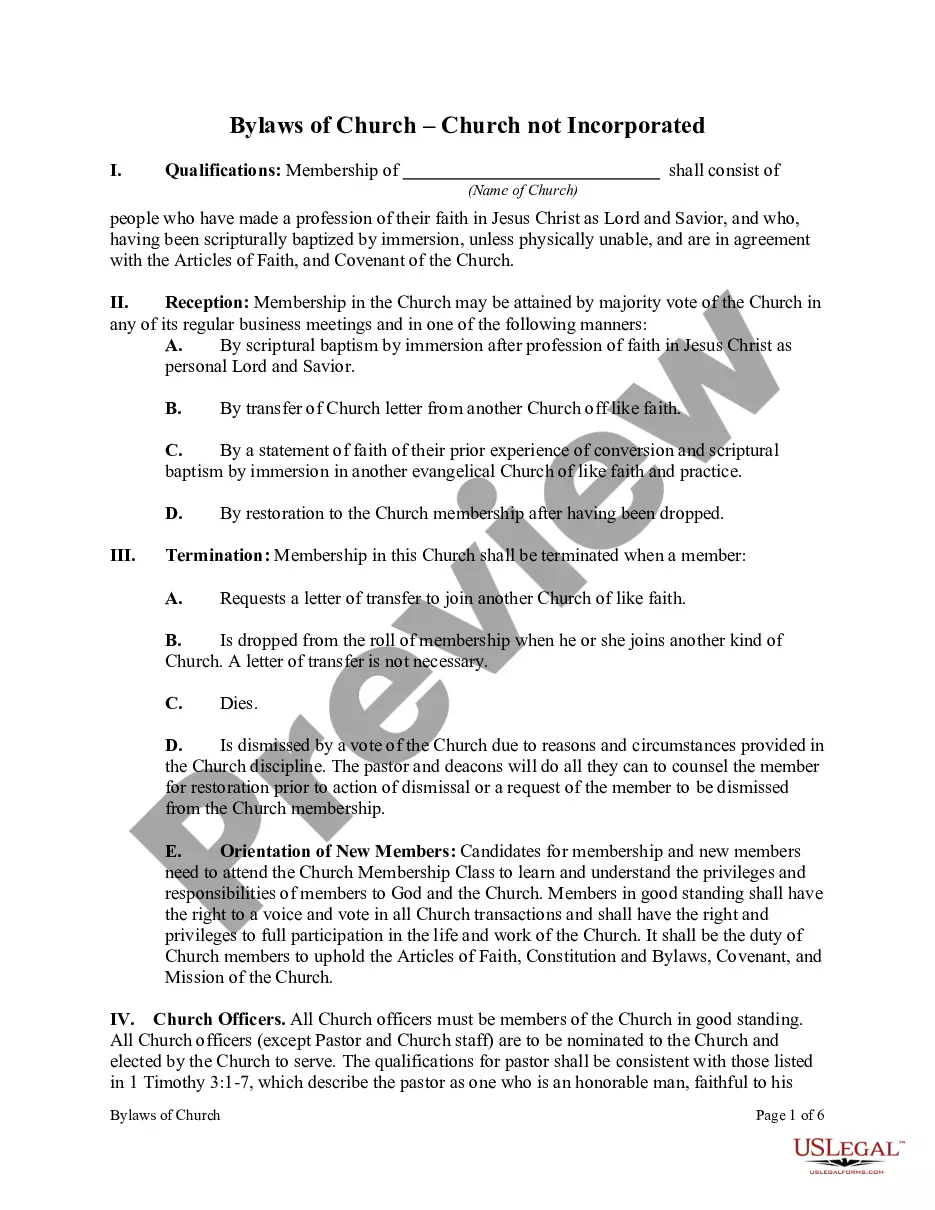
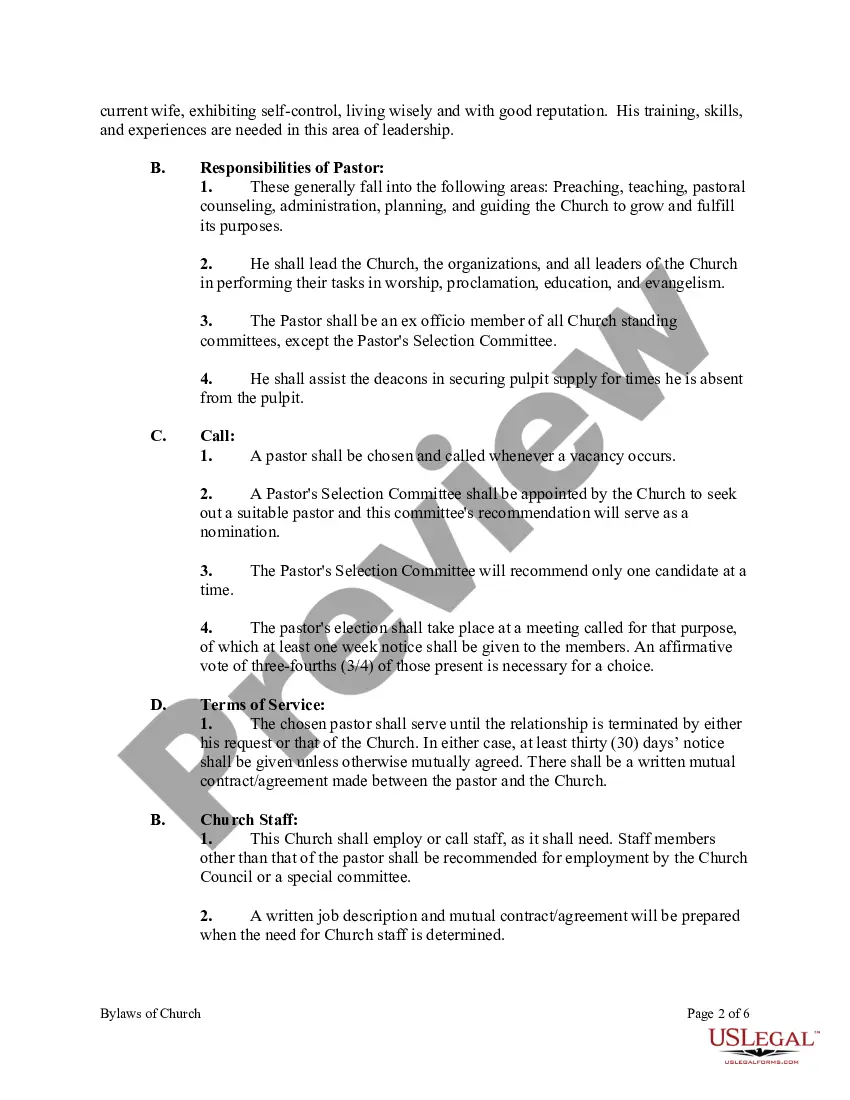
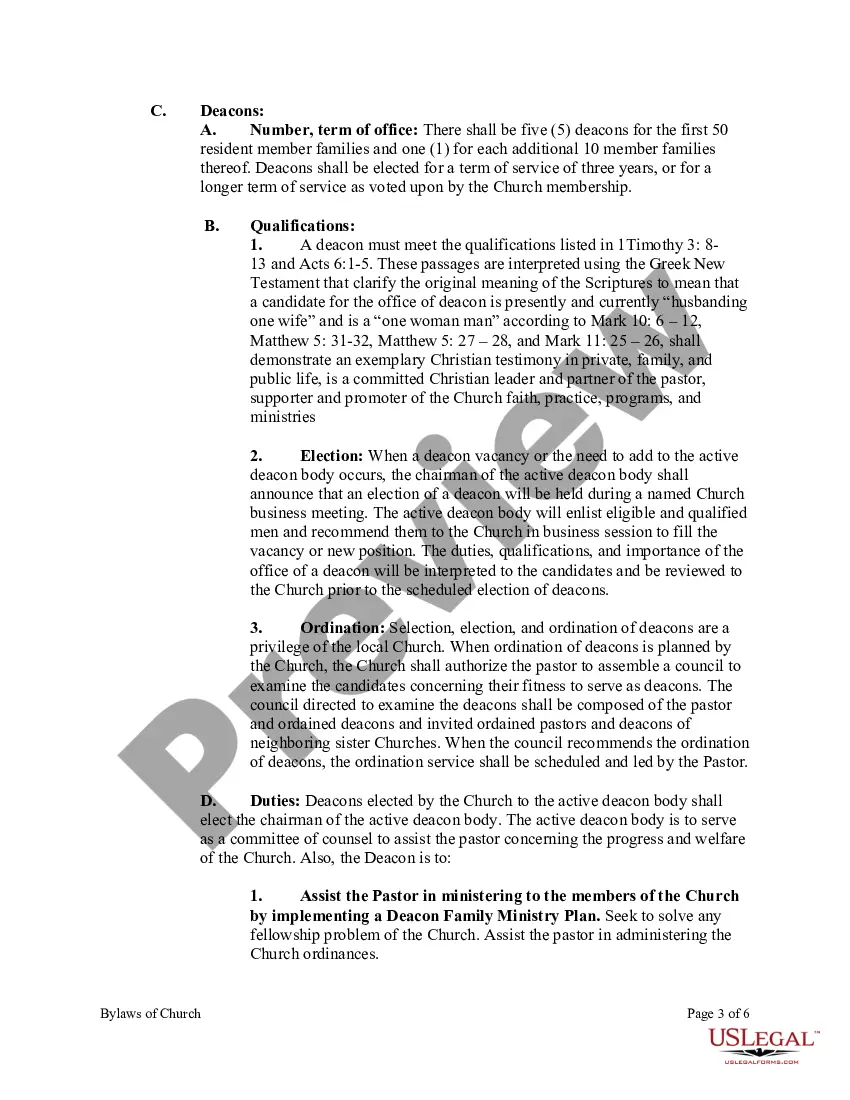
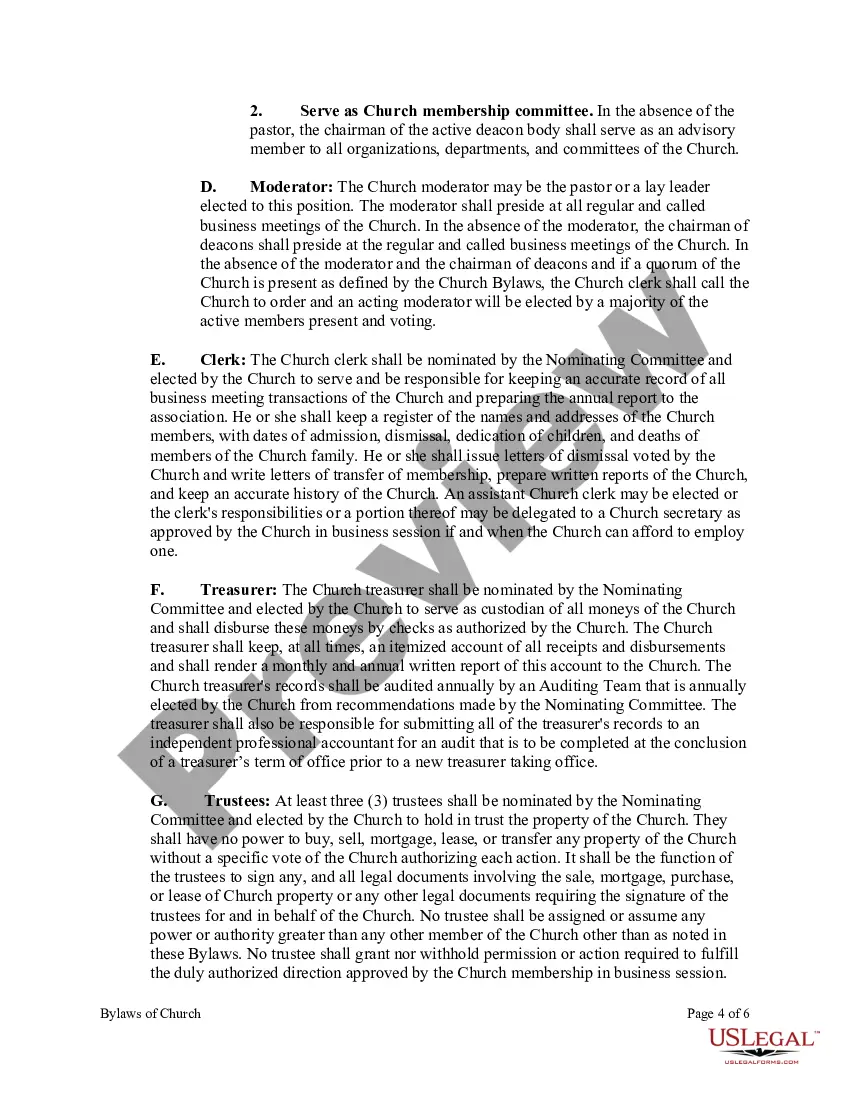
Get your form ready online
Our built-in tools help you complete, sign, share, and store your documents in one place.
Make edits, fill in missing information, and update formatting in US Legal Forms—just like you would in MS Word.
Download a copy, print it, send it by email, or mail it via USPS—whatever works best for your next step.
Sign and collect signatures with our SignNow integration. Send to multiple recipients, set reminders, and more. Go Premium to unlock E-Sign.
If this form requires notarization, complete it online through a secure video call—no need to meet a notary in person or wait for an appointment.
We protect your documents and personal data by following strict security and privacy standards.

Make edits, fill in missing information, and update formatting in US Legal Forms—just like you would in MS Word.

Download a copy, print it, send it by email, or mail it via USPS—whatever works best for your next step.

Sign and collect signatures with our SignNow integration. Send to multiple recipients, set reminders, and more. Go Premium to unlock E-Sign.

If this form requires notarization, complete it online through a secure video call—no need to meet a notary in person or wait for an appointment.

We protect your documents and personal data by following strict security and privacy standards.
Looking for another form?
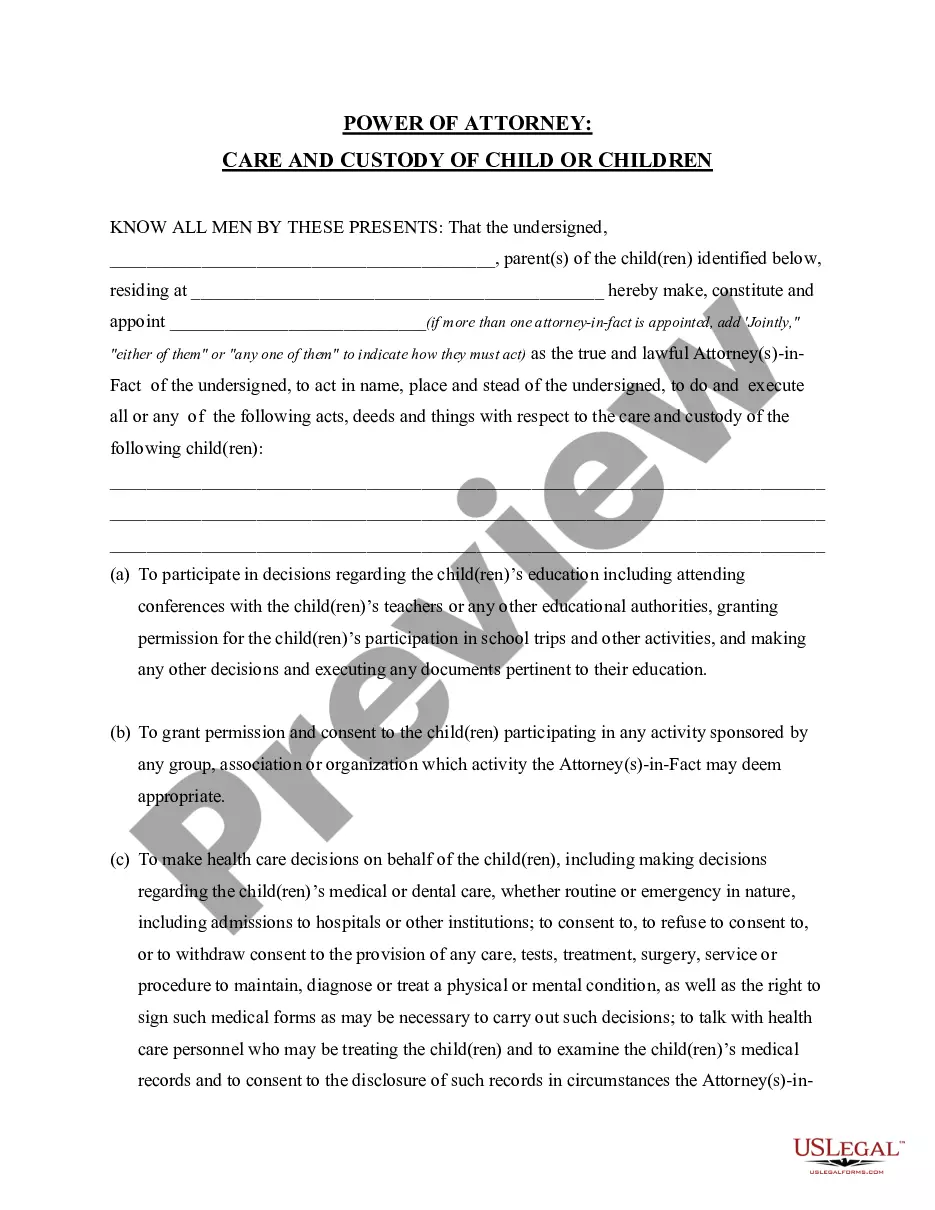





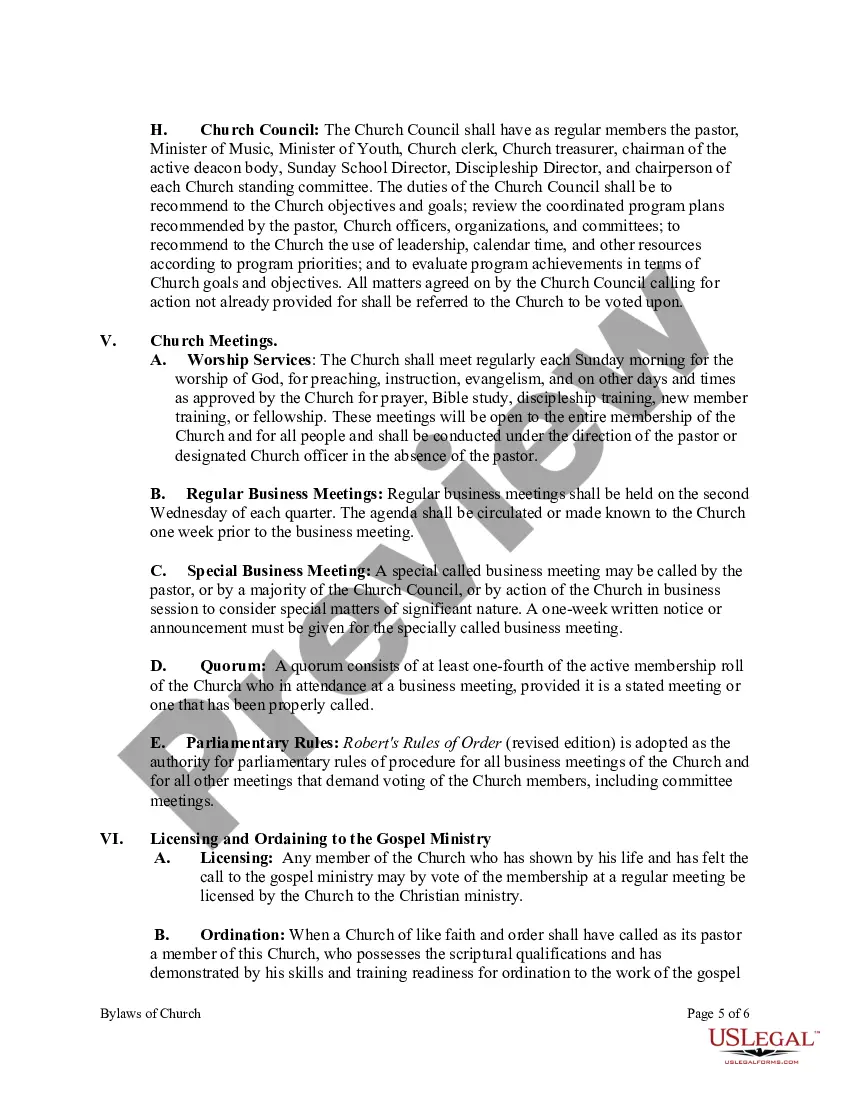
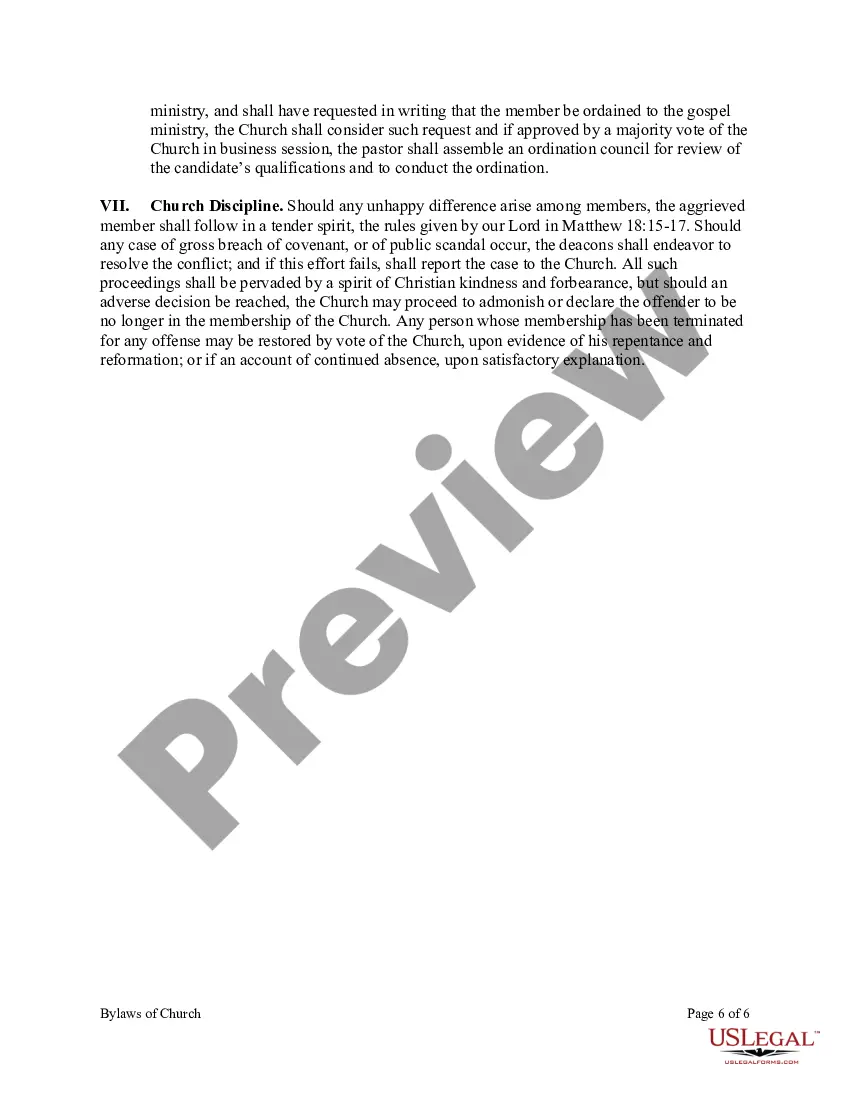
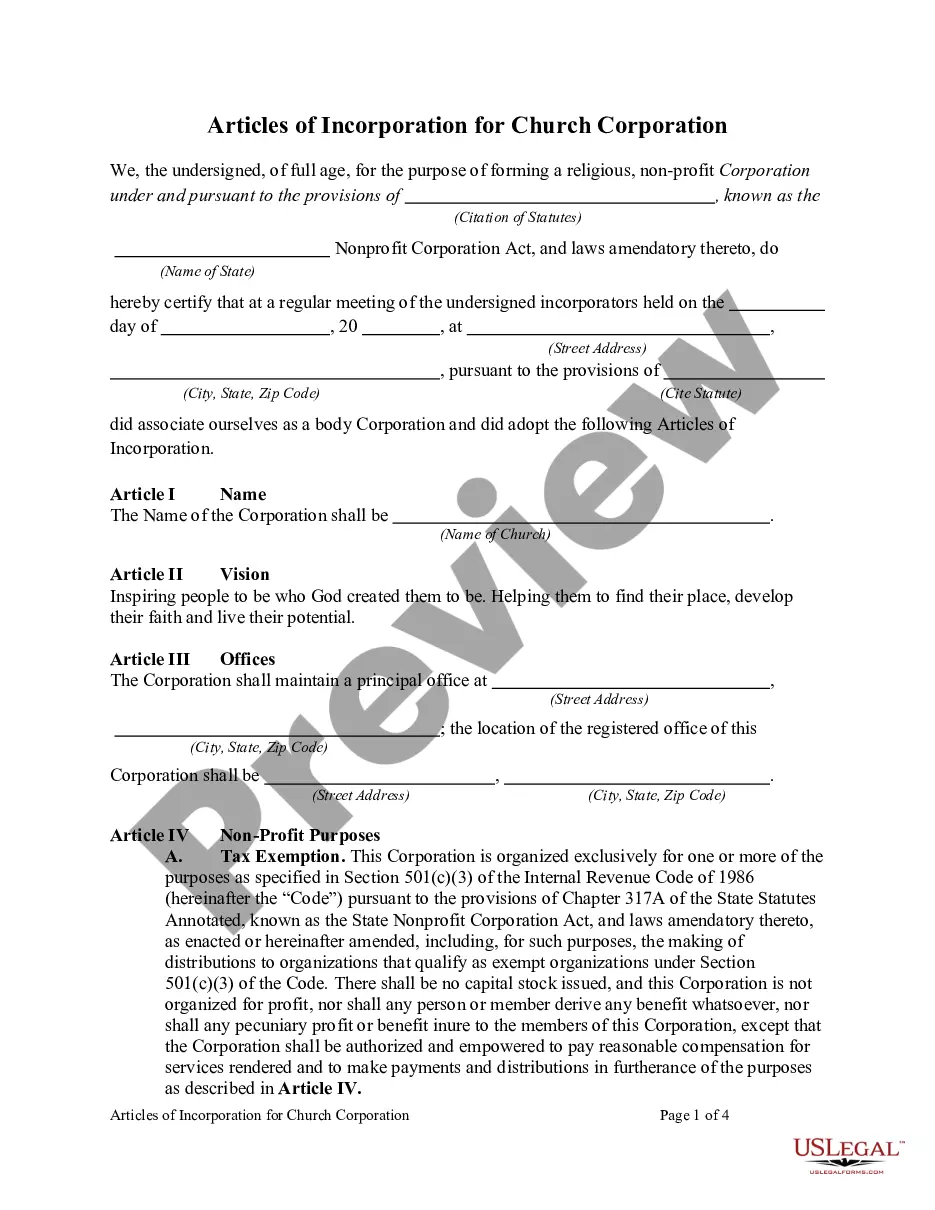
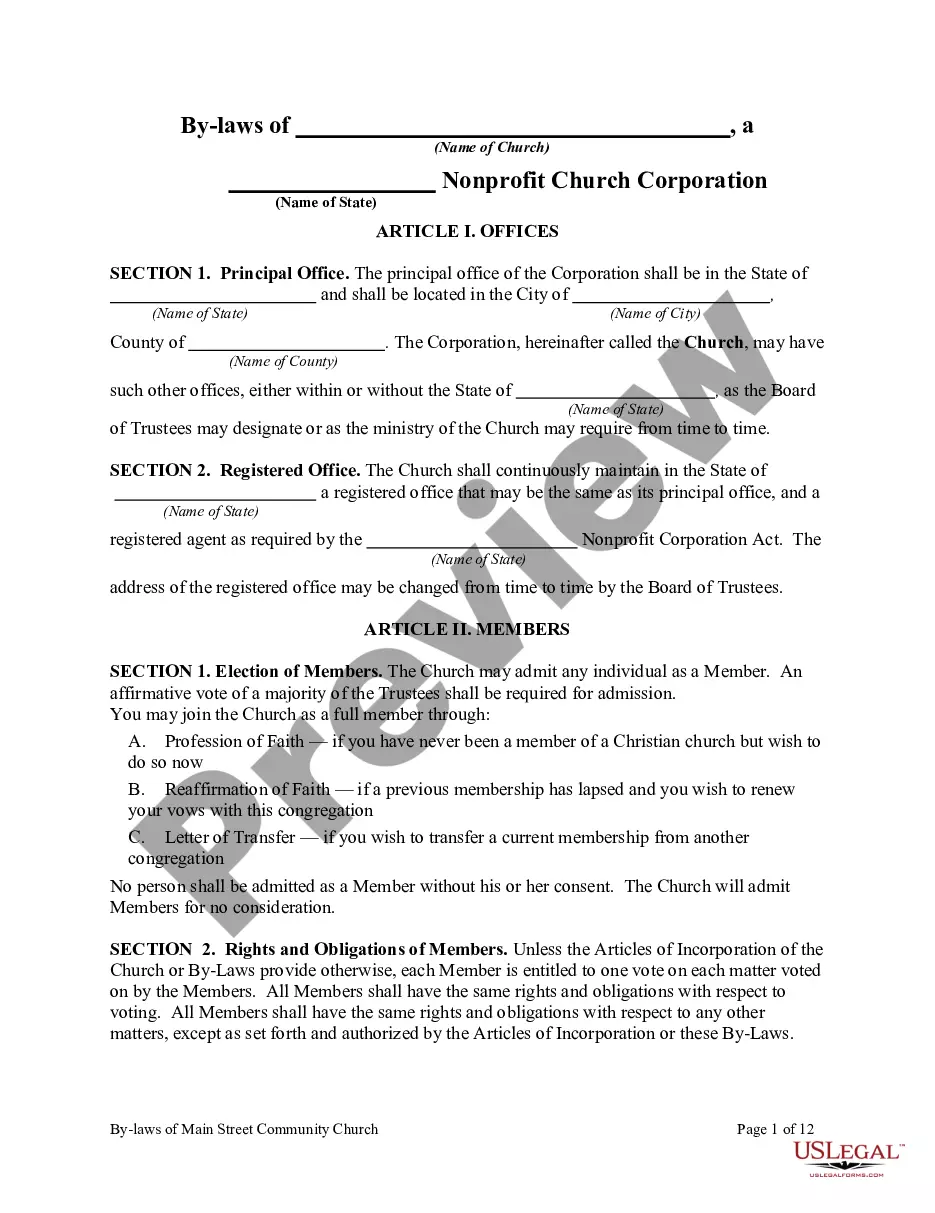
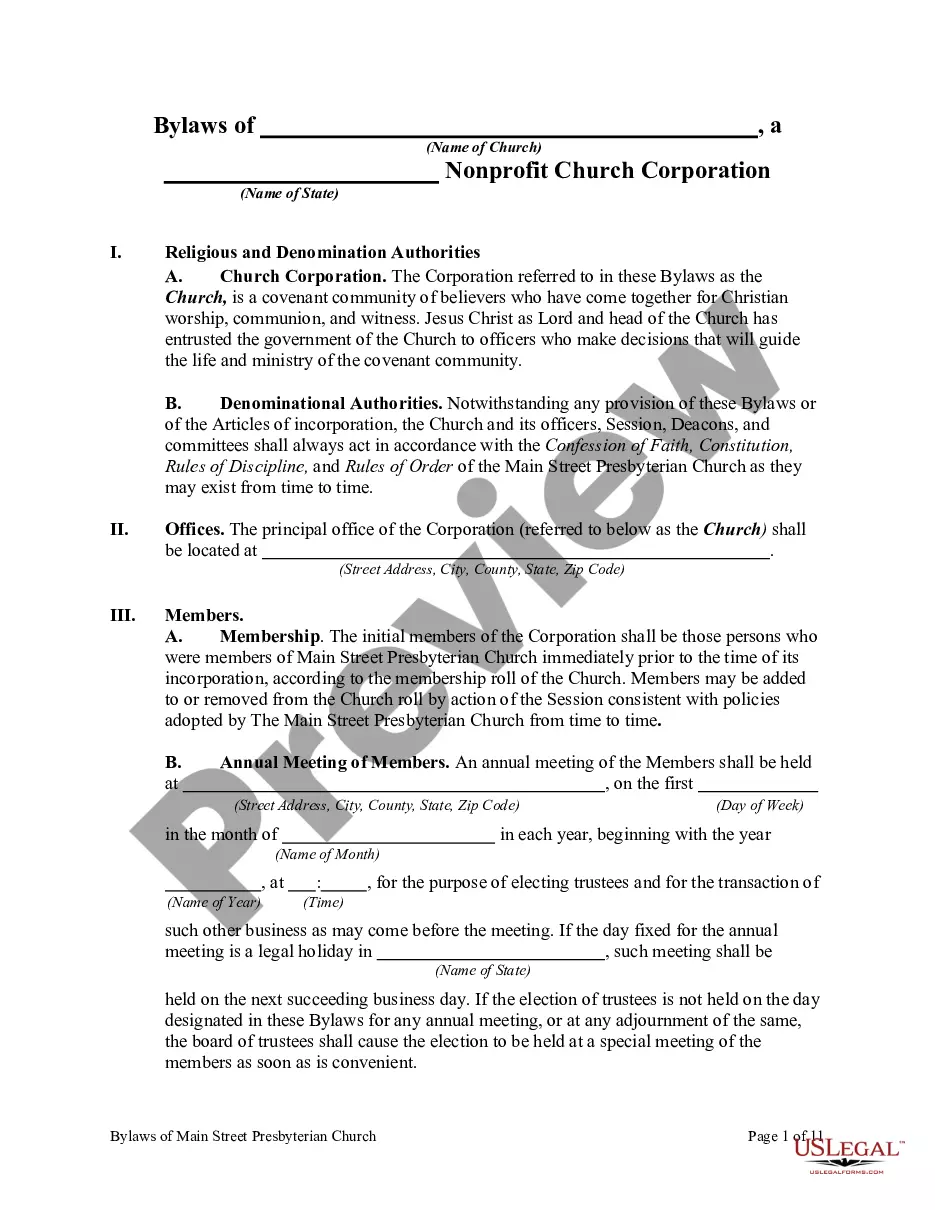
How to fill out Bylaws Of Church - Church Not Incorporated?
- Log in to your existing US Legal Forms account. Ensure your subscription is active to access your desired legal forms.
- In case you're new to the service, start by browsing the Preview mode and form descriptions to ensure the selected document meets your requirements and compliance with your jurisdiction.
- If you find discrepancies or require a different template, utilize the Search function at the top of the page to locate the correct document.
- Purchase the required form by clicking the Buy Now button, and select your desired subscription plan while creating an account for resource access.
- Complete your purchase by entering your credit card details or using PayPal for seamless payment.
- Download your Church box template and save it to your device. You can always revisit the My Forms section in your profile to access your legal documents.
With over 85,000 fillable legal forms, US Legal Forms empowers users to quickly obtain valid legal documentation. Their robust collection surpasses competitors, making it ideal for both individuals and attorneys.
Don't hesitate to explore the vast resources available to you. Start your journey with US Legal Forms today and ensure your legal documentation is precise and compliant.
Form popularity
FAQ
To qualify as a church, an organization typically needs to have a defined purpose centered around worship, a gathering of individuals who share a faith, and regular meetings. You'll also want to establish a governing structure and possibly apply for 501(c)(3) tax-exempt status. Creating a church box can help signify your commitment to community contributions and support, solidifying your identity as an organized church.
Building a church blessing box involves selecting a suitable location and gathering materials to construct a weather-resistant container. Design the box to be inviting, encouraging members of the community to contribute. Consider including a section for prayer requests or community needs, along with a church box for receiving donations or supplies that support your mission.
To obtain a church license, you first need to research the legal requirements of your state or locality. Typically, this involves submitting an application and demonstrating your church's mission and structure. You can utilize the services of uslegalforms, which provides helpful resources and templates to assist in the licensing process. Additionally, establishing a church box can facilitate donations to cover legal costs during this process.
Starting a church can vary in requirements depending on the religious organization. Generally, you need at least a few committed individuals who share your vision. This small group can help manage the church box, supporting fundraising and community outreach efforts from the outset. More members often mean more substantial support as the church develops.
Being licensed means you have permission from a governing body to perform certain religious duties, often related to officiating ceremonies. On the other hand, being ordained recognizes you as a minister, allowing you to perform a broader range of religious functions. Many people choose to start with a church box to collect funds needed for obtaining licenses or ordination, ensuring they have the financial support from the community.
To create a church in Infinite Craft, start by gathering the necessary resources to build your structure. Use the available building blocks to design a church that fits your vision. Once constructed, ensure that you set up a church box for collecting donations and supporting community initiatives. This box not only serves a practical purpose but also enhances the sense of community within your church.
To report your church to the IRS, it's important to initially ensure that it qualifies as a tax-exempt organization. You would typically submit Form 1023 or Form 1023-EZ for recognition as a religious entity. Completing this process allows the church to receive gifts that can be reported using the Church box on donors' tax returns. Reach out to uslegalforms for assistance in navigating this reporting process.
The IRS recognizes a church based on specific criteria, including a recognized status as a nonprofit organization and adherence to operational guidelines. To be classified properly, a church may need to complete Form 1023. This process helps ensure the church can receive tax-deductible donations, and accurately reporting through the Church box is crucial. Understanding this recognition can support your church’s mission.
If you don't keep tax receipts for your charitable donations, including those made through your church, you risk losing deductions during an audit. The IRS typically requires proof of contributions to validate your claims. Without receipts, you may find it challenging to substantiate the amounts in the Church box. Consider using platforms like uslegalforms for maintaining organized records.
The IRS verifies church donations through financial records and documentation provided by both the donor and the church. Using the Church box helps donors categorize these contributions correctly. The church should provide receipts to the donors for their records. Transparency in this process can ease the verification efforts when needed.