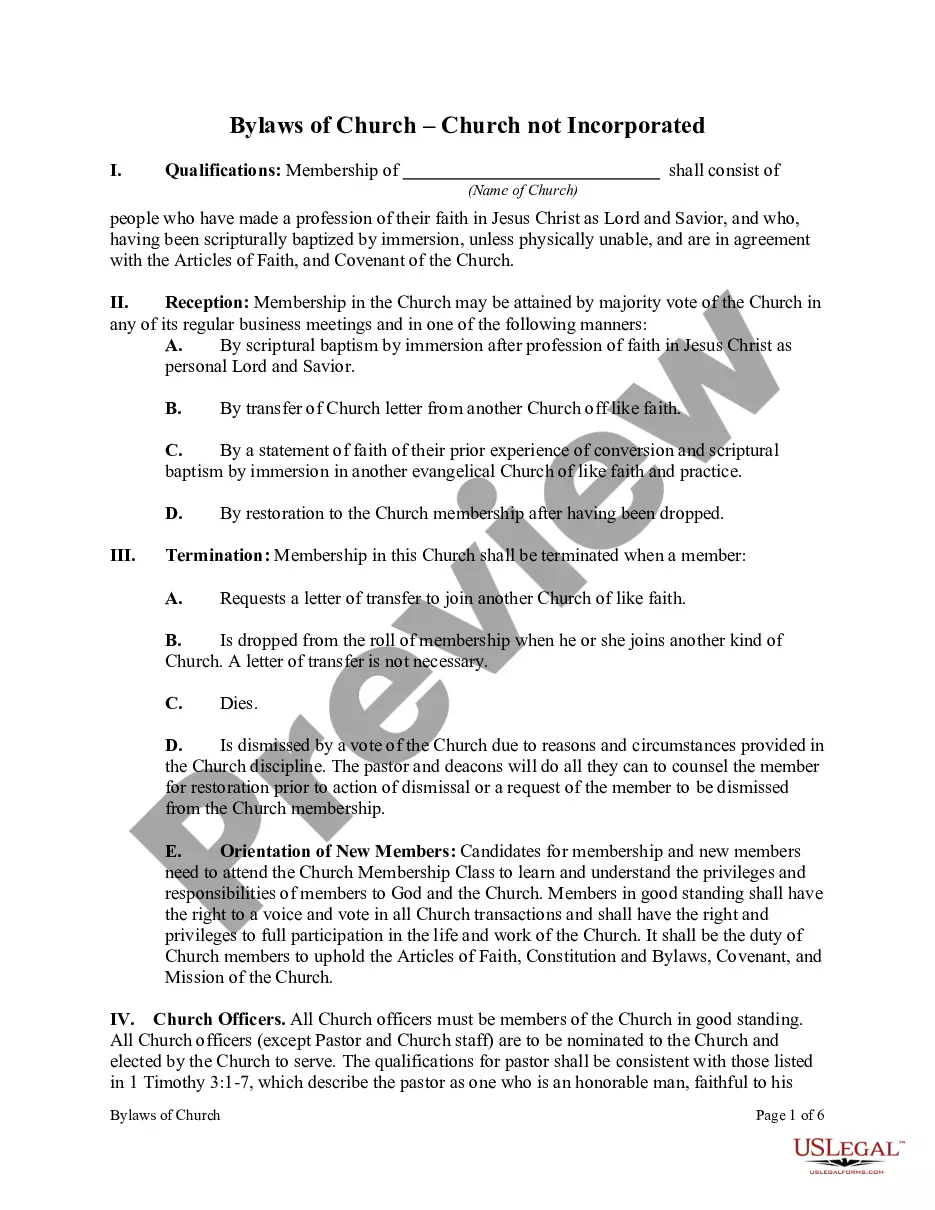
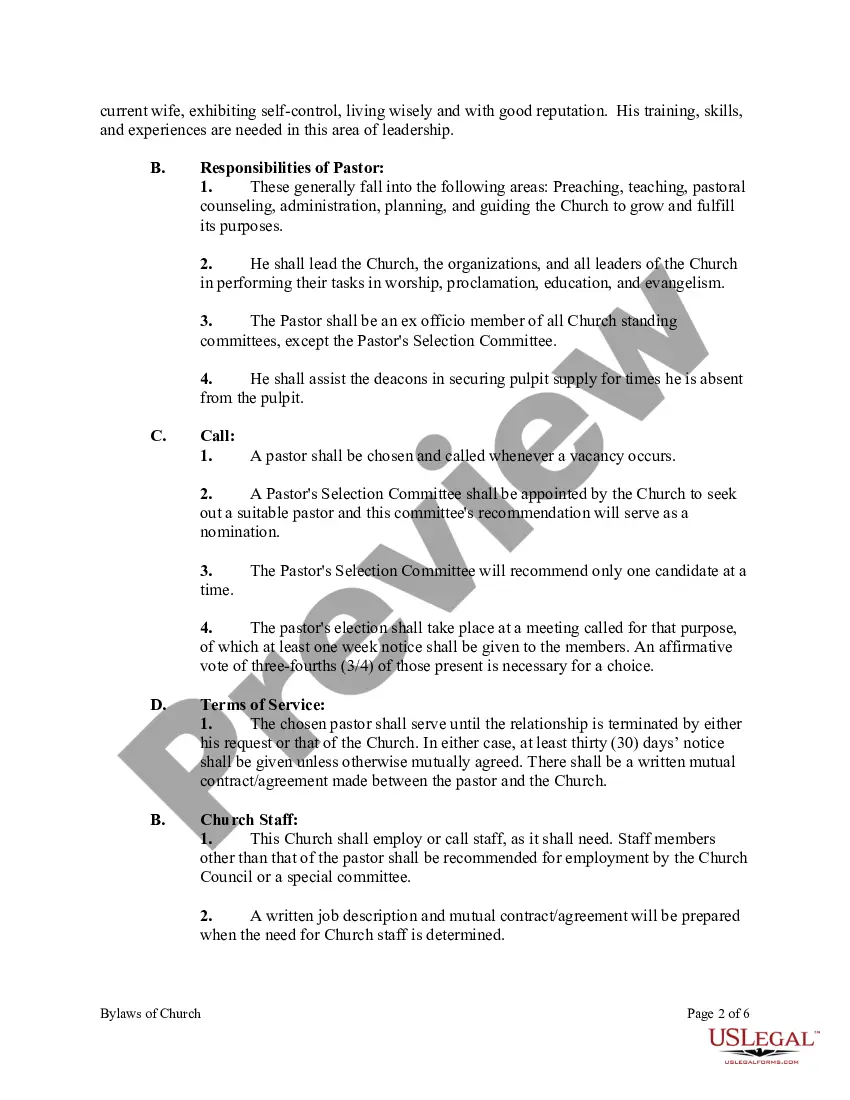
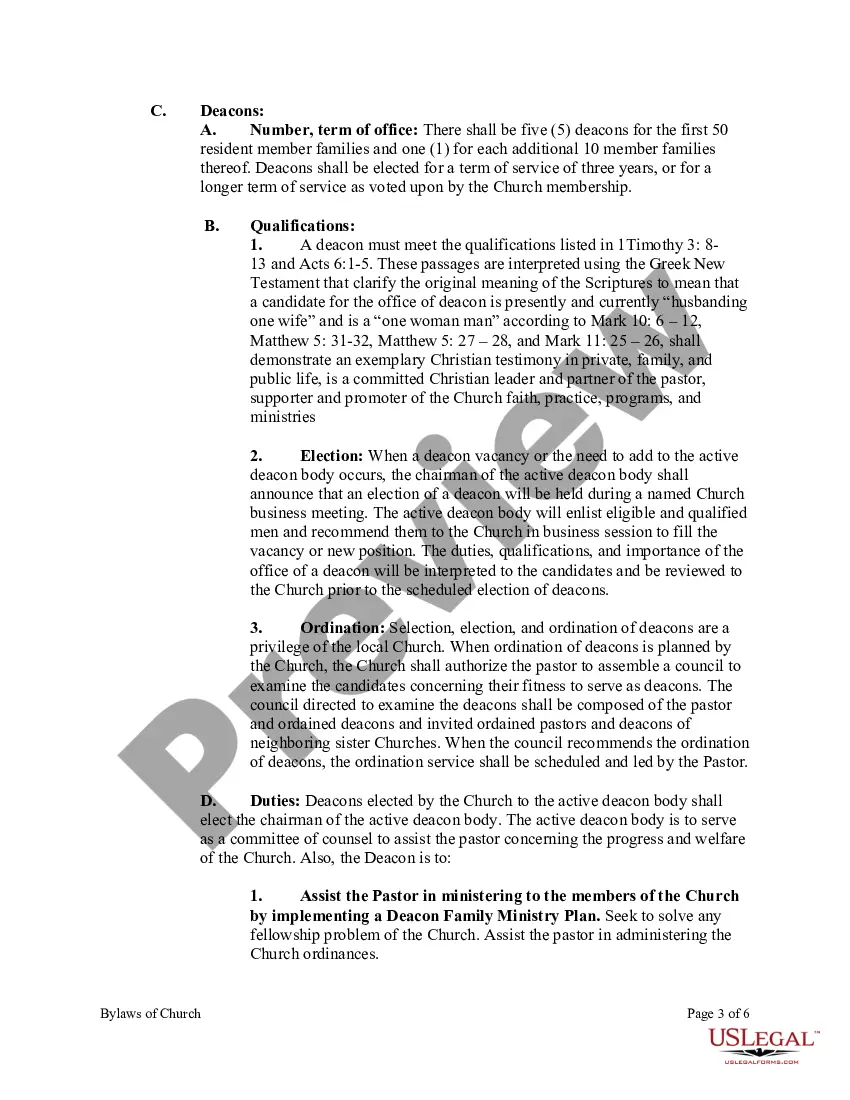
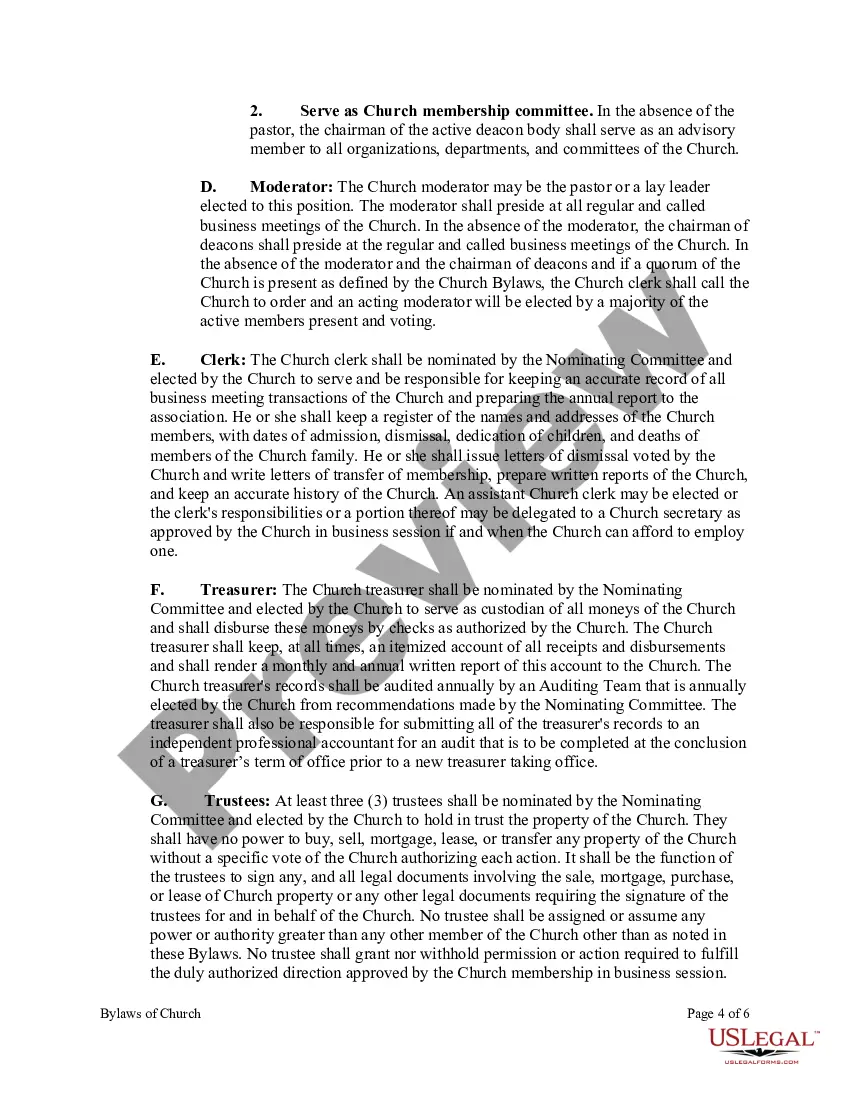
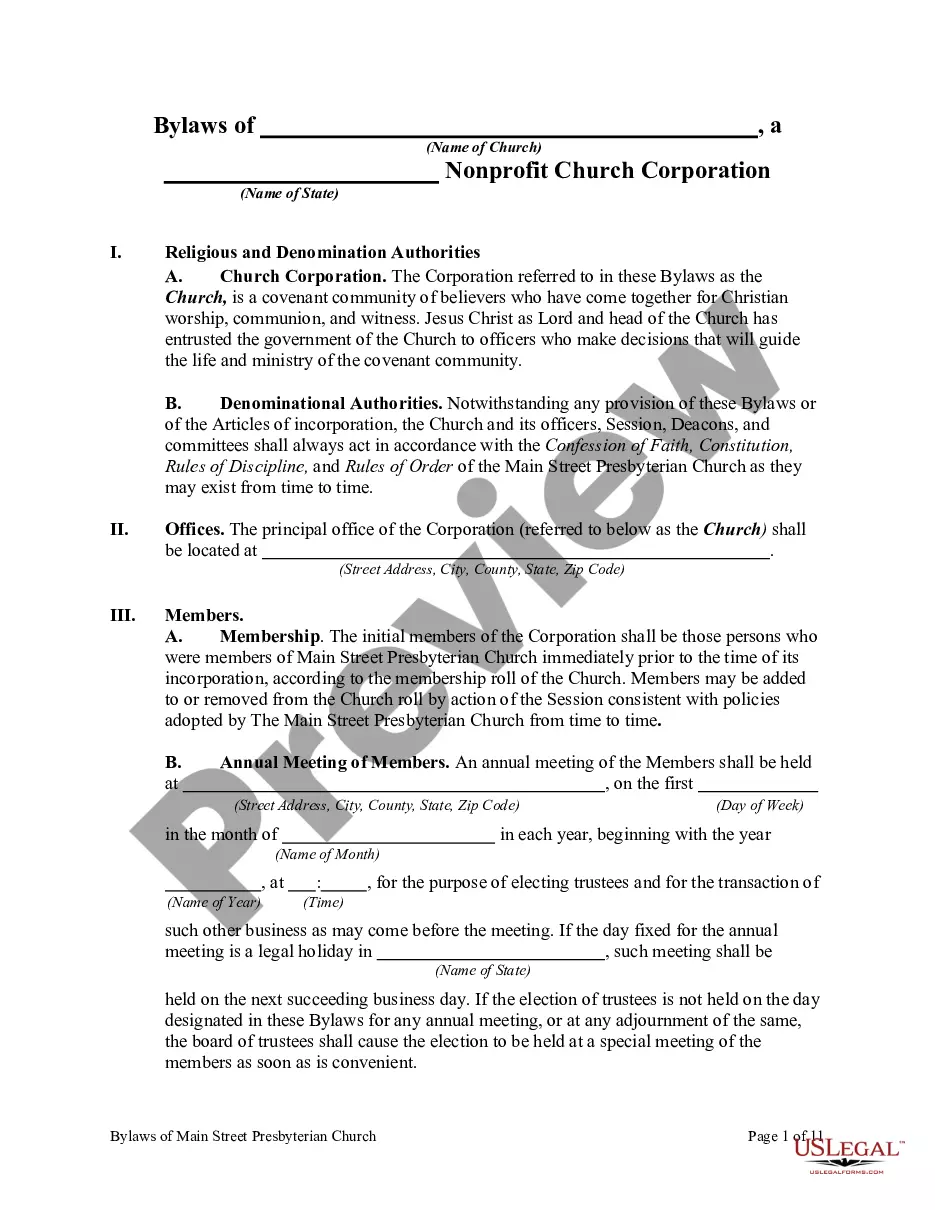
Bylaws Church Form With 2 Points
Description
Get your form ready online
Our built-in tools help you complete, sign, share, and store your documents in one place.
Make edits, fill in missing information, and update formatting in US Legal Forms—just like you would in MS Word.
Download a copy, print it, send it by email, or mail it via USPS—whatever works best for your next step.
Sign and collect signatures with our SignNow integration. Send to multiple recipients, set reminders, and more. Go Premium to unlock E-Sign.
If this form requires notarization, complete it online through a secure video call—no need to meet a notary in person or wait for an appointment.
We protect your documents and personal data by following strict security and privacy standards.

Make edits, fill in missing information, and update formatting in US Legal Forms—just like you would in MS Word.

Download a copy, print it, send it by email, or mail it via USPS—whatever works best for your next step.

Sign and collect signatures with our SignNow integration. Send to multiple recipients, set reminders, and more. Go Premium to unlock E-Sign.

If this form requires notarization, complete it online through a secure video call—no need to meet a notary in person or wait for an appointment.

We protect your documents and personal data by following strict security and privacy standards.
Looking for another form?







How to fill out Bylaws Of Church - Church Not Incorporated?
Locating a reliable source for the latest and pertinent legal templates is a significant part of managing bureaucracy.
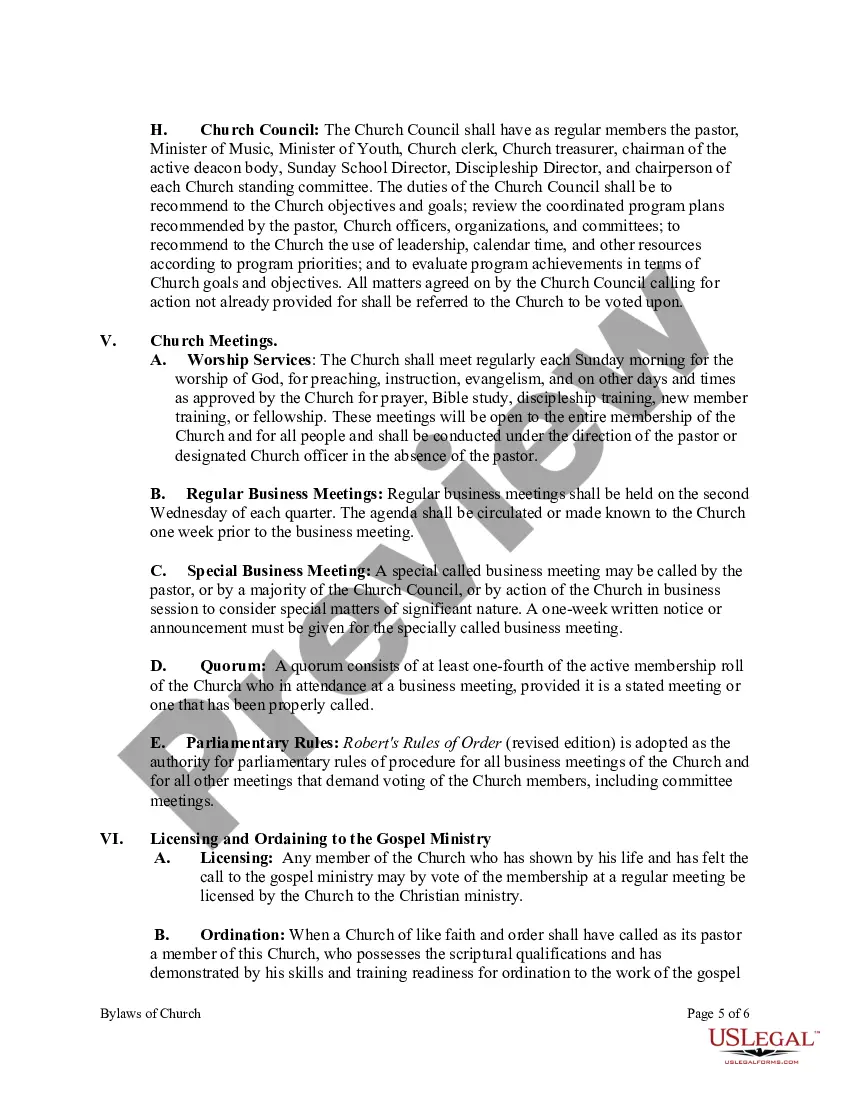
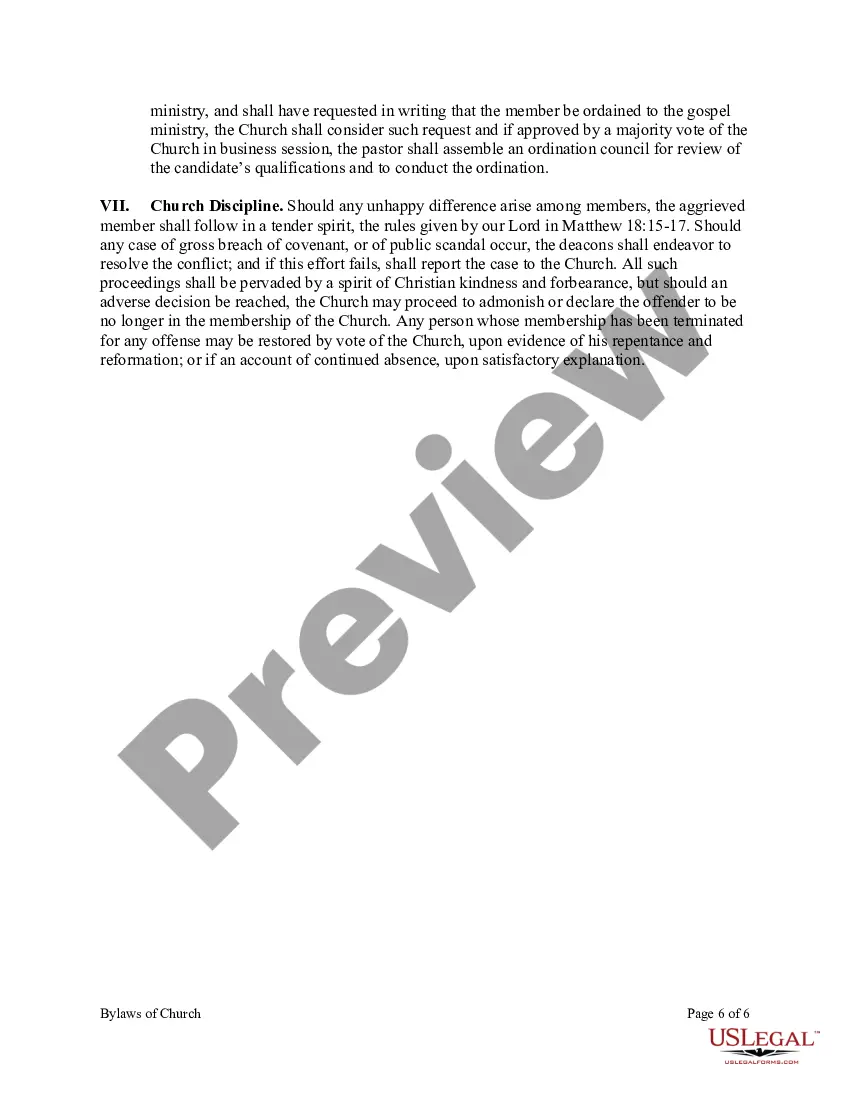
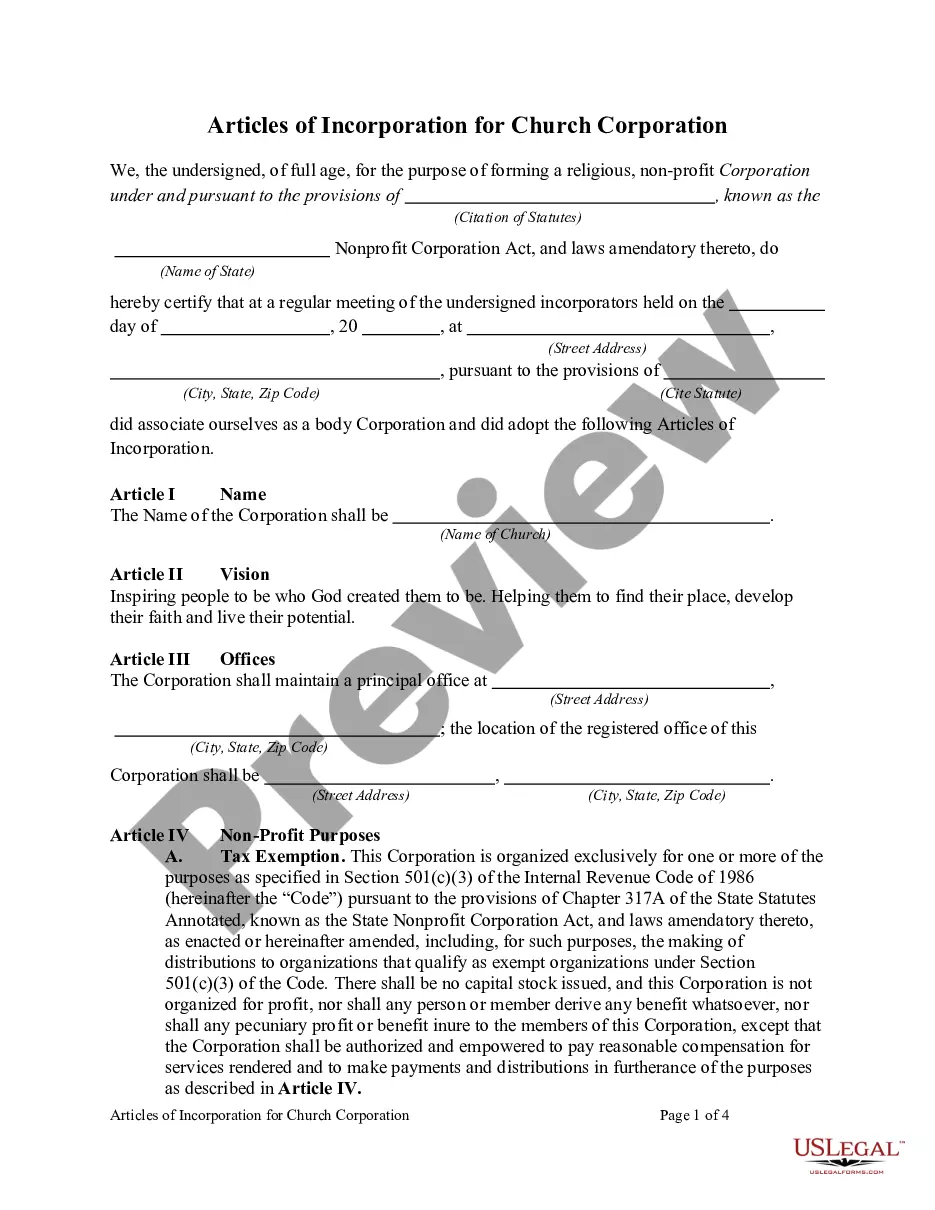
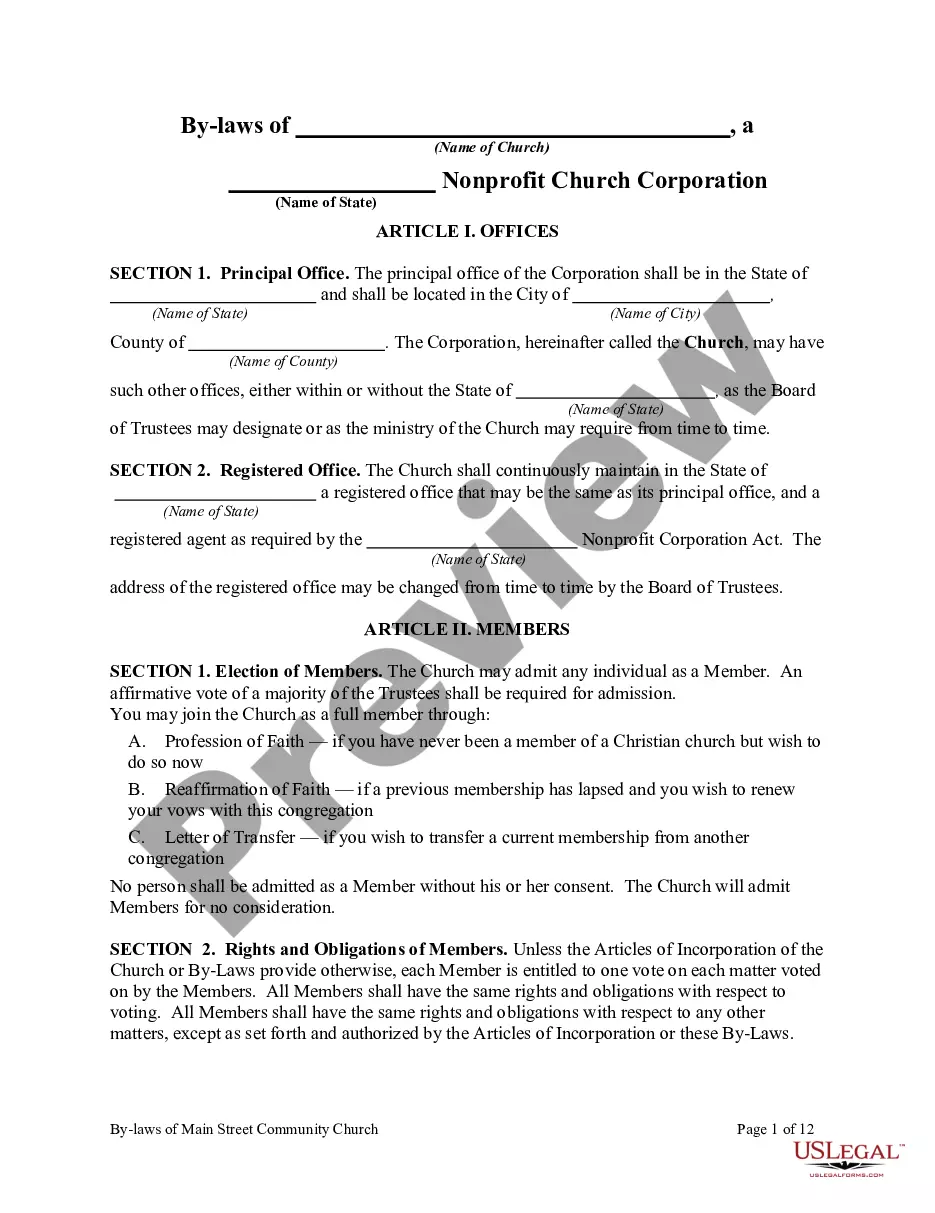
Identifying the appropriate legal documents necessitates precision and carefulness, which is why it is crucial to obtain samples of Bylaws Church Form With 2 Points solely from reputable sources, such as US Legal Forms. An incorrect template can squander your time and delay your situation. With US Legal Forms, you have minimal concerns. You can view and verify all the information concerning the document's applicability and significance for your situation and in your jurisdiction.
Eliminate the complications associated with your legal documentation. Explore the comprehensive US Legal Forms catalog to discover legal templates, assess their applicability to your situation, and download them instantly.
- Utilize the catalog navigation or search bar to find your template.
- Examine the form's description to confirm if it meets the standards of your jurisdiction.
- View the form preview, if available, to ensure the template is indeed the one you require.
- Return to the search and look for the correct template if the Bylaws Church Form With 2 Points does not match your needs.
- Once you are confident about the form’s applicability, download it.
- If you are a registered user, click Log in to verify and access your chosen forms in My documents.
- If you do not possess an account yet, click Buy now to acquire the form.
- Select the pricing option that aligns with your needs.
- Proceed to the registration to complete your purchase.
- Conclude your purchase by choosing a payment method (credit card or PayPal).
- Choose the file format for downloading Bylaws Church Form With 2 Points.
- After obtaining the form on your device, you can edit it using the editor or print it out and complete it by hand.
Form popularity
FAQ
Most churches have a constitution that states the mission and general governing rules. The bylaws, which often are more easily amended, have more specifics. Some churches are discovering that one simple document may be all they need; therefore, they set up bylaws only.
Almost every local church has a document that it uses to describe how it is organized and governed. Usually this is a constitution and bylaws. Normally the constitution is the broader body of mutually agreed upon principles and purposeful structure that govern the affairs and action of the church.
The constitution is required to describe the structure and order of the church so as to describe how the church will set out to remain "pure". Thus, the constitution often incorporates those other items you have listed or at least makes reference to them specifically by name to accomplish that.
10 steps for writing bylaws for an association Research. Form a committee. Create the structure. Outline your organization's key roles and responsibilities. Establish your meeting rules. Define your membership. Address finances. Outline the amendment process.
Bylaws generally define things like the group's official name, purpose, requirements for membership, officers' titles and responsibilities, how offices are to be assigned, how meetings should be conducted, and how often meetings will be held.