Temporary Occupancy Agreement Form
Description
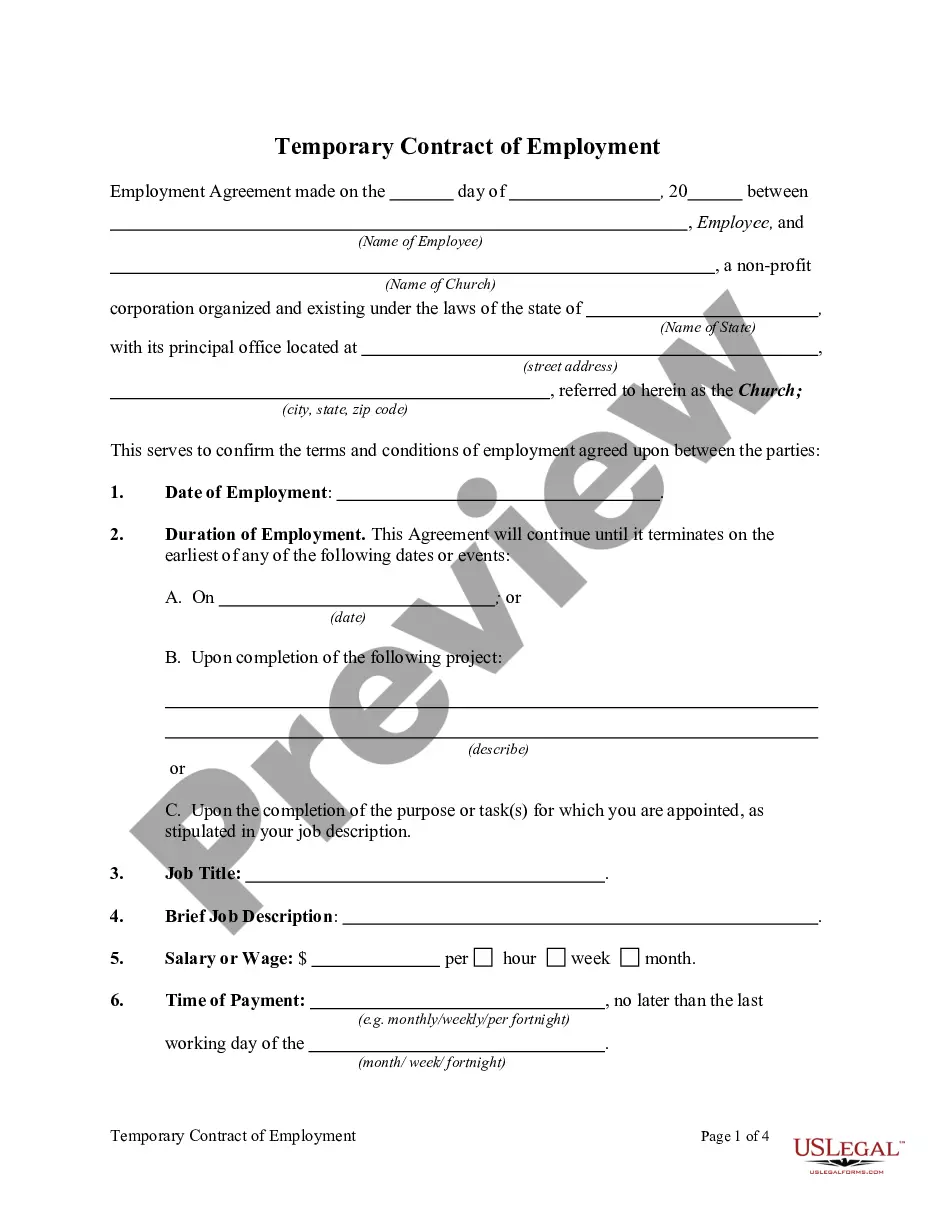
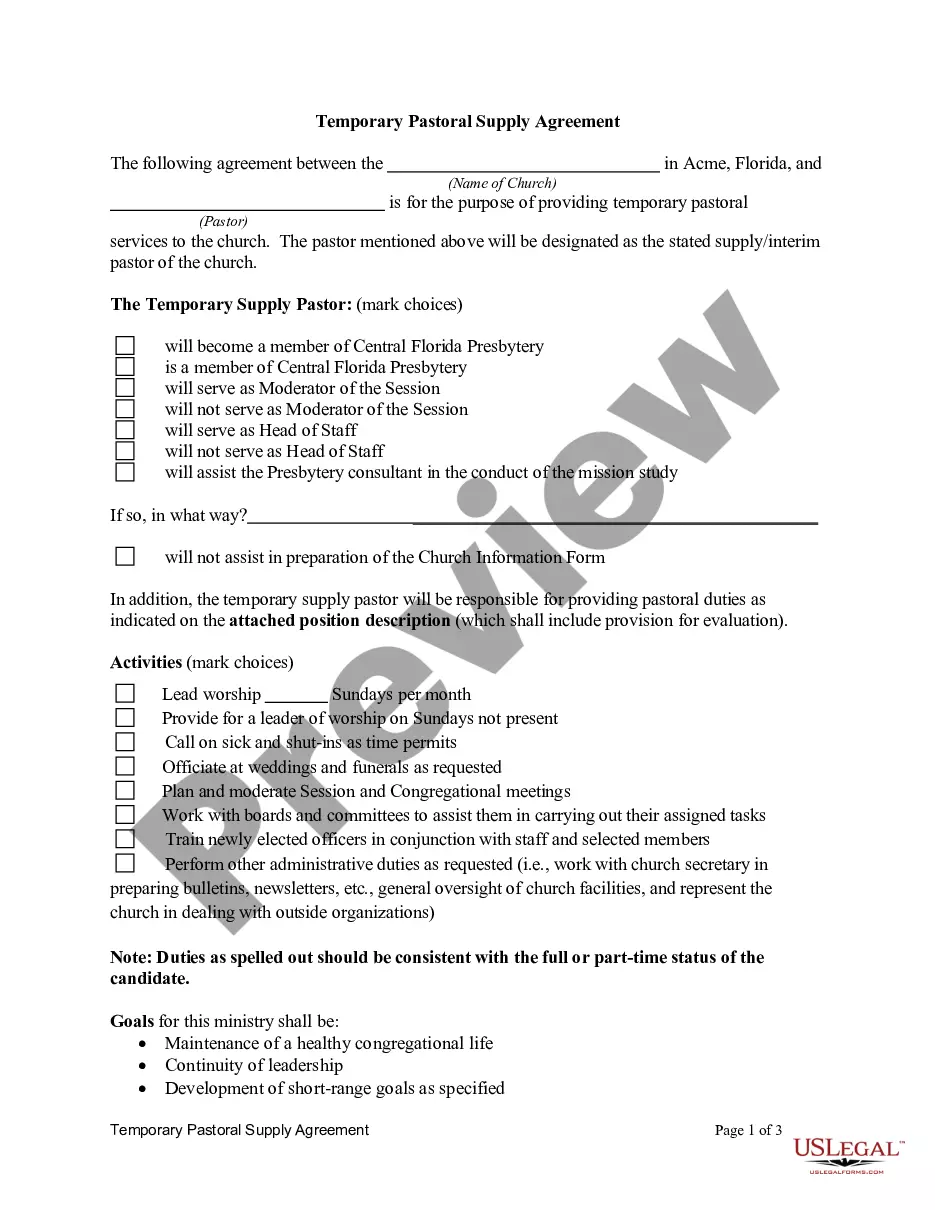
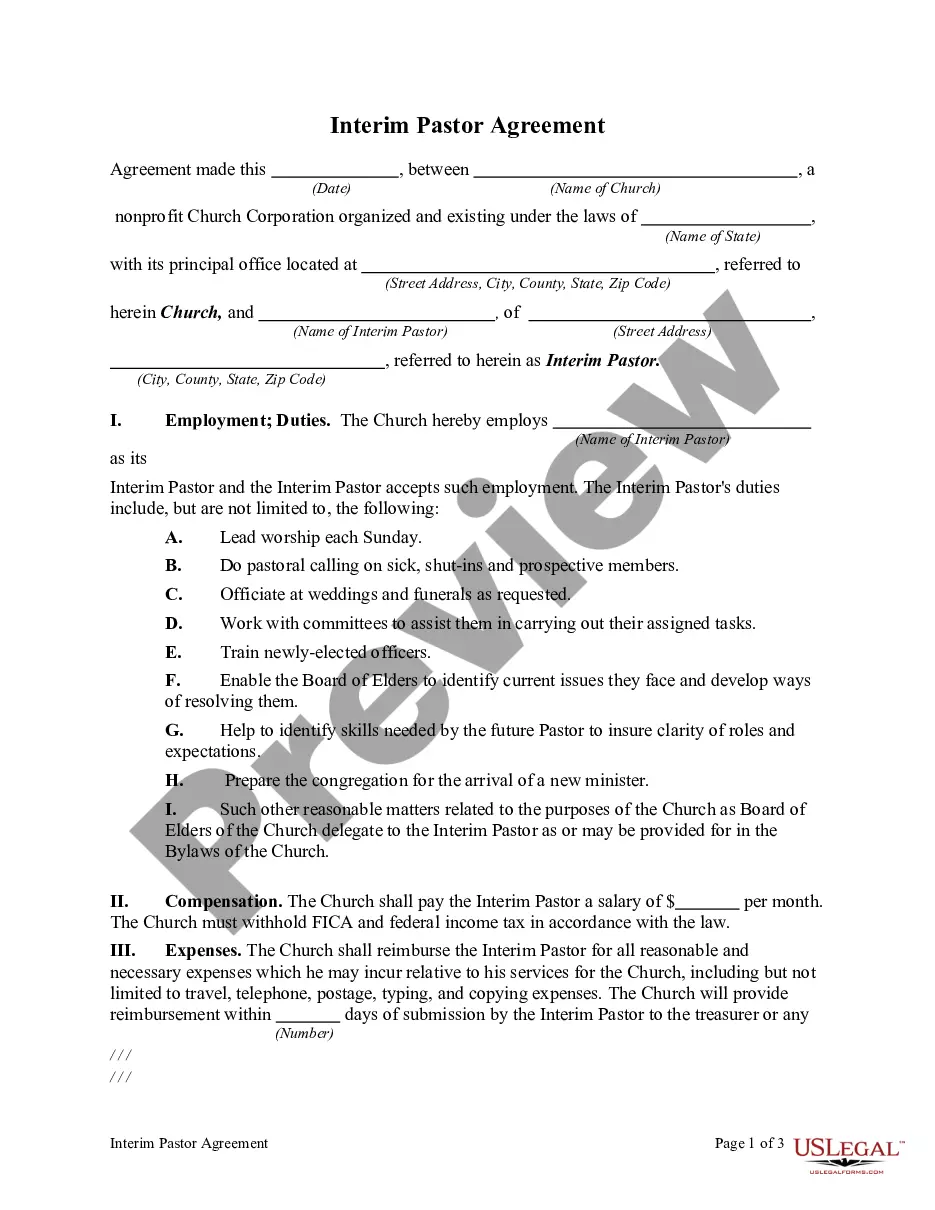
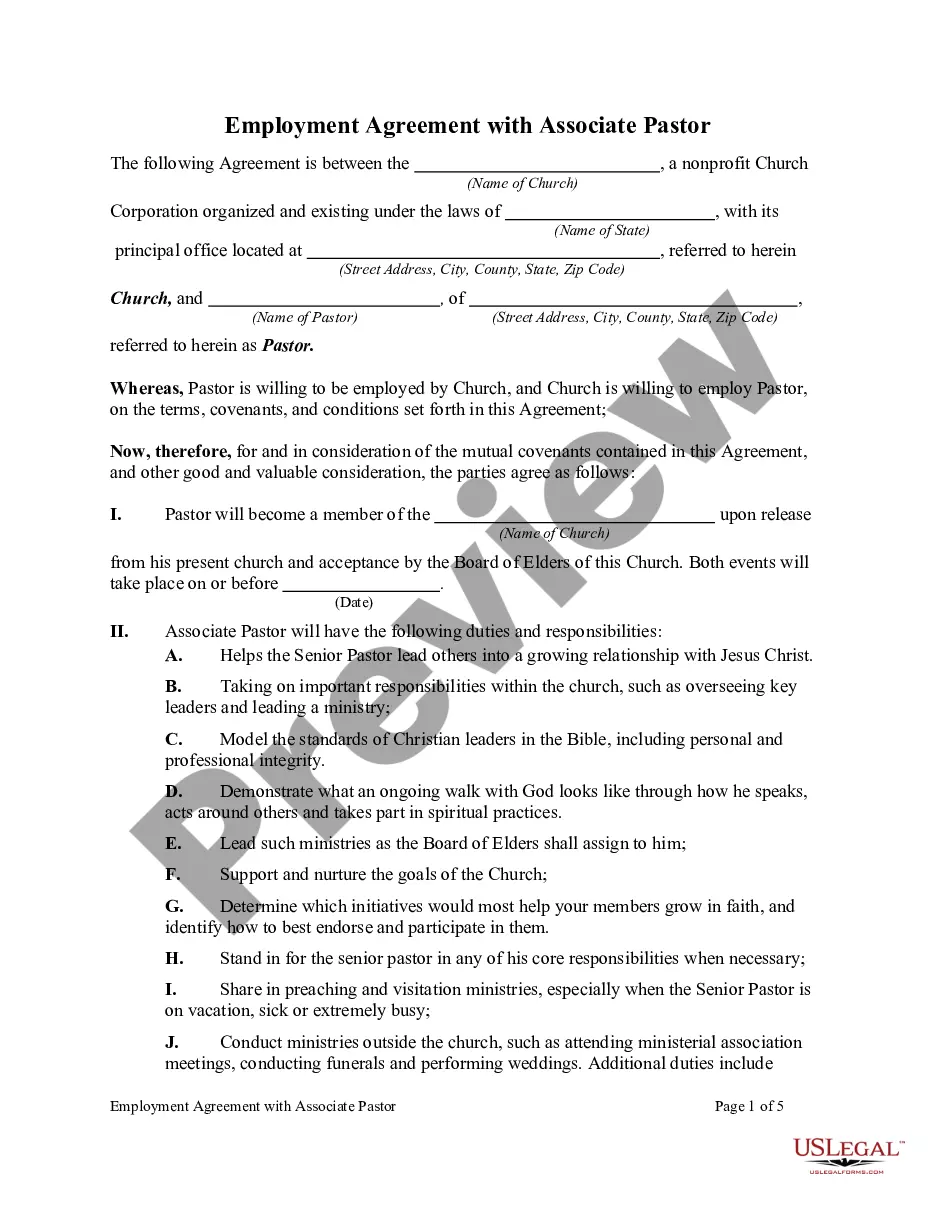
Get your form ready online
Our built-in tools help you complete, sign, share, and store your documents in one place.
Make edits, fill in missing information, and update formatting in US Legal Forms—just like you would in MS Word.
Download a copy, print it, send it by email, or mail it via USPS—whatever works best for your next step.
Sign and collect signatures with our SignNow integration. Send to multiple recipients, set reminders, and more. Go Premium to unlock E-Sign.
If this form requires notarization, complete it online through a secure video call—no need to meet a notary in person or wait for an appointment.
We protect your documents and personal data by following strict security and privacy standards.

Make edits, fill in missing information, and update formatting in US Legal Forms—just like you would in MS Word.

Download a copy, print it, send it by email, or mail it via USPS—whatever works best for your next step.

Sign and collect signatures with our SignNow integration. Send to multiple recipients, set reminders, and more. Go Premium to unlock E-Sign.

If this form requires notarization, complete it online through a secure video call—no need to meet a notary in person or wait for an appointment.

We protect your documents and personal data by following strict security and privacy standards.
Looking for another form?








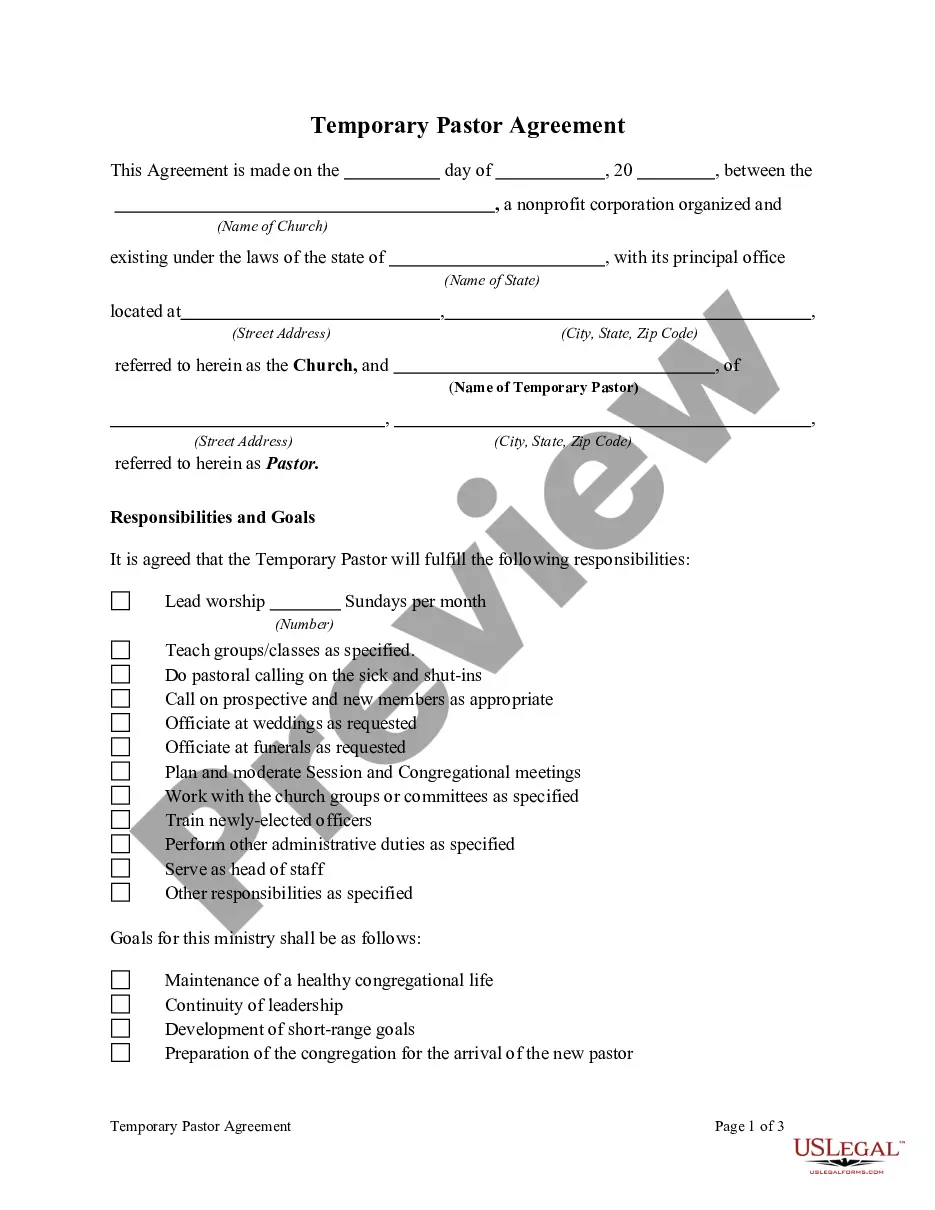
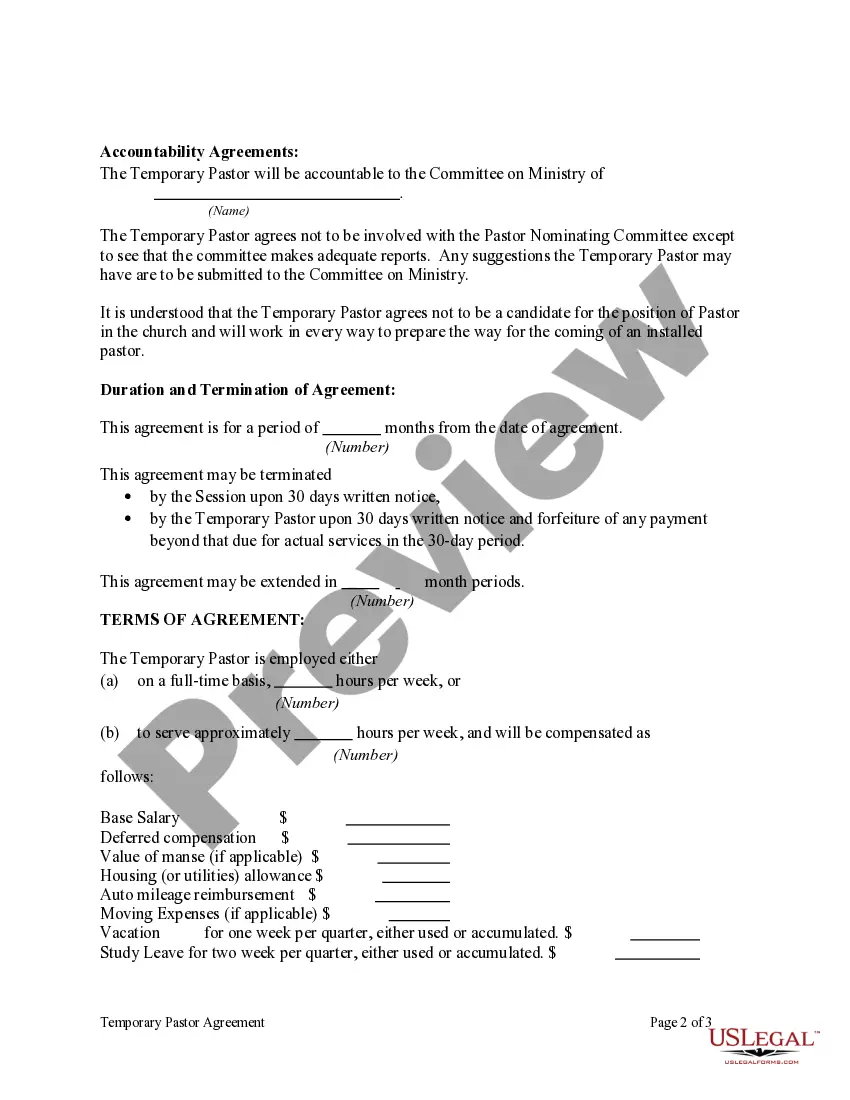
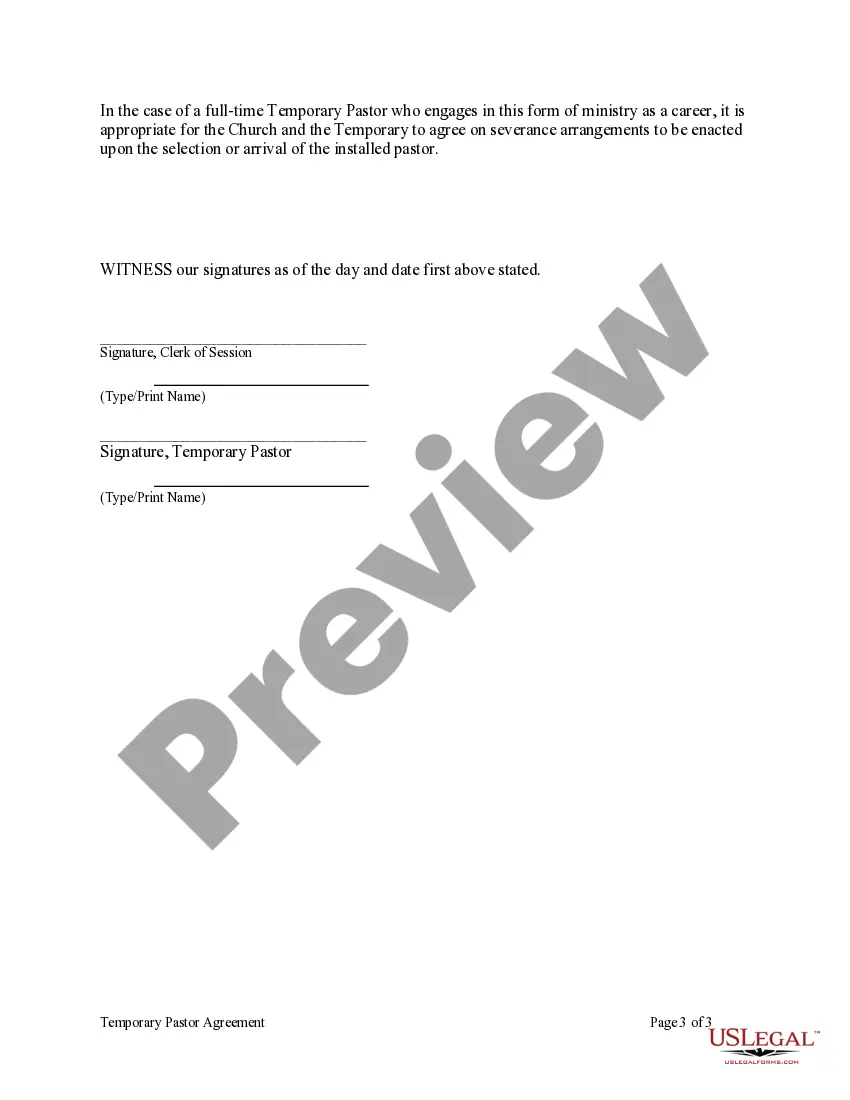
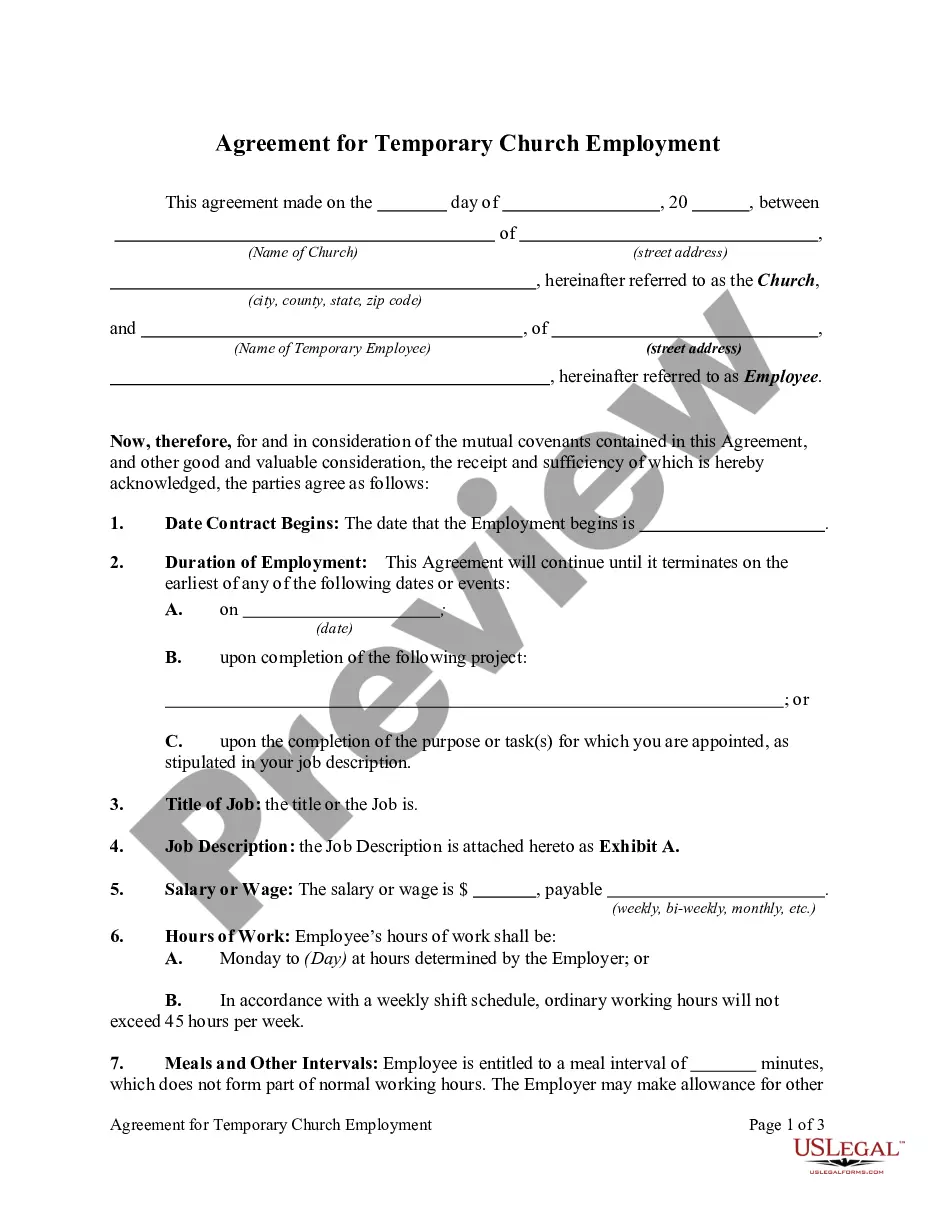
How to fill out Temporary Pastor Agreement?
How to locate expert legal documents adhering to your state laws and draft the Temporary Occupancy Agreement Form without consulting a lawyer.
Numerous online services provide templates to address various legal matters and formal procedures.
However, it might take a while to ascertain which of the accessible samples meet both your use case and legal stipulations.
Retrieve the Temporary Occupancy Agreement Form with the corresponding button next to the file name. If you do not have an account with US Legal Forms, then follow the steps below: Review the webpage you've accessed and confirm if the form fulfills your requirements. To do so, utilize the form description and preview options if provided. Search for an alternative template in the header designated for your state if needed. Press the Buy Now button when you identify the correct document. Choose the most appropriate pricing plan, then Log In or register an account. Select a payment option (either by credit card or through PayPal). Alter the file format for your Temporary Occupancy Agreement Form and click Download. The obtained templates remain with you: you can always revisit them in the My documents tab of your account. Join our collection and craft legal documents on your own like a seasoned legal professional!
- US Legal Forms is a reliable service that assists you in locating official documents created in accordance with the most recent state law revisions and helps you save on legal fees.
- US Legal Forms is not a typical online directory.
- It serves as a repository of over 85,000 verified templates for different business and personal situations.
- All documents are categorized by area and state to streamline your searching process.
- It also integrates advanced tools for PDF editing and electronic signatures, permitting users with a Premium subscription to swiftly complete their forms online.
- It requires minimal time and effort to obtain the necessary documents.
- If you already possess an account, Log In and verify your subscription is active.
Form popularity
FAQ
A use and occupancy agreement - sometimes referred to as a U&O - is a temporary agreement between the buyer and the seller that allows one party the right to use and occupy the property for a set period of time. It's usually put in place if the buyer needs to move into the property before ownership can be transferred.
The tenancy / occupancy agreement clearly sets out the amount of rent, what it covers, how it is to be paid, how any changes of rent will be notified to the tenant, arrangements for return of rent deposits and how any deductions from the deposit will be agreed.
By Practical Law Real Estate. A Standard Document allowing a real estate purchaser to use and occupy a residential property in New Jersey before closing or the real estate seller to remain in the property after closing.
If a property is 'under offer' you can still make an offer of your own. This is because it is technically still available. Until all the paperwork has been signed and exchanged, the buyer and seller do not legally have to proceed with the sale.
