Release Waivers
Description


Get your form ready online
Our built-in tools help you complete, sign, share, and store your documents in one place.
Make edits, fill in missing information, and update formatting in US Legal Forms—just like you would in MS Word.
Download a copy, print it, send it by email, or mail it via USPS—whatever works best for your next step.
Sign and collect signatures with our SignNow integration. Send to multiple recipients, set reminders, and more. Go Premium to unlock E-Sign.
If this form requires notarization, complete it online through a secure video call—no need to meet a notary in person or wait for an appointment.
We protect your documents and personal data by following strict security and privacy standards.

Make edits, fill in missing information, and update formatting in US Legal Forms—just like you would in MS Word.

Download a copy, print it, send it by email, or mail it via USPS—whatever works best for your next step.

Sign and collect signatures with our SignNow integration. Send to multiple recipients, set reminders, and more. Go Premium to unlock E-Sign.

If this form requires notarization, complete it online through a secure video call—no need to meet a notary in person or wait for an appointment.

We protect your documents and personal data by following strict security and privacy standards.
Looking for another form?
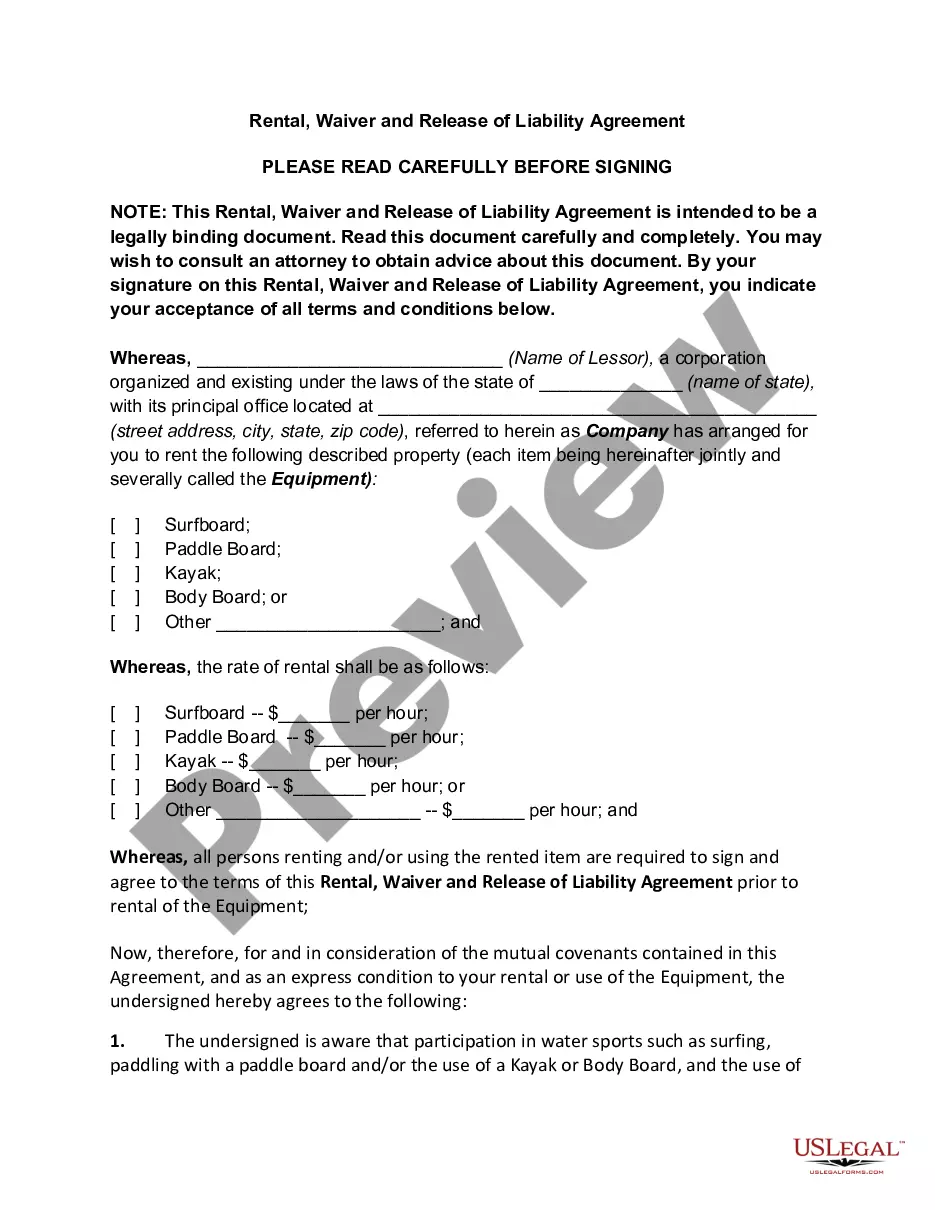
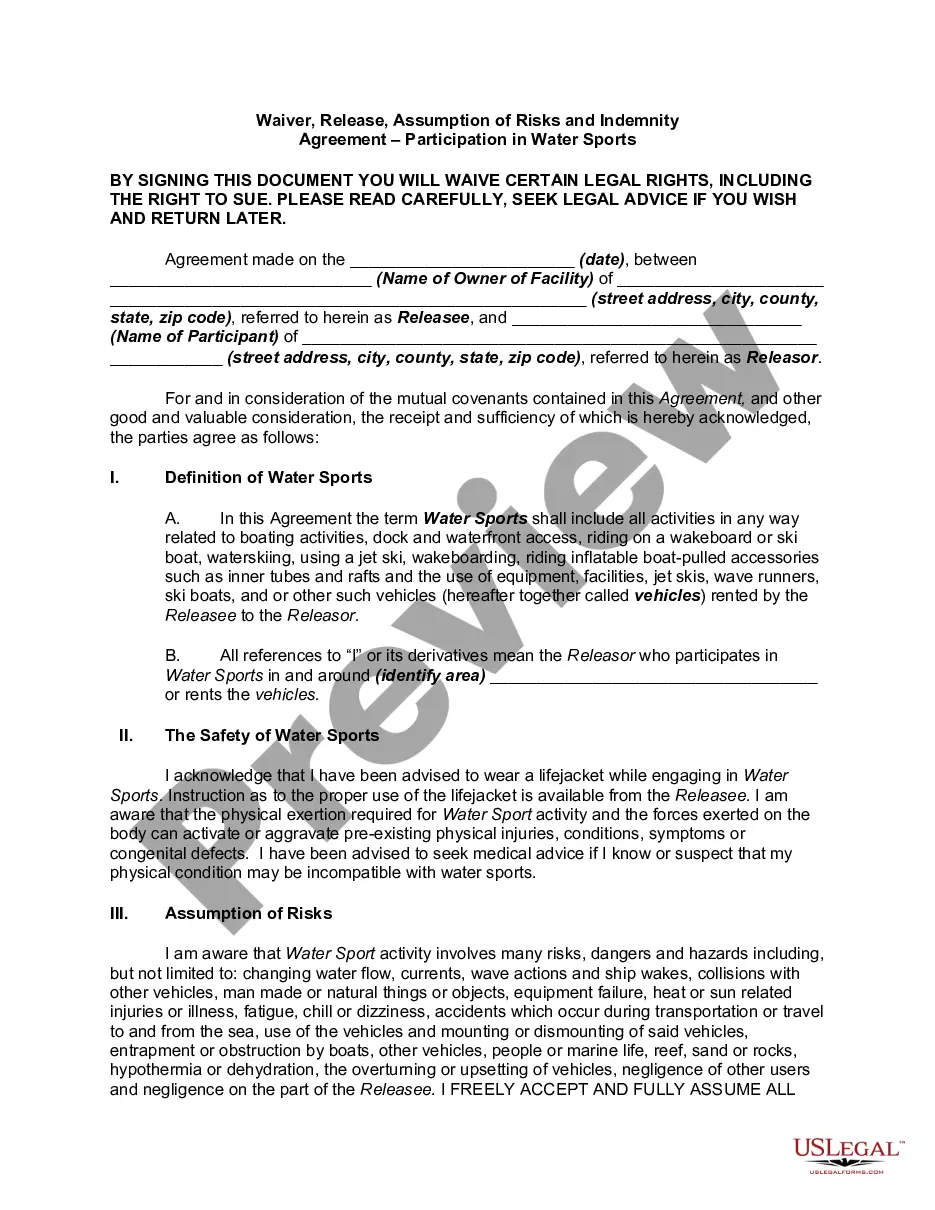
How to fill out Rental, Waiver And Release Of Liability Agreement - Water Sports Or Beach Rentals?
- If you're an existing user, log in to your account to download your required release waiver template with the click of the Download button. Confirm that your subscription is active and renew if necessary.
- For first-time users, start by browsing the extensive library. Use the Preview mode to check descriptions and ensure the chosen form complies with your local jurisdiction’s needs.
- If you don't find a suitable template, utilize the Search tab to locate the correct release waiver that fits your requirements.
- Once you identify the right document, select the Buy Now button and choose your preferred subscription plan. An account registration will grant you full access to the library.
- Enter your payment information, using either your credit card or PayPal, to finalize your purchase.
- Finally, download your completed form to your device. You can revisit it later through the My Forms section of your profile.
In conclusion, US Legal Forms streamlines the process of obtaining release waivers, offering a vast library and expert assistance. Take advantage of this tool to make your legal documentation stress-free.
Start today and gain peace of mind by ensuring your release waivers are legally sound!
Form popularity
FAQ
A waiver release form means a legal agreement that protects an organization by releasing them from liability for any injuries or damages that occur during an event or activity. When participants sign this document, they acknowledge the risks involved and agree not to hold the organization legally accountable. This form is a key legal tool that ensures both parties understand their rights and assumes responsibility for any incidents. At US Legal Forms, you can find customizable templates for waiver release forms that suit your specific needs.
A waiver release form is a specific type of document that combines elements of a waiver and a release of liability. This form not only informs participants about the risks involved in an activity but also releases the organization from financial liability for those risks once signed. By signing a waiver release form, individuals confirm they accept these risks and will not pursue legal action for any injuries sustained. It's essential for organizations to use these forms effectively to protect themselves while promoting safe participation.
The purpose of a waiver form is to clearly outline the risks associated with an activity while securing acknowledgment from participants. By signing this form, individuals waive their right to claim damages for certain injuries, which helps organizations mitigate potential legal claims. This enhances safety and transparency, allowing everyone to enjoy activities with a clear understanding of the associated risks. Utilizing waiver forms can significantly minimize legal disputes and boost participant confidence.
Release waivers are legal documents that protect organizations from liability in case of accidents or injuries. When a participant signs a release waiver, they agree not to hold the organization responsible for any harm that may occur. These documents are commonly used in sports, recreational activities, and events where risks are involved. Understanding release waivers is crucial for both organizers and participants to ensure everyone knows their rights and responsibilities.
While you can create a liability waiver without a lawyer, consulting one ensures that the document meets legal standards and covers all necessary bases. A well-crafted waiver can protect you from future liability claims, making it a wise choice to get professional advice. uSlegalforms provides easy-to-use templates, making it simpler for you to create your release waivers, but legal consultation can enhance their effectiveness.
Writing a release of liability waiver involves clearly outlining the risks, detailing the parties involved, and specifying what liabilities the signer agrees to release. You should use simple language to ensure understanding. If you're unsure about the specifics, uSlegalforms offers templates that guide you in creating effective release waivers tailored to your requirements.
Typically, a liability waiver does not need to be notarized to be considered valid. However, some states or specific situations may require additional verification to enhance enforceability. Using uSlegalforms allows you to generate customized release waivers that include any necessary legal requirements pertinent to your state.
A waiver is a voluntary relinquishment of a known right, while a release form is a document that excuses one party from liability due to certain actions. Essentially, release waivers serve as a safeguard for businesses, ensuring they cannot be held responsible for certain risks. Understanding this distinction can help you choose the right document based on your needs.
A good waiver typically includes several key components: the full names of the parties involved, a clear description of the activity, specific risks assumed, and a statement of intent to release liability. Additionally, a date, signature lines, and contact information can help make the release waivers legally binding and enforceable.
To write a good waiver, ensure you use clear and concise language that precisely outlines the terms of the release waivers. Include essential details, such as the parties involved, the scope of the waiver, and applicable dates. It is also wise to consult with legal professionals to ensure the waiver complies with local laws and effectively protects your interests.