Unincorporated Association In Ohio
Description
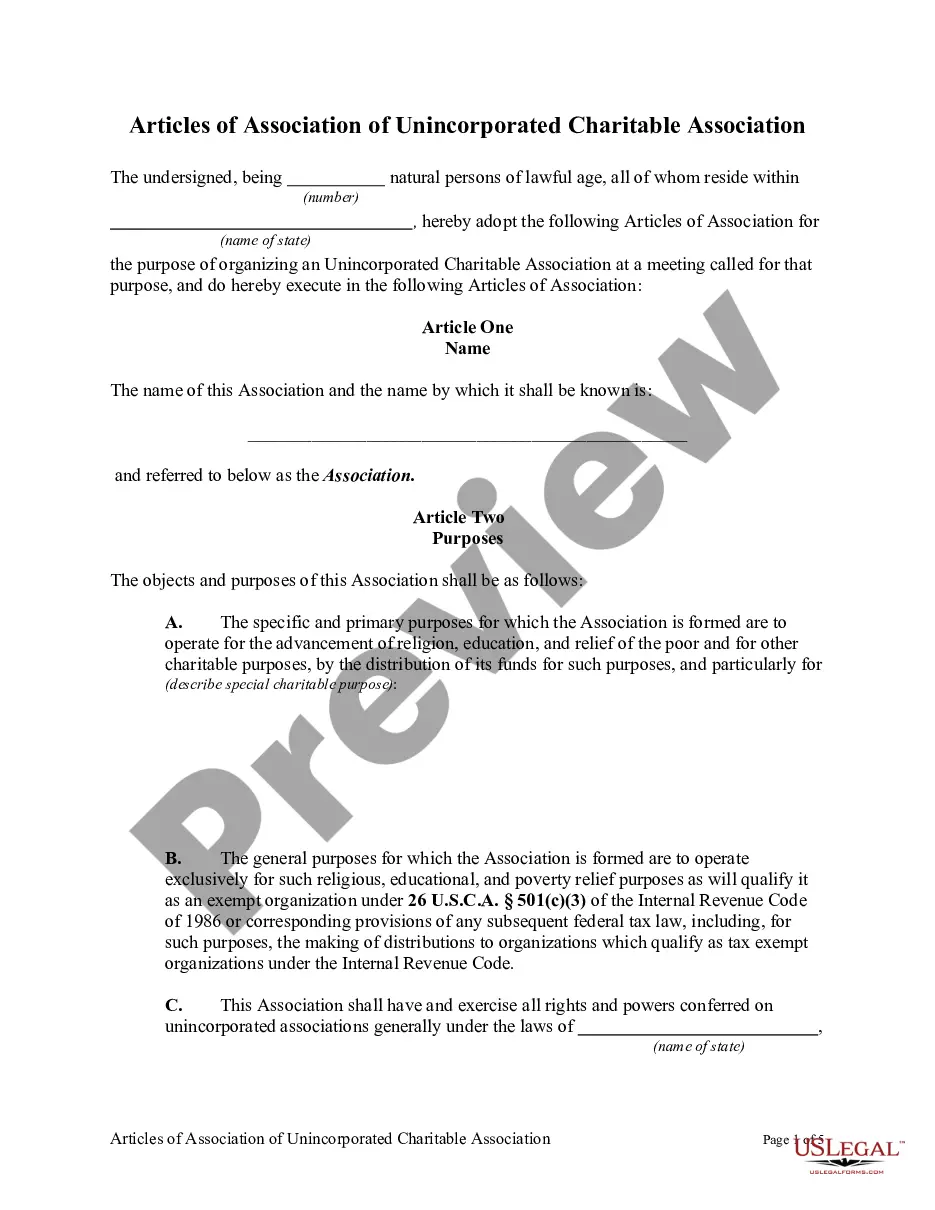
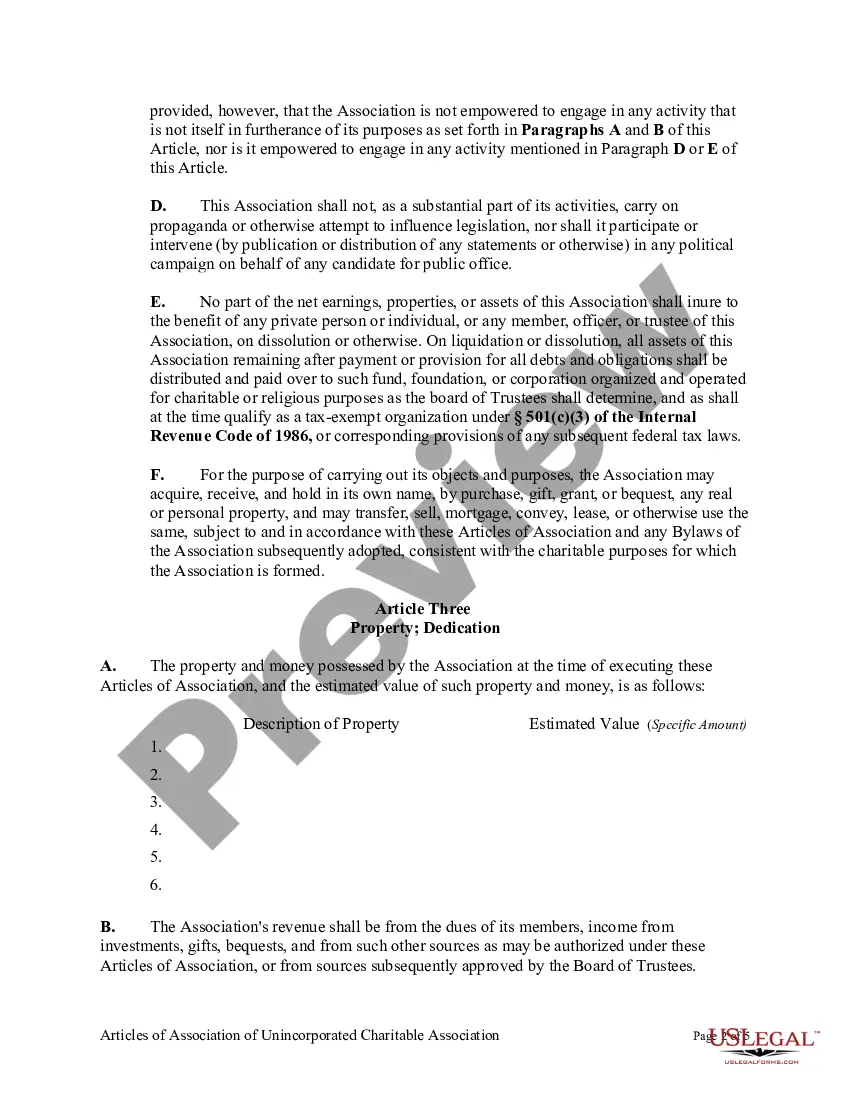
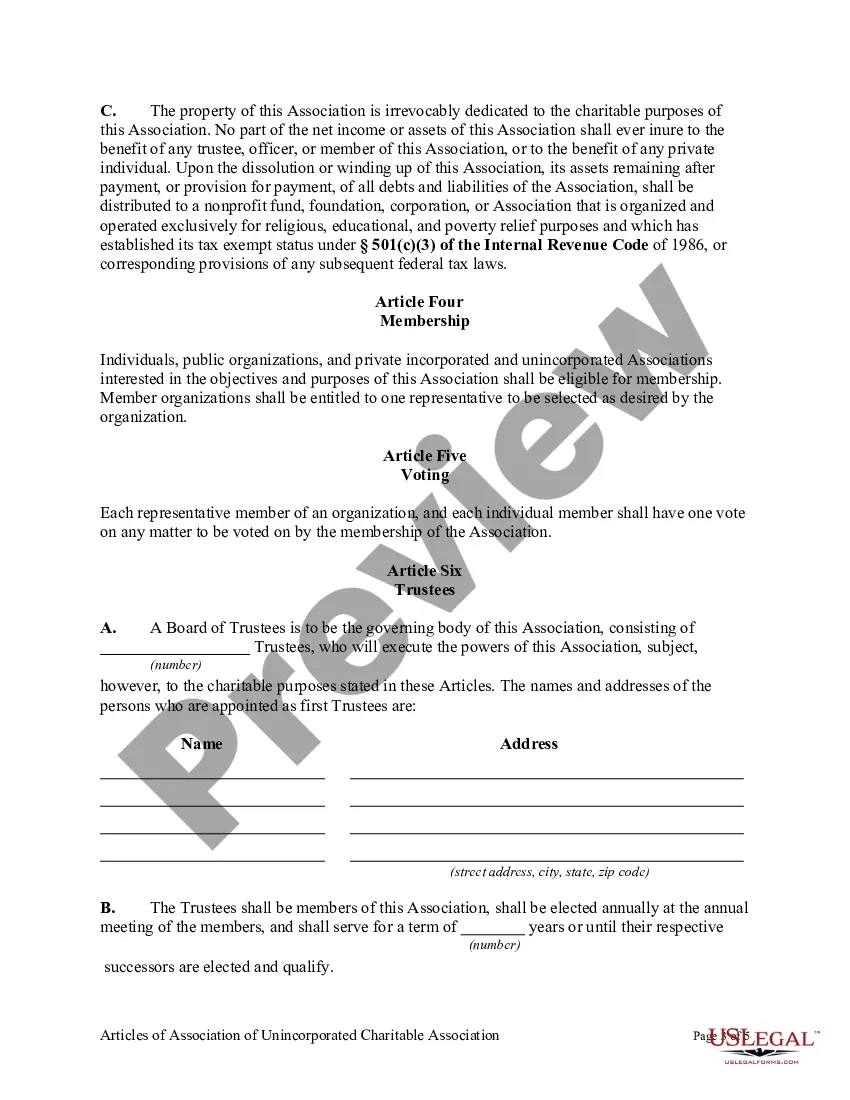
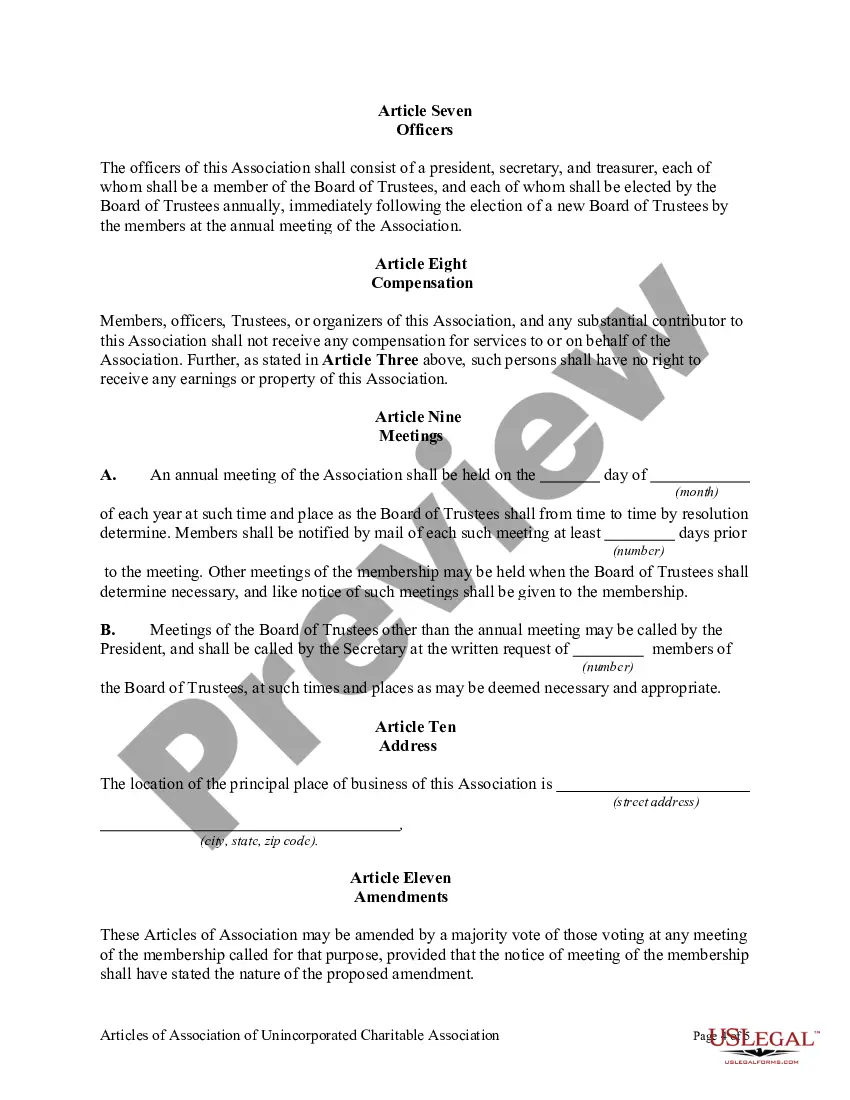
Get your form ready online
Our built-in tools help you complete, sign, share, and store your documents in one place.
Make edits, fill in missing information, and update formatting in US Legal Forms—just like you would in MS Word.
Download a copy, print it, send it by email, or mail it via USPS—whatever works best for your next step.
Sign and collect signatures with our SignNow integration. Send to multiple recipients, set reminders, and more. Go Premium to unlock E-Sign.
If this form requires notarization, complete it online through a secure video call—no need to meet a notary in person or wait for an appointment.
We protect your documents and personal data by following strict security and privacy standards.

Make edits, fill in missing information, and update formatting in US Legal Forms—just like you would in MS Word.

Download a copy, print it, send it by email, or mail it via USPS—whatever works best for your next step.

Sign and collect signatures with our SignNow integration. Send to multiple recipients, set reminders, and more. Go Premium to unlock E-Sign.

If this form requires notarization, complete it online through a secure video call—no need to meet a notary in person or wait for an appointment.

We protect your documents and personal data by following strict security and privacy standards.
Looking for another form?

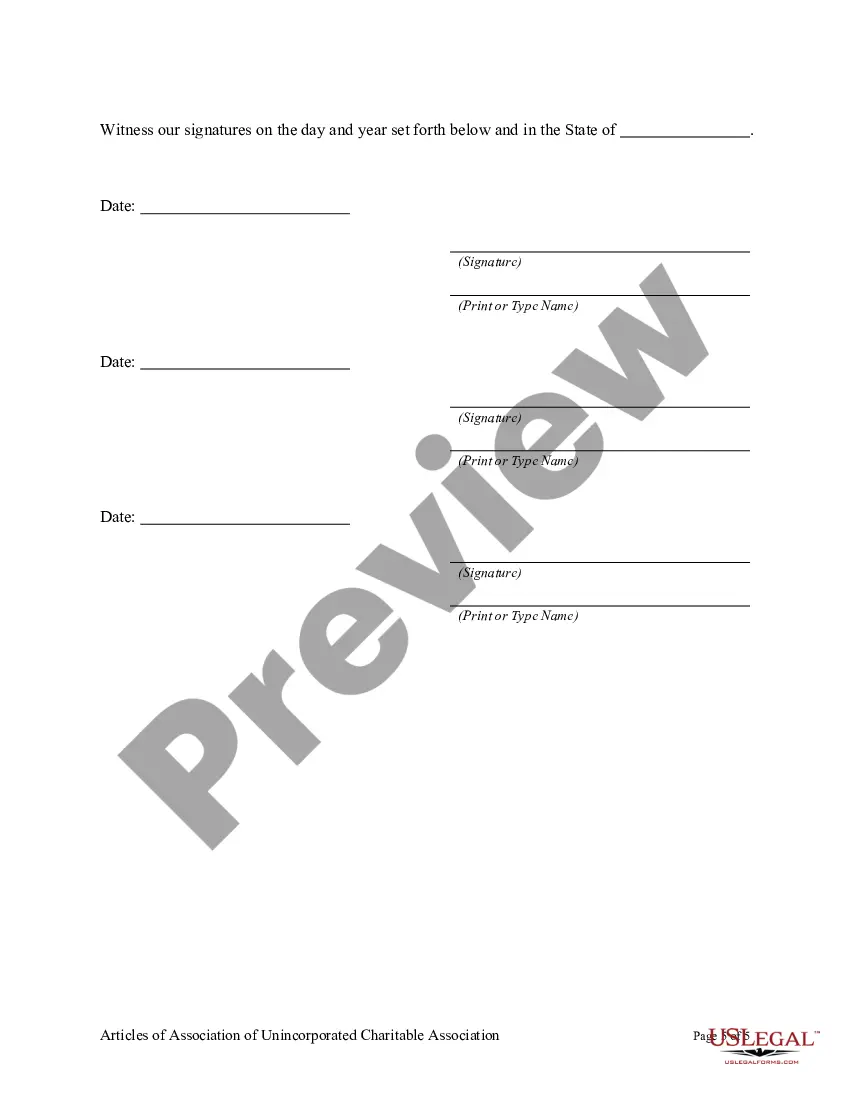
How to fill out Articles Of Association Of Unincorporated Charitable Association?
Whether for professional reasons or personal issues, everyone must confront legal circumstances at some stage in their lifetime.
Filling out legal documents requires meticulous care, starting from selecting the correct form template.
Once it is saved, you can fill out the form with the aid of editing software or print it and complete it by hand. With an extensive US Legal Forms catalog available, you will never need to waste time searching for the suitable sample on the internet. Utilize the library’s straightforward navigation to find the right template for any circumstance.
- Obtain the sample you require by using the search bar or catalog browsing.
- Review the form’s details to ensure it aligns with your case, state, and county.
- Access the form’s preview to analyze it.
- If it’s not the correct form, return to the search feature to find the Unincorporated Association In Ohio sample you need.
- Acquire the template if it fulfills your criteria.
- If you possess a US Legal Forms account, click Log in to access previously saved templates in My documents.
- If you don’t have an account yet, you can download the form by clicking Buy now.
- Select the appropriate pricing option.
- Complete the account registration form.
- Choose your payment method: use a credit card or PayPal account.
- Select the document format you desire and download the Unincorporated Association In Ohio.
Form popularity
FAQ
To set up an unincorporated association in Ohio, start by gathering interested members and discussing your shared goals. Next, define your association's rules and structure, ideally in a written agreement. Utilizing platforms like US Legal Forms can simplify the process, providing templates and resources to help you establish your association efficiently.
Forming an unincorporated association in Ohio is straightforward and requires minimal paperwork. Typically, a group convenes to outline its purpose and rules, often through a simple agreement among members. While formal registration is not necessary, drafting a guiding document may help clarify each member's role and responsibilities.
An unincorporated association in Ohio offers several advantages, including flexibility in structure and low formation costs. Members can make decisions collectively without the need for extensive legal formalities. This type of organization allows groups to operate smoothly while enjoying certain legal protections, especially in informal settings.
To register a non-profit organization in Ohio, begin by choosing a unique name for your organization. Next, you will need to file your articles of incorporation with the Ohio Secretary of State. Additionally, you must apply for federal tax-exempt status if you wish to operate as a 501(c)(3) organization. If you find this process daunting, USLegalForms can help you navigate the registration process efficiently.
In Ohio, a non-profit organization must have at least three directors on its board. These directors do not have to be Ohio residents, which provides flexibility for unincorporated associations in Ohio. Having a robust board can enhance the governance and accountability of your organization. If you need assistance in setting up your non-profit, consider using USLegalForms to access important legal documents and guidance.
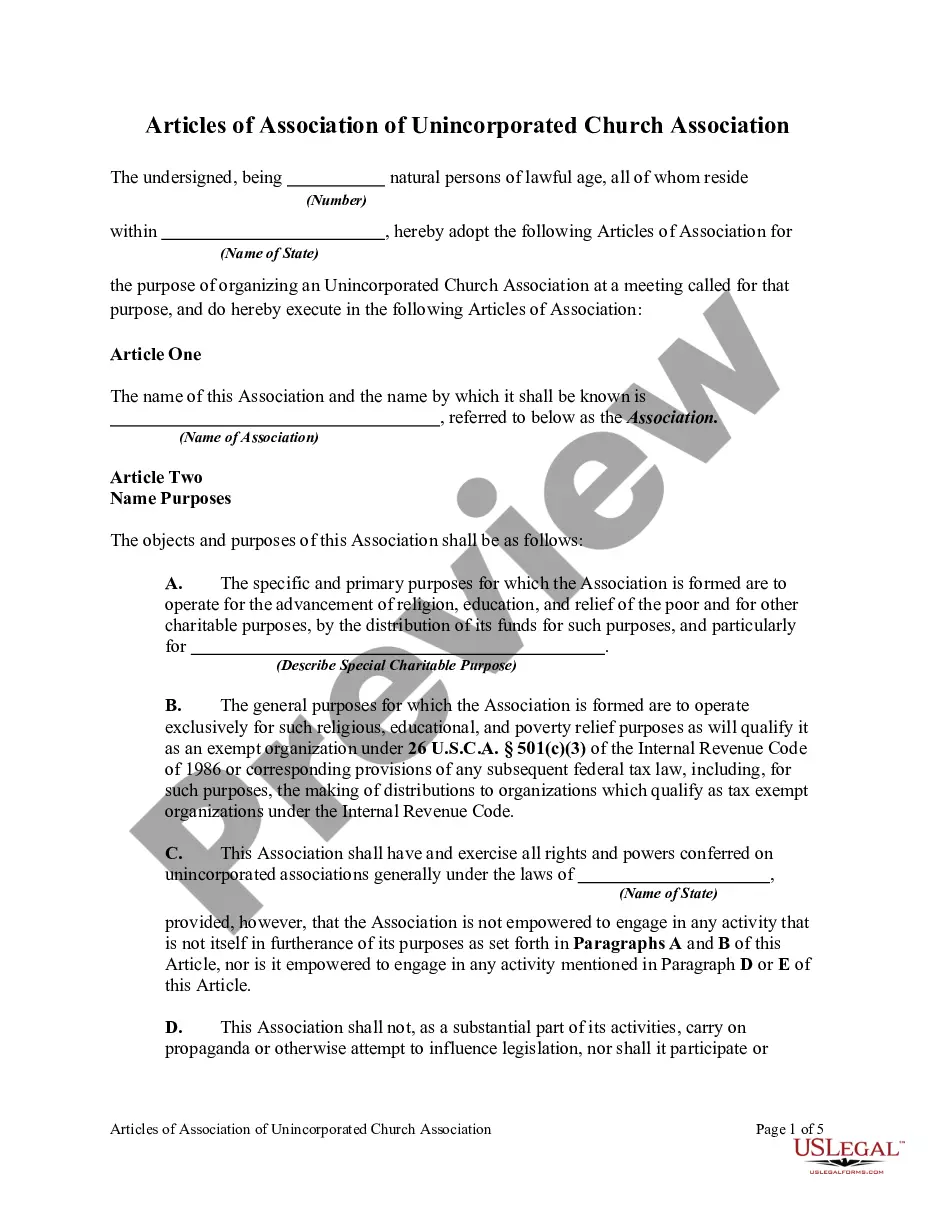
The purpose of an unincorporated association in Ohio is to bring people together for a shared interest, goal, or activity without the complexities of formal incorporation. This could range from social clubs to community service groups, allowing members to cooperate and organize effectively. Such associations typically operate based on mutual consent, aiming to fulfill collective objectives and enhance the members' experiences.
Ownership of an unincorporated association in Ohio is typically shared among its members rather than held by a single individual. Since the association does not have a legal identity, assets and liabilities are collectively managed by its members. This structure can promote collaboration and shared responsibility, allowing members to work together towards common goals.
The main difference between a nonprofit and an unincorporated association in Ohio lies in their legal status and purpose. Nonprofits are formally incorporated and recognized as tax-exempt organizations, whereas unincorporated associations do not enjoy this legal framework. A nonprofit must adhere to specific regulatory requirements, while an unincorporated association can operate with more flexibility and less administrative burden.
Unincorporated associations in Ohio generally do not file taxes as separate entities unless they meet specific income thresholds. Members typically report any income on their personal tax returns, which can simplify compliance. However, it is essential to understand the tax implications for your specific situation to ensure proper adherence to state and federal regulations.
Using an unincorporated association in Ohio allows for easy formation and a flexible structure. This option is often chosen for groups focused on social, charitable, or recreational activities without the need for complex regulatory requirements. Additionally, the simplicity of management can foster camaraderie among members and enhance decision-making processes.