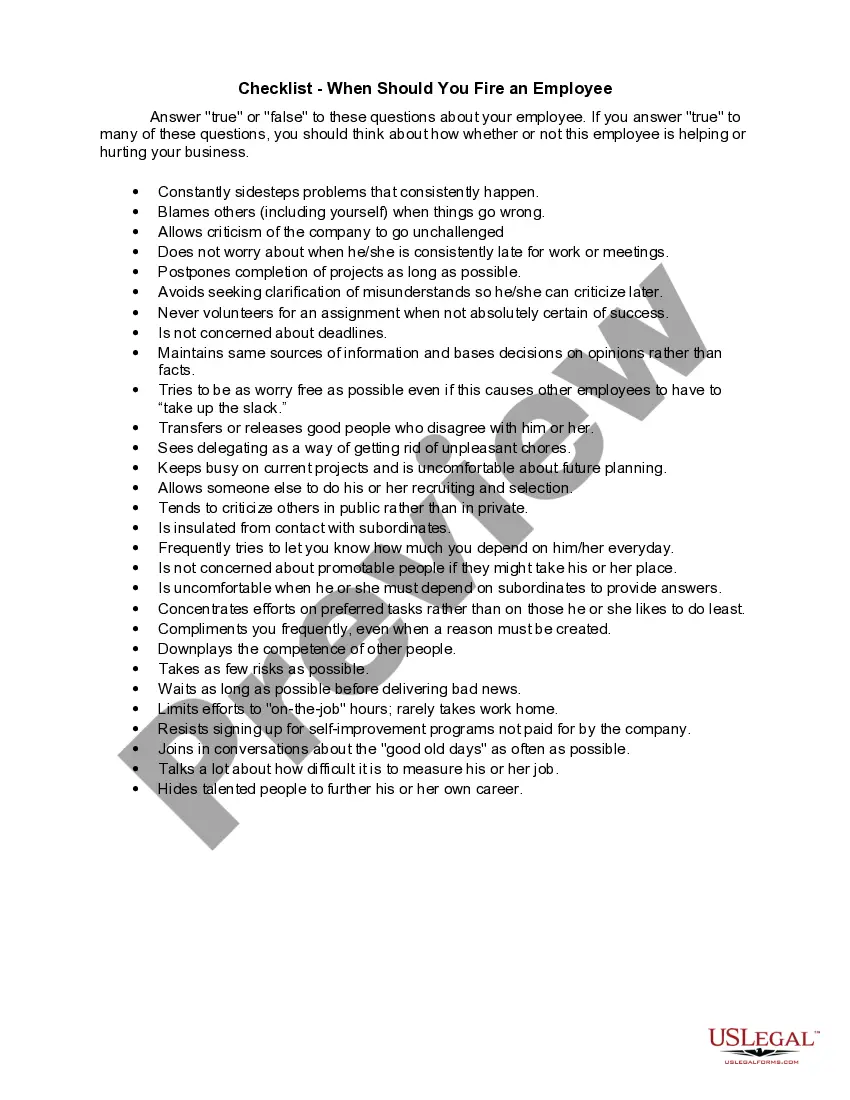
Should You Fire Employee Without Paying Taxes
Description
Get your form ready online
Our built-in tools help you complete, sign, share, and store your documents in one place.
Make edits, fill in missing information, and update formatting in US Legal Forms—just like you would in MS Word.
Download a copy, print it, send it by email, or mail it via USPS—whatever works best for your next step.
Sign and collect signatures with our SignNow integration. Send to multiple recipients, set reminders, and more. Go Premium to unlock E-Sign.
If this form requires notarization, complete it online through a secure video call—no need to meet a notary in person or wait for an appointment.
We protect your documents and personal data by following strict security and privacy standards.

Make edits, fill in missing information, and update formatting in US Legal Forms—just like you would in MS Word.

Download a copy, print it, send it by email, or mail it via USPS—whatever works best for your next step.

Sign and collect signatures with our SignNow integration. Send to multiple recipients, set reminders, and more. Go Premium to unlock E-Sign.

If this form requires notarization, complete it online through a secure video call—no need to meet a notary in person or wait for an appointment.

We protect your documents and personal data by following strict security and privacy standards.
Looking for another form?


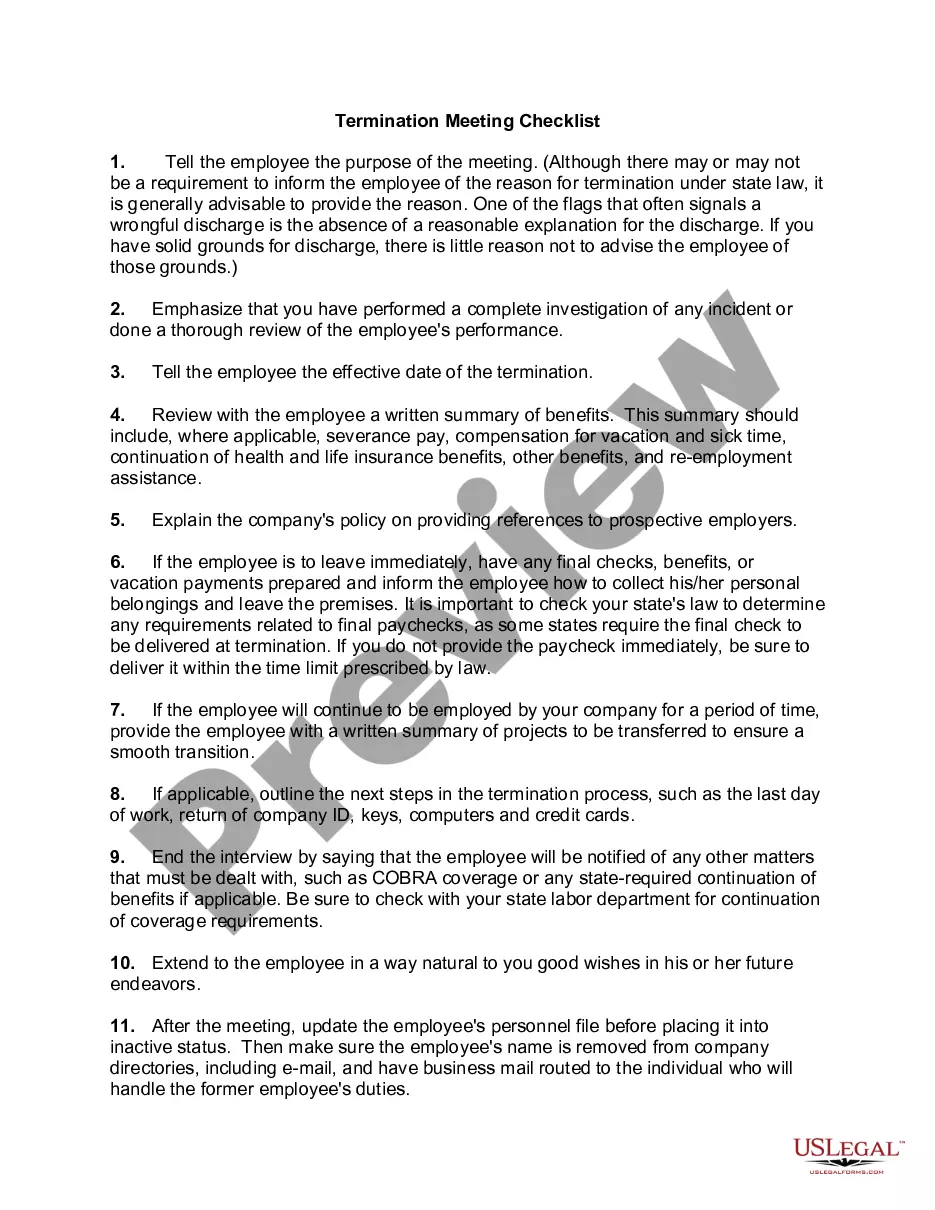
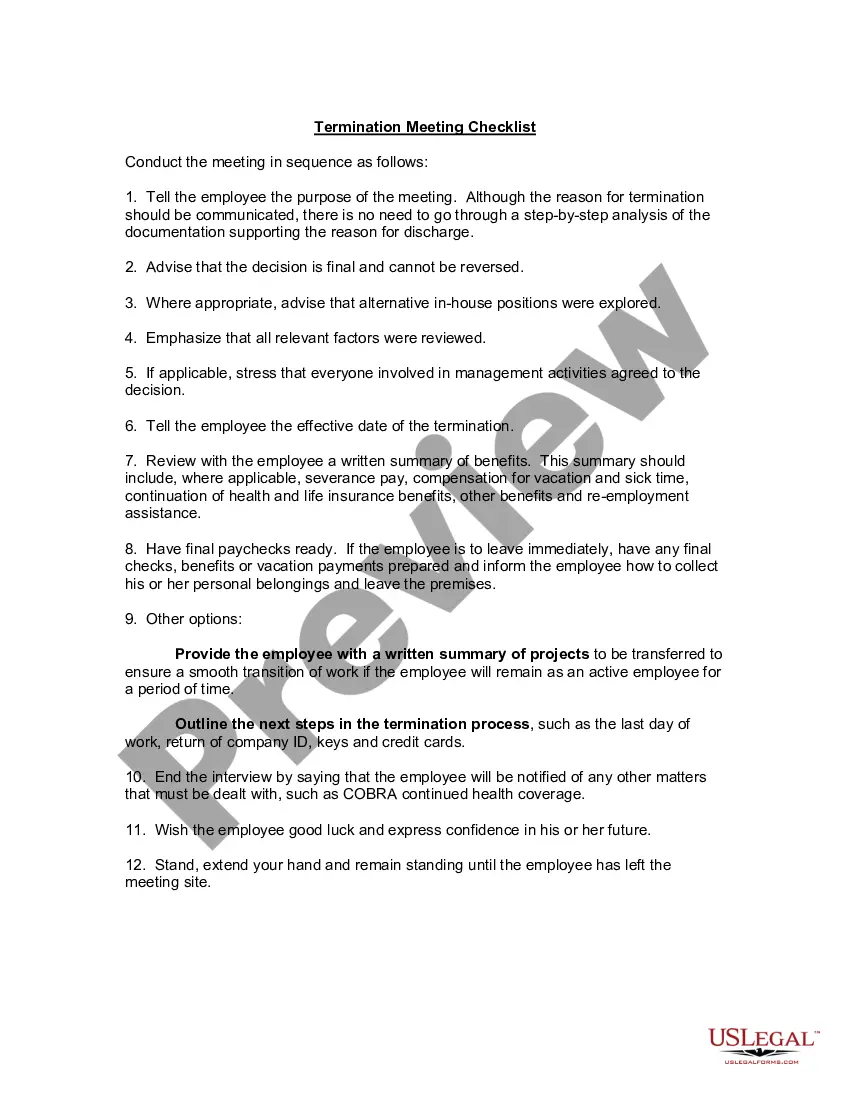
How to fill out Checklist - When Should You Fire An Employee?
It’s widely known that you cannot become a legal authority in a short period, nor can you swiftly understand how to efficiently draft Should You Fire Employee Without Paying Taxes without possessing a specific skill set.
Generating legal documents is an elaborate undertaking that demands a certain level of education and expertise. Therefore, why not entrust the drafting of the Should You Fire Employee Without Paying Taxes to the professionals.
With US Legal Forms, one of the most extensive collections of legal templates, you can find everything from legal filings to templates for workplace correspondence. We recognize how vital compliance with federal and local regulations is.
Click Buy now. Once your payment is processed, you can download the Should You Fire Employee Without Paying Taxes document, fill it in, print it, and either deliver it by mail or send it to the appropriate parties.
You can access your documents anytime from the My documents section. If you are a returning user, simply Log In to find and download the template from the same area.
Regardless of the intent of your documentation—whether related to finances, legal matters, or personal use—our site has what you need. Experience US Legal Forms today!
- Start by visiting our site and obtain the document you need within minutes.
- Locate the document you seek using the search feature at the top of the website.
- If available, preview it and review the accompanying description to see if Should You Fire Employee Without Paying Taxes meets your needs.
- If you require a different template, initiate your search again.
- Create a free account and select a subscription plan to acquire the template.
Form popularity
FAQ
Yes, an employer can terminate an employee immediately, but there are important considerations to keep in mind. When deciding on termination, employers must ensure compliance with federal and state laws, as well as company policies. It's crucial to address any outstanding issues, including tax liabilities. If you are wondering, 'should you fire employee without paying taxes,' it’s advisable to consult with a legal expert or use platforms like US Legal Forms to navigate the complexities of employment law.
A silent termination occurs when an employee is effectively let go without an official termination meeting or communication. This can lead to confusion and may create legal issues, particularly regarding whether you should fire an employee without paying taxes. Clear communication is essential to ensure the employee understands their status and the implications of their termination. Utilizing platforms like USLegalForms can provide the necessary documentation and guidance to handle terminations properly.
When considering whether to fire an employee, HR should gather documented evidence such as performance reviews, attendance records, and any written warnings. This evidence helps ensure that the decision aligns with company policy and legal requirements. It's crucial to establish a clear justification for termination, especially when contemplating sensitive issues like whether you should fire an employee without paying taxes. Having solid evidence protects the organization from potential legal challenges.
The $600 rule refers to the IRS requirement that businesses report payments made to independent contractors totaling $600 or more in a calendar year. This rule ensures proper tax reporting and compliance for both parties involved. If you're considering whether you should fire an employee without paying taxes, understanding such reporting requirements is crucial to avoid legal repercussions.
Yes, you can potentially be fired for not paying your taxes, as it may violate company policies or create legal complications for the employer. Many companies require employees to maintain good standing with tax obligations as part of their employment terms. If you're facing tax issues, it’s wise to resolve them promptly to maintain your job security, particularly when contemplating if you should fire an employee without paying taxes.
You can report someone who is working and not paying taxes by contacting the IRS or your state's tax agency. Provide specific details such as the individual's name, address, and the nature of the work being done. Reporting these actions can help ensure compliance and address issues related to whether you should fire an employee without paying taxes.
When considering the question, should you fire an employee without paying taxes, it’s essential to understand the legal implications. First, ensure you follow proper procedures such as documenting performance issues and conducting exit interviews. Do communicate clearly with the employee about their termination and the reasons behind it. Avoid any actions that could be perceived as discriminatory or retaliatory, as these can lead to legal complications.