Assessment Worksheet For Kindergarten
Description
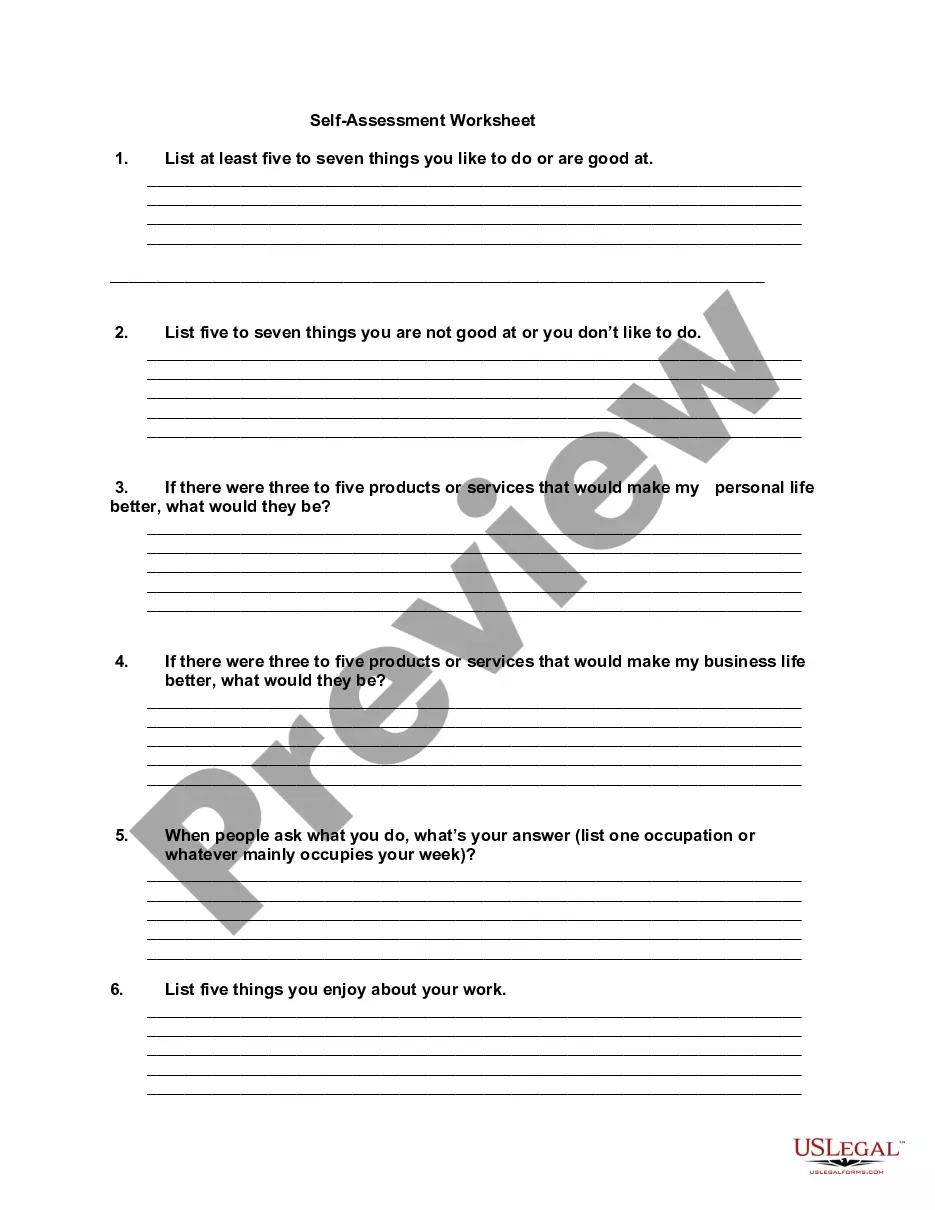
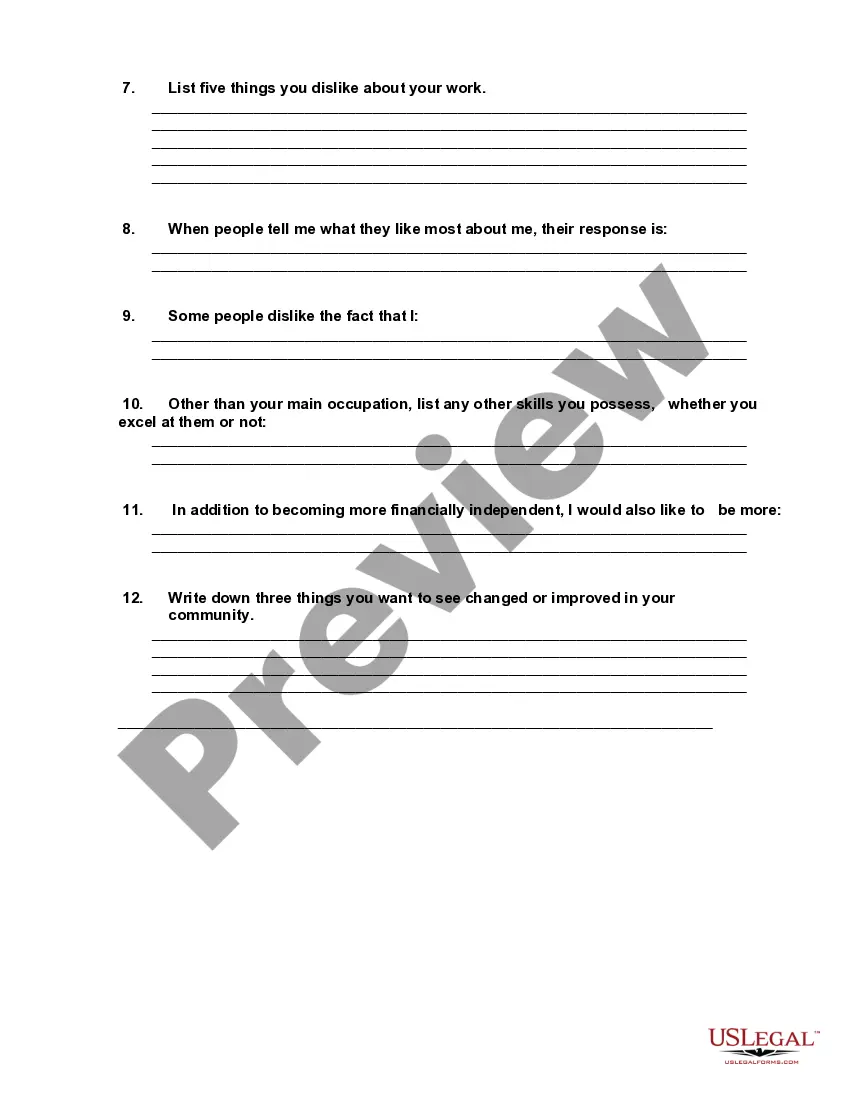
Get your form ready online
Our built-in tools help you complete, sign, share, and store your documents in one place.
Make edits, fill in missing information, and update formatting in US Legal Forms—just like you would in MS Word.
Download a copy, print it, send it by email, or mail it via USPS—whatever works best for your next step.
Sign and collect signatures with our SignNow integration. Send to multiple recipients, set reminders, and more. Go Premium to unlock E-Sign.
If this form requires notarization, complete it online through a secure video call—no need to meet a notary in person or wait for an appointment.
We protect your documents and personal data by following strict security and privacy standards.

Make edits, fill in missing information, and update formatting in US Legal Forms—just like you would in MS Word.

Download a copy, print it, send it by email, or mail it via USPS—whatever works best for your next step.

Sign and collect signatures with our SignNow integration. Send to multiple recipients, set reminders, and more. Go Premium to unlock E-Sign.

If this form requires notarization, complete it online through a secure video call—no need to meet a notary in person or wait for an appointment.

We protect your documents and personal data by following strict security and privacy standards.
Looking for another form?
How to fill out Self-Assessment Worksheet?
Individuals commonly link legal documentation with a complicated process that only an expert can manage.
In a sense, this is accurate, as composing an Assessment Worksheet For Kindergarten necessitates considerable understanding of the subject requirements, including state and county laws.
However, with US Legal Forms, the situation has improved: ready-made legal templates for any life and business scenario tailored to state regulations are gathered in one online directory and are now accessible to everyone.
Create an account or Log In to continue to the payment page. Make your payment using PayPal or your credit card. Choose your desired file format and click Download. Print your document or upload it to an online editor for quicker completion. All templates in our catalog are reusable: once purchased, they remain stored in your profile. You can access them at any time through the My documents tab. Discover all the advantages of using the US Legal Forms platform. Subscribe today!
- US Legal Forms provides over 85,000 current documents categorized by state and area of application, making it quick to find the Assessment Worksheet For Kindergarten or any other specific template in just minutes.
- Existing users with an active subscription must Log In to their account and click Download to retrieve the form.
- New users will need to create an account and subscribe before downloading any files.
- Here’s a detailed procedure on how to acquire the Assessment Worksheet For Kindergarten.
- Review the content of the page carefully to ensure it fulfills your requirements.
- Read the form description or view it through the Preview feature.
- If the previous document doesn’t meet your needs, find another example through the Search field above.
- When you find the appropriate Assessment Worksheet For Kindergarten, click Buy Now.
- Select a subscription plan that suits your needs and budget.
Form popularity
FAQ
To prepare for a kindergarten assessment, consider engaging your child in playful learning activities that enhance their skills. Reading together and practicing basic math concepts can be helpful. Moreover, an assessment worksheet for kindergarten can serve as a practical resource, allowing you to identify specific areas where your child may need additional focus.
The assessment for learning in kindergarten focuses on understanding children’s progress toward learning goals. It provides insights that inform instruction and help tailor educational experiences to individual needs. By incorporating an assessment worksheet for kindergarten, parents can contribute to this process and ensure their child's learning journey is on track.
Educators assess various areas in kindergarten, including language skills, number sense, and social behavior. The goal is to identify children's strengths and areas for improvement, supporting their overall development. Utilizing an assessment worksheet for kindergarten enables parents to actively engage in their child's learning and monitor progress.
A kindergarten entrance exam usually covers essential skills such as letter recognition, counting, and basic shape identification. The purpose is to determine a child's readiness for the curriculum. An assessment worksheet for kindergarten can be a valuable tool for parents to prepare their children before they take the exam.
During a kindergarten assessment, you can expect a mix of activities that evaluate your child's skills in areas like literacy, math, and social interaction. The assessment is typically administered in a friendly environment to keep your child comfortable. Using an assessment worksheet for kindergarten can help familiarize your child with the types of activities they will encounter.
Children do not technically fail kindergarten assessments; these assessments are designed to gauge their readiness for school. They help identify areas where a child may need support or enrichment. An assessment worksheet for kindergarten can aid in understanding your child's learning needs and establish a foundation for development.
A kindergarten assessment typically takes between 30 minutes to an hour, depending on the specific format used, including the assessment worksheet for kindergarten. Teachers aim to create a comfortable environment, ensuring that children feel relaxed during the assessment process. The duration allows educators enough time to adequately evaluate each child's abilities without causing fatigue. This thoughtful approach helps ensure accurate results and supports effective learning strategies.
During a kindergarten assessment, children complete specific tasks that measure their understanding of various concepts, often using the assessment worksheet for kindergarten. Teachers observe how students approach these tasks, which can involve both individual work and interactive activities. Following the assessment, educators analyze the results to identify each child's strengths and areas for improvement. This approach ensures that students receive the tailored support they need to thrive in their educational environment.
To assess students' progress in kindergarten, teachers typically use various tools, including the assessment worksheet for kindergarten. This worksheet allows educators to track children's development in key areas such as literacy, numeracy, and social skills. By gathering this information, teachers can tailor instruction to meet each child's individual needs. Regular assessments also help in identifying areas where additional support may be necessary.
A kindergarten assessment often includes interactive activities that assess various skills, such as drawing, counting, and simple language tasks. Utilizing an assessment worksheet for kindergarten allows educators to document observations systematically. Typically, the assessment format is friendly and engaging; it may involve games or stories to keep children interested. The goal is to identify strengths and areas for growth, helping educators tailor their teaching approaches effectively.
