Job Contract For
Description
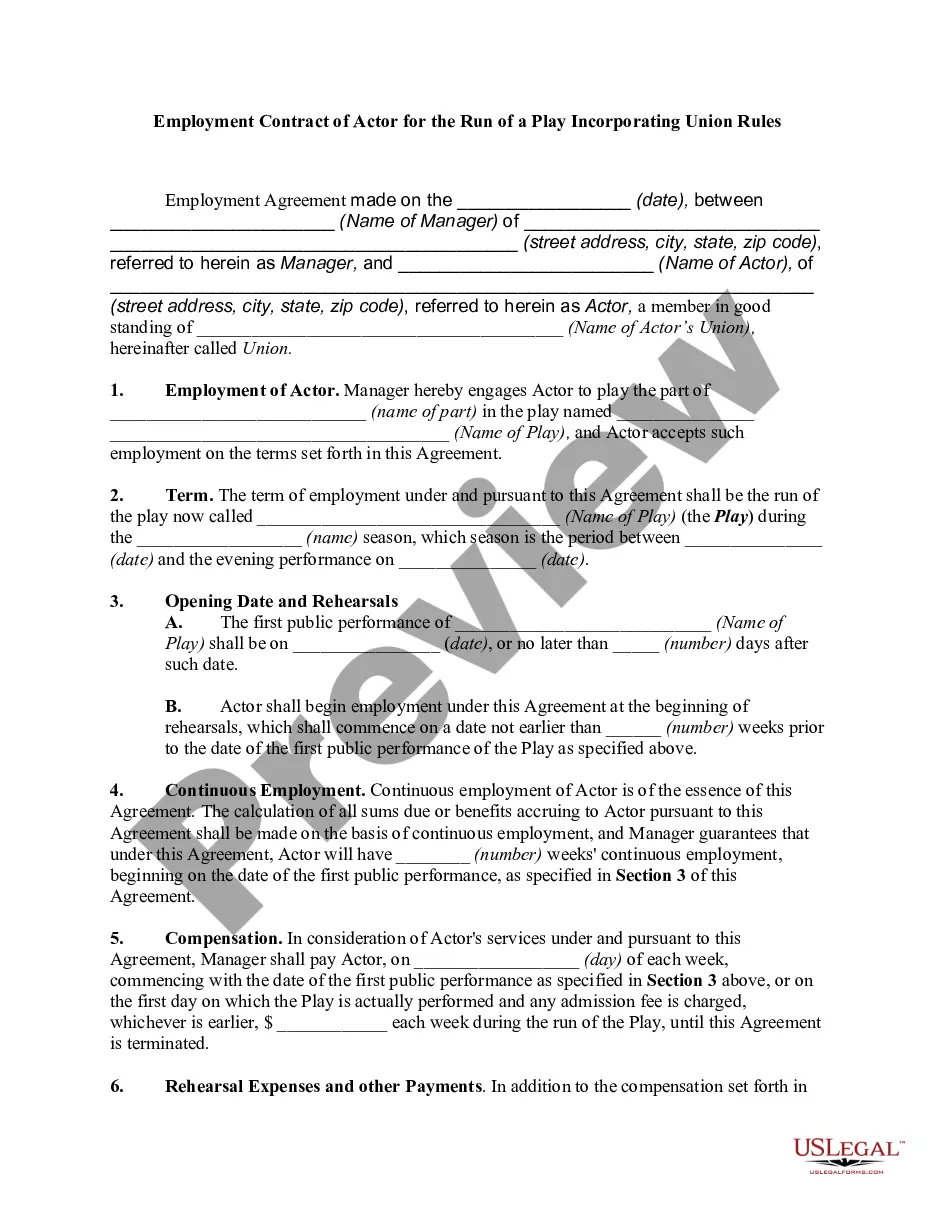
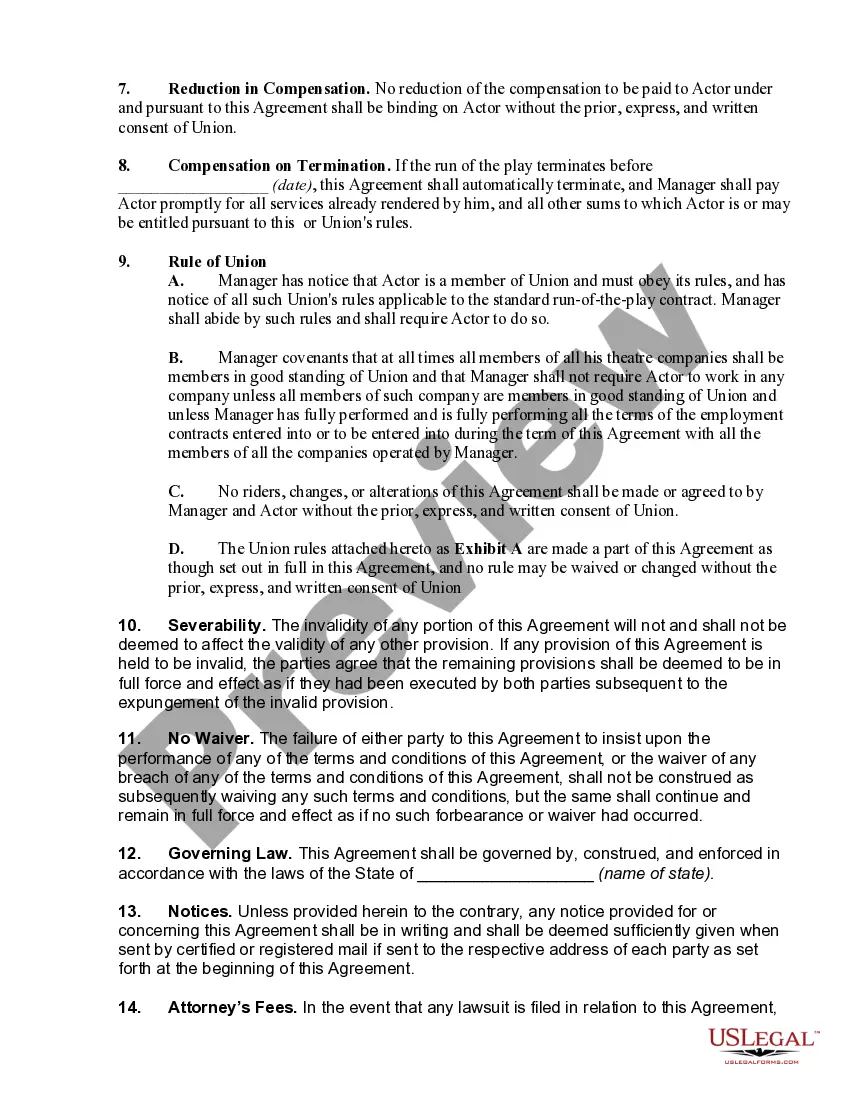
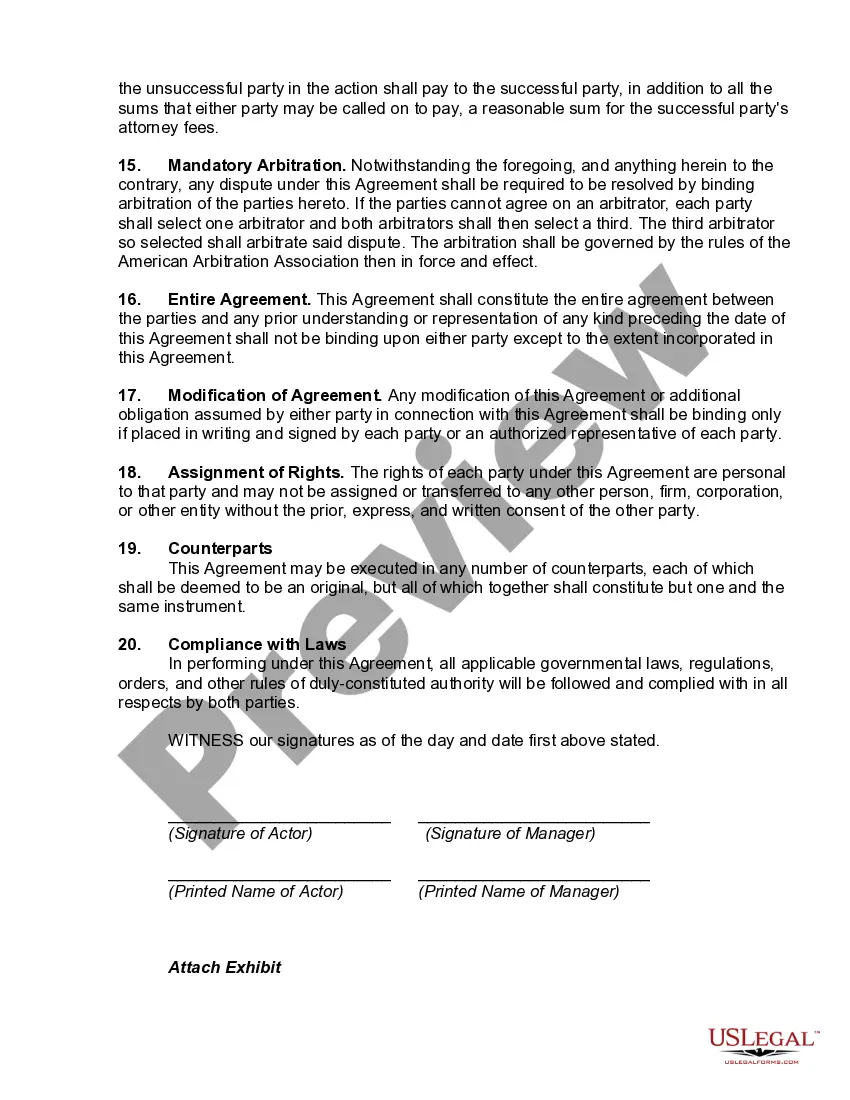
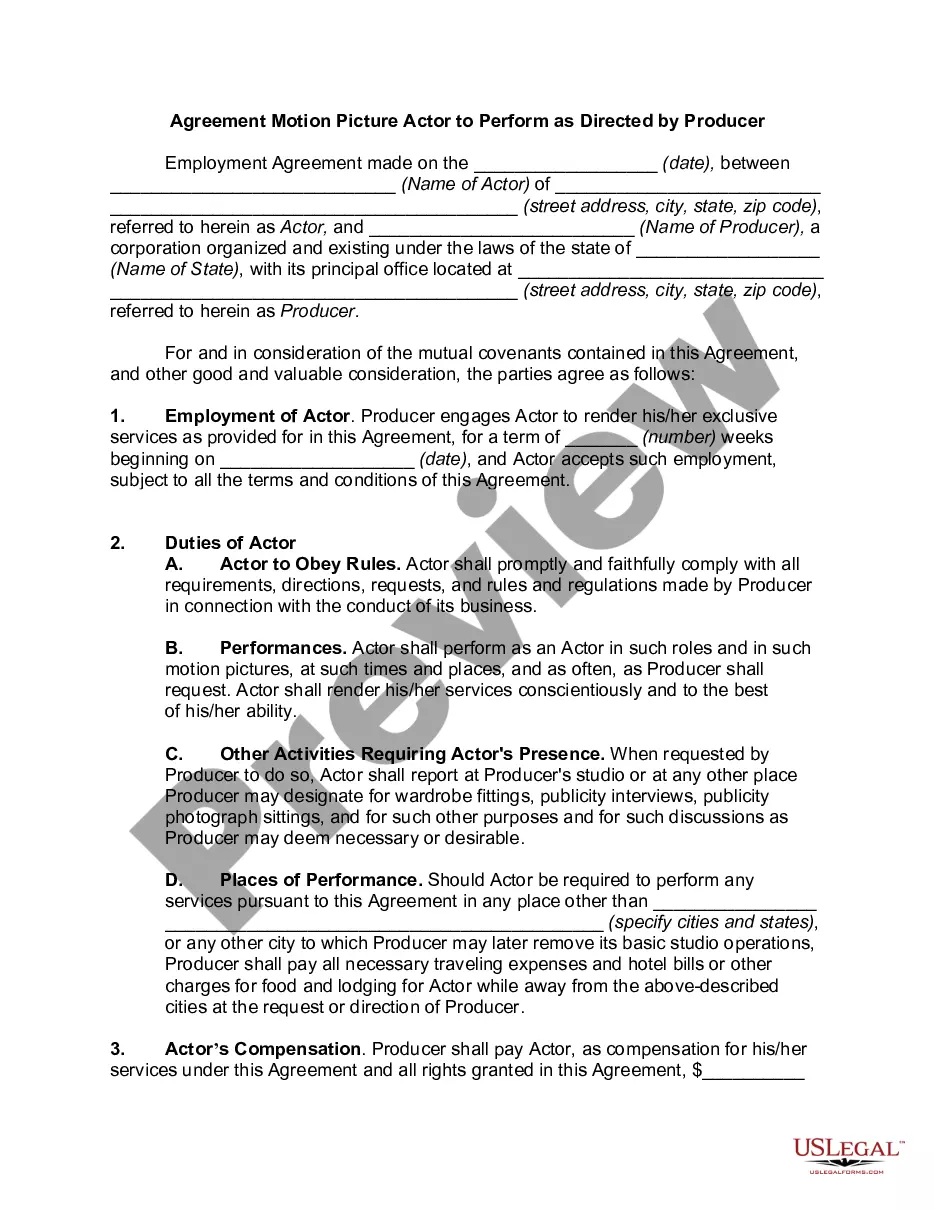
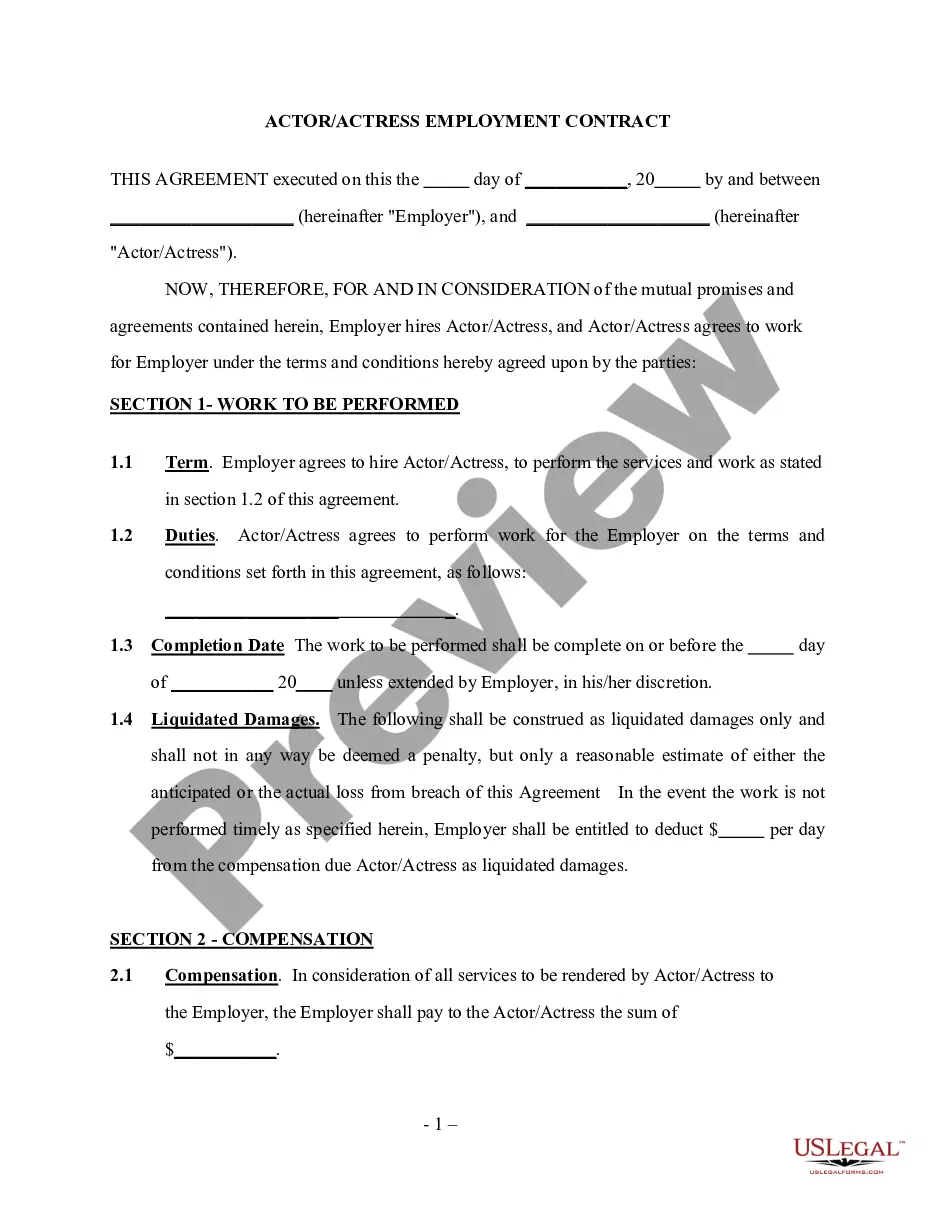
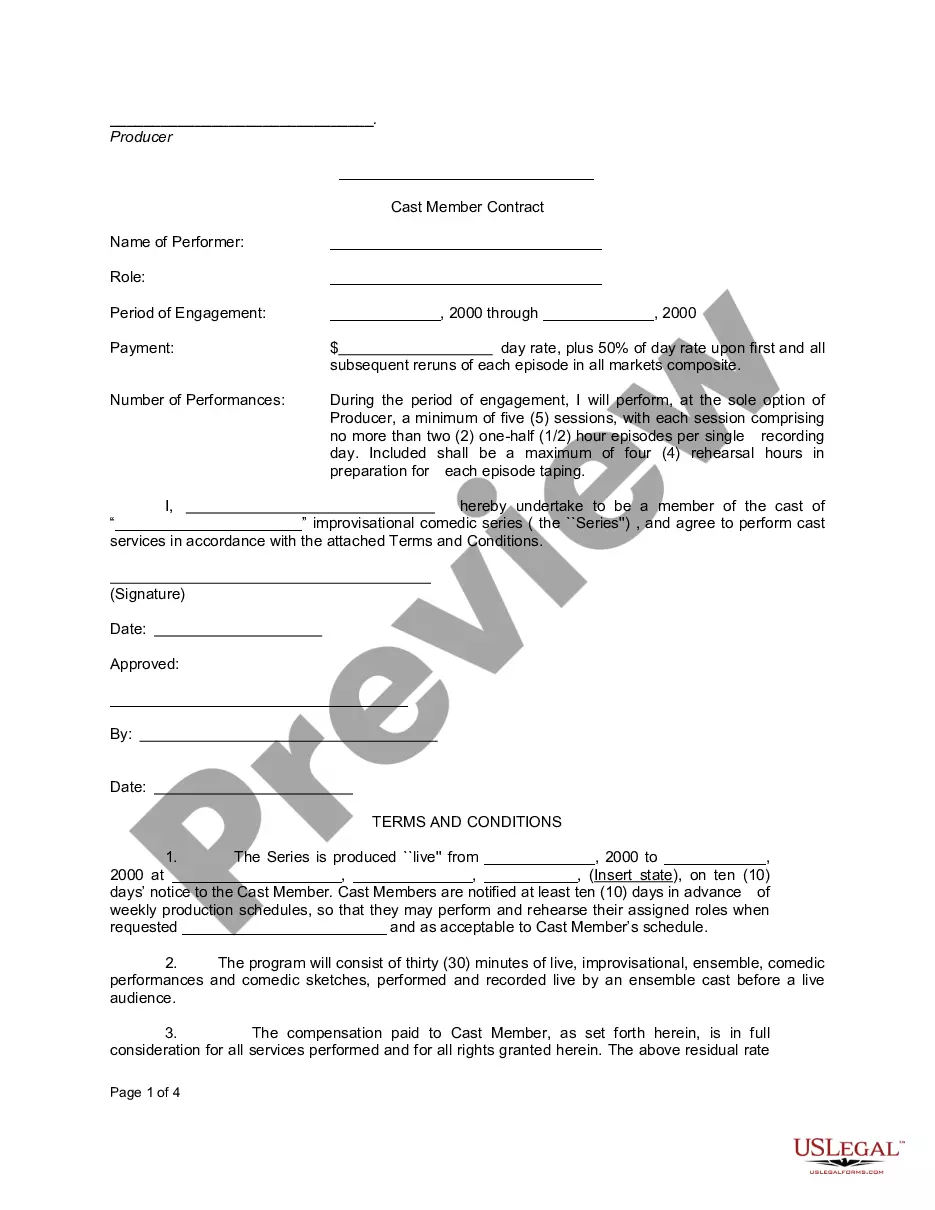
How to fill out Employment Contract Of Actor For The Run Of A Play Incorporating Union Rules?
The Employment Agreement displayed on this page is a reusable official template created by expert attorneys in compliance with federal and local laws.
For over 25 years, US Legal Forms has supplied individuals, companies, and lawyers with more than 85,000 authenticated, state-specific documents for any business and personal situation. It’s the quickest, simplest, and most reliable method to acquire the paperwork you require, as the service ensures bank-level data security and anti-malware safeguards.
Choose the format you prefer for your Employment Agreement (PDF, DOCX, RTF) and download the sample to your device.
- Search for the document you need and review it.
- Browse through the file you searched and preview it or check the form description to confirm it meets your requirements. If it doesn’t, use the search feature to find the suitable one. Click Buy Now when you have found the template you need.
- Register and Log In.
- Choose the pricing option that fits your needs and create an account. Use PayPal or a credit card to make a swift payment. If you already have an account, Log In and check your subscription to proceed.
- Obtain the editable template.
Form popularity
FAQ
To get an employment contract, express your desire for one during the hiring process. It is common to request a written job contract for clarity on your role, salary, and benefits. Make sure to review the contract thoroughly before signing to ensure it meets your needs. For ease, you can explore US Legal Forms for customizable employment contract templates tailored to your situation.
Yes, your employer can refuse to provide a job contract for various reasons, such as company policy or the nature of the job. However, it is important to understand your rights and request a job contract for clarity on terms and conditions. If your employer declines, consider discussing your concerns or seeking legal advice. Utilizing resources from US Legal Forms can help you understand the implications of not having a job contract for your employment.
To secure contracts for work, network within your industry and showcase your skills. You can also apply for freelance gigs or full-time positions that offer job contracts for your expertise. Be proactive by reaching out to companies and using job boards to find opportunities that align with your qualifications. Consider using US Legal Forms to access templates for job contracts to formalize your agreements.
To get a job contract, start by discussing your employment terms with your prospective employer. Ensure you understand your responsibilities, salary, and benefits. Once you agree on these points, request a written job contract for clarity and legal protection. Using platforms like US Legal Forms can help you find templates to create a job contract for your specific situation.
Creating a job contract for employment involves several straightforward steps. Start by clearly defining the job role, responsibilities, and compensation. Next, outline any benefits or additional terms, like work hours and termination conditions. You can simplify this process by using platforms like US Legal Forms, which provide templates and guidance to help you draft a comprehensive job contract for your specific needs. This approach ensures you cover all necessary aspects while saving you time and effort.
To create a valid job contract for employment, five key elements must be present. First, there needs to be an offer, which outlines the terms of the job. Next, acceptance occurs when both parties agree to those terms. Additionally, consideration must be exchanged, meaning both parties provide something of value. Furthermore, both parties must have the legal capacity to enter into the contract, and finally, the contract's purpose must be lawful. By ensuring these requirements are met, you can establish a strong job contract for your employment needs.
Write the contract in six steps Start with a contract template. ... Open with the basic information. ... Describe in detail what you have agreed to. ... Include a description of how the contract will be ended. ... Write into the contract which laws apply and how disputes will be resolved. ... Include space for signatures.
How to draft a contract between two parties: A step-by-step checklist Check out the parties. ... Come to an agreement on the terms. ... Specify the length of the contract. ... Spell out the consequences. ... Determine how you would resolve any disputes. ... Think about confidentiality. ... Check the contract's legality. ... Open it up to negotiation.
When creating an Employment Contract, you can include the following terms: The type and rate of compensation. The frequency of payment. Vacation time. Specified work hours. Specified work location. Employee responsibilities. Length of a probationary period. Confidentiality, non-solicitation, or non-competition clauses.
The contract typically includes basic information, such as the employee's job title, start date, and work schedule. It also outlines the employee's compensation?including salary, bonuses, and leave?and employee benefits like health insurance and retirement.