Trust Deed With A Mortgage
Description
Get your form ready online
Our built-in tools help you complete, sign, share, and store your documents in one place.
Make edits, fill in missing information, and update formatting in US Legal Forms—just like you would in MS Word.
Download a copy, print it, send it by email, or mail it via USPS—whatever works best for your next step.
Sign and collect signatures with our SignNow integration. Send to multiple recipients, set reminders, and more. Go Premium to unlock E-Sign.
If this form requires notarization, complete it online through a secure video call—no need to meet a notary in person or wait for an appointment.
We protect your documents and personal data by following strict security and privacy standards.

Make edits, fill in missing information, and update formatting in US Legal Forms—just like you would in MS Word.

Download a copy, print it, send it by email, or mail it via USPS—whatever works best for your next step.

Sign and collect signatures with our SignNow integration. Send to multiple recipients, set reminders, and more. Go Premium to unlock E-Sign.

If this form requires notarization, complete it online through a secure video call—no need to meet a notary in person or wait for an appointment.

We protect your documents and personal data by following strict security and privacy standards.
Looking for another form?






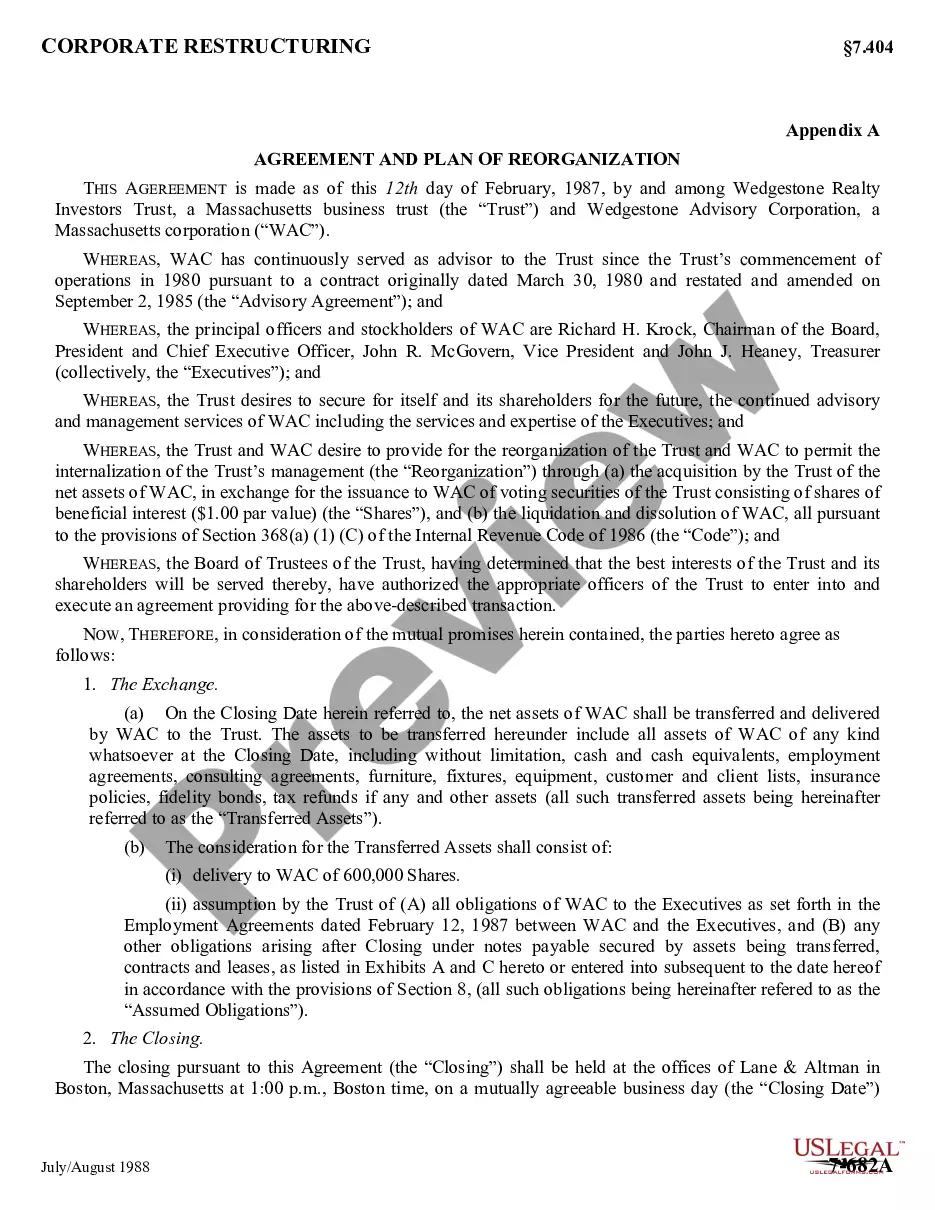



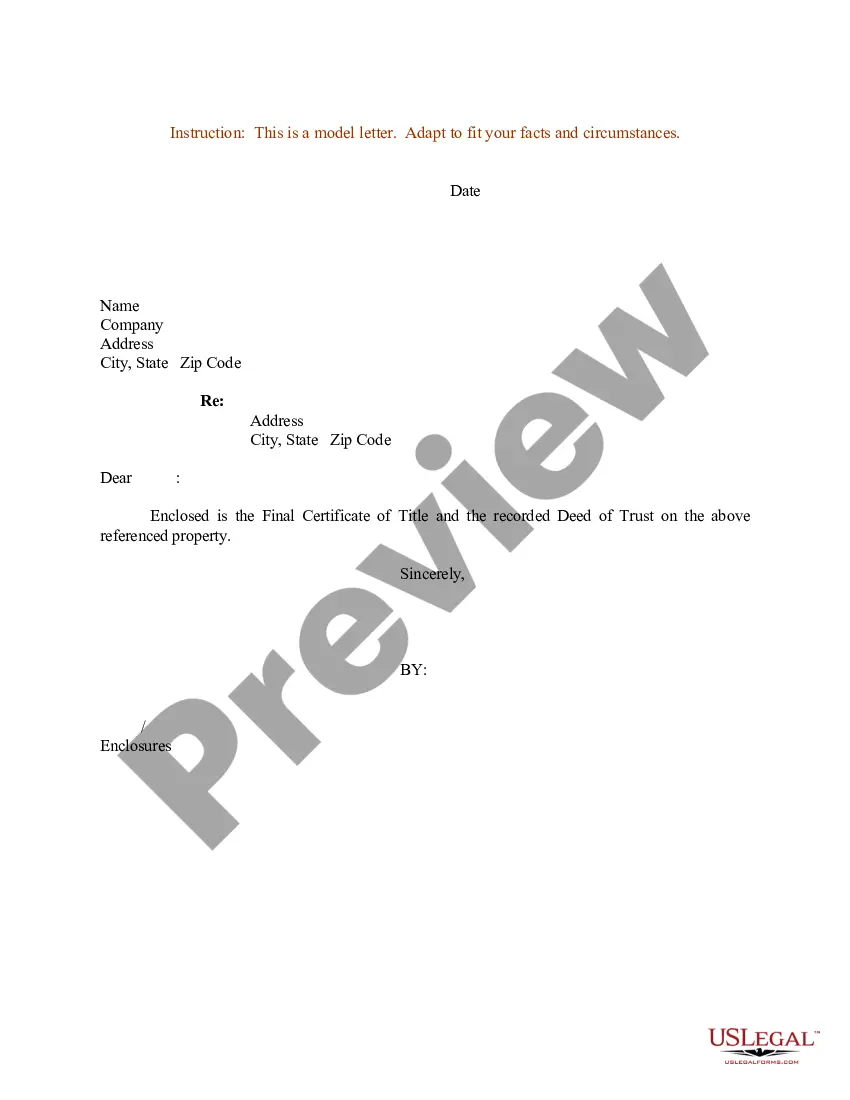
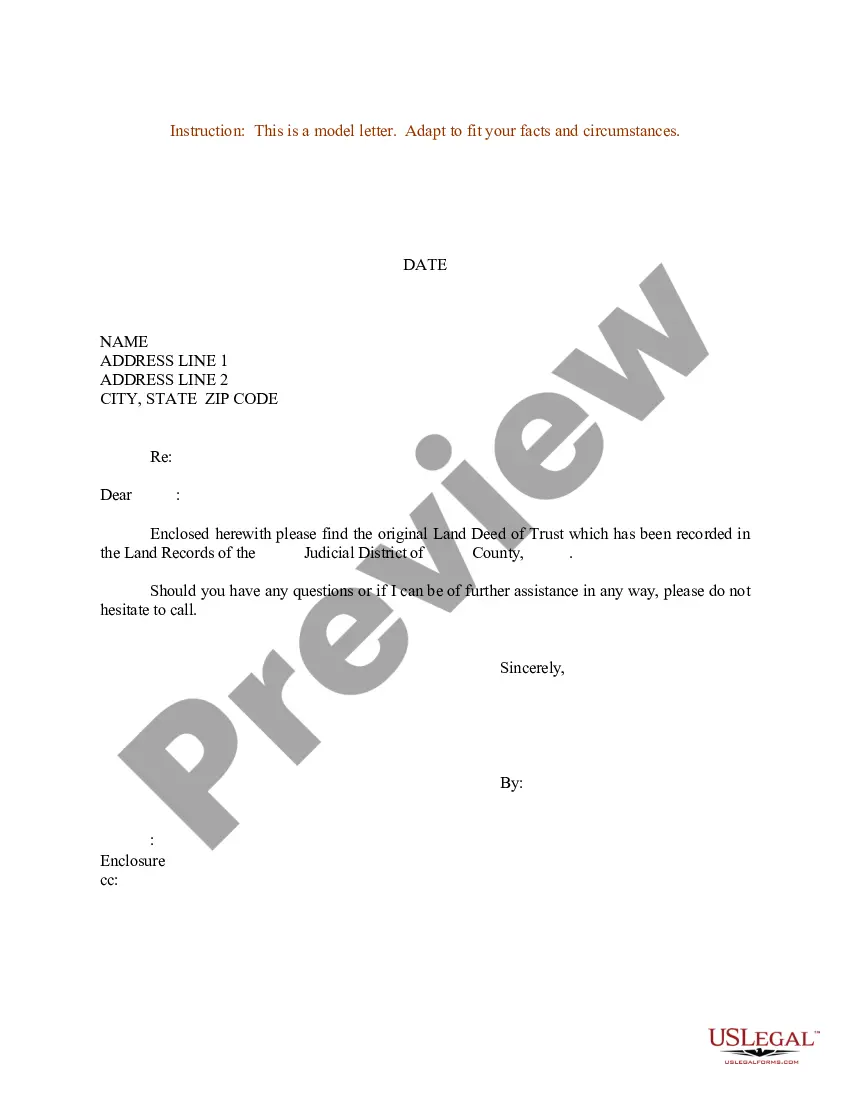
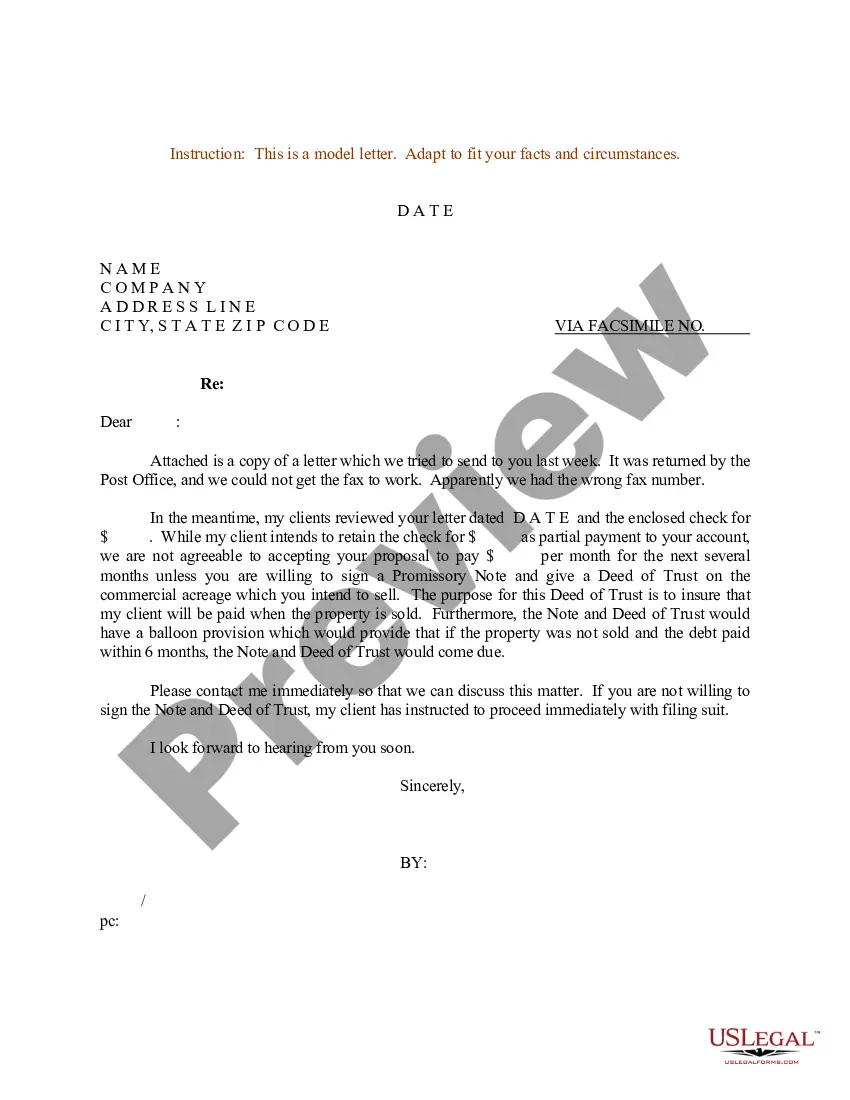
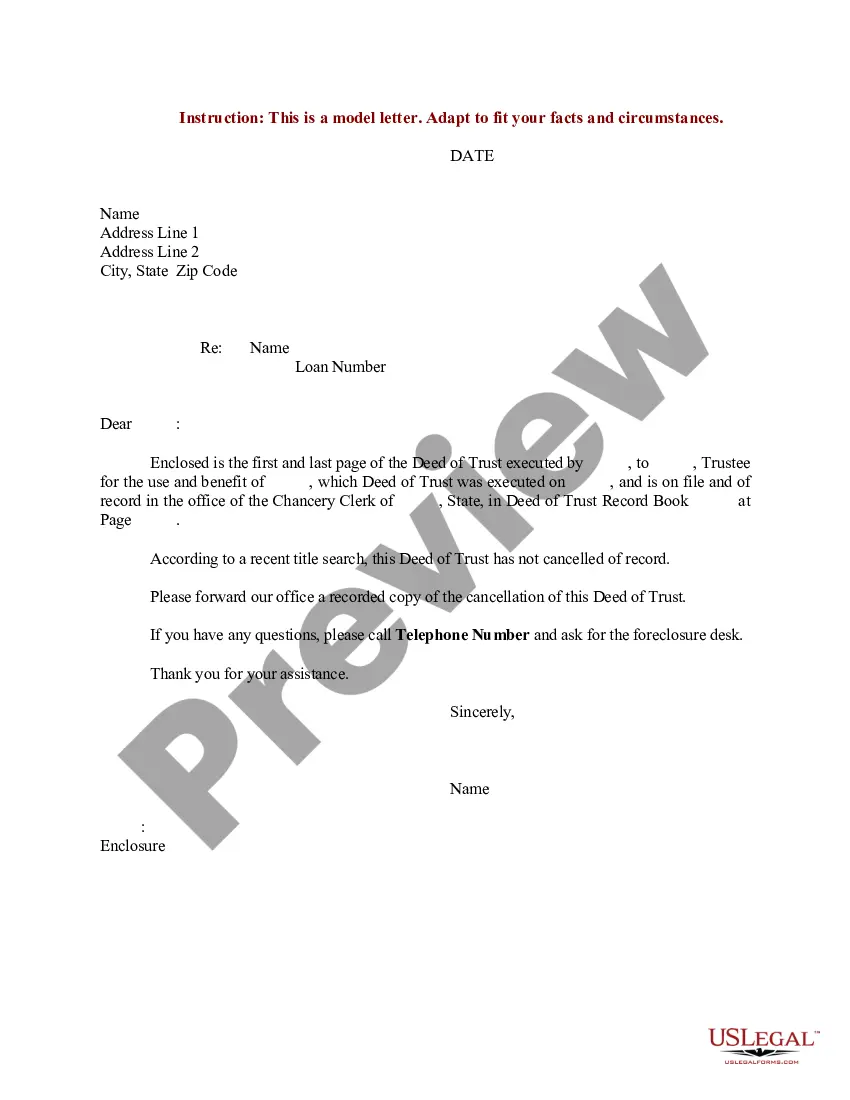
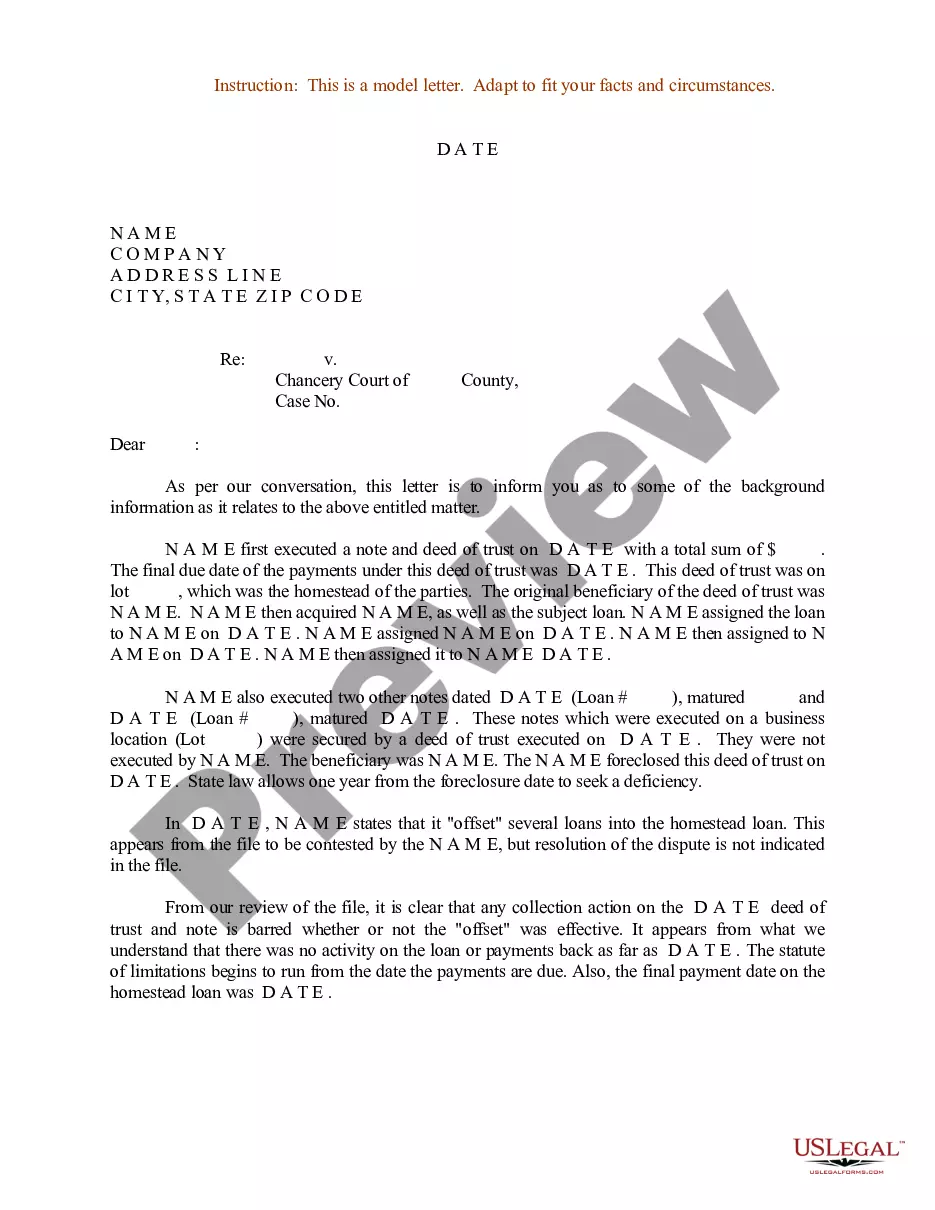
How to fill out Sample Letter For Deed Of Trust And Final Certificate Of Title?
Finding a reliable source for the latest and most applicable legal templates is a significant part of managing red tape.
Selecting the appropriate legal documents demands accuracy and careful consideration, which is why it is crucial to obtain samples of Trust Deed With A Mortgage exclusively from credible providers, such as US Legal Forms. An incorrect template could squander your time and delay your current circumstances. With US Legal Forms, there's minimal cause for anxiety.
Eliminate the stress associated with your legal documentation. Explore the extensive US Legal Forms catalog where you can discover legal templates, assess their applicability to your circumstances, and download them instantly.
- Use the catalog browsing or search feature to locate your template.
- Review the form’s description to confirm it meets your state and regional requirements.
- Check the form preview, if available, to verify that it is the document you want.
- Return to the search function to find the appropriate document if the Trust Deed With A Mortgage does not fulfill your needs.
- If you are confident in the document’s applicability, download it.
- If you are a registered user, click Log in to verify and access your selected forms in My documents.
- If you don’t have an account, click Buy now to acquire the template.
- Choose the pricing option that suits your needs.
- Proceed to registration to complete your purchase.
- Finalise your transaction by selecting a payment option (credit card or PayPal).
- Choose the file format for downloading Trust Deed With A Mortgage.
- Once you have the form on your device, you can modify it using the editor or print it out and fill it in by hand.
Form popularity
FAQ
One disadvantage of a deed of trust is the potential for a less flexible foreclosure process. Although it offers efficiency, a trust deed with a mortgage could limit your ability to negotiate terms during a financial hardship. Additionally, some borrowers may not feel as secure with a deed of trust because it typically lacks the judicial oversight found in traditional mortgages.
One common mistake parents make when establishing a trust fund is failing to clearly outline their intentions. When creating a trust deed with a mortgage, it’s crucial to communicate your wishes effectively to avoid confusion down the line. Also, neglecting to regularly update the trust can create problems if circumstances change. Consulting with a financial advisor can help you avoid these pitfalls.
Using a deed of trust can offer several advantages over a traditional mortgage. The trust deed with a mortgage provides more security for the lender and can streamline the borrowing process for you. Additionally, in many states, a deed of trust can make it easier to resolve disputes, making it a favorable option for homeowners.
A lender may choose a deed of trust over a mortgage due to its more efficient foreclosure process. The trust deed with a mortgage allows them to act swiftly, minimizing delays and legal complications. This efficiency translates to lower costs for the lender, making it a preferred choice in many lending scenarios.
Being on the mortgage or the deed depends on your financial goals. If you are listed on the trust deed with a mortgage, you have an ownership stake in the property, securing your investment. Conversely, being solely on the mortgage holds financial responsibility, which can impact your credit score. Careful consideration of your situation is essential before making this decision.
Lenders often prefer a deed of trust because it simplifies the foreclosure process. A trust deed with a mortgage allows lenders to bypass the court system, making it quicker and less costly to reclaim property if necessary. This streamlined process gives lenders peace of mind, which can lead to more favorable terms for the borrower.
Yes, a house with a mortgage can be placed in a trust. When you establish a trust deed with a mortgage, it allows you to transfer ownership while keeping the mortgage intact. However, you must ensure the lender does not impose any restrictions on transferring the property into a trust. It’s best to consult with a legal expert to navigate this process smoothly.
Yes, you can place a property in a trust, even if it has a mortgage. When doing so, you must inform the lender of the change in ownership. The trust will still honor the existing trust deed with a mortgage, ensuring the lender's rights remain intact. For assistance in navigating this process, consider utilizing the resources available on US Legal Forms.
If your name is on the mortgage but not the deed, you may be responsible for making mortgage payments without having legal ownership of the property. This situation can complicate your rights and responsibilities. It's wise to consult with a real estate attorney to understand your options. Additionally, resources from US Legal Forms can help clarify this issue.
You hold the deed to your house, but the lender has a security interest in it through the mortgage. This trust deed with a mortgage ensures that the lender can recover the owed amount if you default. It's essential to understand that the lender's rights do not transfer ownership; you are still the homeowner. If you need clarity, platforms like US Legal Forms can provide detailed resources.