New York State Beneficiary Laws For Trusts
Description
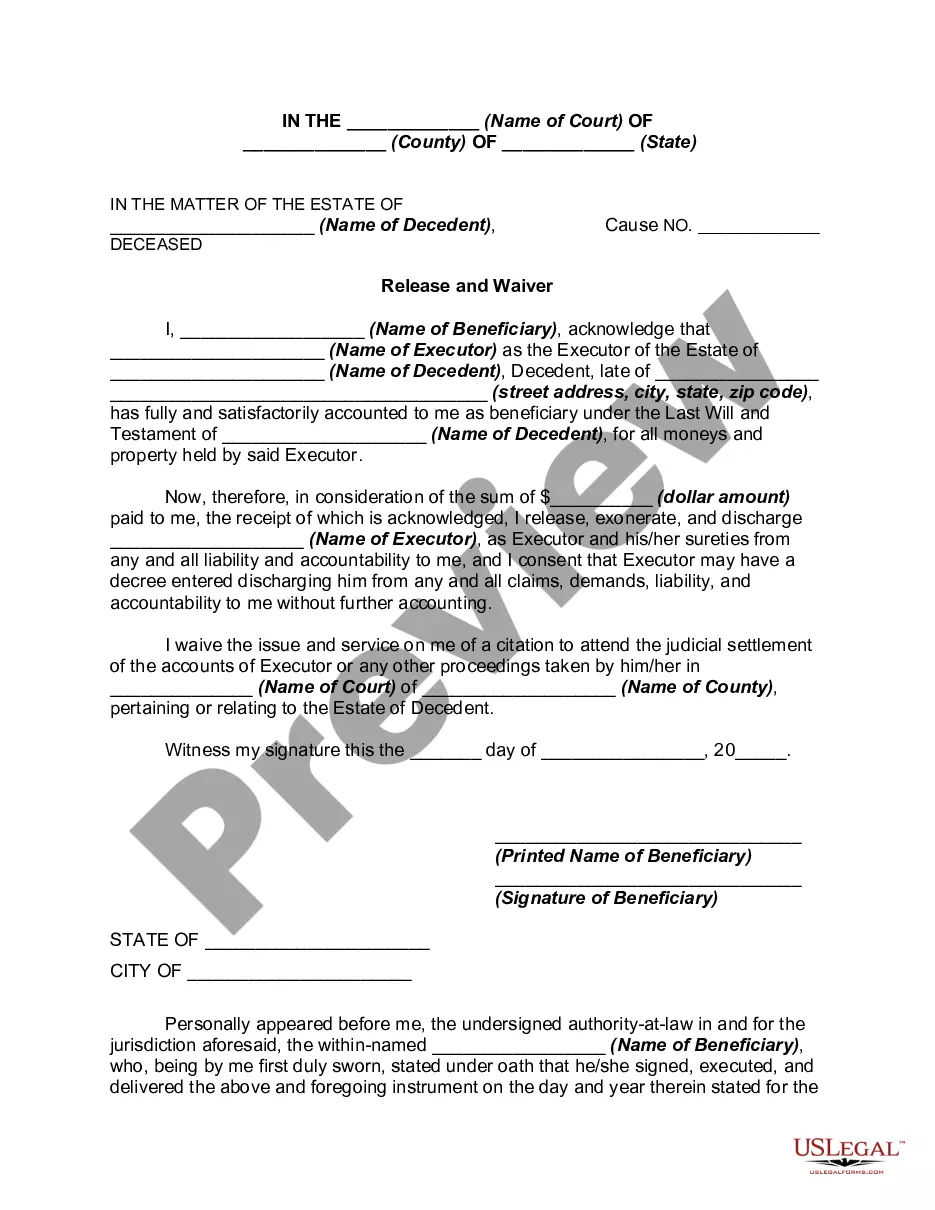

How to fill out Release And Exoneration Of Executor On Distribution To Beneficiary Of Will And Waiver Of Citation Of Final Settlement?
Creating legal documents from the ground up can occasionally feel a bit daunting. Certain instances may require extensive research and substantial financial investment.
If you’re seeking a more straightforward and cost-effective method of generating New York State Beneficiary Laws For Trusts or any other documents without unnecessary complications, US Legal Forms is always available to assist you.
Our online collection of over 85,000 current legal documents encompasses nearly every facet of your financial, legal, and personal matters. With just a few clicks, you can swiftly obtain state- and county-compliant templates meticulously assembled for you by our legal professionals.
Utilize our platform whenever you require dependable and trustworthy services through which you can promptly locate and download the New York State Beneficiary Laws For Trusts. If you’re familiar with our site and have previously established an account, simply Log In to your account, select the template, and download it or re-download it anytime later in the My documents section.
Examine the document preview and descriptions to confirm that you are on the document you are looking for. Ensure that the template you choose meets the criteria of your state and county. Select the most appropriate subscription option to acquire the New York State Beneficiary Laws For Trusts. Download the document. Then fill it out, certify it, and print it. US Legal Forms boasts a strong reputation and over 25 years of experience. Join us today and make form completion an easy and efficient process!
- Not registered yet? No problem.
- Registration only takes a few minutes.
- Explore the library once you're registered.
- Before you proceed to download New York State Beneficiary Laws For Trusts, follow these suggestions.
Form popularity
FAQ
The 2 year rule for trusts in New York pertains to the statute of limitations for contesting a trust. Beneficiaries have a two-year period from the date of the trust's execution to challenge its validity. This rule emphasizes the importance of timely action and understanding New York state beneficiary laws for trusts, as delays can result in losing the right to contest the trust.
New York state trust law governs the creation and management of trusts, outlining the responsibilities of trustees and the rights of beneficiaries. These laws ensure that trusts operate fairly and that beneficiaries can enforce their rights. Understanding the specifics of New York state beneficiary laws for trusts is crucial for both trustees and beneficiaries to navigate their legal obligations effectively.
Under New York state beneficiary laws for trusts, beneficiaries possess the right to receive distributions as specified in the trust document. They can also enforce the terms of the trust if the trustee fails to act according to the trust's provisions. Furthermore, beneficiaries can challenge any actions taken by the trustee that they deem inappropriate or harmful to their interests.
Beneficiaries of a trust under New York state beneficiary laws for trusts have several important rights. They have the right to receive information about the trust's assets and its management. Additionally, beneficiaries can demand an accounting of the trust's activities, ensuring transparency and accountability from the trustee.
Generally, for New York estate tax purposes, if the value of assets passing to beneficiaries other than a spouse or charity is below a certain threshold ($6.58 million in 2023), the assets are fully exempt from tax and no New York estate taxes will be due.
Beneficiaries of a New York estate have the right to: If they are entitled to, they are able to get the entire share of the estate. Receive their share of the estate in a timely manner. Receive an inventory of the estate within nine months of the executor or administrator being appointed.
Beneficiaries have several rights in New York estates and trusts, including: Right to Information: Beneficiaries have the right to receive timely and accurate information about the estate or trust.
While New York doesn't charge an inheritance tax, it does include an estate tax in its laws. The state has set a $6.58 million estate tax exemption for 2023 (up from $6.11 million in 2022), meaning if the decedent's estate exceeds that amount, the estate is required to file a New York estate tax return.
Beneficiaries in New York have rights under SCPA and EPTL to access information about the trust and its finances, as well as to receive distributions from the trust. When trustees refuse to provide information or withhold distributions, beneficiaries can pursue legal remedies to protect their interests.