Executor Citation Beneficiary Without A Will
Description
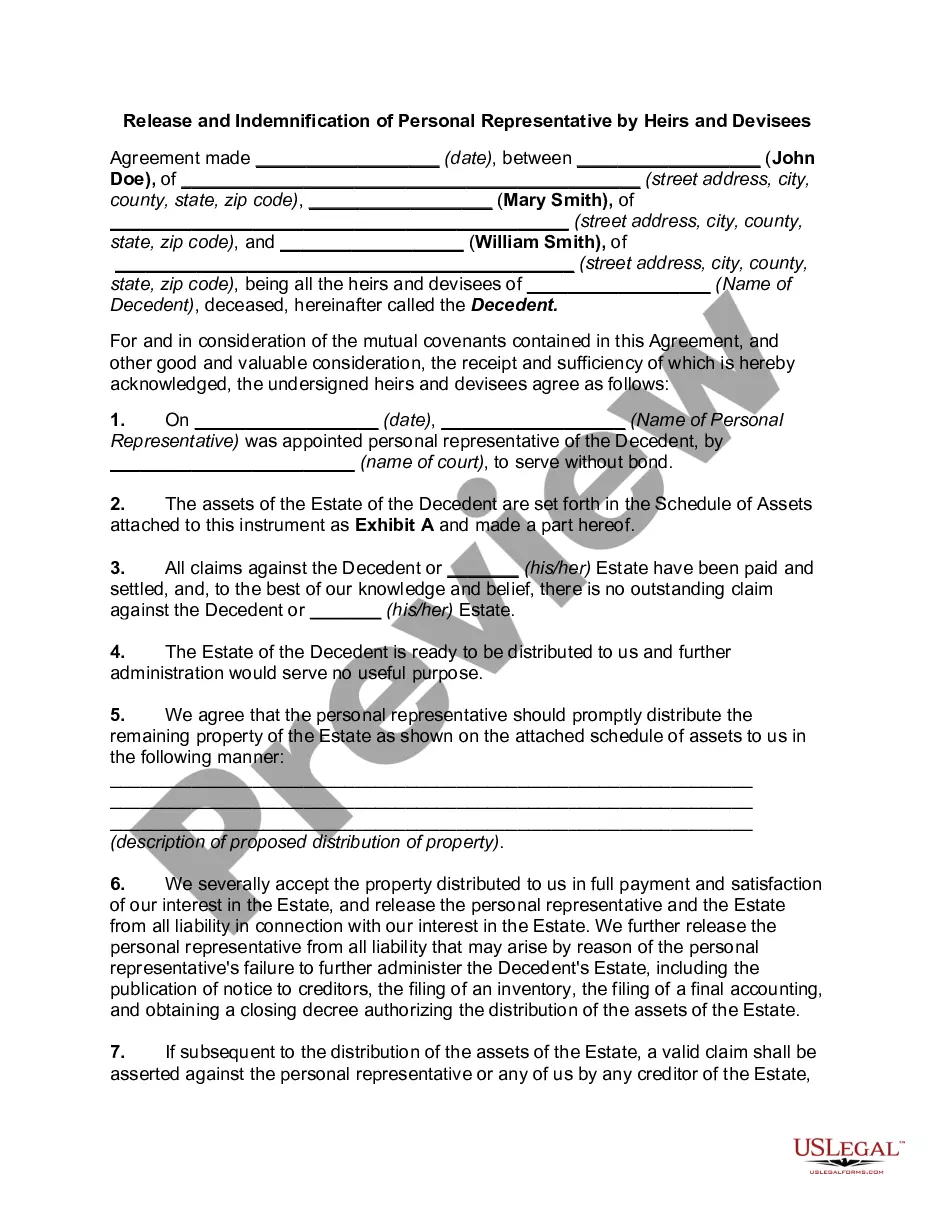
Get your form ready online
Our built-in tools help you complete, sign, share, and store your documents in one place.
Make edits, fill in missing information, and update formatting in US Legal Forms—just like you would in MS Word.
Download a copy, print it, send it by email, or mail it via USPS—whatever works best for your next step.
Sign and collect signatures with our SignNow integration. Send to multiple recipients, set reminders, and more. Go Premium to unlock E-Sign.
If this form requires notarization, complete it online through a secure video call—no need to meet a notary in person or wait for an appointment.
We protect your documents and personal data by following strict security and privacy standards.

Make edits, fill in missing information, and update formatting in US Legal Forms—just like you would in MS Word.

Download a copy, print it, send it by email, or mail it via USPS—whatever works best for your next step.

Sign and collect signatures with our SignNow integration. Send to multiple recipients, set reminders, and more. Go Premium to unlock E-Sign.

If this form requires notarization, complete it online through a secure video call—no need to meet a notary in person or wait for an appointment.

We protect your documents and personal data by following strict security and privacy standards.
Looking for another form?


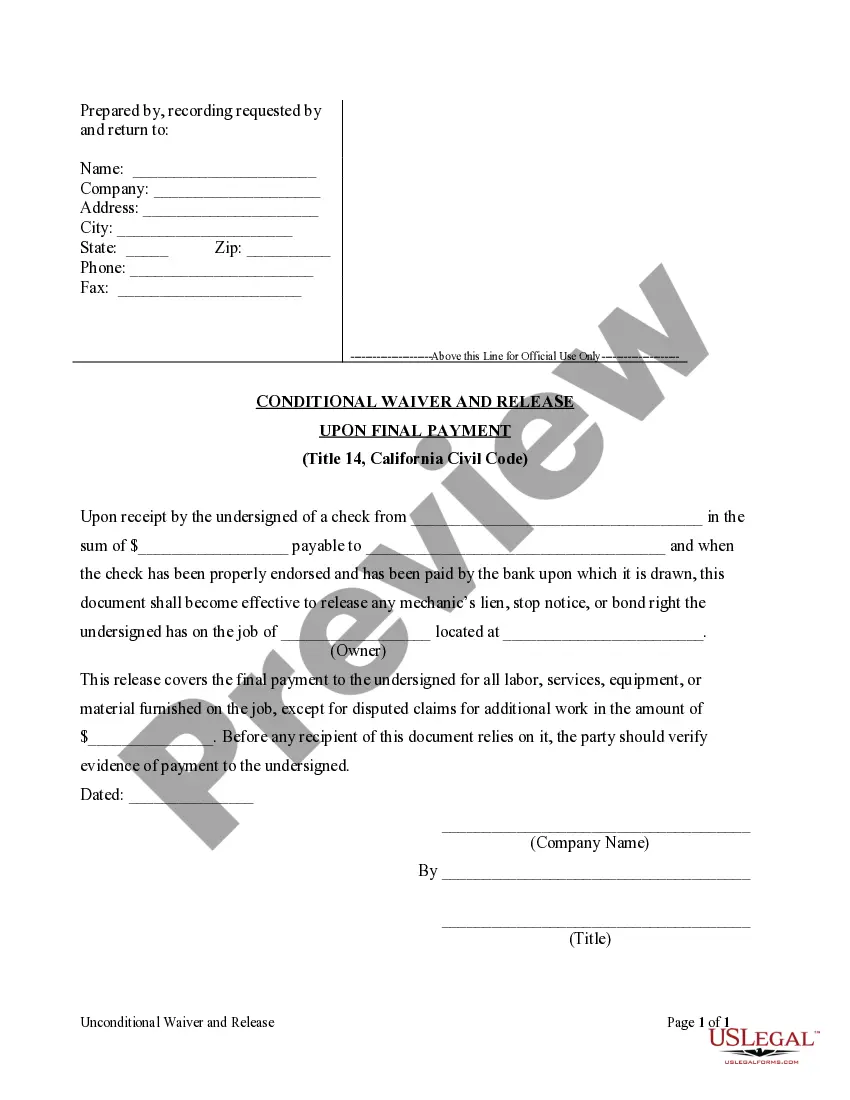





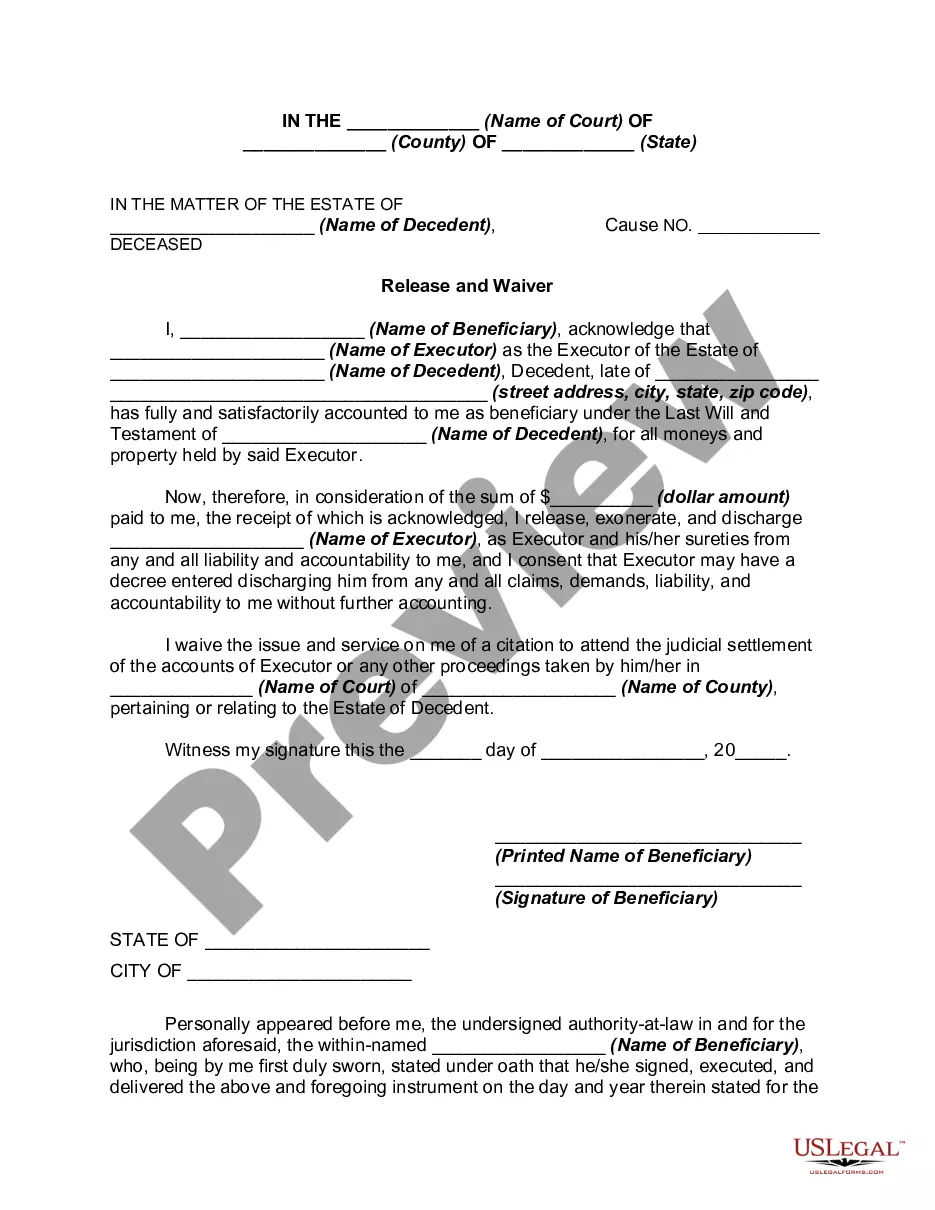
How to fill out Release And Exoneration Of Executor On Distribution To Beneficiary Of Will And Waiver Of Citation Of Final Settlement?
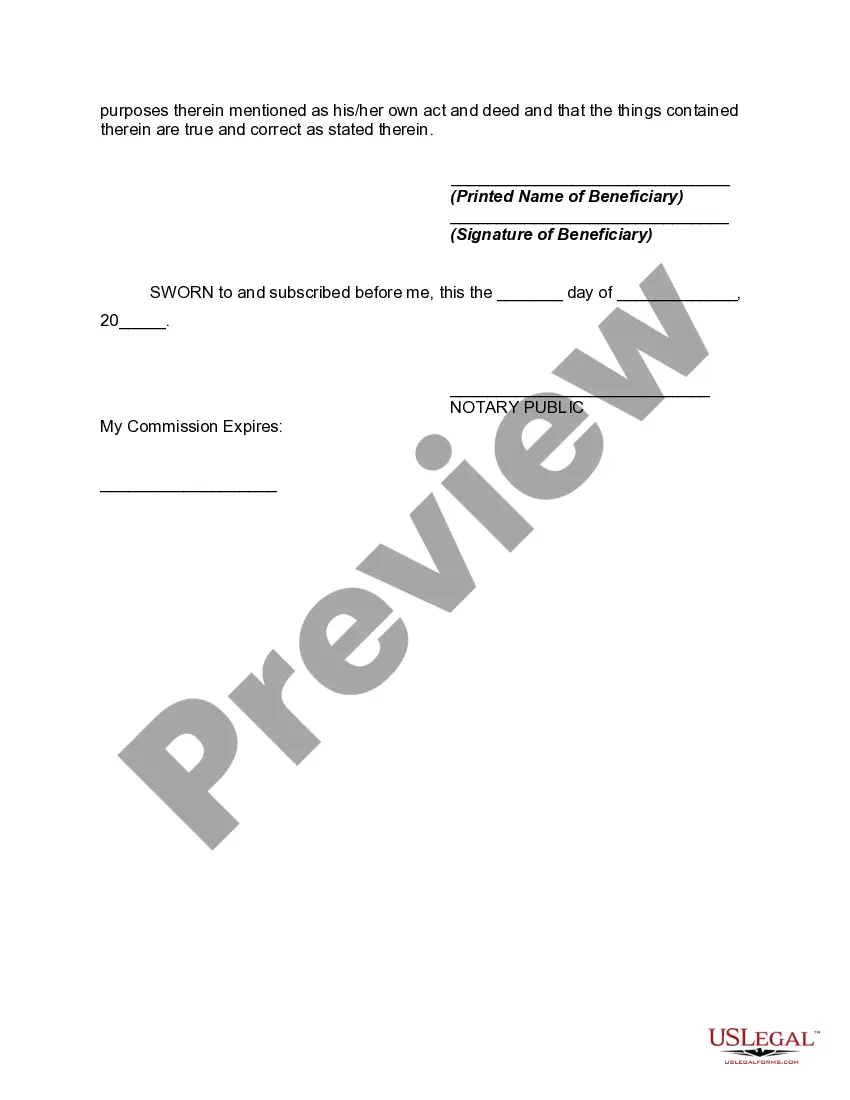
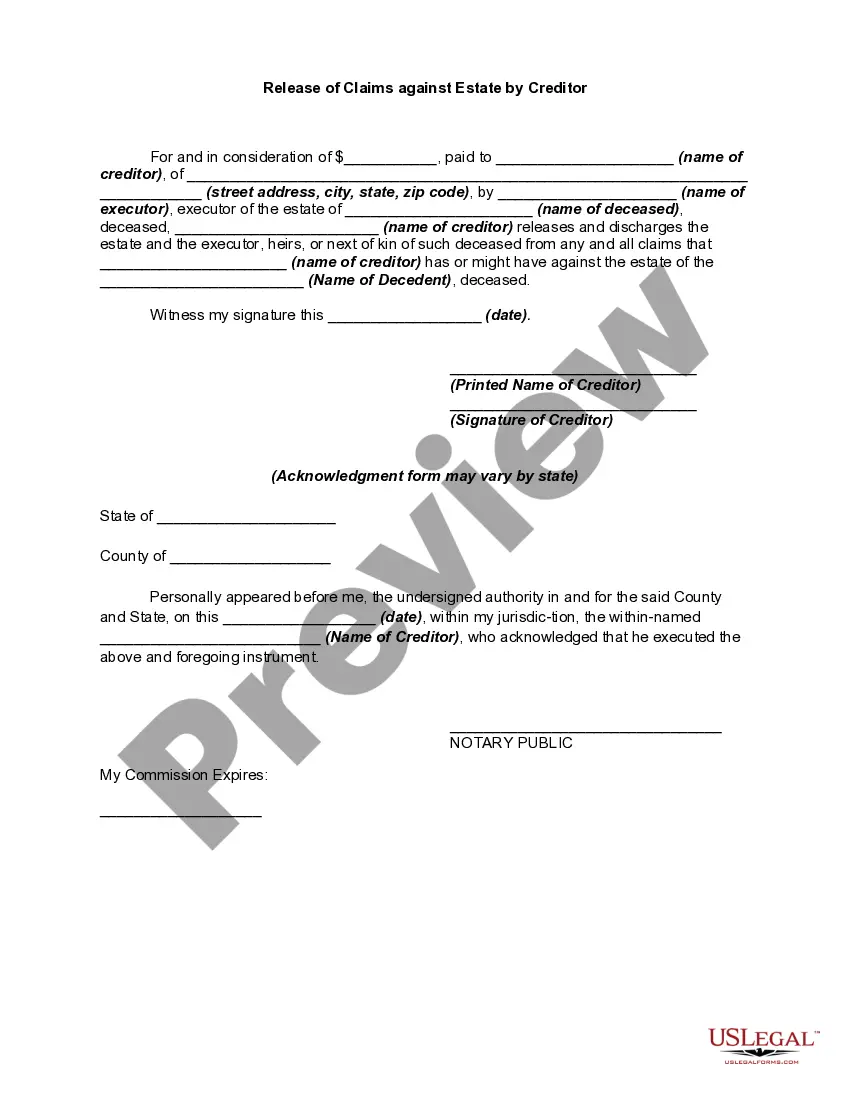
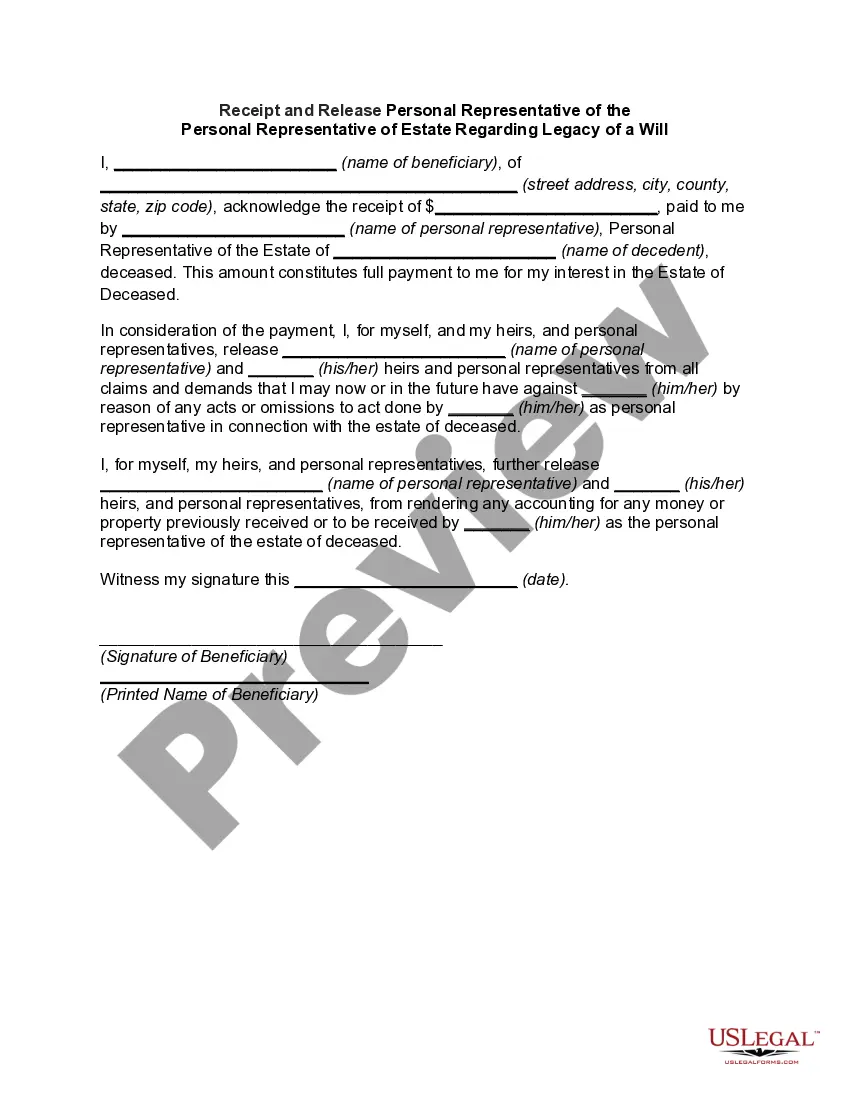
The Executor Citation Beneficiary Without A Will you observe on this page is a versatile legal template crafted by expert attorneys in accordance with federal and state statutes and regulations.
For over 25 years, US Legal Forms has supplied individuals, companies, and legal practitioners with more than 85,000 authenticated, state-specific forms for any commercial and personal circumstance. It’s the quickest, simplest, and most reliable way to secure the documentation you require, as the service ensures the utmost level of data protection and anti-malware safeguards.
Select the format you desire for your Executor Citation Beneficiary Without A Will (PDF, DOCX, RTF) and save the sample on your device.
- Search for the document you require and review it.
- Browse through the file you looked for and preview it or examine the form description to confirm it meets your needs. If it doesn’t, utilize the search feature to locate the appropriate one. Click Buy Now once you have identified the template you need.
- Choose and Log In.
- Select the pricing option that fits you and create an account. Use PayPal or a credit card for a swift payment. If you already possess an account, Log In and check your subscription to continue.
- Acquire the editable template.
Form popularity
FAQ
What is Citation? A notice to appear in probate court in an estate matter, where some event, deadline, or dispute in the processing of the estate has occurred and must be reviewed by the court.
You may also appoint a statutory trustee company or a professional adviser such as a legal practitioner or an accountant as your Executive. Please be aware that should you choose to appoint a professional as executor, they will need to be paid from your estate.
Yes, the executor and beneficiary can be named as the same person in the Will. It's perfectly normal and legal. It's actually a common approach because the executor should be someone you know and trust and it's common sense that your beneficiaries fall into that column.
Parents, brothers and sisters and nieces and nephews of the intestate person may inherit under the rules of intestacy. This will depend on a number of circumstances: whether there is a surviving married or civil partner. whether there are children, grandchildren or great grandchildren.
The thinking that the oldest child continually inherits the whole thing is a frequent misconception. In reality, inheritance legal guidelines vary depending on the US and state, and many factors come into play, such as the presence of a will, the type of belongings involved, and the household structure.