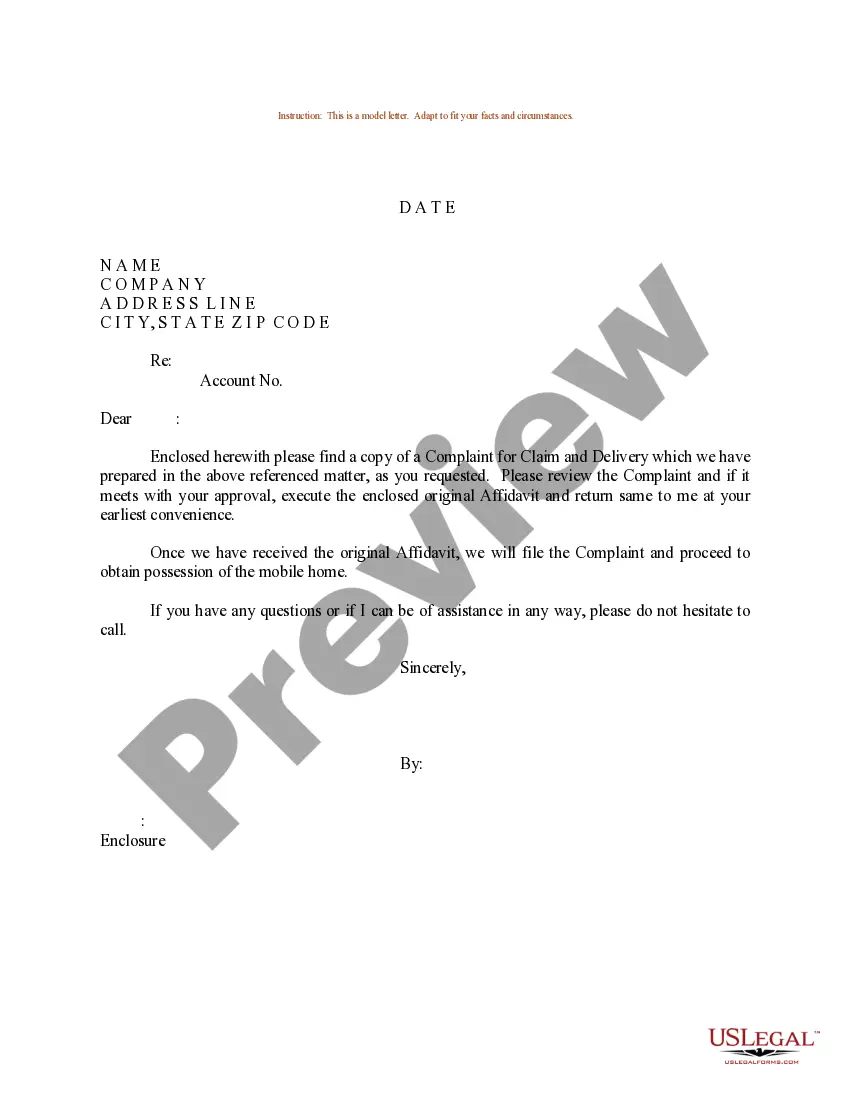
Sample Complaint Document With Multiple Plaintiffs
Description
Get your form ready online
Our built-in tools help you complete, sign, share, and store your documents in one place.
Make edits, fill in missing information, and update formatting in US Legal Forms—just like you would in MS Word.
Download a copy, print it, send it by email, or mail it via USPS—whatever works best for your next step.
Sign and collect signatures with our SignNow integration. Send to multiple recipients, set reminders, and more. Go Premium to unlock E-Sign.
If this form requires notarization, complete it online through a secure video call—no need to meet a notary in person or wait for an appointment.
We protect your documents and personal data by following strict security and privacy standards.

Make edits, fill in missing information, and update formatting in US Legal Forms—just like you would in MS Word.

Download a copy, print it, send it by email, or mail it via USPS—whatever works best for your next step.

Sign and collect signatures with our SignNow integration. Send to multiple recipients, set reminders, and more. Go Premium to unlock E-Sign.

If this form requires notarization, complete it online through a secure video call—no need to meet a notary in person or wait for an appointment.

We protect your documents and personal data by following strict security and privacy standards.
Looking for another form?
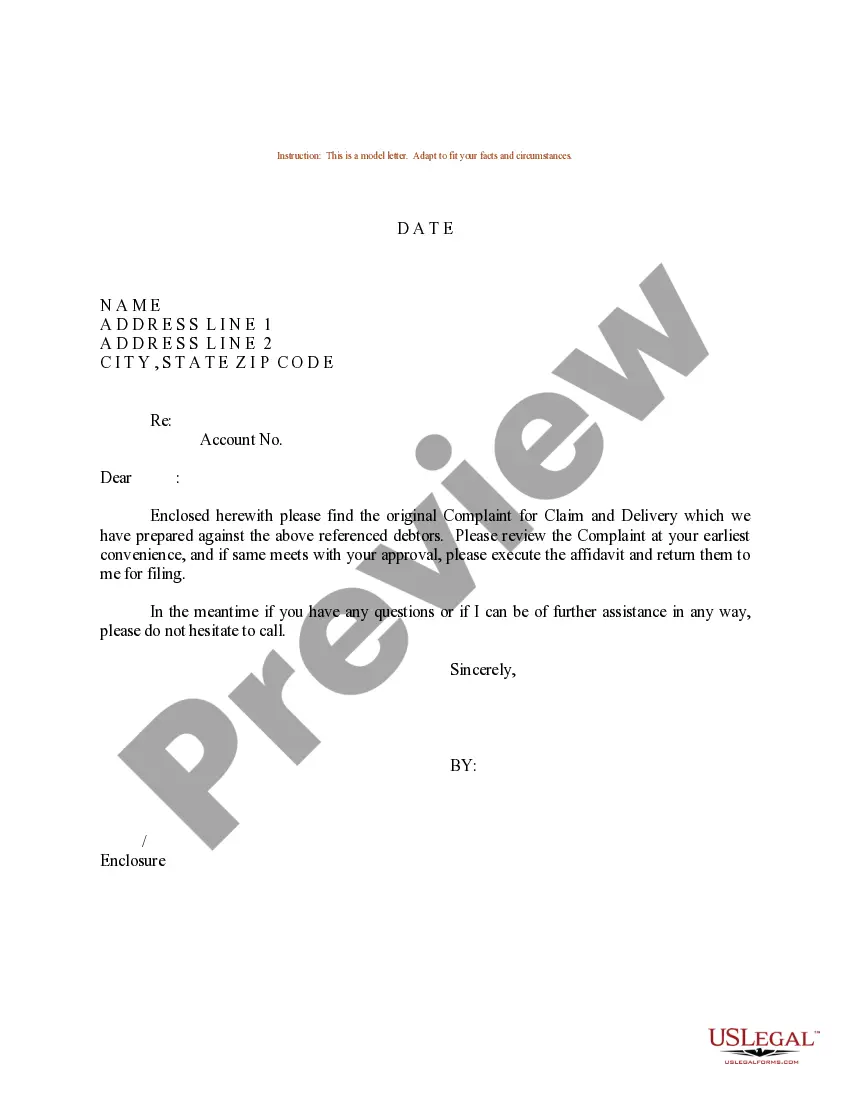
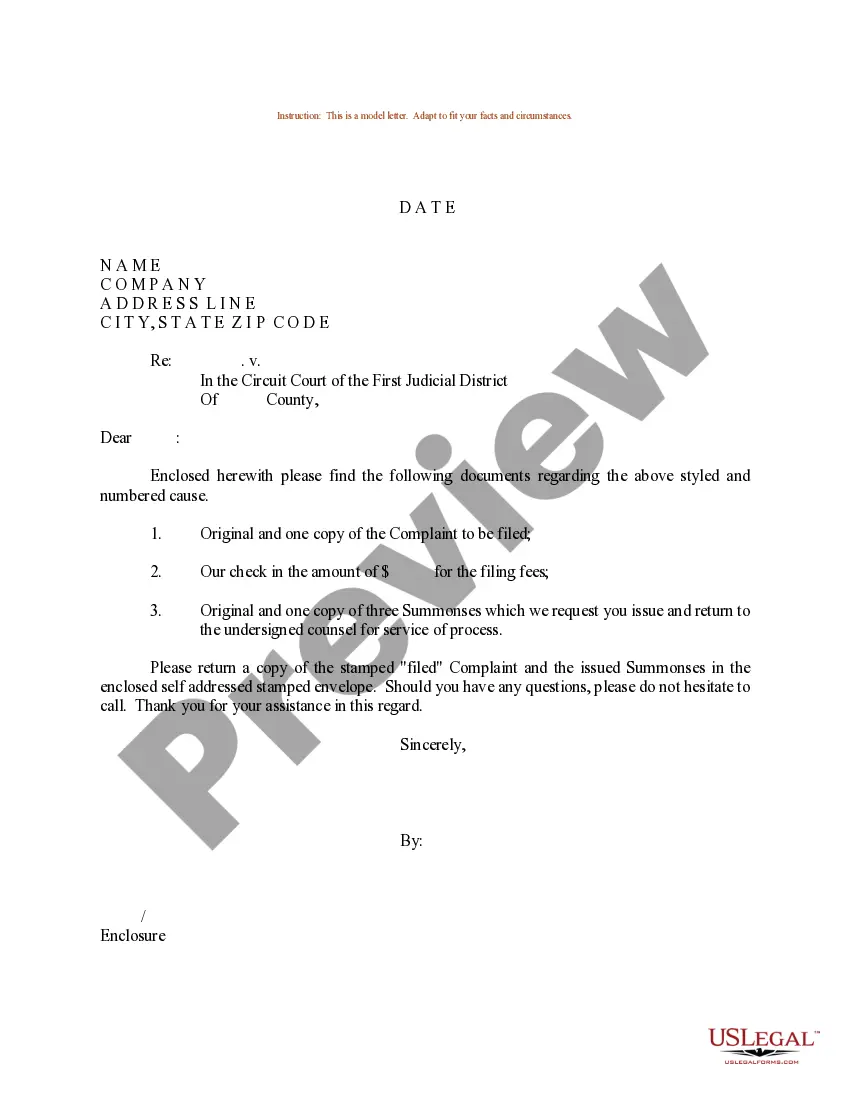
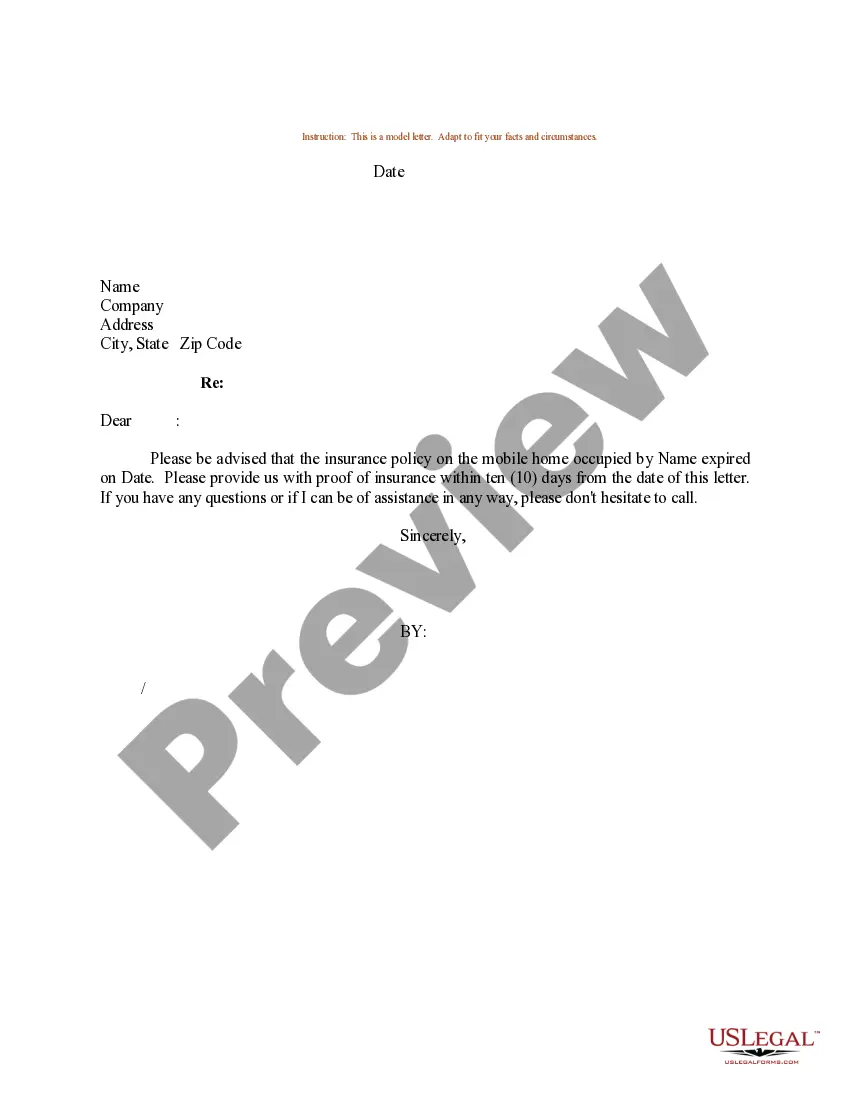
How to fill out Sample Letter For Complaint For Claim And Delivery - Possession Of Mobile Home?
Locating a reliable source for the latest and suitable legal documents is a significant part of navigating bureaucracy.
Identifying the correct legal forms requires accuracy and meticulousness, which is why it is vital to obtain samples of Sample Complaint Document With Multiple Plaintiffs solely from reputable suppliers, like US Legal Forms.
Once you have the document on your device, you can modify it using the editor or print it out to complete it by hand. Eliminate the complications that accompany your legal paperwork. Explore the vast US Legal Forms library to discover legal templates, assess their applicability to your situation, and download them instantly.
- Utilize the resource library or search functionality to find your document.
- Examine the form's specifics to ensure it aligns with the demands of your state and county.
- View the form preview, if available, to confirm that the template is indeed what you need.
- Return to the search for the correct template if the Sample Complaint Document With Multiple Plaintiffs does not meet your specifications.
- If you are confident about the form’s applicability, download it.
- As a registered user, click Log in to verify and access your selected templates in My documents.
- If you do not have an account yet, click Buy now to acquire the document.
- Choose the pricing option that suits your needs.
- Proceed to registration to complete your transaction.
- Finalize your purchase by selecting a payment method (credit card or PayPal).
- Choose the format for downloading Sample Complaint Document With Multiple Plaintiffs.
Form popularity
FAQ
If a plaintiff provides false information in a complaint, it can lead to serious consequences, including the dismissal of the case or possible legal penalties. Courts take honesty seriously, as any deceit undermines the judicial process. Additionally, the affected party may have grounds to file a counterclaim. Always refer to a sample complaint document with multiple plaintiffs to guide you in accurate and truthful disclosures.
Complaint: The Court has civil complaint forms available for you to use which include instructions that will help you explain your lawsuit to the presiding judge and to the opposing party or parties. Filing Fee: The filing fee for a complaint is $350.00 plus a $50.00 administrative fee for a total of $400.00.
The small claims court has jurisdiction over all actions for the recovery of money or specific personal property when the amount claimed does not exceed $7,000, exclusive of costs, and the defendant can be served within the county where the action is commenced.
The local attorney must file a notice of appearance in the case in which you seek to appear. This notice of appearance informs the court that you are making an application to the Montana Bar to appear pro hac vice.
If you are an individual and want to file a lawsuit for $10,000 or less, you have the option of filing a small claims case or a limited civil case. If you are a business, you can file in small claims court for $5,000 or less.
Complaint: The Court has civil complaint forms available for you to use which include instructions that will help you explain your lawsuit to the presiding judge and to the opposing party or parties. Filing Fee: The filing fee for a complaint is $350.00 plus a $50.00 administrative fee for a total of $400.00.
Parties in Small Claims Court may not have an attorney unless both parties are represented by an attorney. Appeal can be on issues of law only; there is not a trial de novo in District Court on appeal.
1) In writing by filing a Motion or responding to a Motion; or 2) In person at a hearing scheduled by the Judge, with both sides present.
Small Claims Forms and Process. The small claims court has jurisdiction over all actions for the recovery of money or specific personal property when the amount claimed does not exceed $7,000, exclusive of costs, and the defendant can be served within the county where the action is commenced.