Visitation Court Forms For Estates
Description
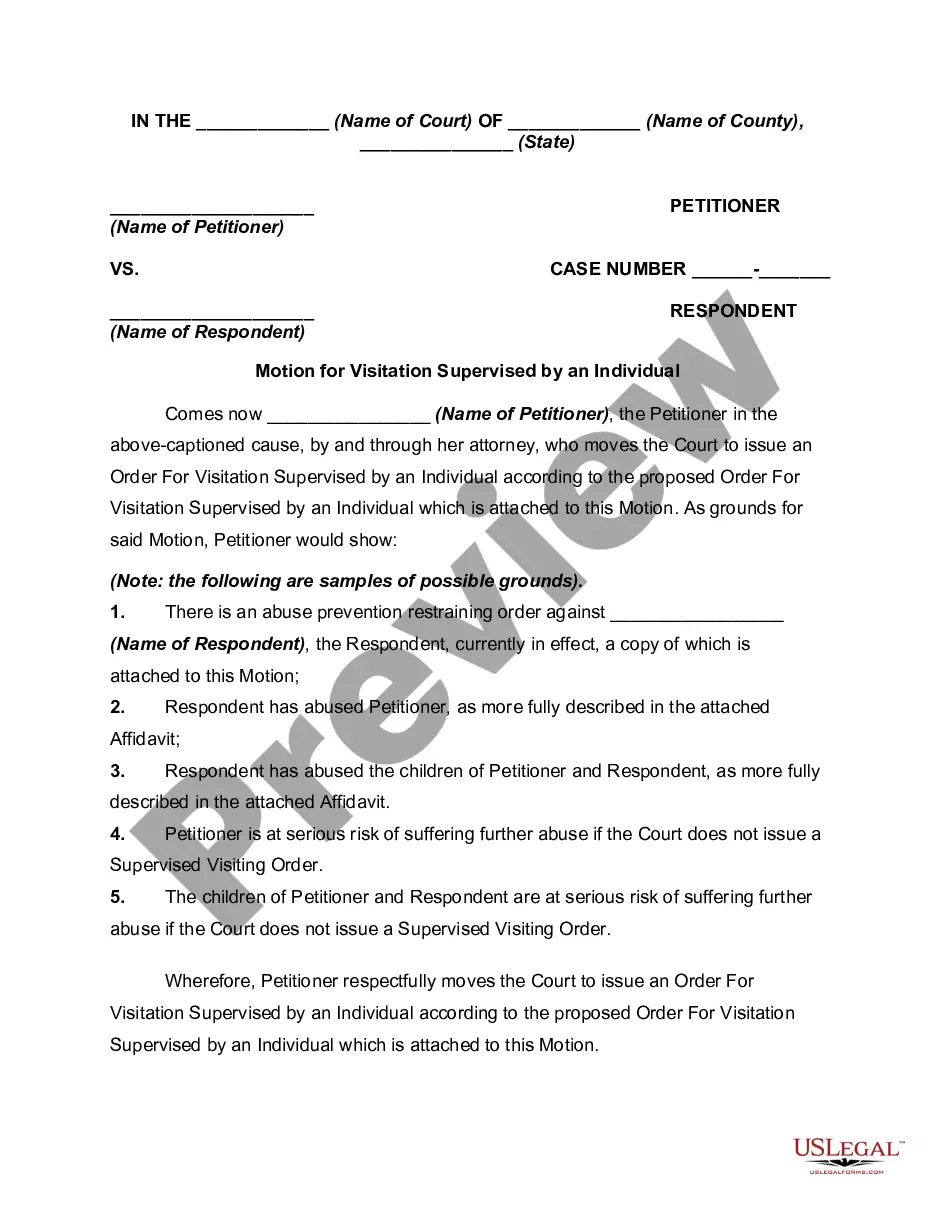
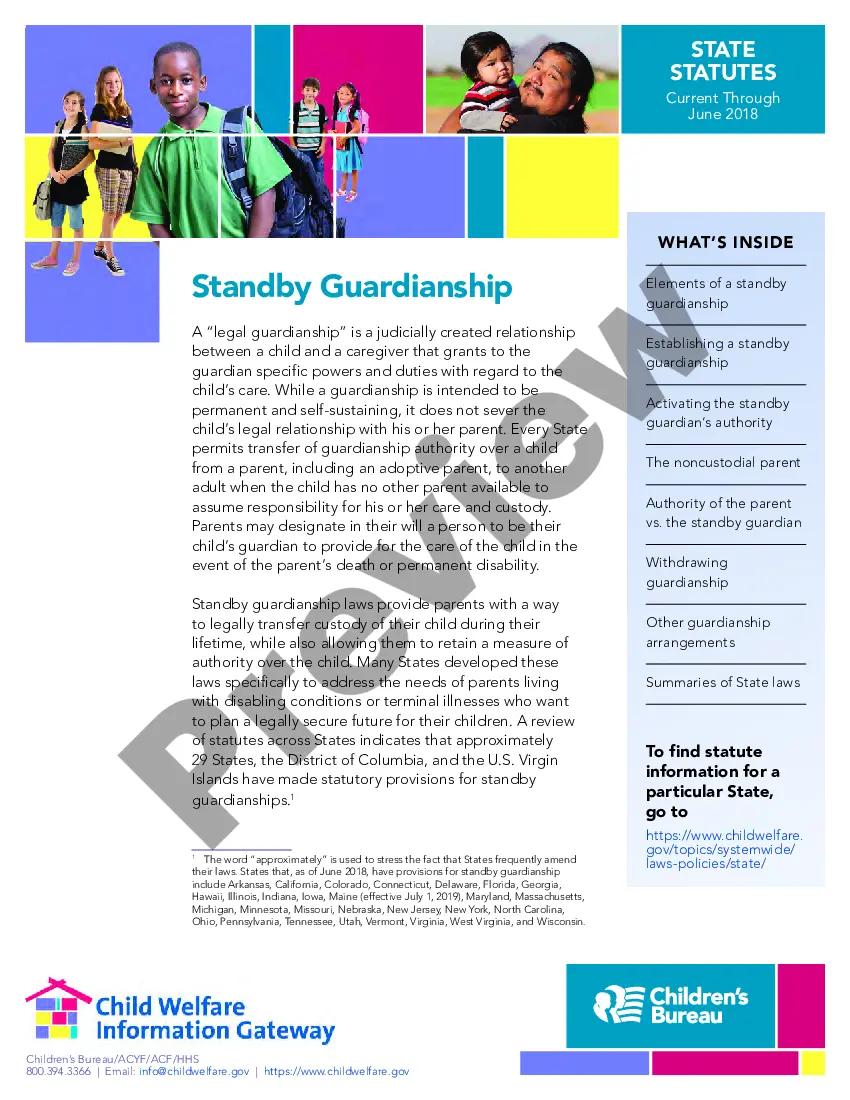
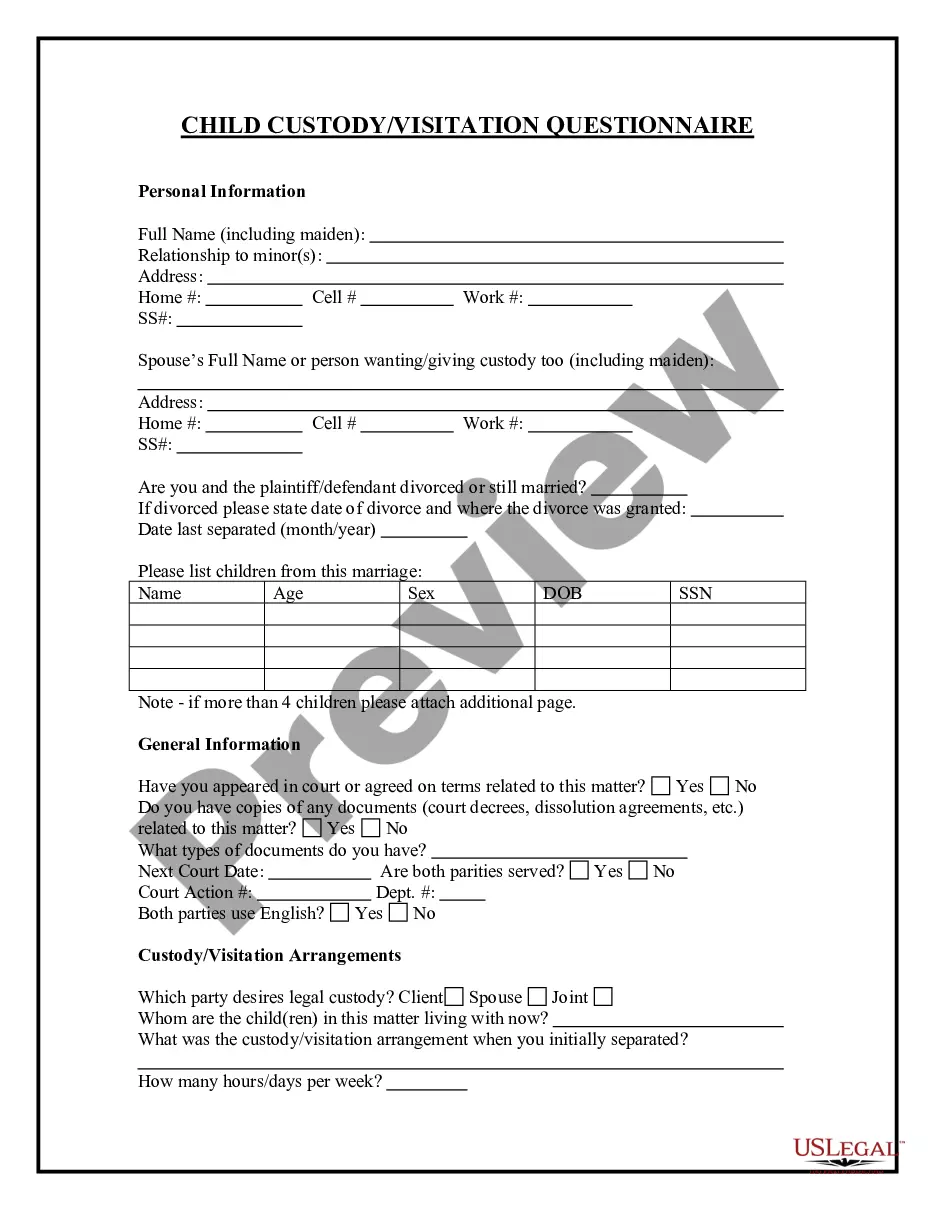
Get your form ready online
Our built-in tools help you complete, sign, share, and store your documents in one place.
Make edits, fill in missing information, and update formatting in US Legal Forms—just like you would in MS Word.
Download a copy, print it, send it by email, or mail it via USPS—whatever works best for your next step.
Sign and collect signatures with our SignNow integration. Send to multiple recipients, set reminders, and more. Go Premium to unlock E-Sign.
If this form requires notarization, complete it online through a secure video call—no need to meet a notary in person or wait for an appointment.
We protect your documents and personal data by following strict security and privacy standards.

Make edits, fill in missing information, and update formatting in US Legal Forms—just like you would in MS Word.

Download a copy, print it, send it by email, or mail it via USPS—whatever works best for your next step.

Sign and collect signatures with our SignNow integration. Send to multiple recipients, set reminders, and more. Go Premium to unlock E-Sign.

If this form requires notarization, complete it online through a secure video call—no need to meet a notary in person or wait for an appointment.

We protect your documents and personal data by following strict security and privacy standards.
Looking for another form?

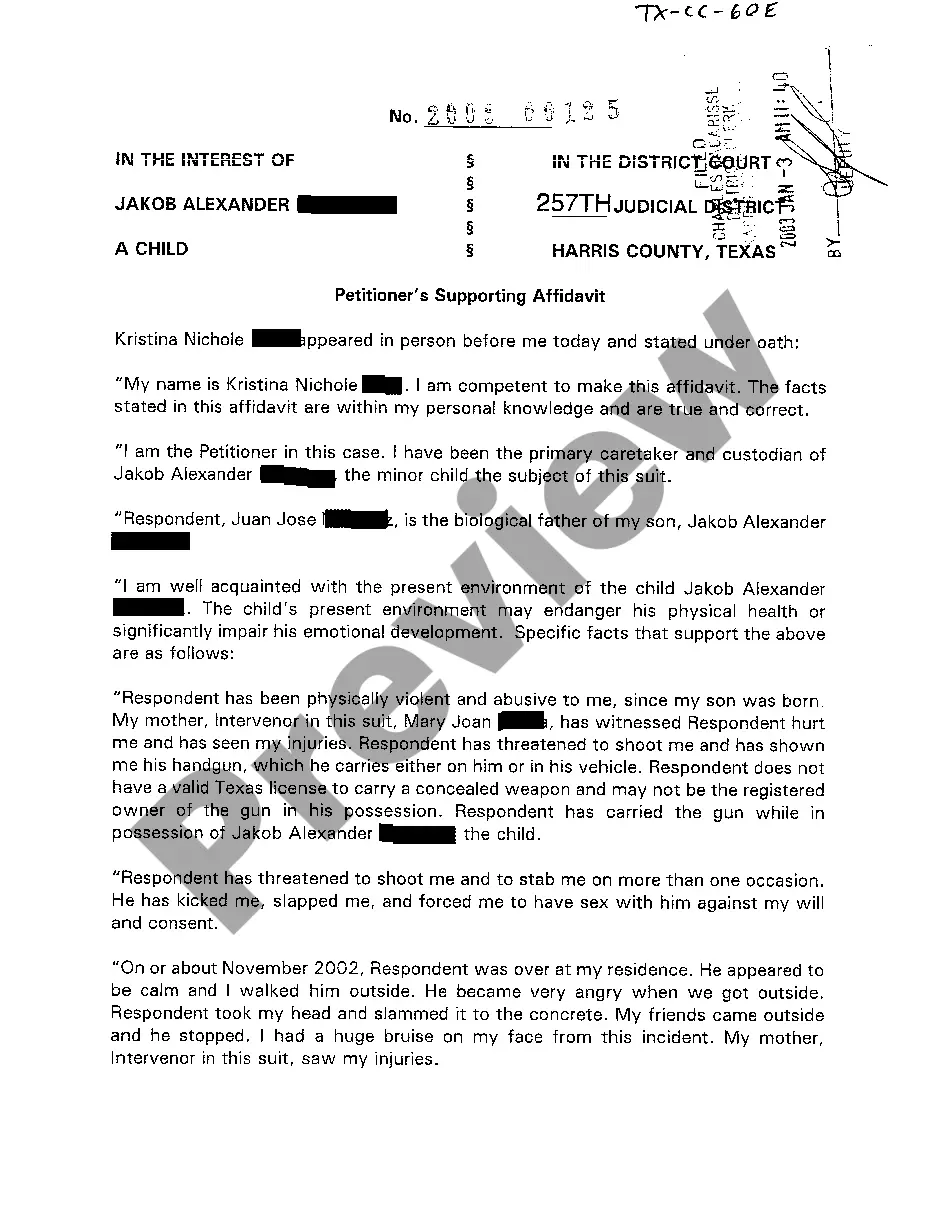





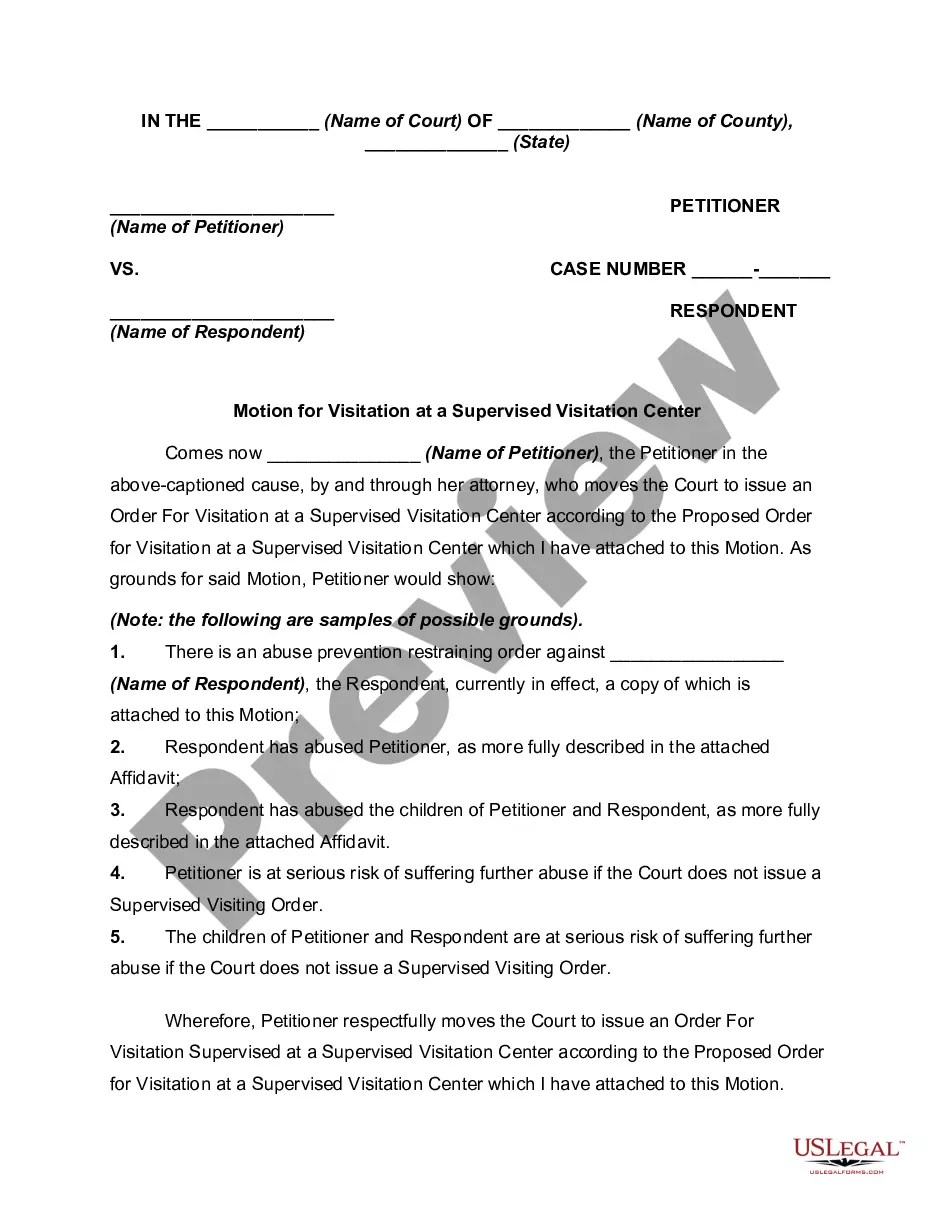
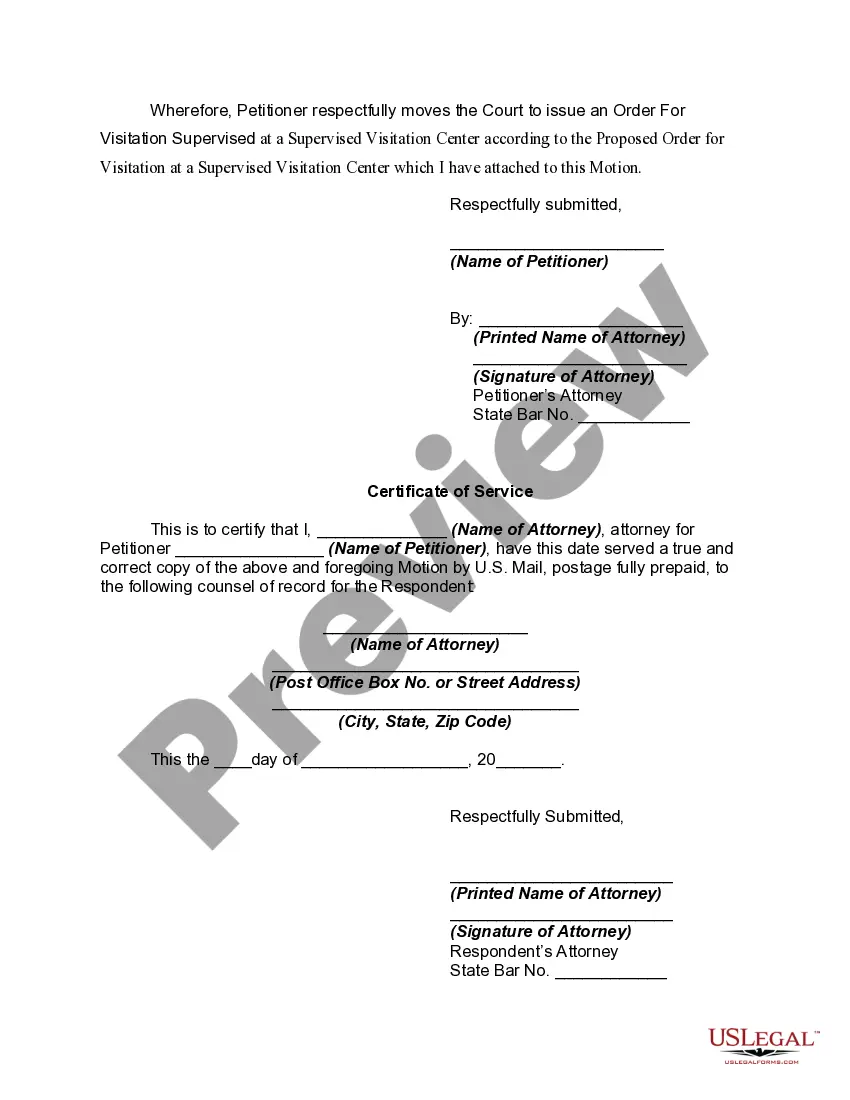
How to fill out Motion For Visitation At A Supervised Visitation Center?
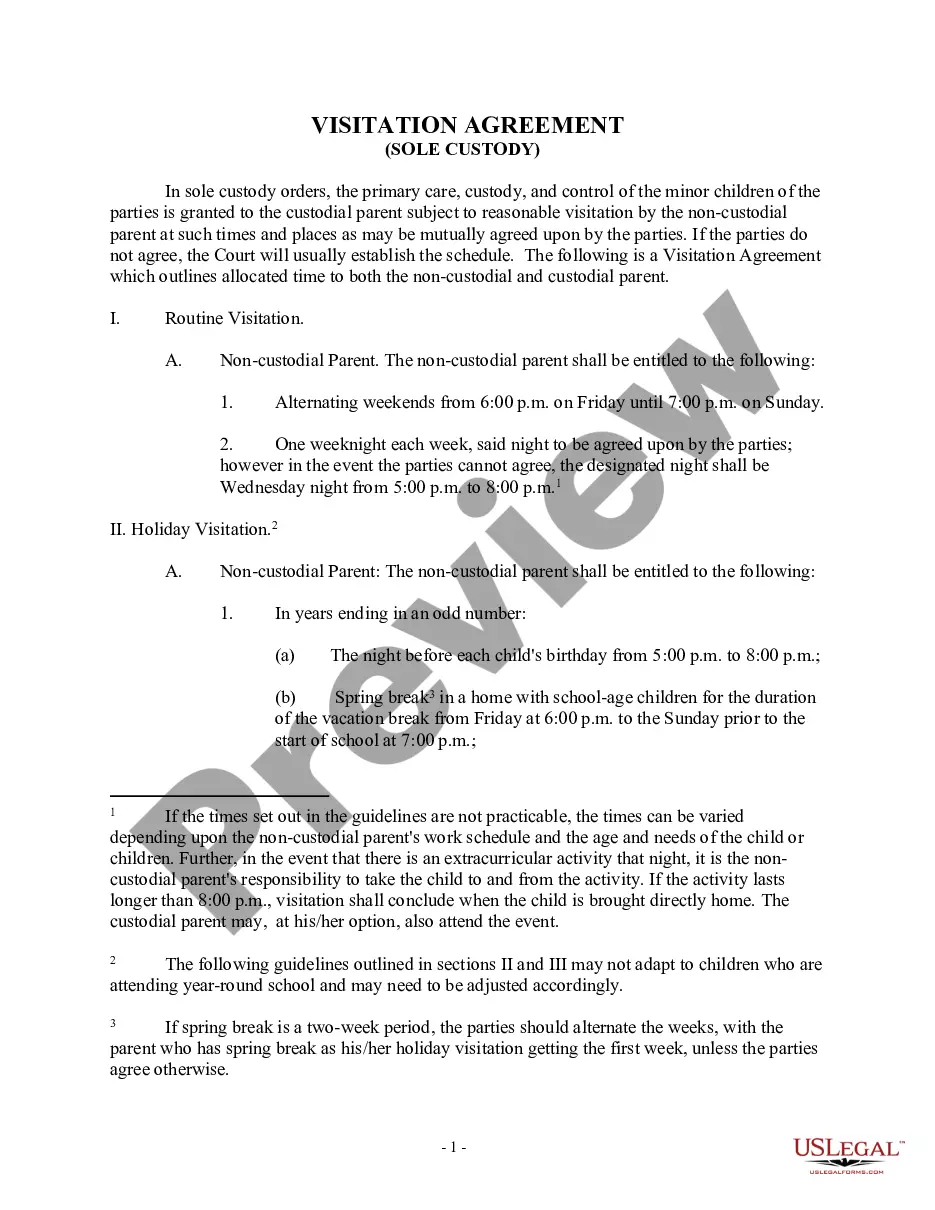
The Visitation Court Documents For Estates you find on this page is a reusable legal template crafted by expert attorneys in compliance with federal and local laws and regulations.
For over 25 years, US Legal Forms has offered individuals, businesses, and legal practitioners access to more than 85,000 authenticated, state-specific documents for any business and personal scenario. It’s the quickest, most straightforward, and most reliable method to acquire the paperwork you require, as the service ensures the highest level of data privacy and anti-malware safeguards.
Subscribe to US Legal Forms to have authenticated legal templates for all of life’s circumstances readily available.
- Search for the document you require and review it. Browse through the file you looked for and preview it or check the form description to confirm it meets your requirements. If it doesn’t, utilize the search bar to find the suitable one. Click Buy Now when you have found the template you need.
- Register and Log In. Select the pricing option that fits your needs and create an account. Use PayPal or a credit card for a rapid payment. If you already possess an account, Log In and check your subscription to proceed.
- Obtain the fillable template. Choose the format you desire for your Visitation Court Documents For Estates (PDF, DOCX, RTF) and save the document on your device.
- Fill out and sign the document. Print the template to complete it by hand. Alternatively, utilize an online versatile PDF editor to quickly and accurately fill out and sign your form with a valid signature.
- Redownload your documents again. Access the same document again whenever required. Open the My documents tab in your profile to redownload any previously saved forms.
Form popularity
FAQ
Implementing a 50/50 custody arrangement in California may present challenges for parents and the court system. Some concerns include logistical issues, such as the child's proximity to both parents' homes, the child's age and adaptability to frequent transitions, and potential conflicts between parents.
Hear this out loud PauseIn Maryland when a child reaches 16 years of age, he or she may have their own counsel to advocate for their preference. Regardless, it is imperative to determine whether the child's refusal is warranted or unwarranted. As a general guideline, the bar for the court to revise a visitation schedule will be high.
FL-311: Child Custody and Visitation Attachment (Part 1) - YouTube YouTube Start of suggested clip End of suggested clip And Jenny Ito case number Li point. Check the petition. Box. Check box number one for custody. WriteMoreAnd Jenny Ito case number Li point. Check the petition. Box. Check box number one for custody. Write down the names of the children. And their respective birth dates.
Hear this out loud PauseDads are not automatically entitled 50-50 custody, or any custody order for that matter. Likewise, there is nothing in the family code that automatically grants custody to fathers solely on the basis that they are the dad. The standard the court uses during a divorce is the best interest of the child.
Hear this out loud PauseIf you have a family law case, you can file a Request for Order in that case. If there's already a family law case involving the child in California, then you can file a Request for Order (form FL-300) to ask the judge to make or change an order in that case about child custody and visitation (parenting time).