Motion Family Law Within
Description
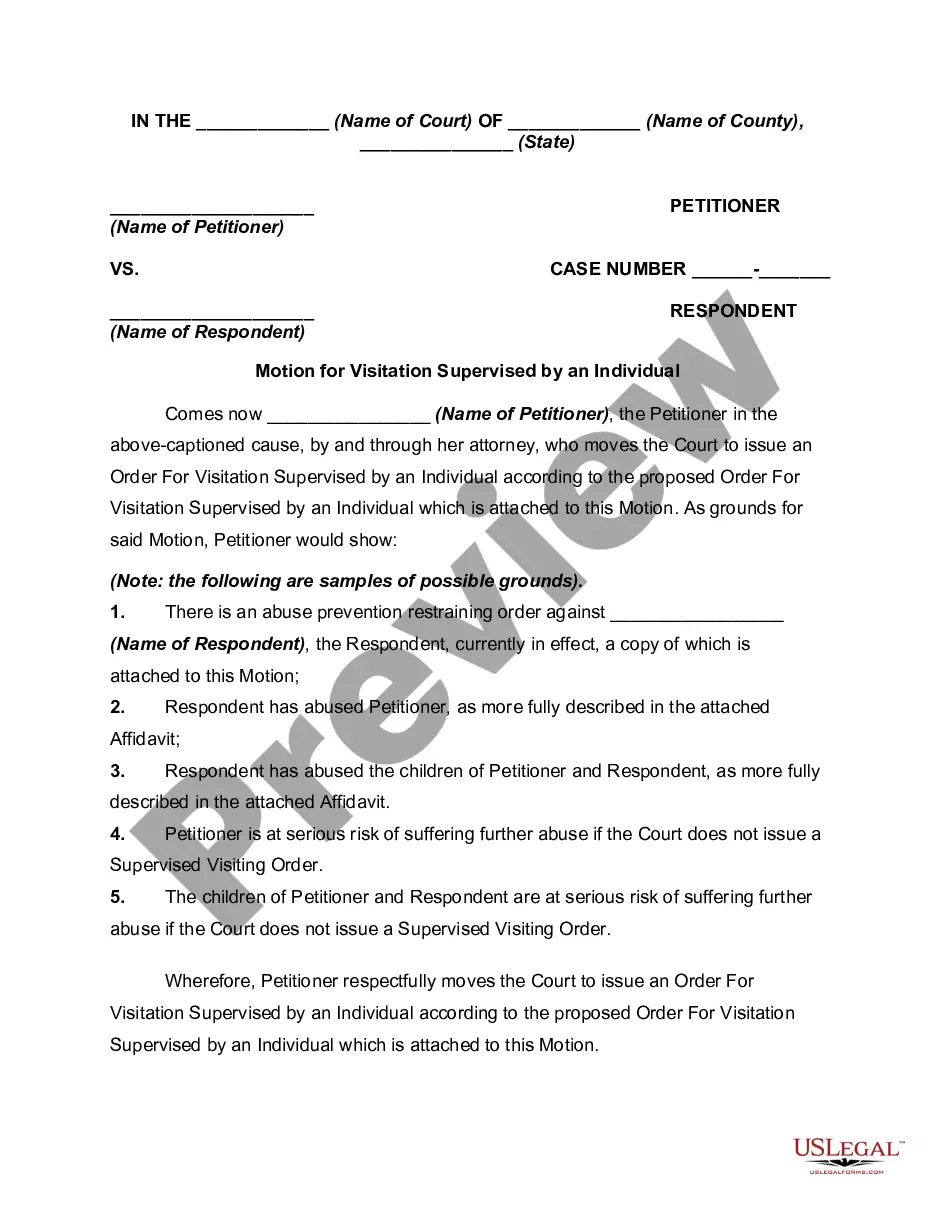
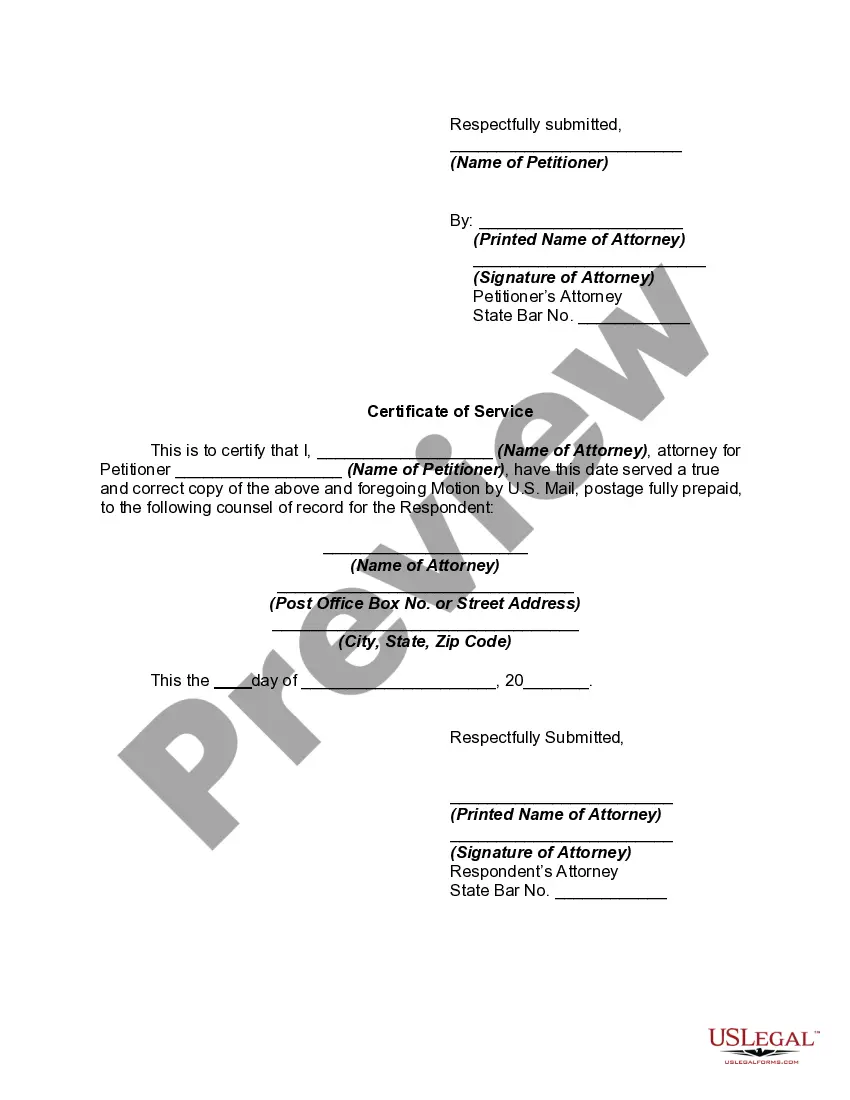

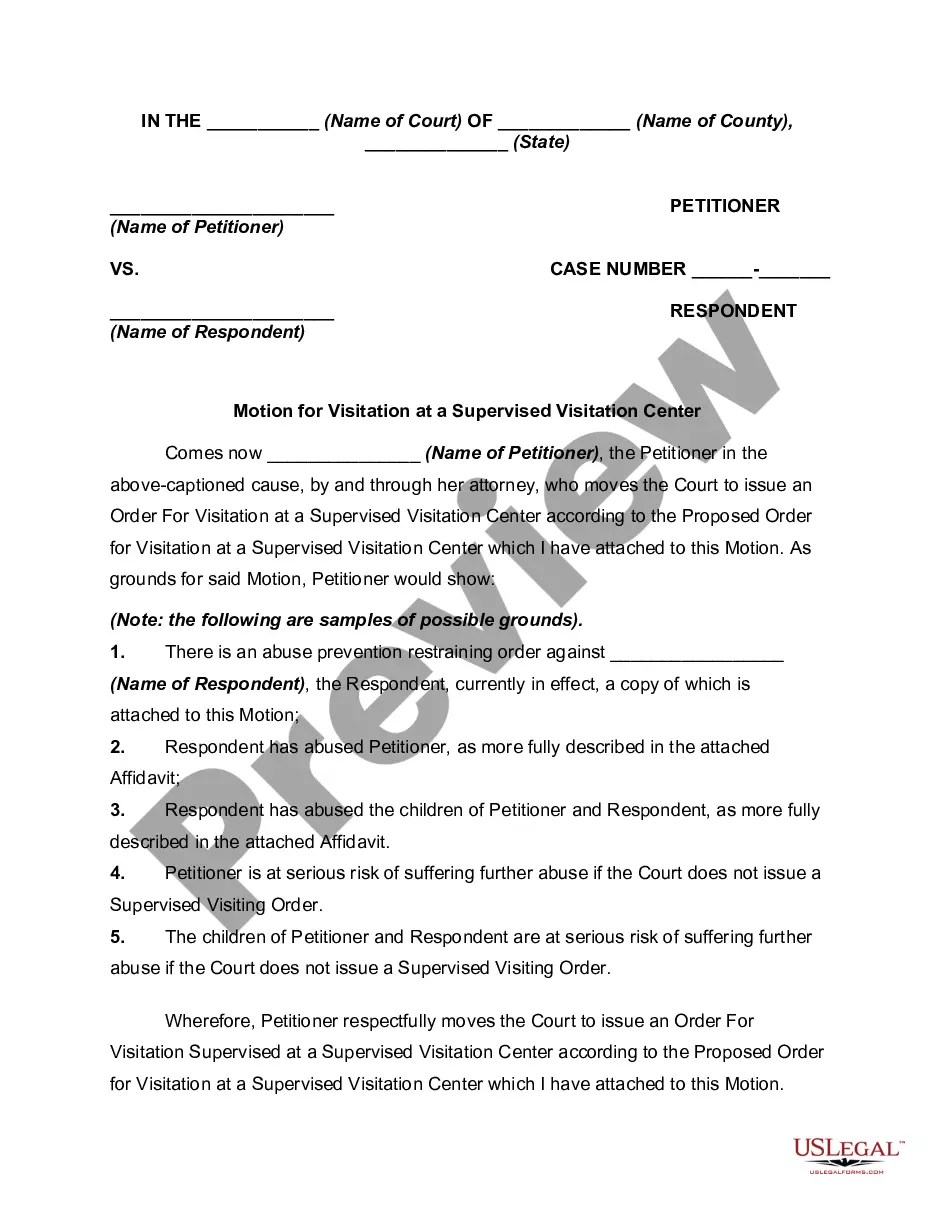

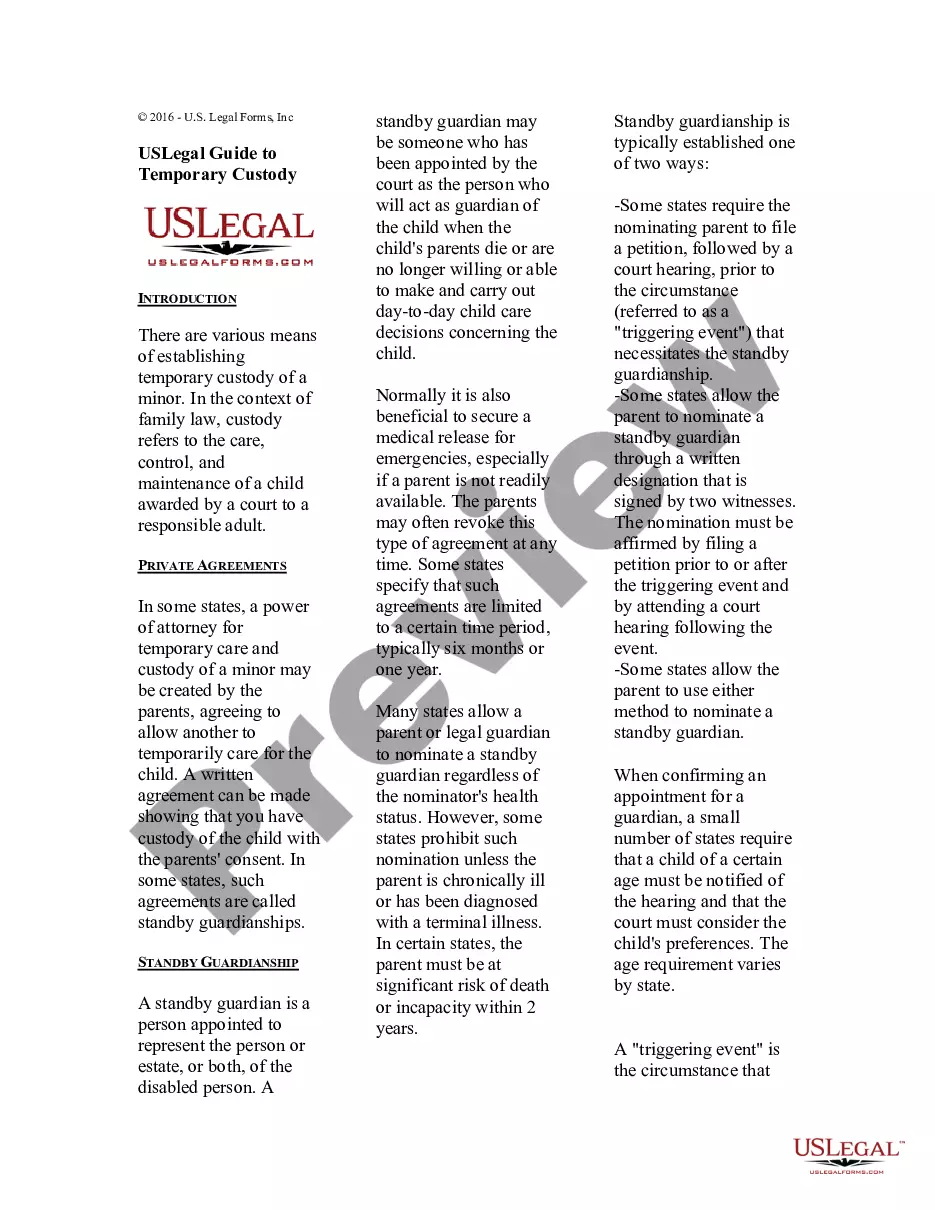



How to fill out Motion For Supervised Visitations?
Managing legal documentation and processes can be a lengthy addition to your day.
Motion Family Law Within and similar forms typically necessitate searching for them and understanding how to fill them out accurately.
Thus, whether you are handling financial, legal, or personal issues, having a comprehensive and user-friendly online directory of forms readily available will be extremely beneficial.
US Legal Forms is the leading online source for legal documents, featuring over 85,000 state-specific forms and an array of resources that assist you in completing your documentation with ease.
Is this your first time using US Legal Forms? Create and establish a free account in just a few minutes to gain access to the form catalog and Motion Family Law Within. Then, follow the steps outlined below to complete your form.
- Browse through the collection of pertinent documents with just a click.
- US Legal Forms offers state- and county-specific forms that can be downloaded at any time.
- Safeguard your document management processes using superior support that allows you to prepare any form in minutes without any additional or concealed costs.
- Simply Log In to your account, find Motion Family Law Within, and download it instantly from the My documents section.
- You can also retrieve previously saved forms.
Form popularity
FAQ
TO MODIFY A CHILD SUPPORT ORDER: Hire an attorney to file the motion. ... File a pro-se motion (file the papers without the help of an attorney). ... IF THE PARENT IS GETTING ENFORCEMENT SERVICES THROUGH THE STATE, he/she can ask the Judicial Branch's Support Enforcement Services to file the motion for them.
Custody Modification Process The paperwork must include a motion for modification, appearance, and affidavit concerning children. A hearing to consider the modification will then be set by the court. Once the court date is set, the other parent must then be served by a State Marshal with a copy of the forms.
In Connecticut, like with most states, a non-custodial parent's child support obligation is calculated as a percentage of their total income compared to the needs of the child. Generally, this is 23% of your net weekly income for 1 child, 32% of your pay for 2 children, and 39% of your pay for 3 children.
Teenagers, in particular, may object to being told they must spend specific blocks of time with a parent, even in families not dealing with divorce. As a result, we are commonly asked by clients at what age a child can refuse visitation. Under Connecticut law, there is no fixed age.
Under state law, unless the custody order is modified by a court, parents must follow the agreement in place. However, if a parent is seeking to change the custody agreement, they must demonstrate that the current agreement is no longer in the child's best interests.
Relocation with children raises significant child custody and visitation issues. If a proposed move involves a child subject to a Connecticut child custody order, a parent cannot move with the child unless he or she has either the other parent's approval or permission from the court.
If you are the custodial parent and wish to relocate out-of-state, you will need either the other parent's approval or permission from the court. The court's priority is to make decisions that are in the best interest of the child.