Spouse Surviving Estate With Nothing
Description
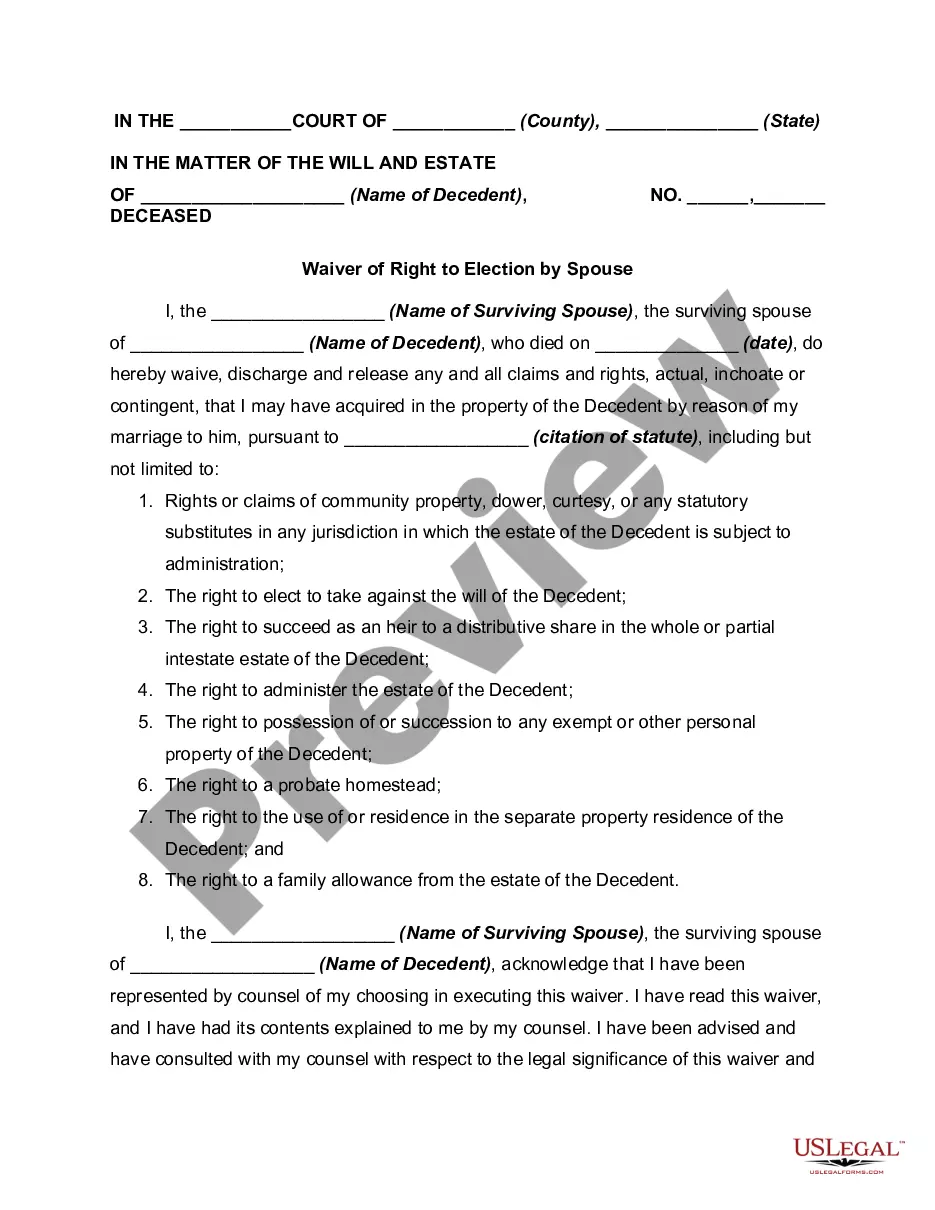
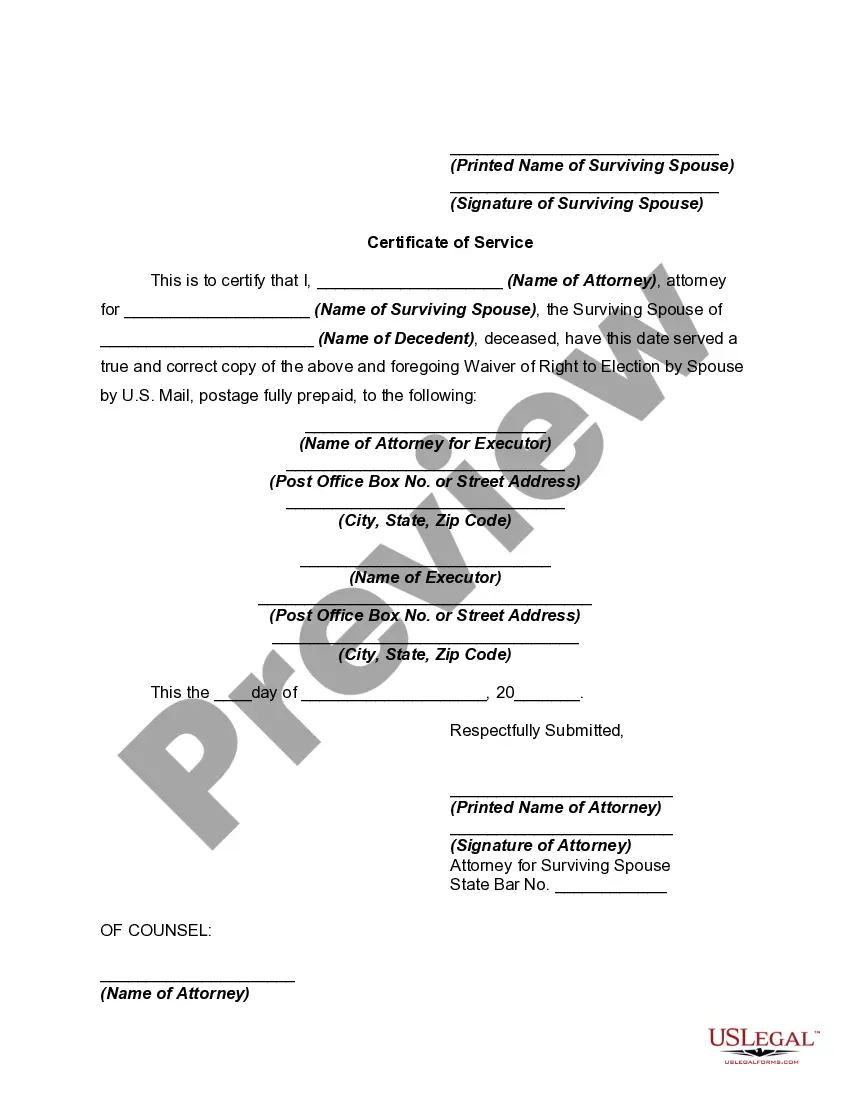
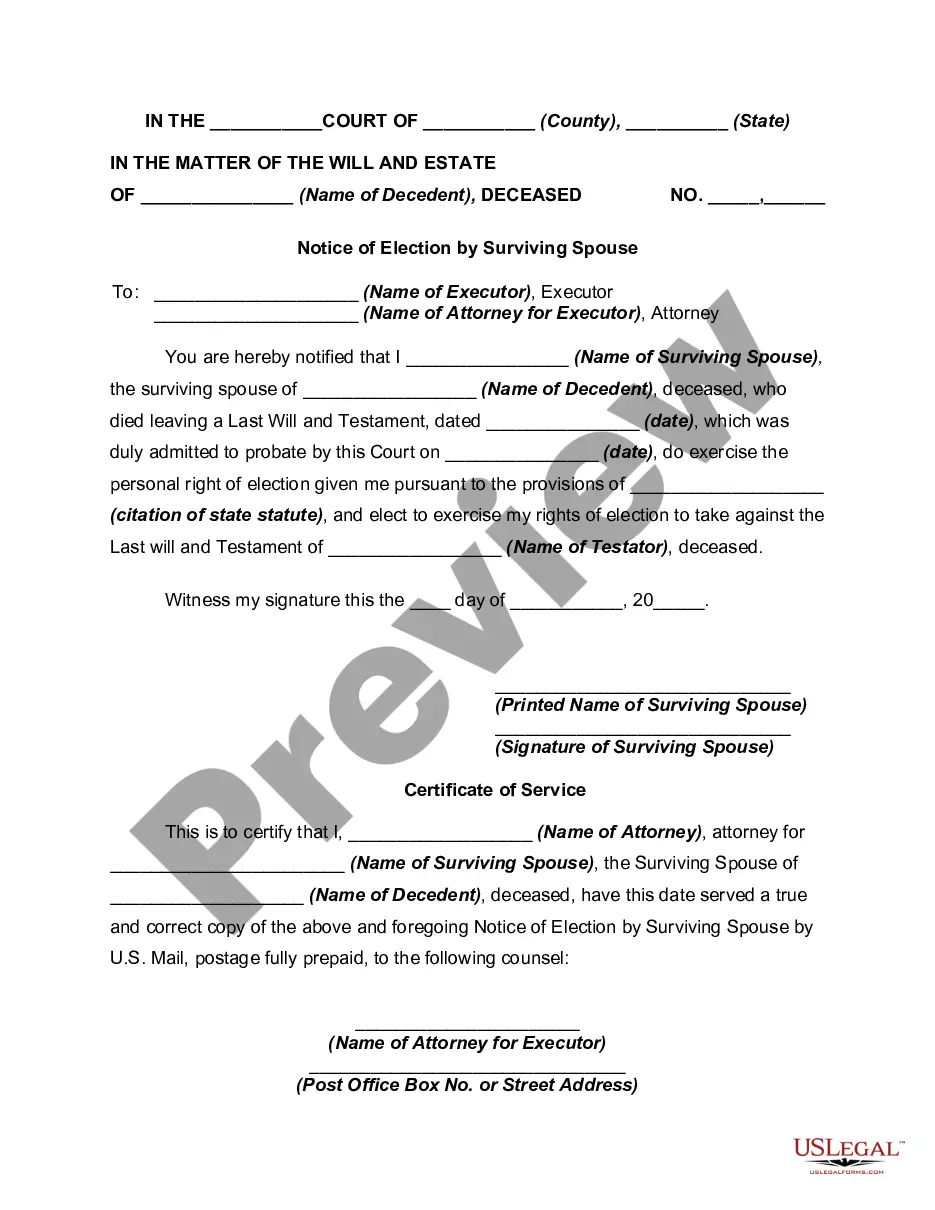
Get your form ready online
Our built-in tools help you complete, sign, share, and store your documents in one place.
Make edits, fill in missing information, and update formatting in US Legal Forms—just like you would in MS Word.
Download a copy, print it, send it by email, or mail it via USPS—whatever works best for your next step.
Sign and collect signatures with our SignNow integration. Send to multiple recipients, set reminders, and more. Go Premium to unlock E-Sign.
If this form requires notarization, complete it online through a secure video call—no need to meet a notary in person or wait for an appointment.
We protect your documents and personal data by following strict security and privacy standards.

Make edits, fill in missing information, and update formatting in US Legal Forms—just like you would in MS Word.

Download a copy, print it, send it by email, or mail it via USPS—whatever works best for your next step.

Sign and collect signatures with our SignNow integration. Send to multiple recipients, set reminders, and more. Go Premium to unlock E-Sign.

If this form requires notarization, complete it online through a secure video call—no need to meet a notary in person or wait for an appointment.

We protect your documents and personal data by following strict security and privacy standards.
Looking for another form?








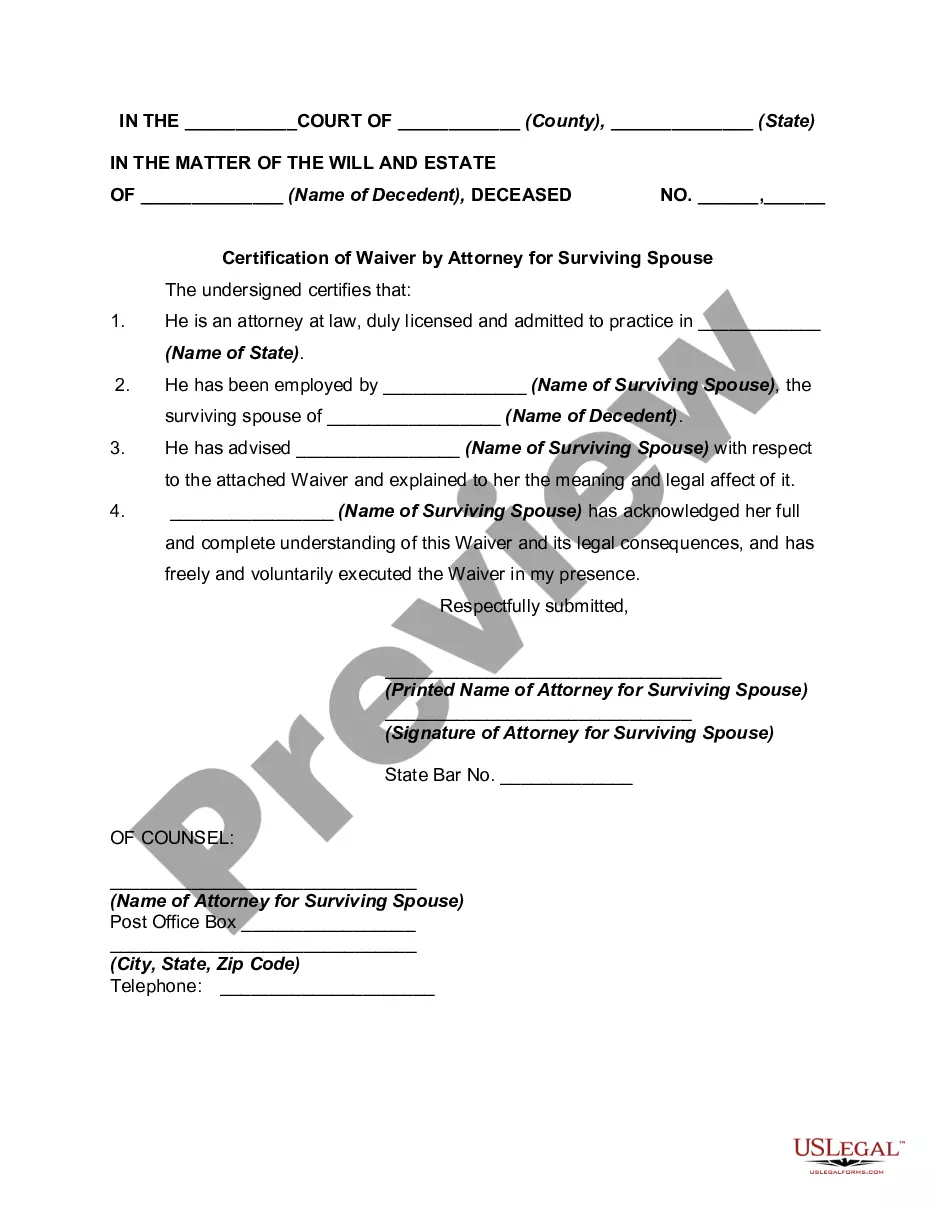
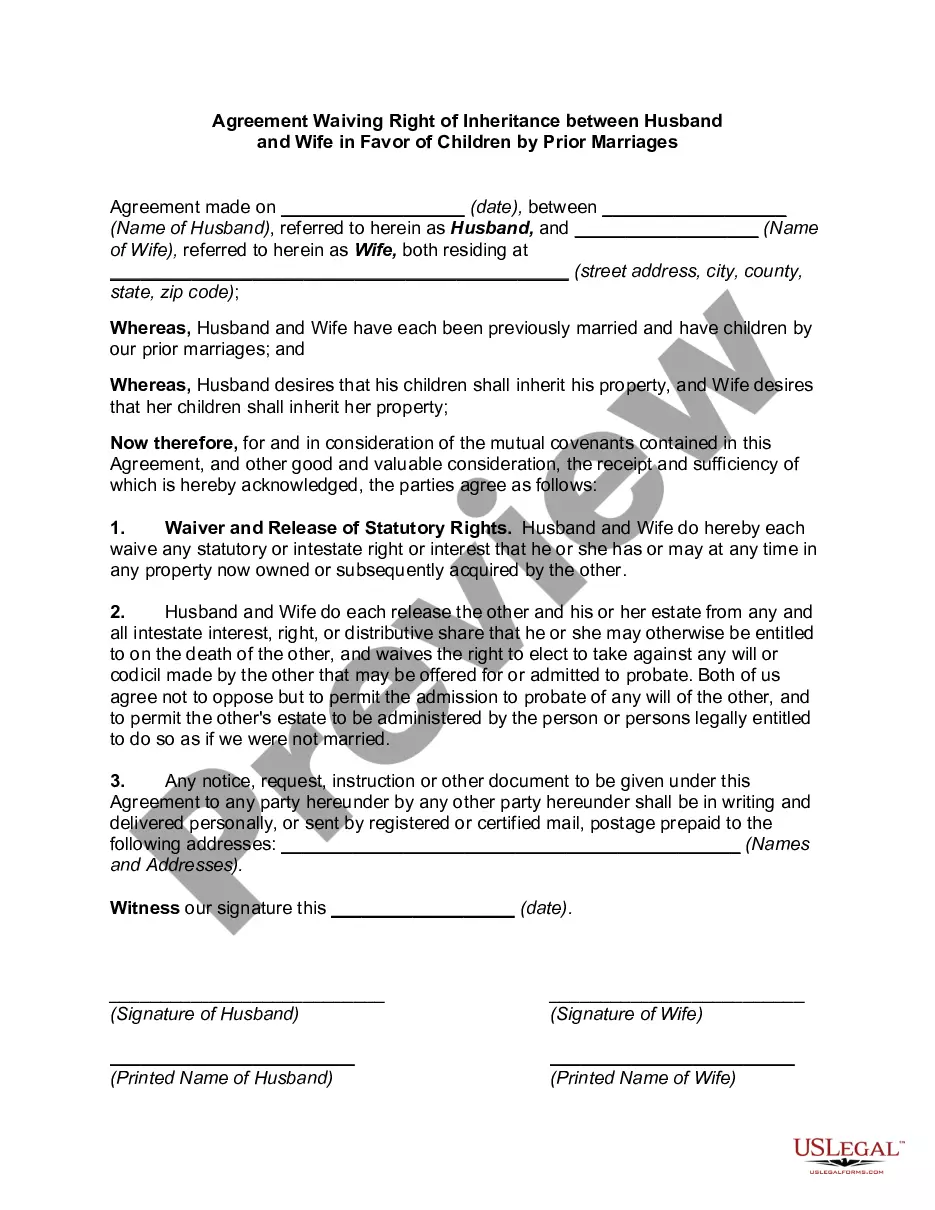
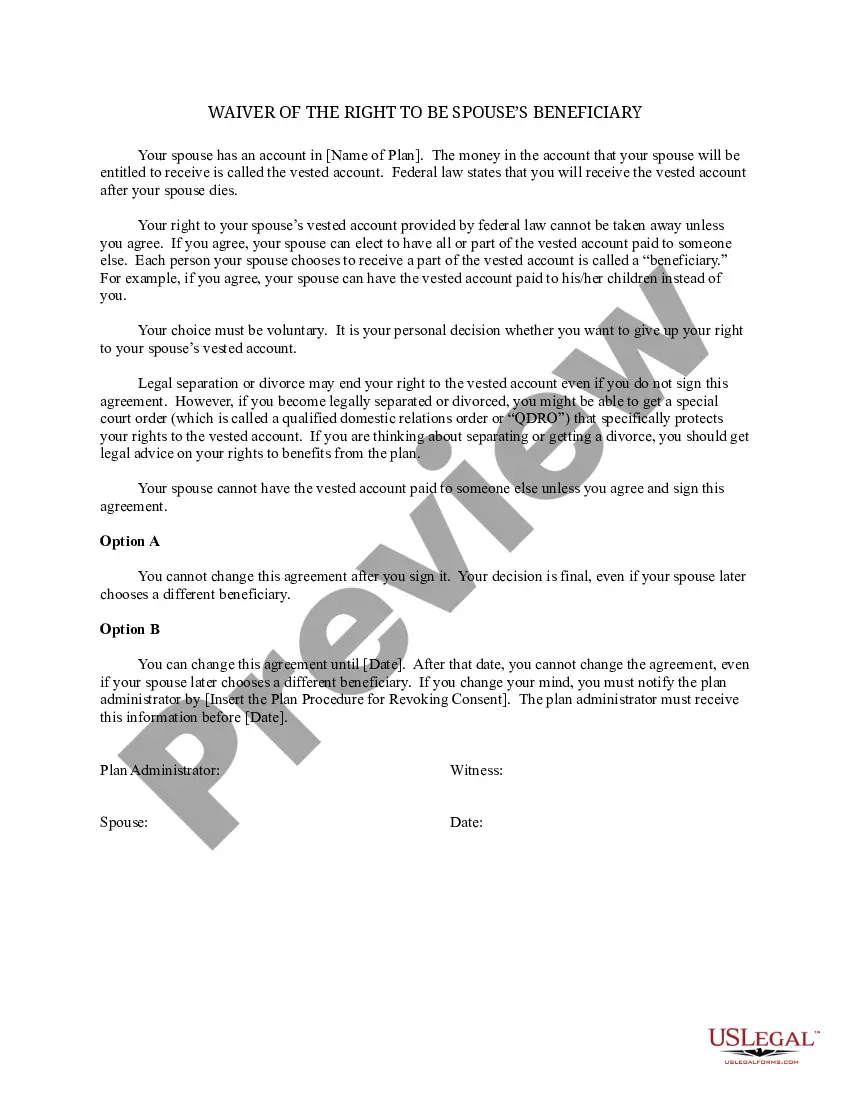
How to fill out Waiver Of Right To Election By Spouse?
- If you're a returning user, log in to your account. Ensure your subscription is active; if not, renew it as per your plan to proceed.
- For first-time users, start by reviewing the Preview mode and form description. Confirm that the selected document fulfills your specific needs and complies with local requirements.
- If adjustments are necessary, utilize the Search tab to explore alternative templates that may better serve your situation. Move forward once you find the right form.
- Click on the Buy Now button to choose your preferred subscription plan. Remember, account registration is required to access the entire library.
- Finalize your purchase by entering your payment details. You can opt for credit card or PayPal options to complete the transaction.
- Download your selected form directly to your device. For easy future access, you'll find the template stored in the My Forms section of your profile.
US Legal Forms provides a robust collection of over 85,000 editable legal forms, ensuring you can find exactly what you need with ease. By offering premium support from legal experts, users can confidently navigate the complexities of legal documentation.
Start simplifying your legal needs today. Sign up for US Legal Forms and gain access to the resources you need for effective estate management.
Form popularity
FAQ
Not necessarily. While many states grant a surviving spouse a significant portion of the estate, various factors influence the distribution, such as the existence of a will or other beneficiaries. In some instances, the spouse surviving estate with nothing may simply mean that the estate is divided among multiple heirs. Understanding these nuances can help you plan effectively and ensure that your loved ones inherit as intended.
In most cases, a wife may inherit a significant portion of her husband's estate, particularly if there is no will. However, the distribution can vary based on state laws regarding intestate succession and the presence of other heirs. The spouse surviving estate with nothing situation can occur when there are children or other relatives involved, which can complicate matters. It's essential to review the estate documents and consult a legal expert for precise guidance.
Generally, a spouse is often considered a primary beneficiary in many states, but this can depend on whether the deceased had a will or trust. If no estate plan exists, the spouse surviving estate with nothing may lead to default inheritance laws, which may not favor the spouse if there are children or other relatives. Checking the terms of any existing legal documents is crucial to confirm the benefits available. Consulting with legal professionals can help clear up any confusion.
When a spouse dies, the first step involves gathering important documents such as the will, trust, and any financial records. You may feel overwhelmed, but addressing these matters is essential. Understanding the spouse surviving estate with nothing situation can provide clarity on how to proceed. It's often advisable to consult with an attorney to navigate the legal obligations and ensure the estate is handled properly.
If your spouse dies and you are not on the house title, this can lead to uncertainty regarding ownership. Depending on the state’s laws and any existing wills, you may still have rights to inherit a portion of the estate. However, if there are no clear directives, you might face challenges as a spouse surviving the estate with nothing. Consulting a legal expert can guide you through your rights and next steps.
If your spouse's name is absent from the deed, this can complicate matters after a death. Generally, the property will belong to the surviving spouse if it was jointly held. However, if it’s solely in one name without additional arrangements, the surviving spouse may need to establish rights through probate. As a spouse surviving the estate with nothing, it’s critical to seek legal advice to navigate ownership and entitlement.
If you pass away and your wife is not listed on the mortgage, the responsibility typically passes to your estate. Your estate may need to settle the mortgage, which could complicate matters for your spouse. If the home was not legally transferred to her or is solely in your name, she may need to seek legal advice to understand her options as a spouse surviving the estate with nothing.
The IRS provides specific guidelines for a surviving spouse, especially regarding tax filing status. As a spouse surviving the estate with nothing, you may qualify for the 'Qualifying Widow' status for two years after your spouse’s death, which can offer significant tax benefits. This allows you to use the same tax rates as married couples. Ensure to consult a tax professional to navigate any complexities.
When one spouse passes away, it's essential to assess the deceased spouse's estate. Start by locating any wills or estate plans that outline how to handle assets. If there is no plan, you may need to work through the probate process to distribute the estate. Always remember, if you are a spouse surviving the estate with nothing, you may have legal rights to claim certain assets.
Forcing your husband to move out can depend on your relationship status and local laws. If you are married, you generally cannot evict him from your shared home without legal proceedings. However, if you are separated, you may have more options to request that he vacate the property. In situations involving marital disputes, it's advisable to consult a legal professional to explore options pertaining to the spouse surviving estate with nothing and getting clarity on your rights.