Third-party Beneficiary In Business Law
Description
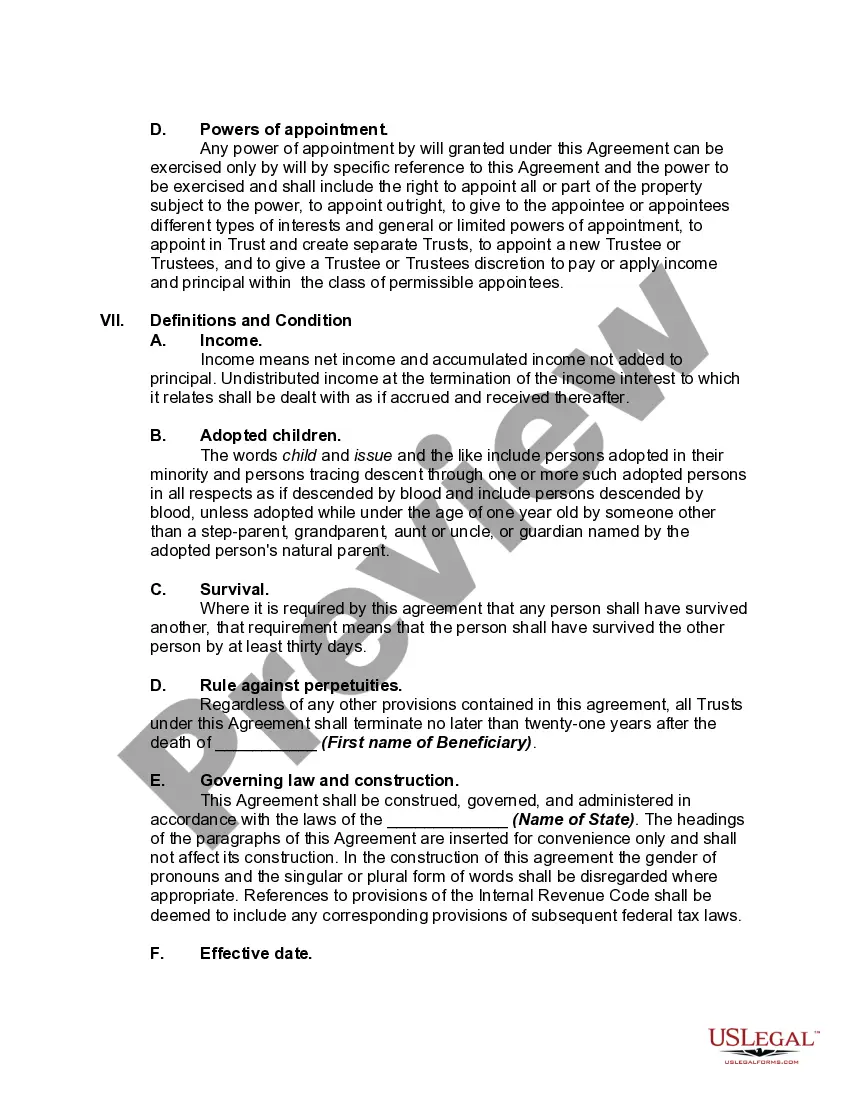


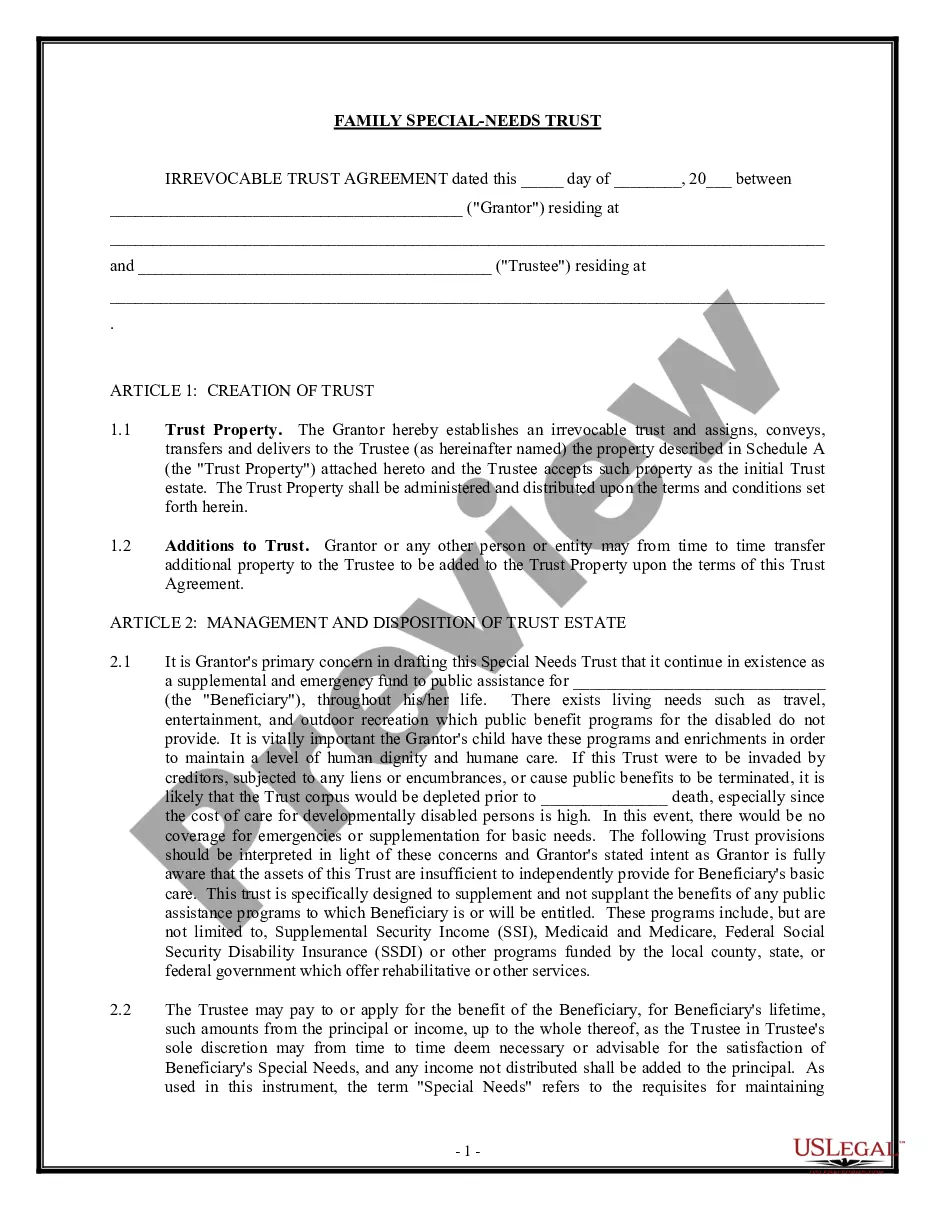
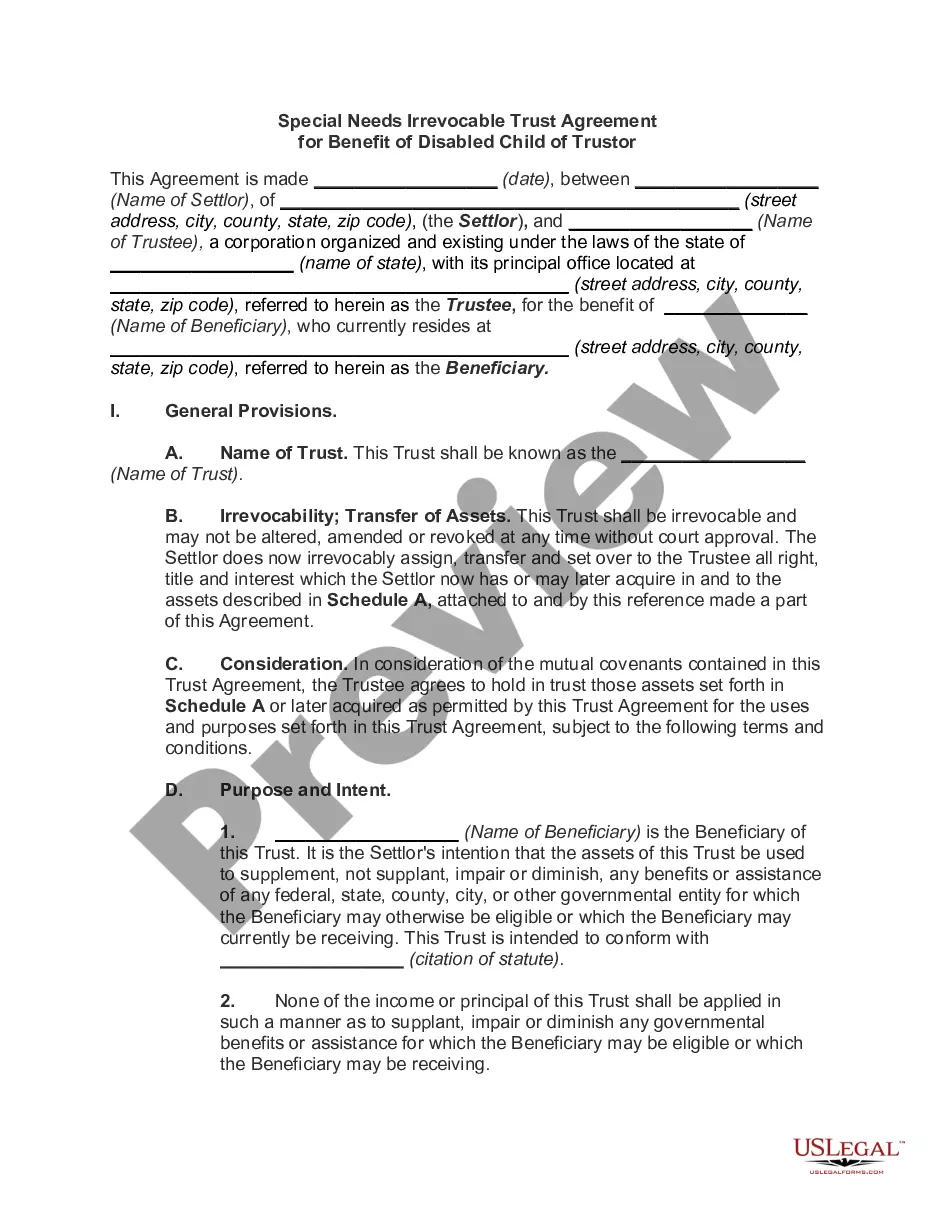
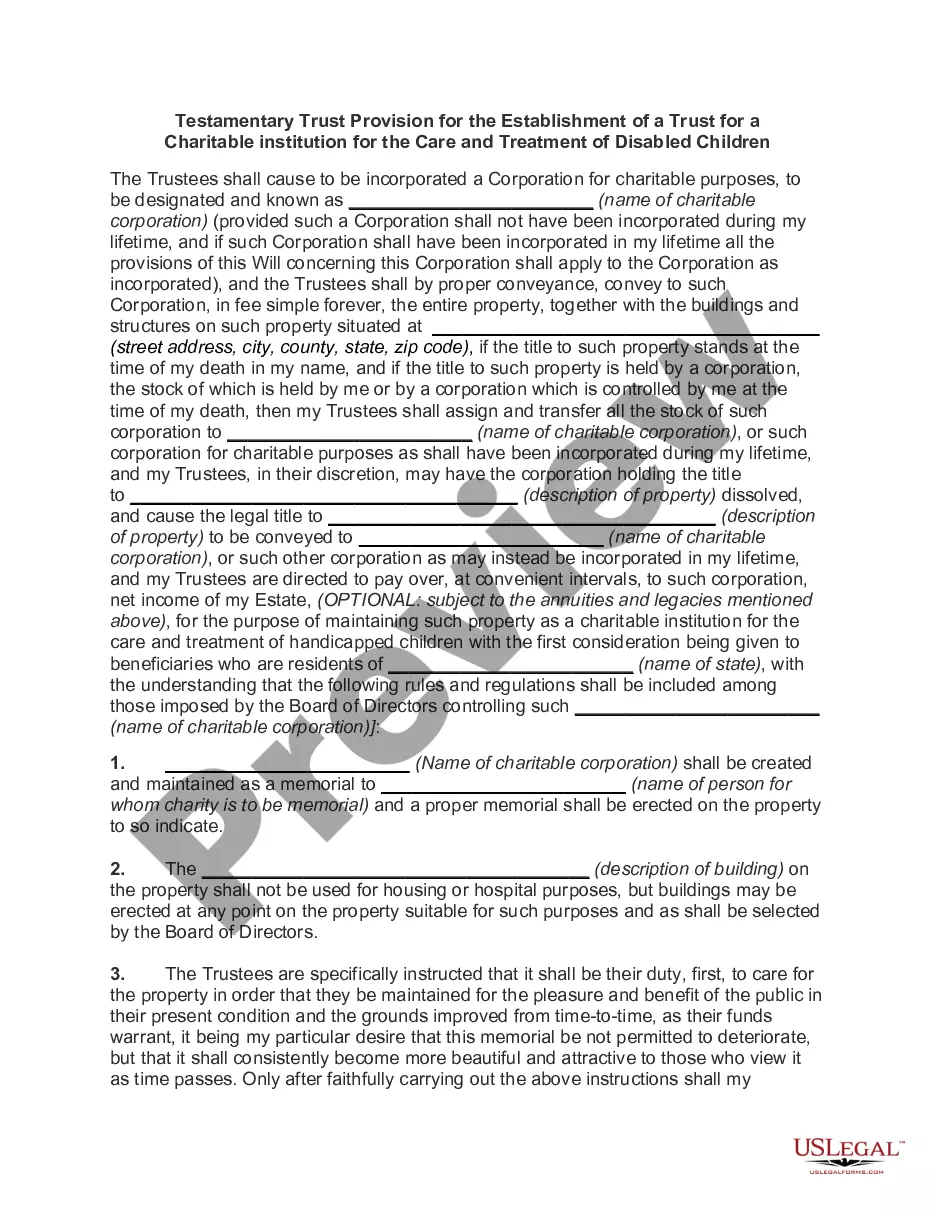
Get your form ready online
Our built-in tools help you complete, sign, share, and store your documents in one place.
Make edits, fill in missing information, and update formatting in US Legal Forms—just like you would in MS Word.
Download a copy, print it, send it by email, or mail it via USPS—whatever works best for your next step.
Sign and collect signatures with our SignNow integration. Send to multiple recipients, set reminders, and more. Go Premium to unlock E-Sign.
If this form requires notarization, complete it online through a secure video call—no need to meet a notary in person or wait for an appointment.
We protect your documents and personal data by following strict security and privacy standards.

Make edits, fill in missing information, and update formatting in US Legal Forms—just like you would in MS Word.

Download a copy, print it, send it by email, or mail it via USPS—whatever works best for your next step.

Sign and collect signatures with our SignNow integration. Send to multiple recipients, set reminders, and more. Go Premium to unlock E-Sign.

If this form requires notarization, complete it online through a secure video call—no need to meet a notary in person or wait for an appointment.

We protect your documents and personal data by following strict security and privacy standards.
Looking for another form?
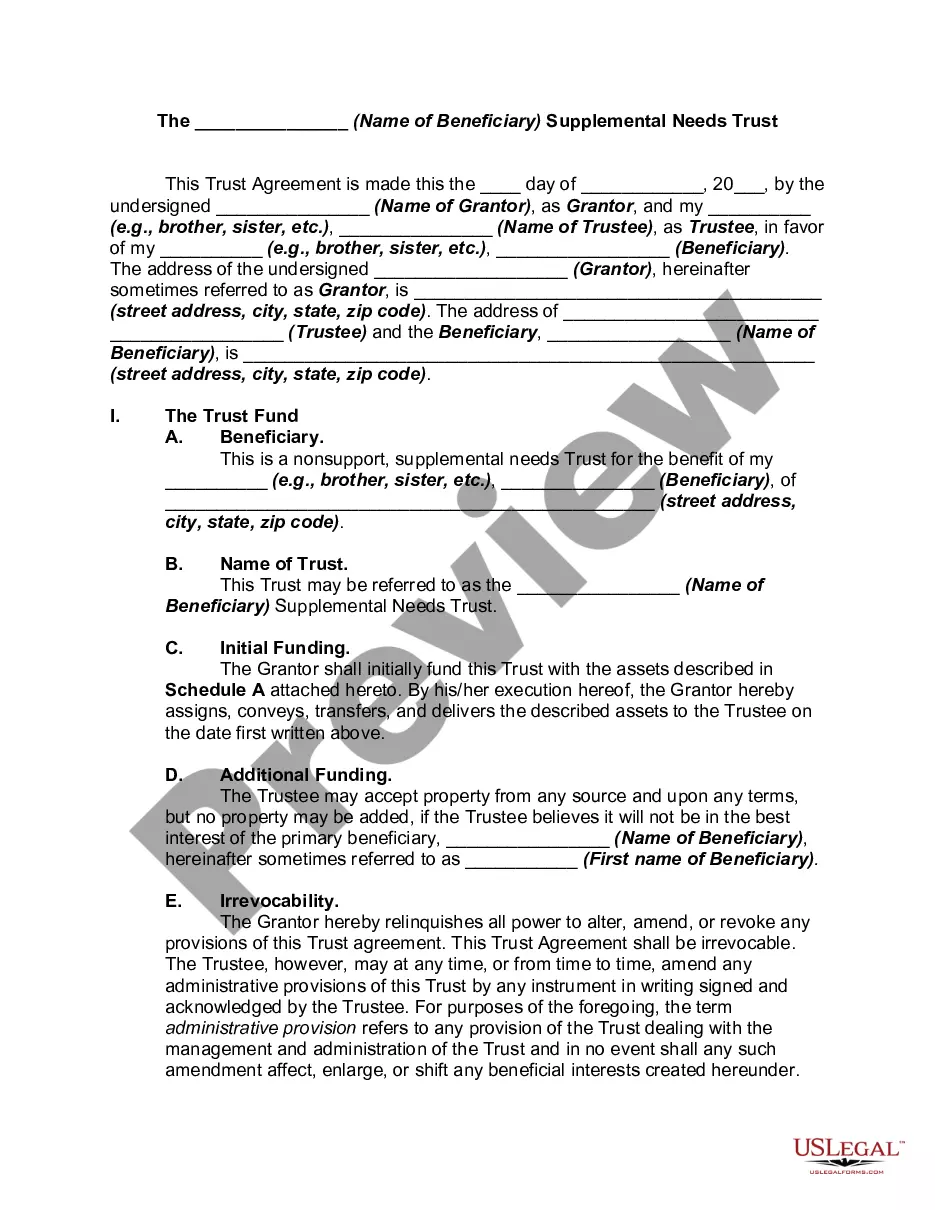
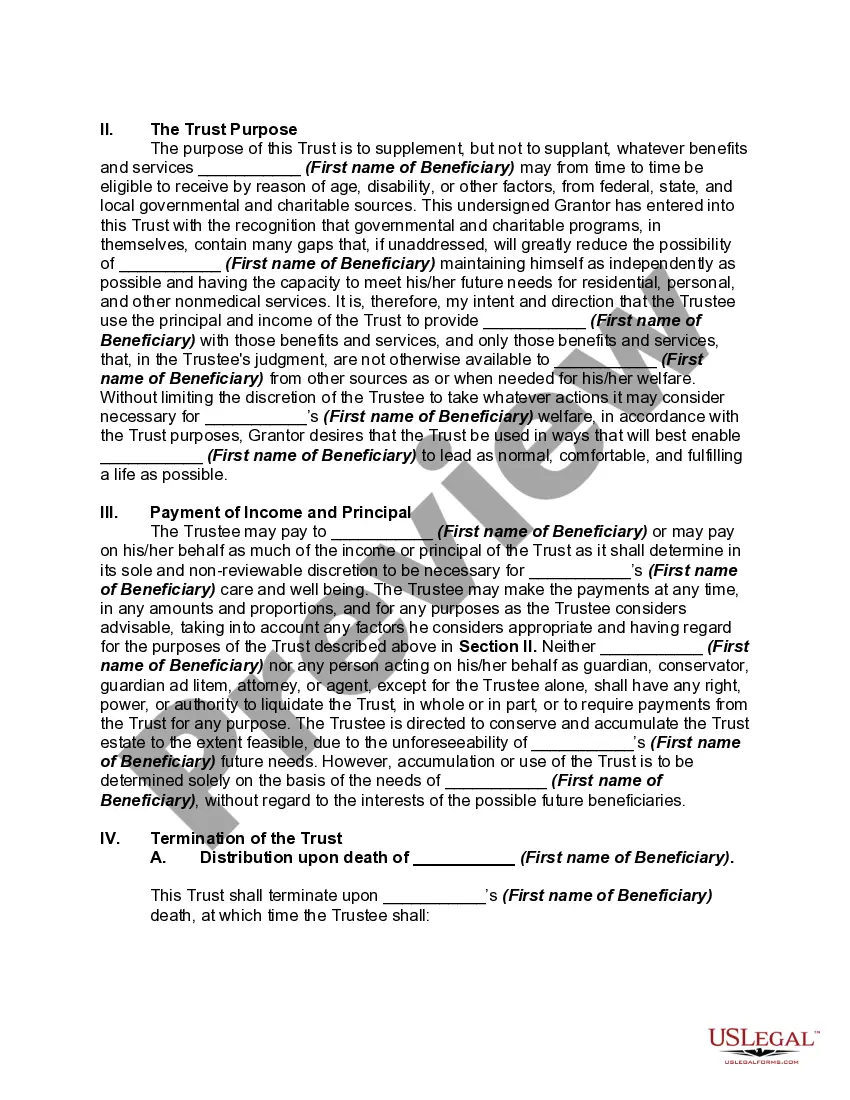
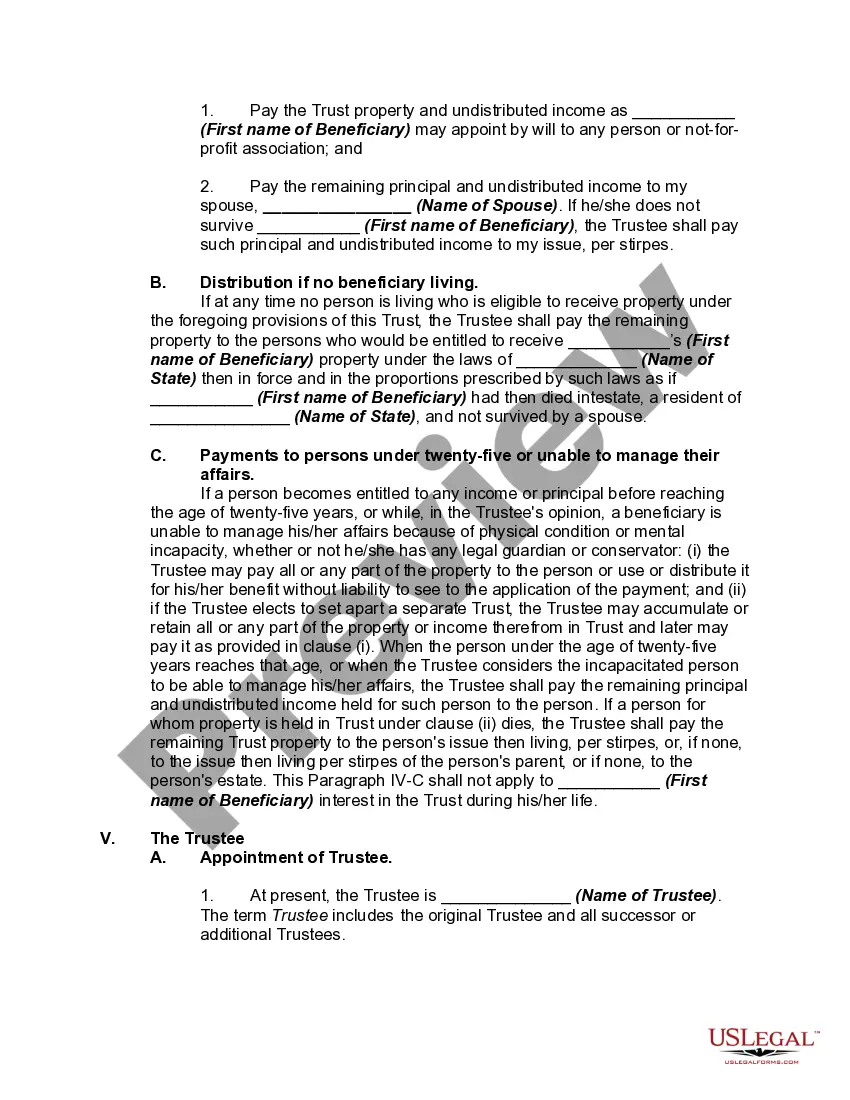
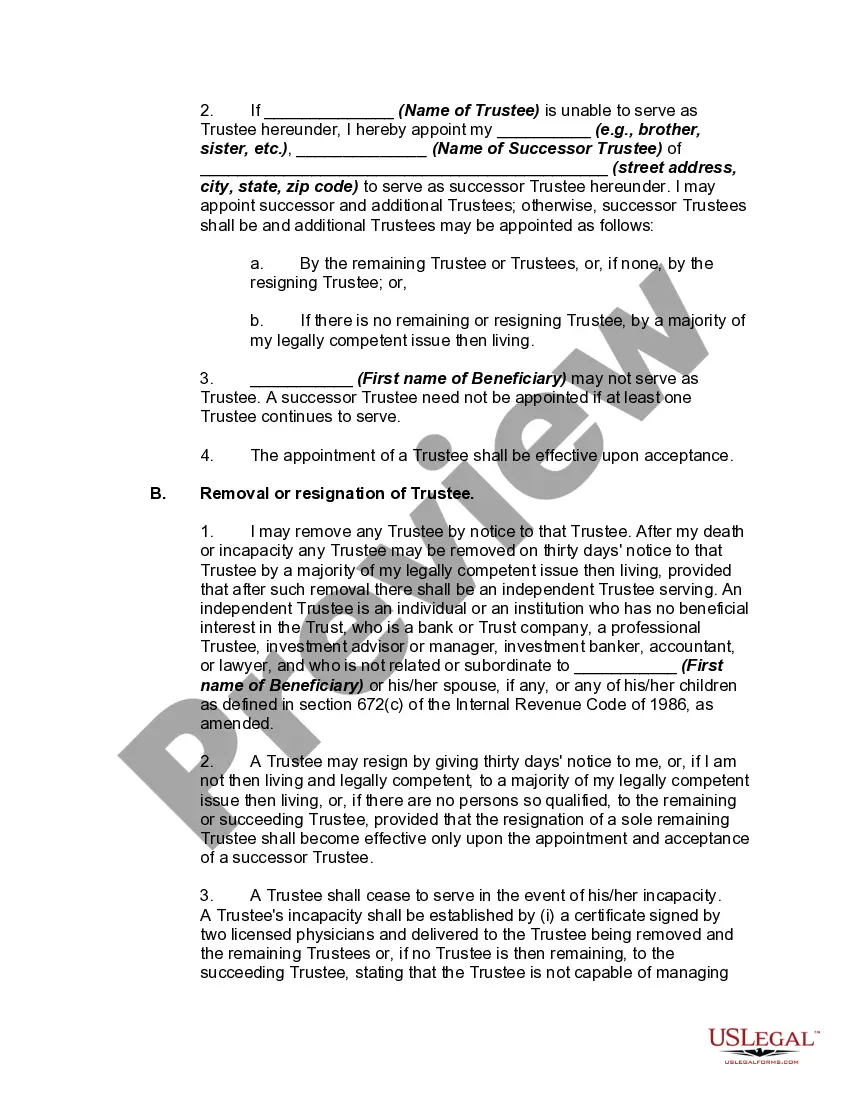
How to fill out Supplemental Needs Trust For Third Party - Disabled Beneficiary?
Finding a reliable source for the latest and most suitable legal templates is a significant part of navigating bureaucracy.
Identifying the appropriate legal documents necessitates precision and meticulousness, which is why it's essential to source Third-party Beneficiary In Business Law samples exclusively from trustworthy providers, such as US Legal Forms.
Once you have the form on your device, you can modify it using the editor or print it out and complete it by hand. Eliminate the complications associated with your legal paperwork. Browse the extensive US Legal Forms catalog to discover legal templates, evaluate their suitability for your circumstance, and download them instantly.
- Utilize the library navigation or search bar to find your template.
- Examine the form's details to ensure it aligns with the stipulations of your state and county.
- Check the form preview, if available, to confirm that it's the form you need.
- If the Third-party Beneficiary In Business Law does not meet your specifications, continue searching to locate the correct document.
- Once you are certain of the form’s appropriateness, download it.
- If you are an authorized user, click Log in to verify and access your selected forms in My documents.
- If you haven't created a profile, click Buy now to acquire the form.
- Choose the subscription plan that best fits your needs.
- Proceed to register to complete your purchase.
- Finish your transaction by selecting a payment method (credit card or PayPal).
- Choose the document format for downloading Third-party Beneficiary In Business Law.
Form popularity
FAQ
party benefit refers to any advantage or gain received by a person or entity that is not a direct party to a contract. In business law, this concept highlights how contracts can create rights for thirdparty beneficiaries. Essentially, if two parties enter a contract, a thirdparty beneficiary can enforce their rights if the agreement was intended to benefit them. Understanding this concept is vital for both individuals and businesses engaging in contractual agreements.
A donee beneficiary is when a contract is made expressly for giving a gift to a third party, the third party is known as the donee beneficiary. The most common donee beneficiary contract is a life insurance policy.
party beneficiary is a person who is not a contracting party of a contract but can still receive the benefits from the performance of the contract. The privity of the contract is between the contracting parties the promisor and promisee.
The clearest example of a third-party beneficiary is found in life insurance contracts. An individual enters into a contract with an insurance company that requires the payment of death benefits to a third party.
The third-party beneficiary must be referred to or named in the contract and the intent to provide a benefit to this third party must be irrevocable. (A typical example: a father pays tuition and enrolls his son in a college, signing the enrollment forms since his son is out of the country in the military.
There are two kinds of third-party beneficiaries: an ?intentional or intended? beneficiary and an ?incidental? beneficiary. When a non-party to a contract receives benefit from the agreement directly, this is known as an intentional beneficiary.