Joint Tenants Force Sale
Description
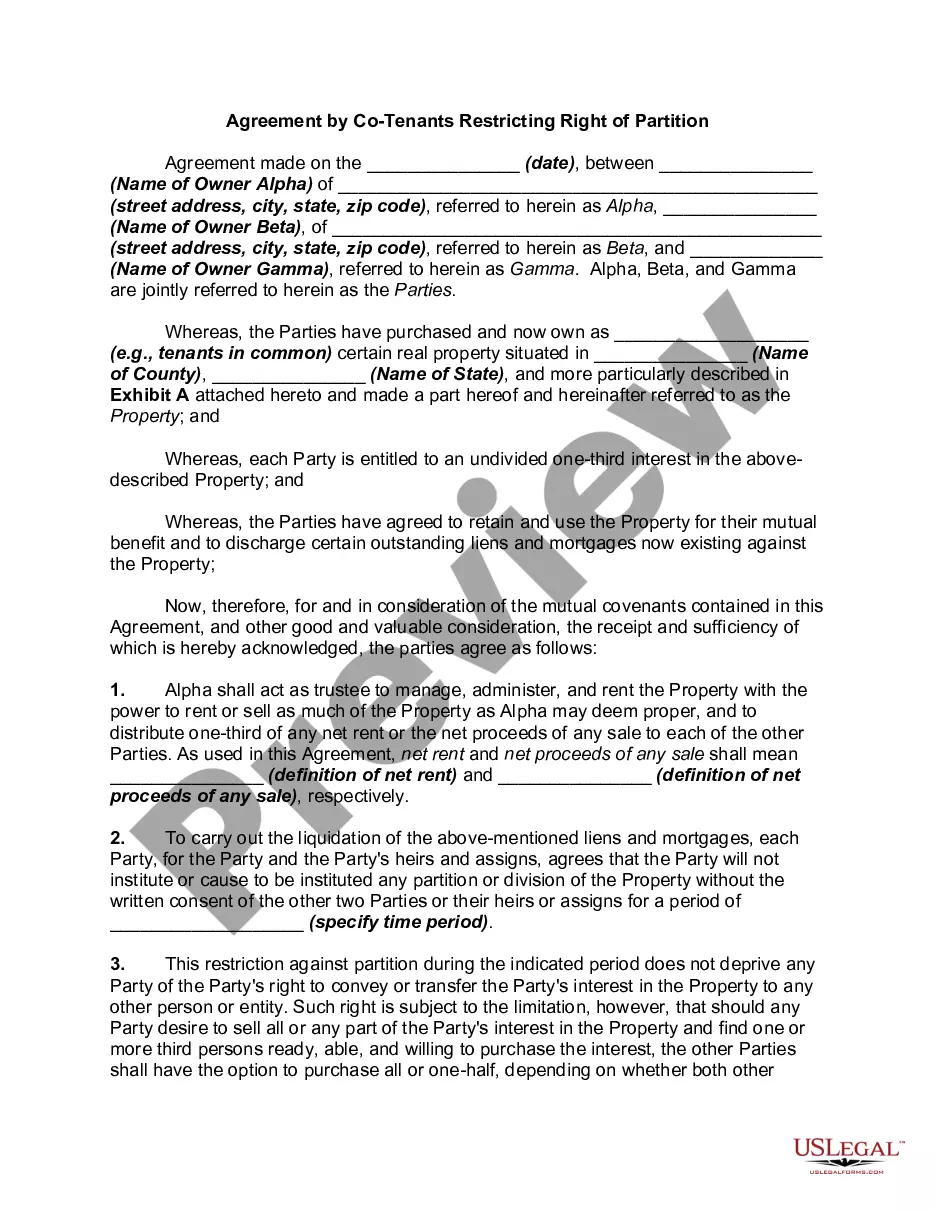
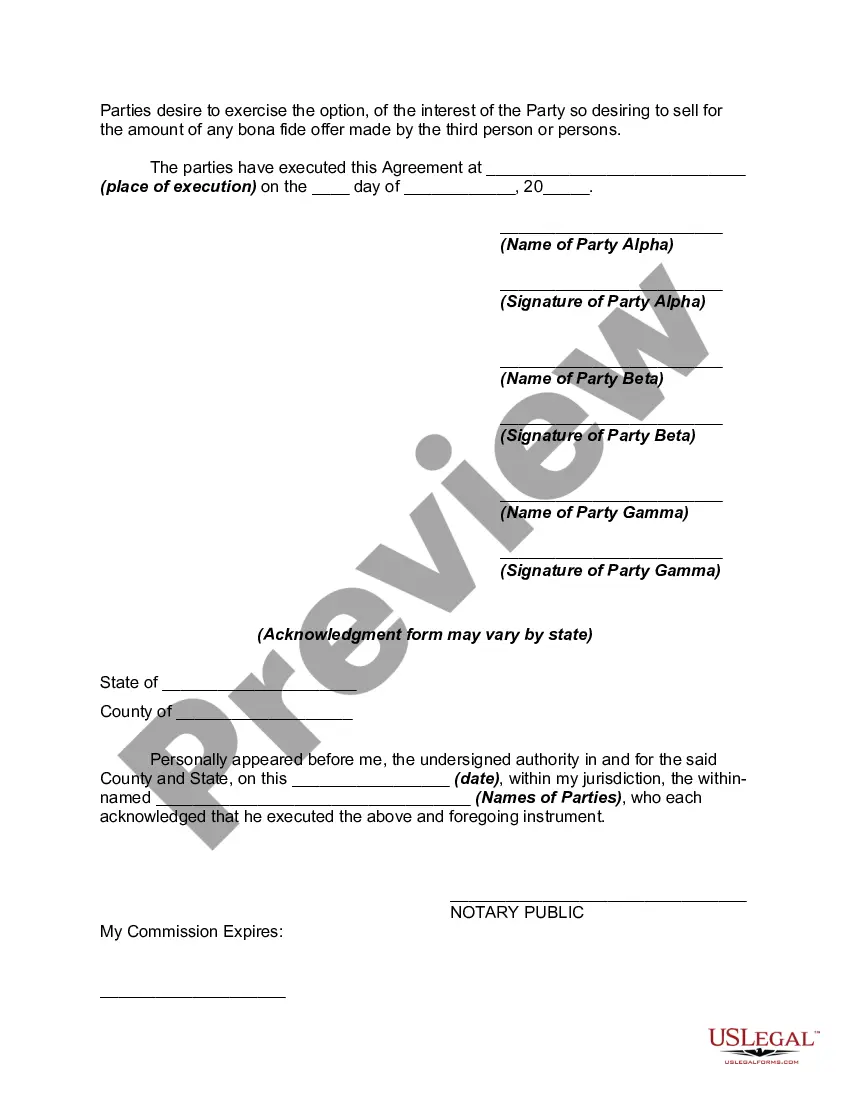

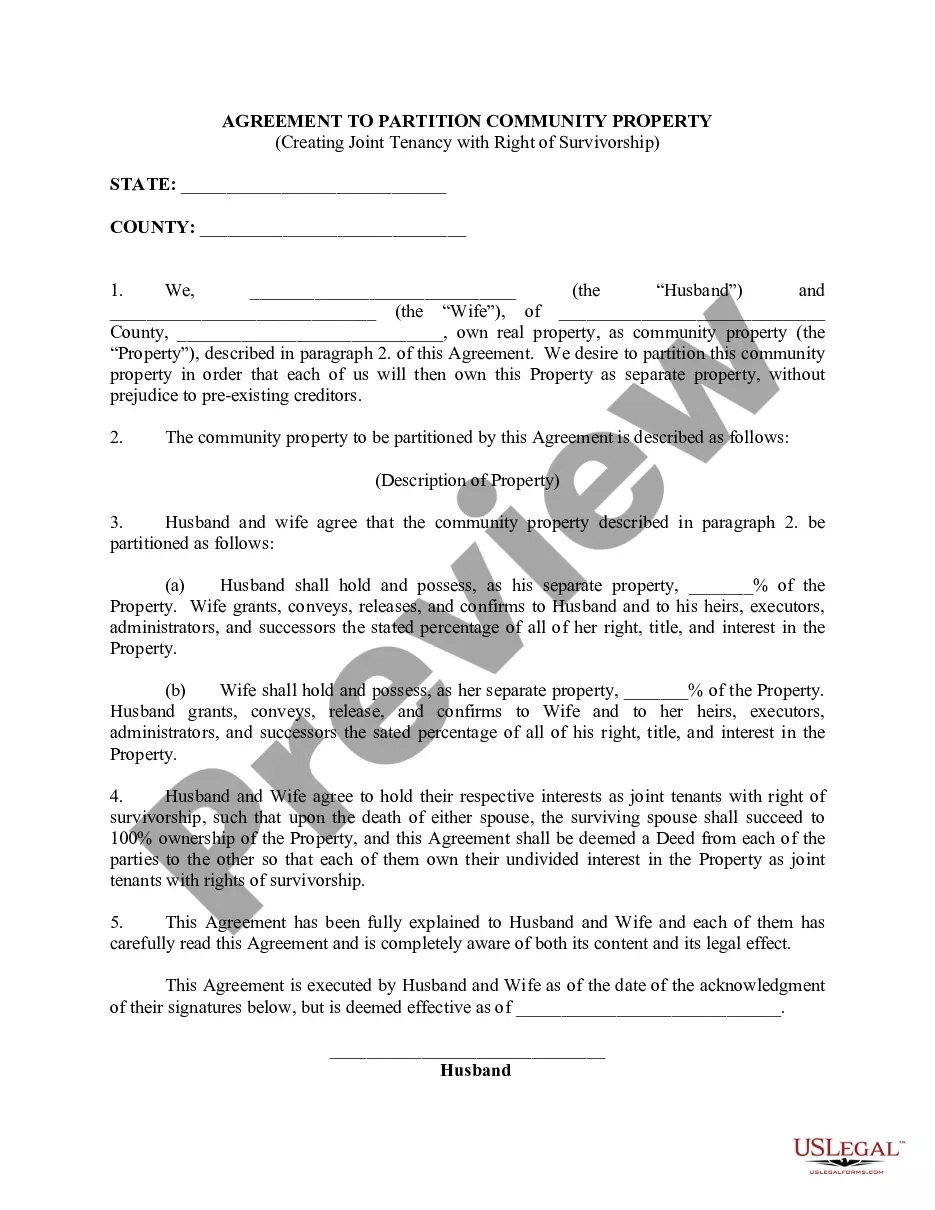
How to fill out Agreement By Co-Tenants Restricting Right Of Partition?
Locating a reliable source for the latest and suitable legal templates constitutes a significant portion of navigating bureaucracy. Selecting the appropriate legal documents requires accuracy and meticulousness, which emphasizes the necessity of obtaining Joint Tenants Force Sale samples exclusively from trusted providers, such as US Legal Forms. An incorrect template can squander your time and delay your current situation. With US Legal Forms, you have minimal concerns. You can access and review all pertinent information regarding the document’s application and relevance to your specific situation as well as in your locality.
To complete your Joint Tenants Force Sale, follow these steps.
After acquiring the form on your device, you can edit it using the editor or print it out and fill it out by hand. Eliminate the hassle associated with your legal paperwork. Browse through the comprehensive US Legal Forms library to discover legal samples, verify their applicability to your situation, and download them immediately.
- Utilize the library navigation or search bar to locate your sample.
- Examine the form’s description to ensure it aligns with the requirements of your state and region.
- View the form preview, if available, to confirm it is the document you seek.
- If the Joint Tenants Force Sale does not suit your needs, continue searching for the appropriate document.
- Once you are confident about the form’s applicability, download it.
- As a registered user, click Log in to verify and access your chosen templates in My documents.
- If you haven't registered yet, click Buy now to obtain the form.
- Select the pricing option that meets your needs.
- Proceed to register to finalize your purchase.
- Complete the purchase by choosing a payment method (credit card or PayPal).
- Select the document format for downloading the Joint Tenants Force Sale.
Form popularity
FAQ
When you are compelled to sell your property, it is often referred to as a joint tenants force sale. This term describes the legal process whereby a court orders the sale of property owned jointly, ensuring all parties receive their respective shares. Understanding this process can help you navigate challenging joint ownership situations more effectively.
Forcing a partner to buy you out can be complex, as it typically requires mutual agreement. If your partner refuses, legal avenues exist to achieve a resolution. By initiating a joint tenants force sale, you can enable the sale of the property, ensuring you obtain your financial interest fairly.
If your partner refuses to sell, it poses a significant challenge for joint ownership. Solutions may involve negotiating terms or seeking mediation. If discussions fail, pursuing a joint tenants force sale can be a viable option, prompting a legal resolution that facilitates the sale of the property.
In cases where one partner wants to sell and the other does not, tensions can escalate. It is crucial to communicate openly and explore mediation first. However, if an agreement remains unreachable, you can opt for a joint tenants force sale, resulting in a court-ordered transaction that honors both parties' rights.
When one person doesn't want to sell, it can disrupt the collective decisions of joint tenants. This disagreement often leads to a stalled property sale process. A joint tenants force sale could be initiated legally, where a court evaluates the situation and may mandate the sale for an equitable resolution.
If one party wants to sell while the other disagrees, it can lead to a challenging situation. To resolve this disagreement, you may have to pursue a joint tenants force sale through the courts. Here, a judge can decide to order the sale of the property, dividing the proceeds among the tenants appropriately.
When one owner doesn't want to sell, it creates a conflict among joint tenants. In this situation, the other owners may consider legal action to initiate a joint tenants force sale. Often, mediation can help reach a compromise, but if necessary, the courts can order the property to be sold, ensuring that all parties receive their fair share.
If one partner refuses to sell in California, you can take legal steps to initiate a partition action. This legal process addresses cases where co-ownership leads to conflicts and can result in a joint tenants force sale. Engaging with platforms like uslegalforms can guide you through this process effectively and ensure your rights are protected.
Certainly, you can compel a sale of jointly owned property in California. By filing a partition action in court, you can seek to mandate a joint tenants force sale if there is no mutual agreement. This process ensures that all parties involved get their fair share from the sale of the property.
When one person wants to sell the house while the other does not, it can lead to disputes among joint owners. In California, the individual who wants to sell can initiate legal proceedings, leading to a joint tenants force sale option. The law may ultimately assist in resolving this by dividing the property or ordering its sale through the court.