Discrimination Based On Age
Description



Get your form ready online
Our built-in tools help you complete, sign, share, and store your documents in one place.
Make edits, fill in missing information, and update formatting in US Legal Forms—just like you would in MS Word.
Download a copy, print it, send it by email, or mail it via USPS—whatever works best for your next step.
Sign and collect signatures with our SignNow integration. Send to multiple recipients, set reminders, and more. Go Premium to unlock E-Sign.
If this form requires notarization, complete it online through a secure video call—no need to meet a notary in person or wait for an appointment.
We protect your documents and personal data by following strict security and privacy standards.

Make edits, fill in missing information, and update formatting in US Legal Forms—just like you would in MS Word.

Download a copy, print it, send it by email, or mail it via USPS—whatever works best for your next step.

Sign and collect signatures with our SignNow integration. Send to multiple recipients, set reminders, and more. Go Premium to unlock E-Sign.

If this form requires notarization, complete it online through a secure video call—no need to meet a notary in person or wait for an appointment.

We protect your documents and personal data by following strict security and privacy standards.
Looking for another form?






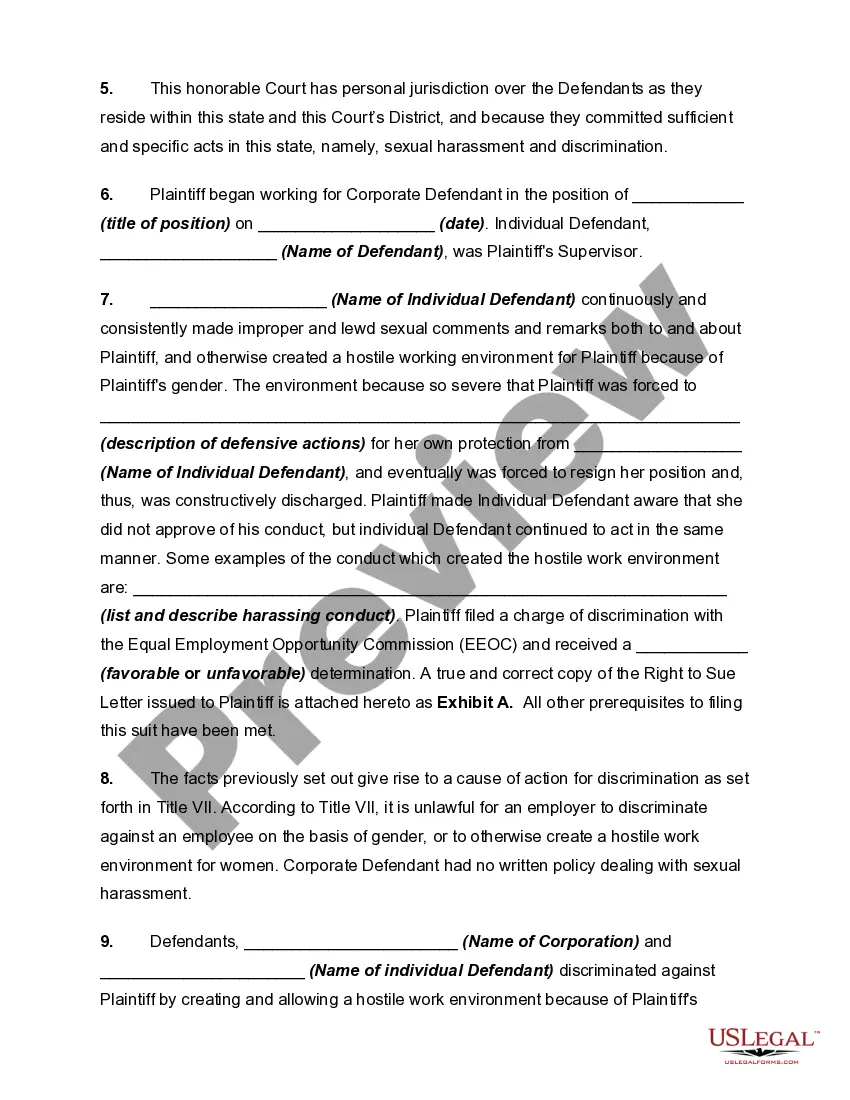
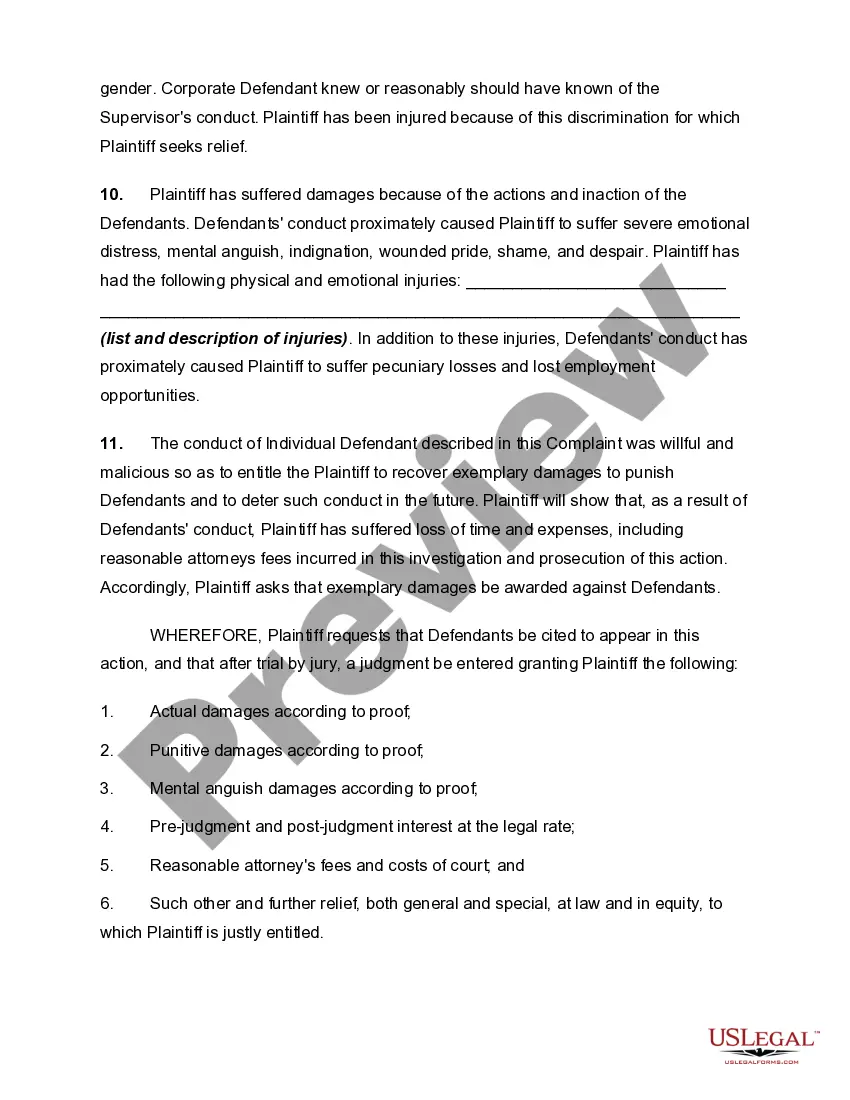
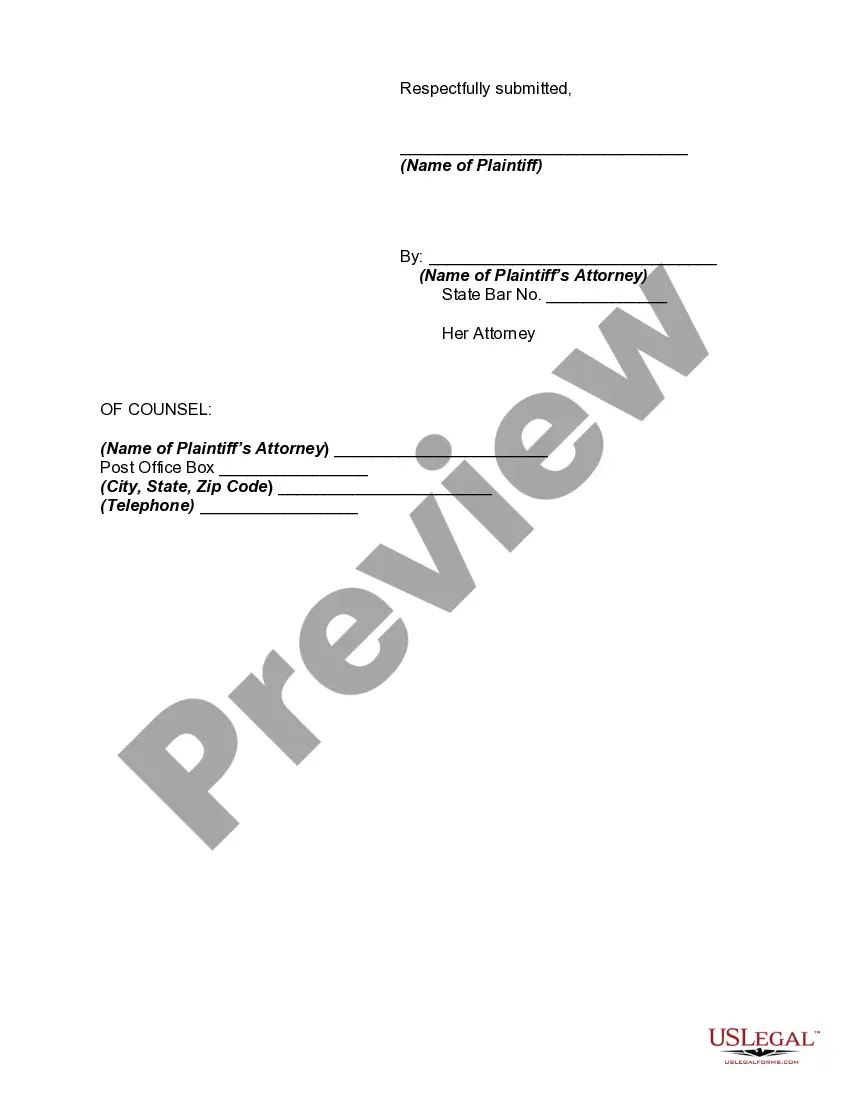
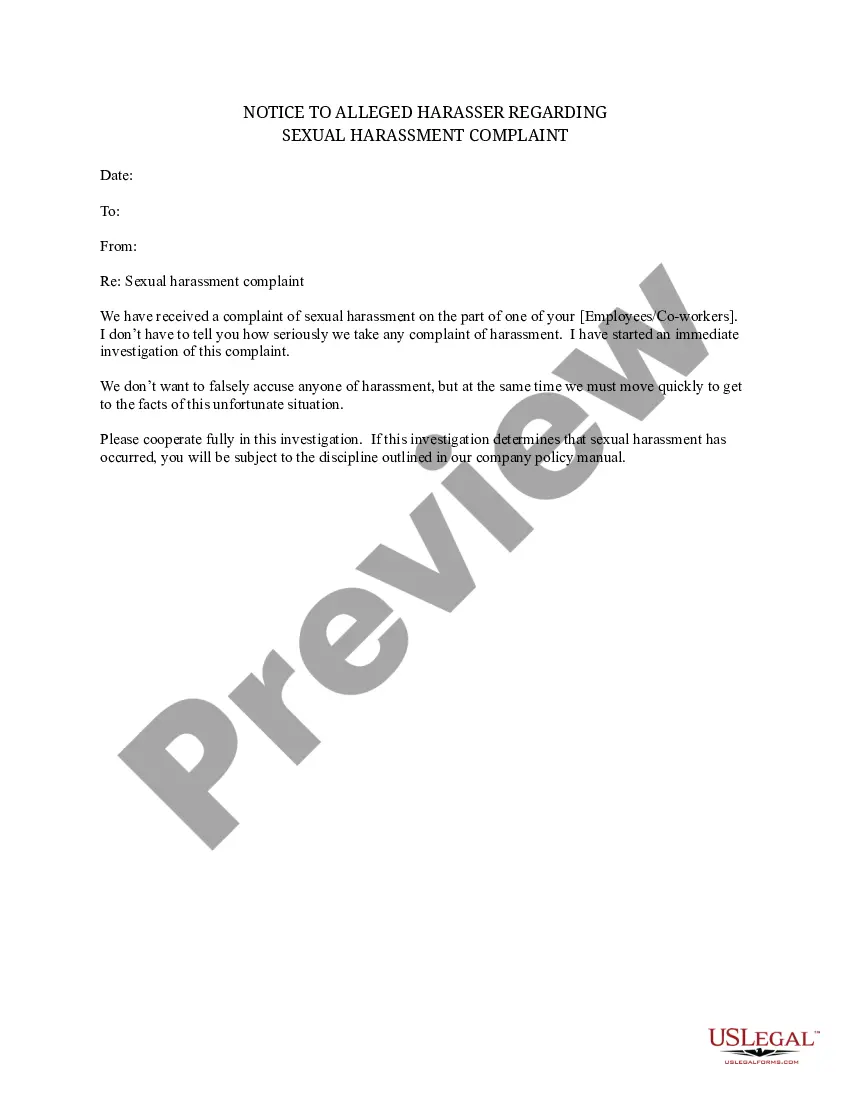
How to fill out Complaint For Discrimination In Employment Based On Sex - Sexual Harassment And A Hostile Work Environment?
Regardless of whether for commercial reasons or personal matters, everyone must confront legal issues at some stage in their existence. Completing legal documents requires meticulous care, starting from choosing the appropriate form template. For example, if you select an incorrect version of a Discrimination Based On Age, it will be rejected upon submission. Thus, it is crucial to have a reliable source of legal documents like US Legal Forms.
If you need to acquire a Discrimination Based On Age template, follow these straightforward steps: Find the template you require by using the search box or catalog navigation. Review the form’s description to ensure it aligns with your circumstances, state, and county. Click on the form’s preview to examine it. If it is the incorrect document, return to the search tool to find the Discrimination Based On Age sample you need. Obtain the template once it meets your requirements. If you possess a US Legal Forms account, click Log in to access previously saved documents in My documents. If you do not have an account yet, you can acquire the form by clicking Buy now. Choose the correct pricing option. Fill out the profile registration form. Select your payment method: you can utilize a credit card or PayPal account. Choose the document format you prefer and download the Discrimination Based On Age. Once it is saved, you can complete the form using editing software or print it and finish it manually.
- With an extensive US Legal Forms catalog available, you never have to waste time searching for the right template on the internet.
- Utilize the library’s user-friendly navigation to find the appropriate form for any circumstance.
Form popularity
FAQ
Here are some tips on how you may be able to prove you've experienced age discrimination at work: Show that you are in the protected age class. ... Prove that you were replaced by a significantly younger person. ... Prove that a policy was implemented that detrimentally impacted and/or targeted older workers.
Age harassment can include age-based jokes or comments, offensive cartoons, drawing, symbols, or gestures, and other verbal and physical conduct based on an individual's age.
The Age Discrimination in Employment Act (ADEA) forbids age discrimination against people who are age 40 or older. It does not protect workers under the age of 40, although some states have laws that protect younger workers from age discrimination.
To establish an age discrimination claim, the employee must show that: they were older than 40; their suffered an adverse employment action; they were qualified for the job and met the defendant's legitimate expectations; and.
Some examples of direct evidence include age-related comments and remarks made by those responsible for the challenged decision, notations on an application form that the applicant is "too old" for the job, and a personnel manual provision to the effect that applicants over a certain age will not be considered.