Appeal Process For Family Court
Description
Get your form ready online
Our built-in tools help you complete, sign, share, and store your documents in one place.
Make edits, fill in missing information, and update formatting in US Legal Forms—just like you would in MS Word.
Download a copy, print it, send it by email, or mail it via USPS—whatever works best for your next step.
Sign and collect signatures with our SignNow integration. Send to multiple recipients, set reminders, and more. Go Premium to unlock E-Sign.
If this form requires notarization, complete it online through a secure video call—no need to meet a notary in person or wait for an appointment.
We protect your documents and personal data by following strict security and privacy standards.

Make edits, fill in missing information, and update formatting in US Legal Forms—just like you would in MS Word.

Download a copy, print it, send it by email, or mail it via USPS—whatever works best for your next step.

Sign and collect signatures with our SignNow integration. Send to multiple recipients, set reminders, and more. Go Premium to unlock E-Sign.

If this form requires notarization, complete it online through a secure video call—no need to meet a notary in person or wait for an appointment.

We protect your documents and personal data by following strict security and privacy standards.
Looking for another form?


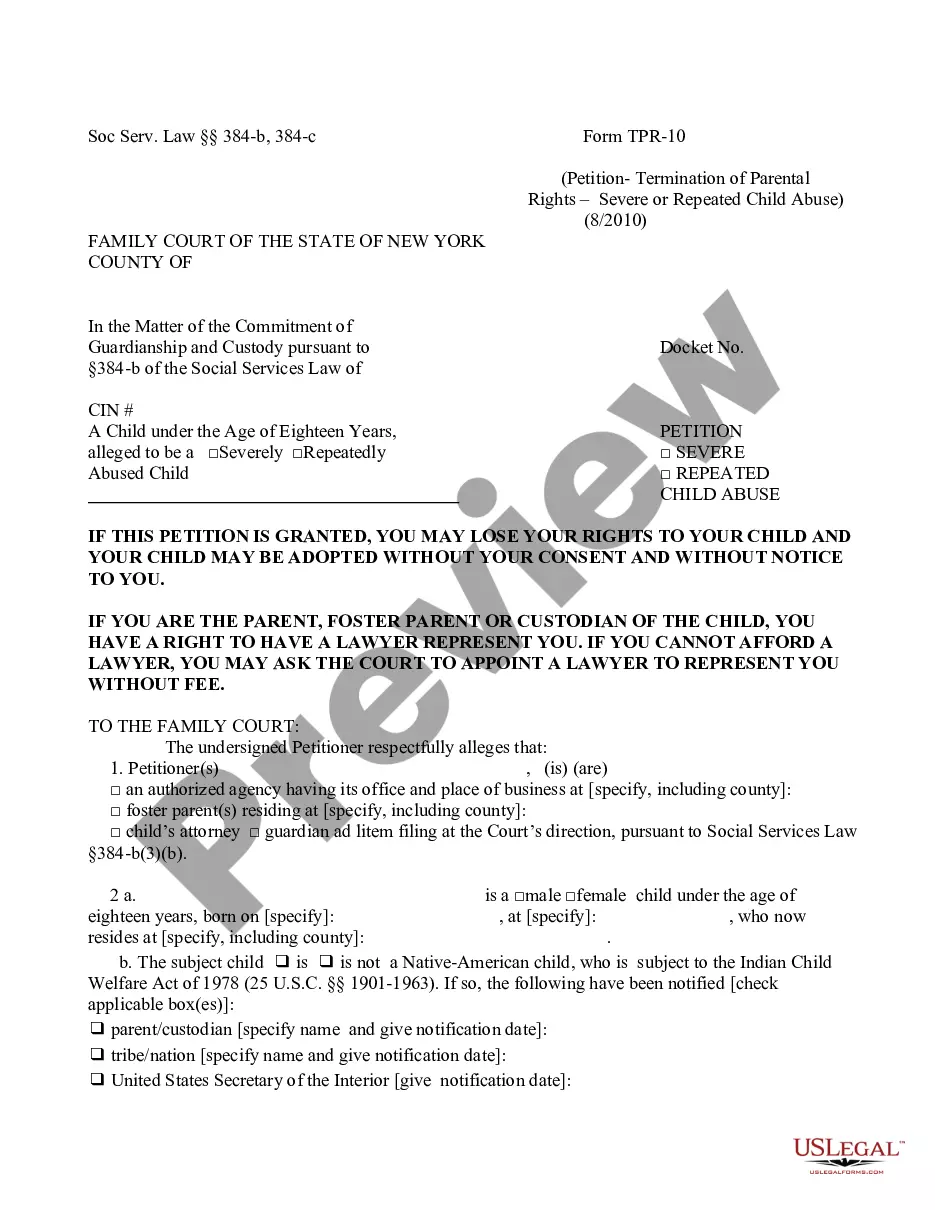


How to fill out Motion To Dismiss Appeal - Not Within Jurisdiction Of Court?
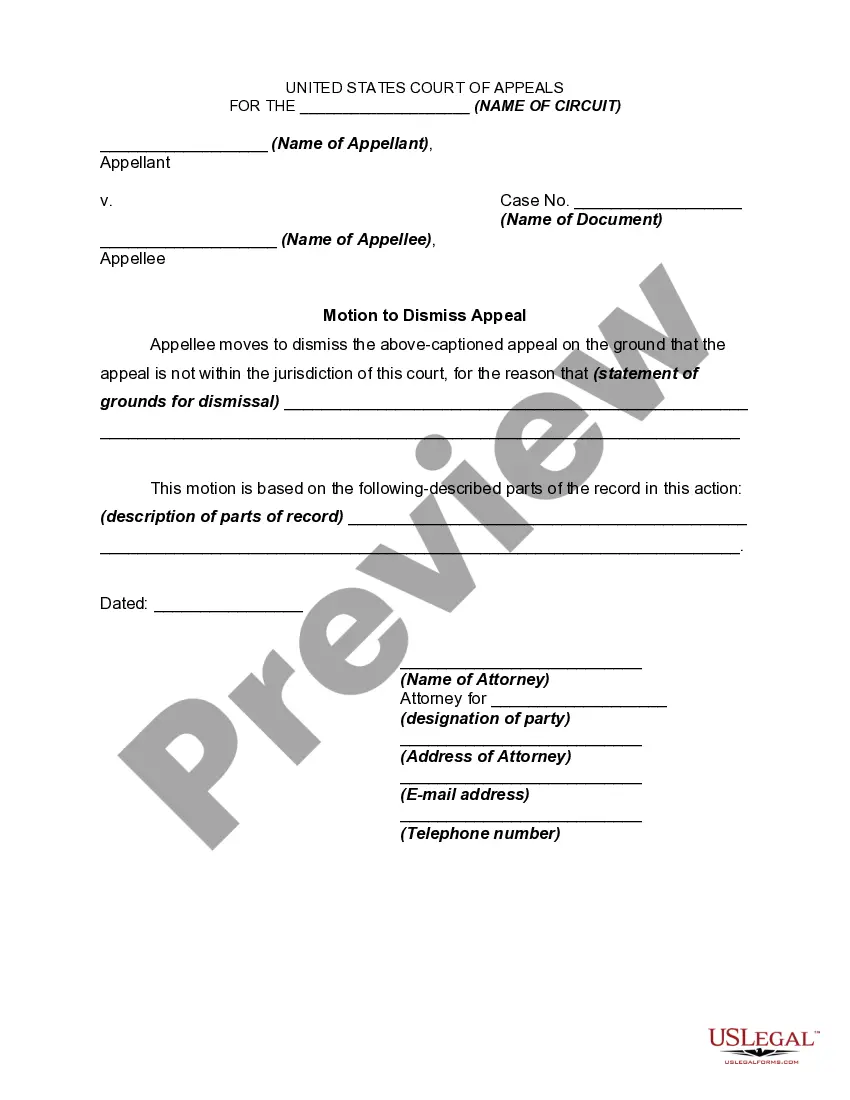
- Log into your existing US Legal Forms account to download the required form template. Ensure your subscription is still active; if not, renew it as per your payment plan.
- For first-time users, start by browsing the Preview mode and reviewing form descriptions. Choose the appropriate document that aligns with your needs and local jurisdiction requirements.
- If you need to search for additional templates, use the Search tab to find alternatives that fit your criteria.
- Click on the 'Buy Now' button and select your preferred subscription plan. You will need to create an account to access the library’s resources.
- Complete your purchase by entering your credit card information or utilizing your PayPal account for subscription payments.
- After payment, download the necessary form to your device. You can access it later in the 'My Forms' section of your account.
By following these straightforward steps, you can efficiently obtain the legal documents essential for your appeal process. US Legal Forms not only provides a comprehensive collection of over 85,000 forms but also connects you with premium experts for guidance.
Start your journey today with US Legal Forms and ensure your legal documents are accurate and ready for submission!
Form popularity
FAQ
To start writing an appeal, gather all relevant documents related to your case, including the original decision and any evidence that supports your claim. Outline the main points you want to address, focusing on significant errors in the initial ruling. This organization will help you craft a clear and persuasive appeal, amplifying your chances in the appeal process for family court.
To write an appeal for a court case, you should first review the court's decision and identify specific errors made by the judge. Draft your appeal by articulating these errors clearly and supporting your claims with relevant evidence. Include any legal precedents that reinforce your argument, thereby enhancing the appeal process for family court.
When writing a legal brief for an appeal, focus on structuring your document effectively. Begin with a statement of the case and its procedural history, followed by the issues being appealed. Clearly outline your arguments supported by applicable laws and precedents that back your position, ensuring each point connects to the appeal process for family court.
A good example of an appeal in family court could involve a custody decision that you believe did not consider all relevant evidence. For instance, if the court overlooked your ability to provide a stable home, you can demonstrate this by documenting your circumstances. Present this information clearly to persuade the appellate court to reconsider the original ruling.
To write an appeal letter for family court, start by clearly stating your intention to appeal the decision. Include important details like the case number, parties involved, and the specific ruling you are challenging. Make sure to outline the grounds for your appeal, supported by relevant facts and evidence, while remaining concise and respectful.
The appeal process consists of five main steps. First, you file a notice of appeal to initiate the process. Next, you prepare the record of the case, which includes all relevant documents and transcripts. Following that, you will draft and submit your brief outlining the errors and arguments for your appeal. Afterward, the other party will have the chance to respond. Lastly, the appellate court will review the case and issue a decision. Understanding these steps is crucial for navigating the appeal process for family court successfully.
The key to a successful appeal lies in identifying specific errors in the original family court ruling and effectively communicating those issues in your appeal. You must present your case clearly and persuasively. Additionally, familiarizing yourself with the appeal process for family court can provide significant insights into what will resonate with the appellate court. Enlisting legal support can enhance your presentation.
The best way to win an appeal involves thorough research and preparation. You should understand the legal grounds for your appeal and compile strong evidence to back up your case. Engaging with legal experts who specialize in the appeal process for family court can further bolster your strategy. Remember, clarity and precision in your presentation are key.
The odds of winning an appeal vary based on numerous factors, including the strength of your argument and the nature of the original case. While some statistics suggest that appeals have a lower success rate than initial trials, presenting a clear and valid reason for your appeal can enhance your chances. Understanding the appeal process for family court will also help you prepare adequately.
Winning an appeal in family court requires a strategic approach. First, identify the specific errors made in the initial judgment. Then, gather necessary documents and evidence that highlight these mistakes during the appeal process for family court. It’s wise to seek legal assistance to navigate the complexities involved.