Automotive Maintenance
Description
Get your form ready online
Our built-in tools help you complete, sign, share, and store your documents in one place.
Make edits, fill in missing information, and update formatting in US Legal Forms—just like you would in MS Word.
Download a copy, print it, send it by email, or mail it via USPS—whatever works best for your next step.
Sign and collect signatures with our SignNow integration. Send to multiple recipients, set reminders, and more. Go Premium to unlock E-Sign.
If this form requires notarization, complete it online through a secure video call—no need to meet a notary in person or wait for an appointment.
We protect your documents and personal data by following strict security and privacy standards.

Make edits, fill in missing information, and update formatting in US Legal Forms—just like you would in MS Word.

Download a copy, print it, send it by email, or mail it via USPS—whatever works best for your next step.

Sign and collect signatures with our SignNow integration. Send to multiple recipients, set reminders, and more. Go Premium to unlock E-Sign.

If this form requires notarization, complete it online through a secure video call—no need to meet a notary in person or wait for an appointment.

We protect your documents and personal data by following strict security and privacy standards.
Looking for another form?
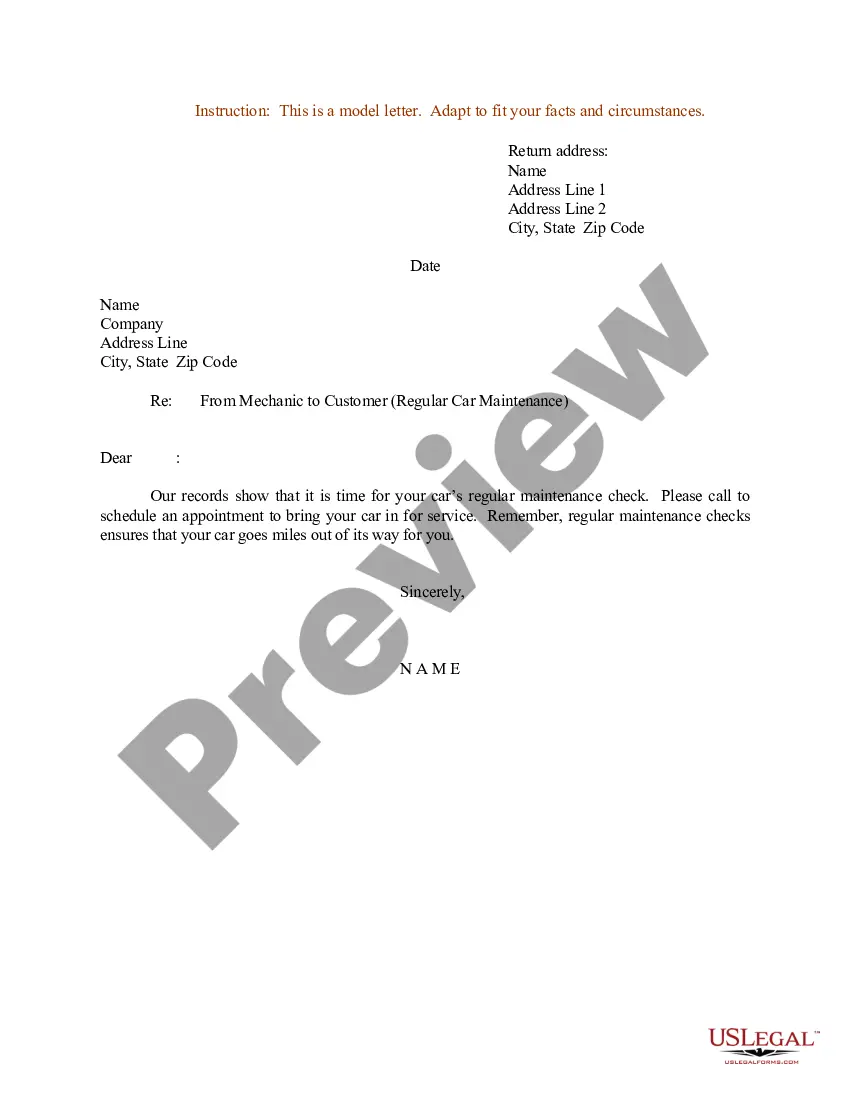
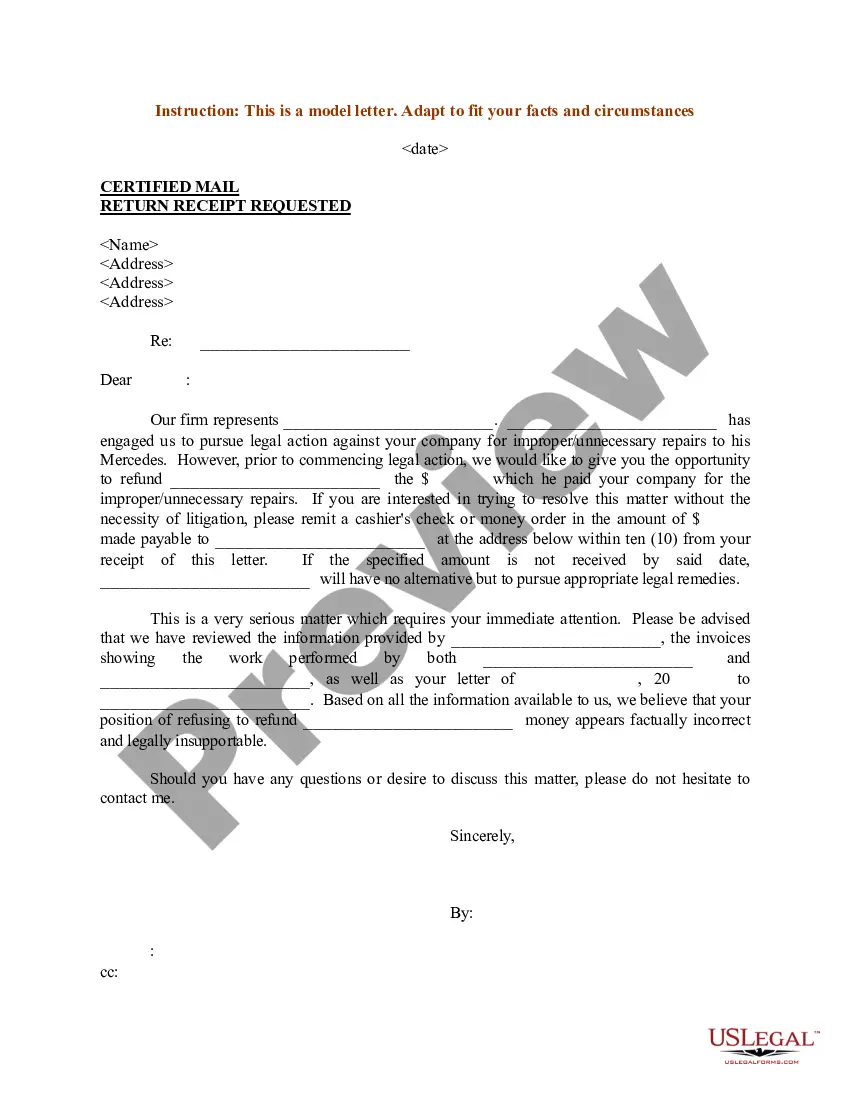
How to fill out Sample Letter For From Mechanic To Customer - Regular Car Maintenance?
- If you are an existing user, log in to your account to retrieve your form, ensuring your subscription is active. Renew it if necessary.
- Check the form preview and description to confirm it matches your requirements and complies with local regulations.
- If adjustments are needed, use the search functionality to find the correct template tailored for your needs.
- Purchase the desired document by clicking 'Buy Now' and selecting your preferred subscription plan. Registration is required for access.
- Complete your transaction by entering your payment details or utilizing PayPal to finalize the subscription.
- Download the form onto your device and find it later in the My Forms section of your profile.
Utilizing US Legal Forms not only provides access to a robust library of over 85,000 legal forms, but it also ensures that you can create precise and legally sound documents with the support of premium experts.
Start your journey to effortless document management today. Access US Legal Forms and simplify your automotive maintenance documentation process!
Form popularity
FAQ
Setting aside funds for automotive maintenance depends on factors like vehicle type, age, and driving habits. A general guideline is to budget about 1-2% of your car's value annually for regular maintenance. Additionally, unexpected repairs can occur, so having an emergency fund for car repairs is wise. Utilizing tools from uslegalforms can help you create a budget plan that ensures you are financially prepared for ongoing automotive maintenance.
Scheduling automotive maintenance by mileage is often more reliable than by time, as it directly correlates to how you use your vehicle. However, a combination of both factors can yield the best results, as time-based schedules can remind you to check fluids and perform inspections even if you drive less. For instance, if you do not drive much, it’s still important to change the oil periodically. Understanding your driving habits can help you make the best maintenance decisions.
The 30-60-90 rule for automotive maintenance is a guideline that helps you schedule necessary checks and services. At 30 days, inspect fluids and filters; at 60 days, check the brakes and tires; and at 90 days, focus on more extensive services like engine tuning. Following this rule ensures that you maintain your vehicle effectively and can prevent costly repairs down the line. Keeping a regular routine can enhance your car’s performance and longevity.
To effectively document your automotive maintenance, start by keeping a dedicated maintenance log. You can easily track dates, services performed, and parts replaced, either in a physical notebook or using a digital format. This record helps you remember your car’s history, assists in future repairs, and can increase resale value. Consider using uslegalforms for structured templates that can simplify this process.
You can find your car's maintenance schedule in the owner's manual, which outlines the recommended services at various mileage intervals. Additionally, many manufacturers provide this information on their websites. For a more personalized approach, consider using platforms like USLegalForms, where you can document and easily access your automotive maintenance needs, ensuring a better vehicle care process.
Scheduling your car maintenance routine involves setting aside specific times for regular check-ups and services. Start by determining how frequently your vehicle needs servicing based on its age and usage. Then, create a calendar using reminders or an app, which can alert you when it’s time for each maintenance task. Consistent scheduling ensures your vehicle remains in excellent condition.
Documenting vehicle maintenance is crucial for tracking repairs and ensuring smooth resale in the future. Maintain a logbook or digital record where you enter dates, types of services performed, and any parts replaced. This organized record not only serves as a reference but also showcases the vehicle's maintenance history to potential buyers, enhancing its value.
To establish a maintenance schedule, start by listing all the routine services your car requires, based on its make and model. Next, decide how often these services should occur, whether monthly, quarterly, or at specific mileage milestones. You can use calendar reminders or automotive maintenance apps to ensure you stay on track. This proactive approach prevents larger issues down the road.
To obtain a maintenance report for your car, visit your local dealership or contact an authorized service center. They maintain detailed records of all automotive maintenance services performed on your vehicle. Alternatively, some platforms allow you to access your maintenance history online, which can be particularly useful for tracking repairs and service dates.
Creating a car maintenance schedule is simple and essential for keeping your vehicle in optimal condition. Start by checking your owner's manual for manufacturer recommendations, including service intervals for oil changes, tire rotations, and brake inspections. You can also consider logging maintenance tasks in a digital tool or app. This method helps you track all automotive maintenance effortlessly.