Mediation In Arbitration
Description



Get your form ready online
Our built-in tools help you complete, sign, share, and store your documents in one place.
Make edits, fill in missing information, and update formatting in US Legal Forms—just like you would in MS Word.
Download a copy, print it, send it by email, or mail it via USPS—whatever works best for your next step.
Sign and collect signatures with our SignNow integration. Send to multiple recipients, set reminders, and more. Go Premium to unlock E-Sign.
If this form requires notarization, complete it online through a secure video call—no need to meet a notary in person or wait for an appointment.
We protect your documents and personal data by following strict security and privacy standards.

Make edits, fill in missing information, and update formatting in US Legal Forms—just like you would in MS Word.

Download a copy, print it, send it by email, or mail it via USPS—whatever works best for your next step.

Sign and collect signatures with our SignNow integration. Send to multiple recipients, set reminders, and more. Go Premium to unlock E-Sign.

If this form requires notarization, complete it online through a secure video call—no need to meet a notary in person or wait for an appointment.

We protect your documents and personal data by following strict security and privacy standards.
Looking for another form?





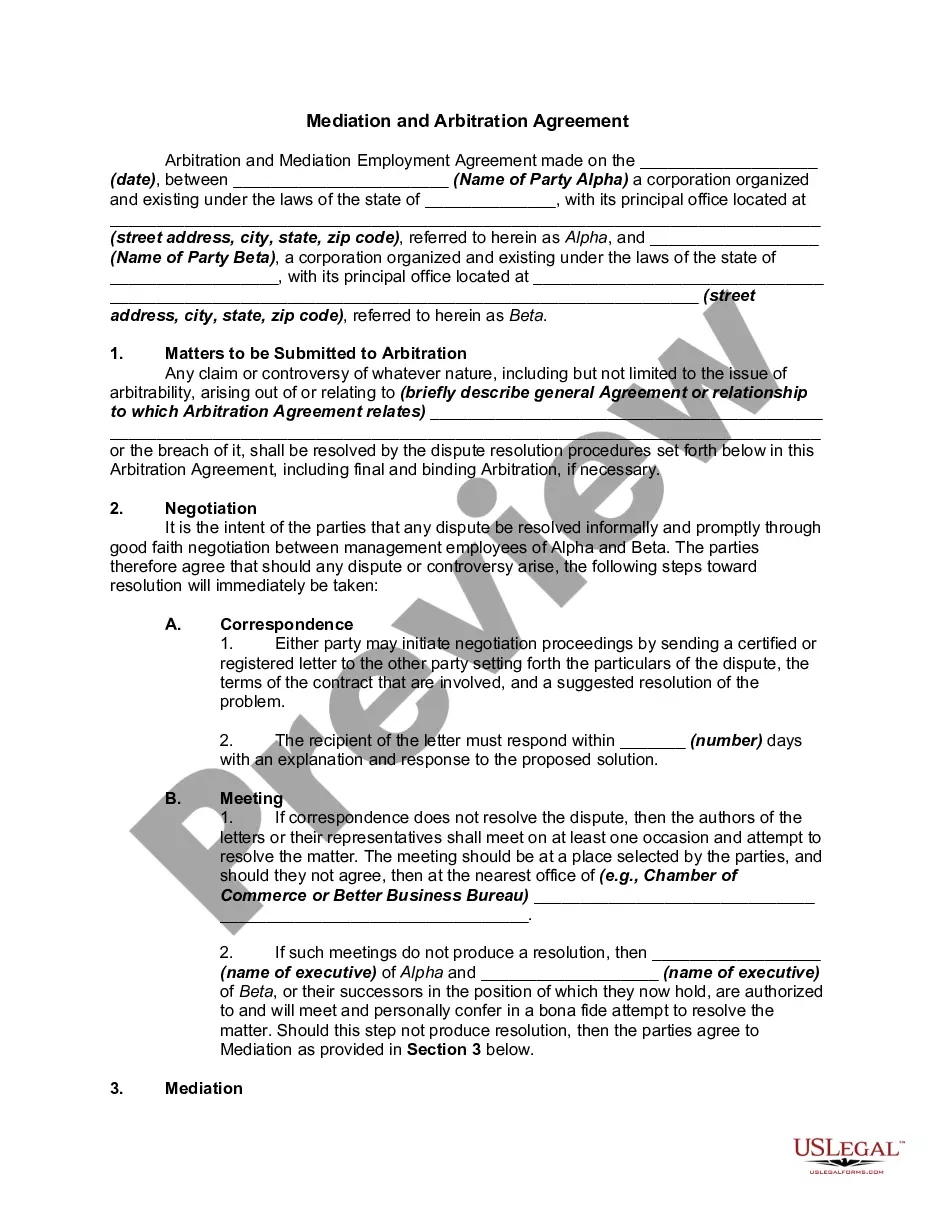
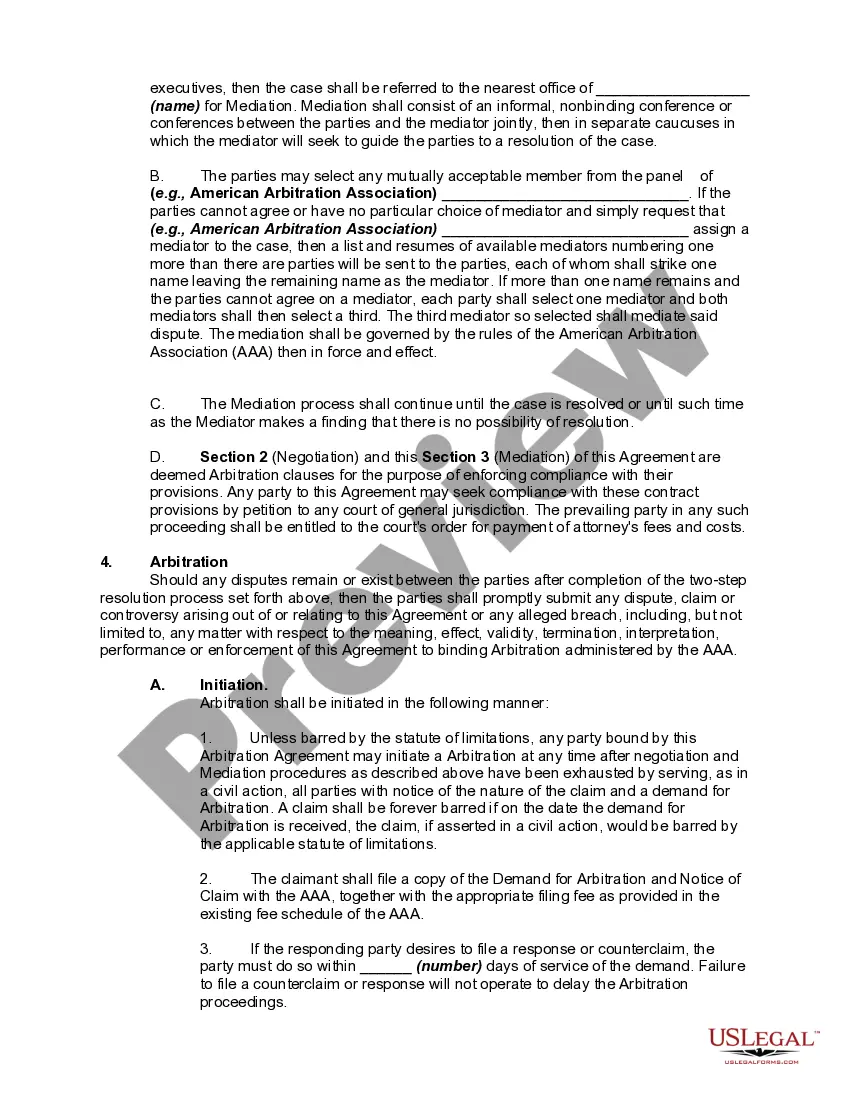
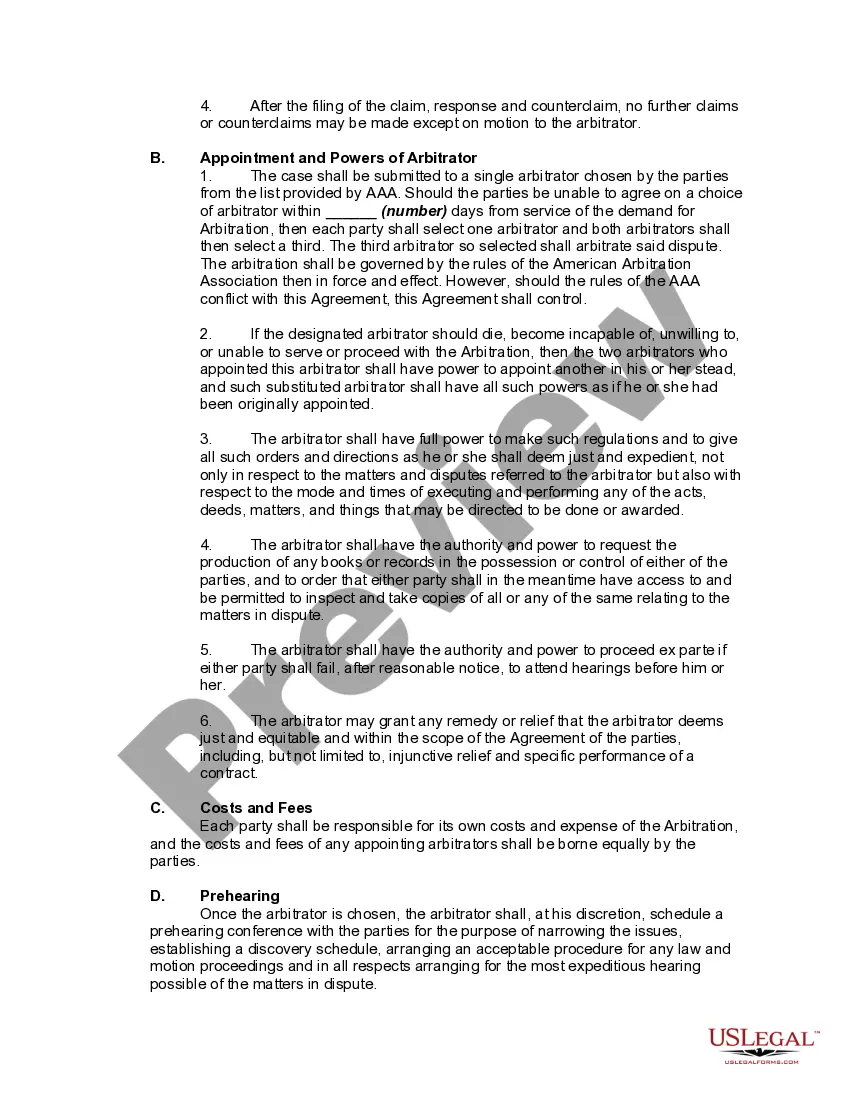
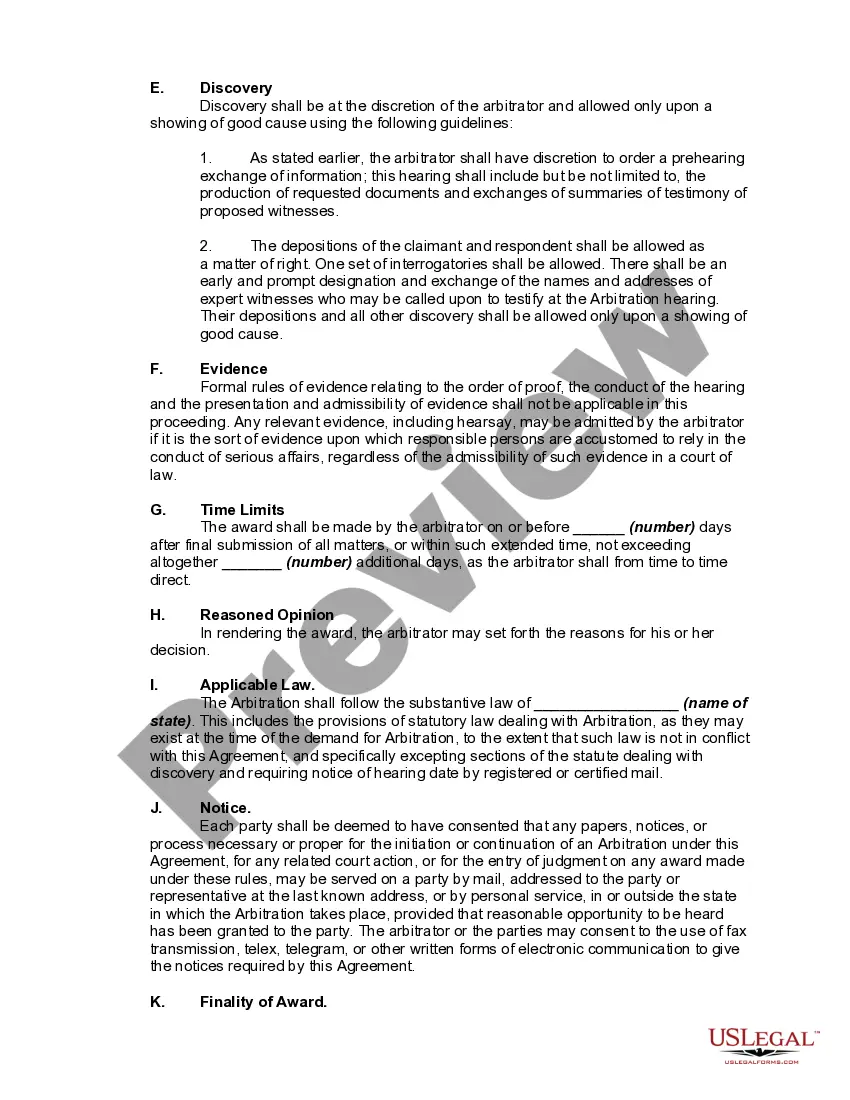
How to fill out Mediation And Arbitration Agreement?
Acquiring legal documents that adhere to national and local laws is essential, and the online world provides numerous alternatives to choose from.
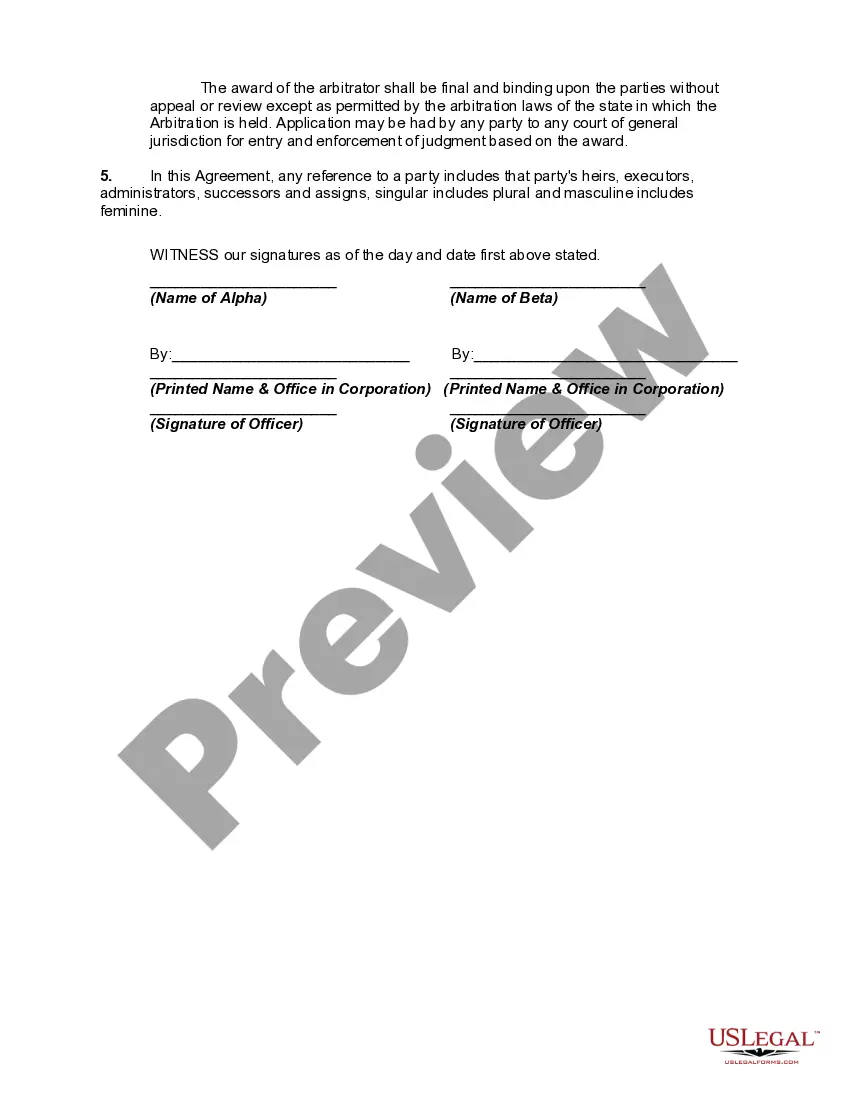
However, what is the benefit of spending time searching for the appropriate Mediation In Arbitration example online when the US Legal Forms digital library already consolidates such documents in one location.
US Legal Forms is the largest online legal repository with over 85,000 editable templates created by lawyers for various business and personal circumstances.
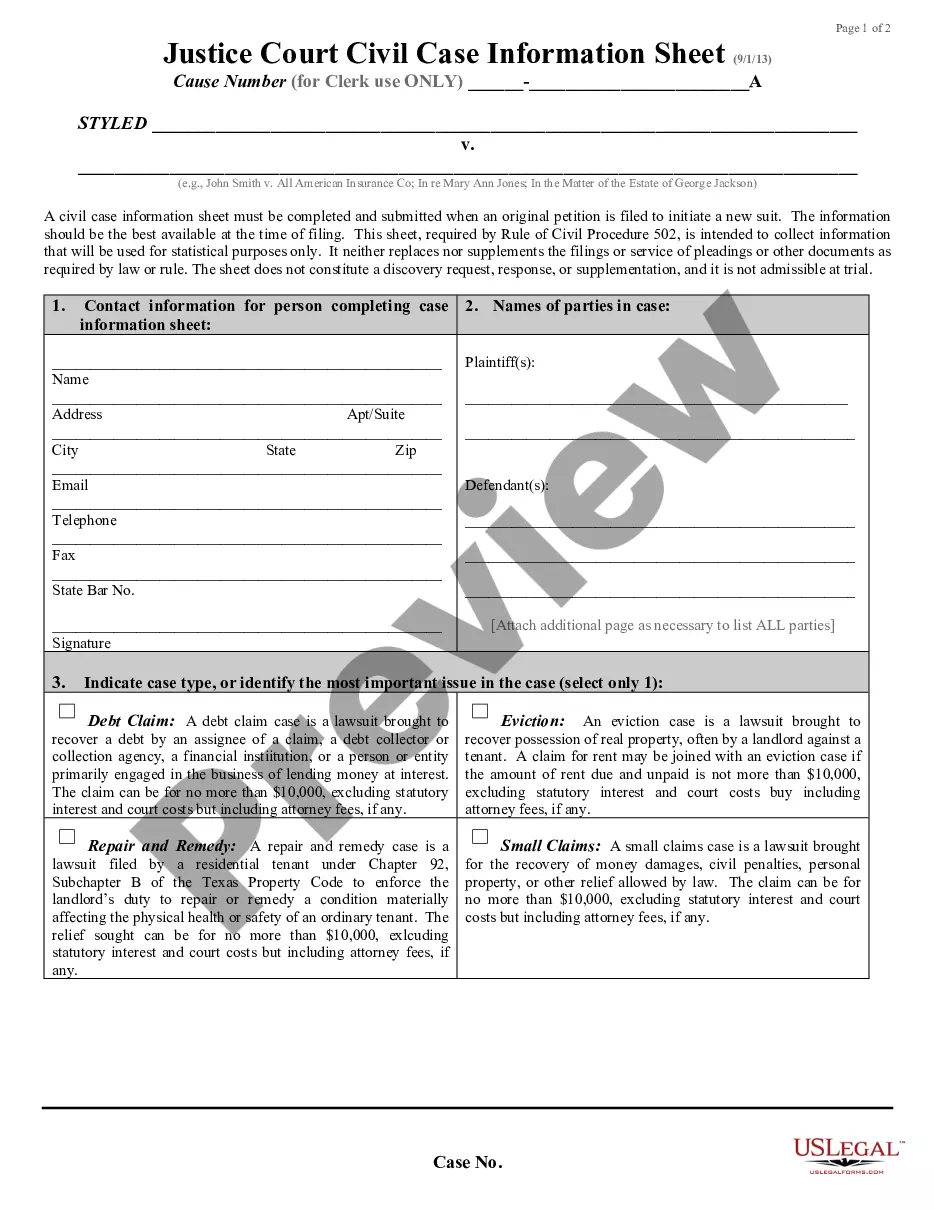
Review the template using the Preview feature or through the text description to ensure it meets your requirements. Search for another example using the search function at the top of the page if necessary. Click Buy Now when you've found the correct form and choose a subscription plan. Create an account or sign in and make a payment via PayPal or credit card. Select the appropriate format for your Mediation In Arbitration and download it. All templates you find through US Legal Forms are reusable. To re-download and complete previously acquired documents, access the My documents section in your account. Take advantage of the most comprehensive and user-friendly legal document service!
- They are user-friendly to navigate with all documents categorized by state and intended use.
- Our specialists keep abreast of legal changes, ensuring your documents are always current and compliant when obtaining a Mediation In Arbitration from our site.
- Acquiring a Mediation In Arbitration is quick and easy for both existing and new users.
- If you possess an account with a valid subscription, sign in and save the required document template in the appropriate format.
- If you are new to our platform, follow the steps outlined below.
Form popularity
FAQ
The arbitration process of mediation involves a neutral third party guiding the disputing parties toward a mutually beneficial agreement. During this process, each side presents their views, and the mediator helps clarify issues and encourages cooperation. This method can save time and costs compared to traditional arbitration. Utilizing a platform like USLegalForms can simplify the preparation and documentation required for mediation in arbitration, making the entire experience more efficient.
To initiate mediation in arbitration, you first need to agree on this method with the opposing party. Next, select a qualified mediator who can facilitate the discussion. Once both parties are on board, you can schedule a mediation session. This process encourages open communication, allowing you to explore solutions that might not have been considered.
The five steps of mediation include preparation, opening statements, negotiation, resolution, and closure. During preparation, parties gather relevant information and define their goals. Opening statements allow each side to present their perspective. In the negotiation phase, the mediator facilitates dialogue to find common ground. Finally, resolution and closure establish an agreement, demonstrating the effectiveness of mediation in arbitration.
Mediation arbitration, often called med-arb, combines the processes of mediation and arbitration to resolve disputes. Initially, parties attempt to reach an agreement through mediation. If they cannot resolve the issue, the mediator transitions into an arbitrator role and makes a binding decision. This process can save time and resources, making it a practical approach for those considering mediation in arbitration.
Typically, mediation comes first before arbitration in the dispute resolution process. Mediation aims to resolve conflicts amicably and collaboratively, allowing parties to maintain control over the outcome. If mediation fails, arbitration serves as a more formal process where a neutral arbitrator makes a binding decision. Understanding the sequence of mediation in arbitration can help parties navigate their options effectively.
The four types of mediation include facilitative mediation, evaluative mediation, transformative mediation, and narrative mediation. Each type offers unique approaches to resolving disputes. In facilitative mediation, a neutral mediator helps both parties communicate effectively. Evaluative mediation involves the mediator providing feedback on the strengths and weaknesses of each side's case, which can be particularly useful in mediation in arbitration.
To write a good mediation statement, start with a clear and concise introduction of the dispute. Present the facts objectively, highlight key issues, and explain your perspective without inflammatory language. Finally, conclude with your proposed solutions, demonstrating your willingness to negotiate. Using USLegalForms can help you create a structured mediation statement that effectively communicates your position.
A good opening statement for mediation should express appreciation for everyone's participation, state the purpose of the session, and outline the desired outcomes. It sets a positive tone and encourages collaboration. By clearly stating your intention to reach a resolution, you can create a constructive atmosphere that is essential for mediation in arbitration.
A good example of mediation is when two business partners facing a dispute over profit sharing engage a neutral mediator to facilitate their conversation. The mediator helps them express their concerns, identify common ground, and negotiate a solution that satisfies both parties. This process exemplifies how mediation in arbitration can lead to mutually beneficial outcomes without resorting to litigation.
A mediation statement should include a clear summary of the case, the key issues at hand, and the desired outcomes. It is important to articulate your position and the reasons behind it while remaining respectful of other parties involved. This document plays a crucial role in mediation in arbitration, as it provides a foundation for discussion and negotiation.