Extended Warehouse Management
Description
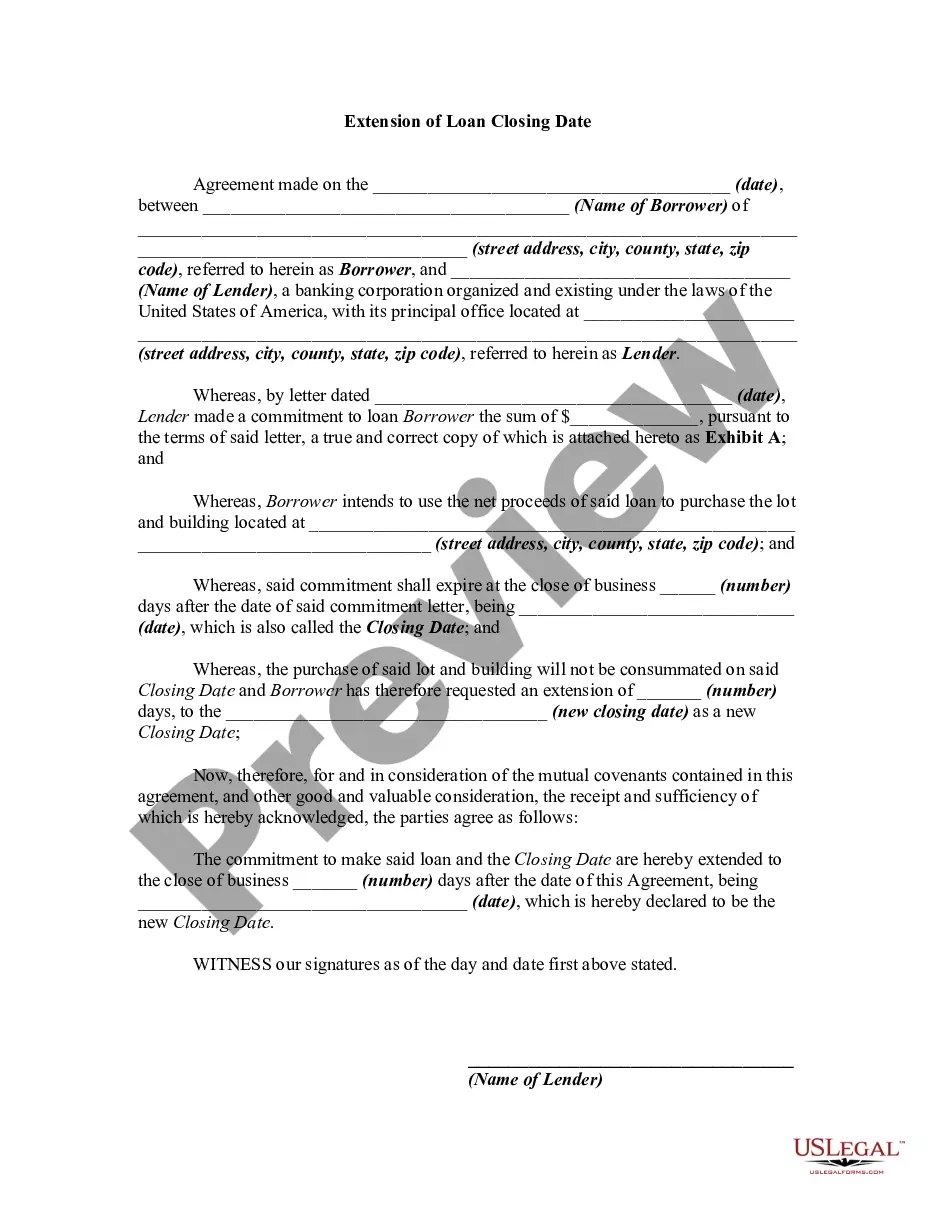
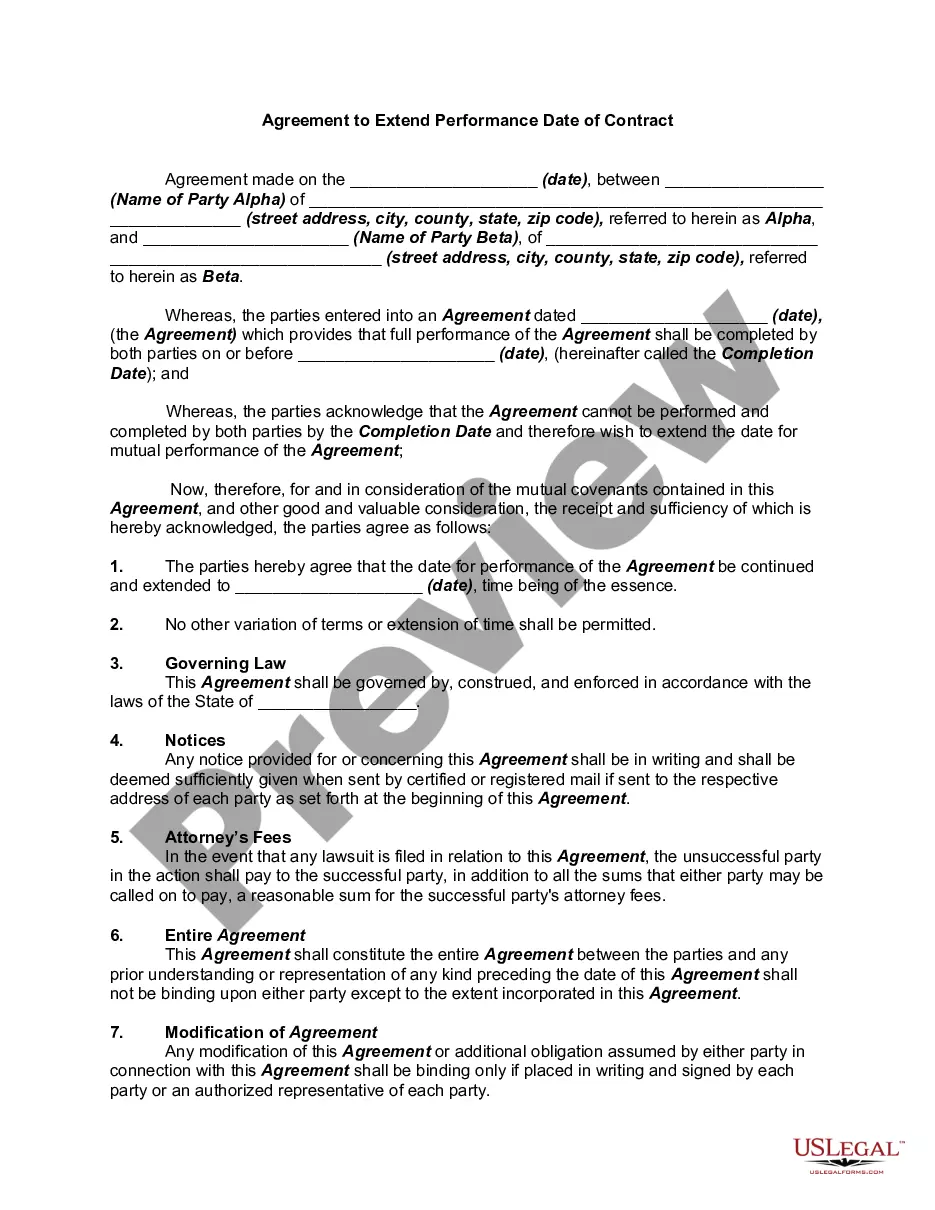
How to fill out Extended Date For Performance?
- If you’re a returning user, log in to your account and verify your subscription status. Click the Download button to save the desired form template to your device.
- If it’s your first visit, start by checking the Preview mode and form description. Confirm that it's the right document for your specific legal needs and meets local jurisdiction standards.
- If you need to find a different form, utilize the Search tab to explore additional templates until you locate the correct one.
- After finding the right form, click on the Buy Now button and select your preferred subscription plan. You will need to create an account for full access.
- For your purchase, provide your credit card information or use PayPal to finalize your subscription.
- Download your chosen form and save it on your device. You can access it later through the My Forms section of your profile.
With US Legal Forms, you can swiftly execute essential legal documents, benefiting from a collection that surpasses competitors at a similar price point.
Experience the ease of accessing legal forms today. Start your journey with US Legal Forms for all your extended warehouse management needs!
Form popularity
FAQ
There are four main types of warehouse management systems: standalone systems, integrated systems, cloud-based systems, and automated systems. Standalone systems operate independently, primarily focusing on basic warehousing tasks. Integrated systems connect with other business applications, enabling smoother operations. Cloud-based systems offer flexibility and scalability, while automated systems utilize technology for tasks like sorting and inventory tracking, making extended warehouse management more effective and efficient.
The standard process flow in SAP Extended Warehouse Management (EWM) begins with receiving goods, where the system captures and verifies incoming inventory. Following this, the system guides you through putaway, allowing efficient storage in designated locations. SAP EWM then facilitates picking, packing, and shipping, ensuring a streamlined transition between inventory stages. Utilizing this process flow, businesses can maximize efficiency and accuracy in warehouse operations.
Learning SAP EWM can vary based on your background and prior experience. Generally, a dedicated individual can grasp the basics within a few weeks, but mastering all aspects might take several months of practice. Engaging with training resources or platforms like US Legal Forms can provide valuable guidance on using extended warehouse management effectively.
An extended warehouse refers to a logistics facility that supports advanced inventory management and distribution processes. It typically incorporates technology and best practices that enhance the efficiency of storage and retrieval operations. Investing in an extended warehouse can significantly improve your overall supply chain management.
A degree in supply chain management or logistics is often ideal for roles in warehouse management. These programs cover essential topics like inventory control, operations management, and logistics strategy. Additionally, hands-on experience in warehouse settings can enhance your understanding of extended warehouse management practices.
The EWM system, or Extended Warehouse Management system, helps manage complex logistics operations. It provides tools to oversee inventory, warehouse processes, and resource allocation. With an EWM system, you can enhance efficiency, reduce errors, and gain real-time visibility into your supply chain.
The difference between SAP Extended Warehouse Management (EWM) and Materials Management (MM) lies in their core functions. EWM focuses specifically on managing warehouse operations and inventory logistics, enhancing processes internally within a warehouse. In contrast, MM deals with procurement and inventory management from a broader supply chain perspective. For businesses aiming for seamless warehouse operations, utilizing EWM can perfectly complement their MM strategies.
An extended warehouse management system refers to a comprehensive solution designed to optimize warehousing processes and improve inventory management. Unlike traditional systems, EWM emphasizes automation, process visibility, and real-time data access. As a result, businesses can adapt quickly to changing logistics demands. Implementing an extended warehouse management system often leads to increased productivity and overall supply chain efficiency.
SAP Extended Warehouse Management (EWM) includes various functions that enhance warehouse operations. These functions encompass advanced inventory tracking, improved order management, automated picking processes, and better control over warehouse layouts. By utilizing EWM, businesses can achieve greater efficiency and accuracy in their supply chain management. The integration of these functions allows for smoother operations and reduced operational costs.
In SAP, WM stands for Warehouse Management, which involves the management of inventory flow within a warehouse. It provides tools for tracking stock and facilitating the storage and retrieval of goods. However, it is important to note that Warehouse Management in SAP does not offer the advanced capabilities found in Extended Warehouse Management (EWM). For businesses that require deeper insights and automation, transitioning to EWM can be beneficial.