Writing For Motion Withdraw
Description
Get your form ready online
Our built-in tools help you complete, sign, share, and store your documents in one place.
Make edits, fill in missing information, and update formatting in US Legal Forms—just like you would in MS Word.
Download a copy, print it, send it by email, or mail it via USPS—whatever works best for your next step.
Sign and collect signatures with our SignNow integration. Send to multiple recipients, set reminders, and more. Go Premium to unlock E-Sign.
If this form requires notarization, complete it online through a secure video call—no need to meet a notary in person or wait for an appointment.
We protect your documents and personal data by following strict security and privacy standards.

Make edits, fill in missing information, and update formatting in US Legal Forms—just like you would in MS Word.

Download a copy, print it, send it by email, or mail it via USPS—whatever works best for your next step.

Sign and collect signatures with our SignNow integration. Send to multiple recipients, set reminders, and more. Go Premium to unlock E-Sign.

If this form requires notarization, complete it online through a secure video call—no need to meet a notary in person or wait for an appointment.

We protect your documents and personal data by following strict security and privacy standards.
Looking for another form?

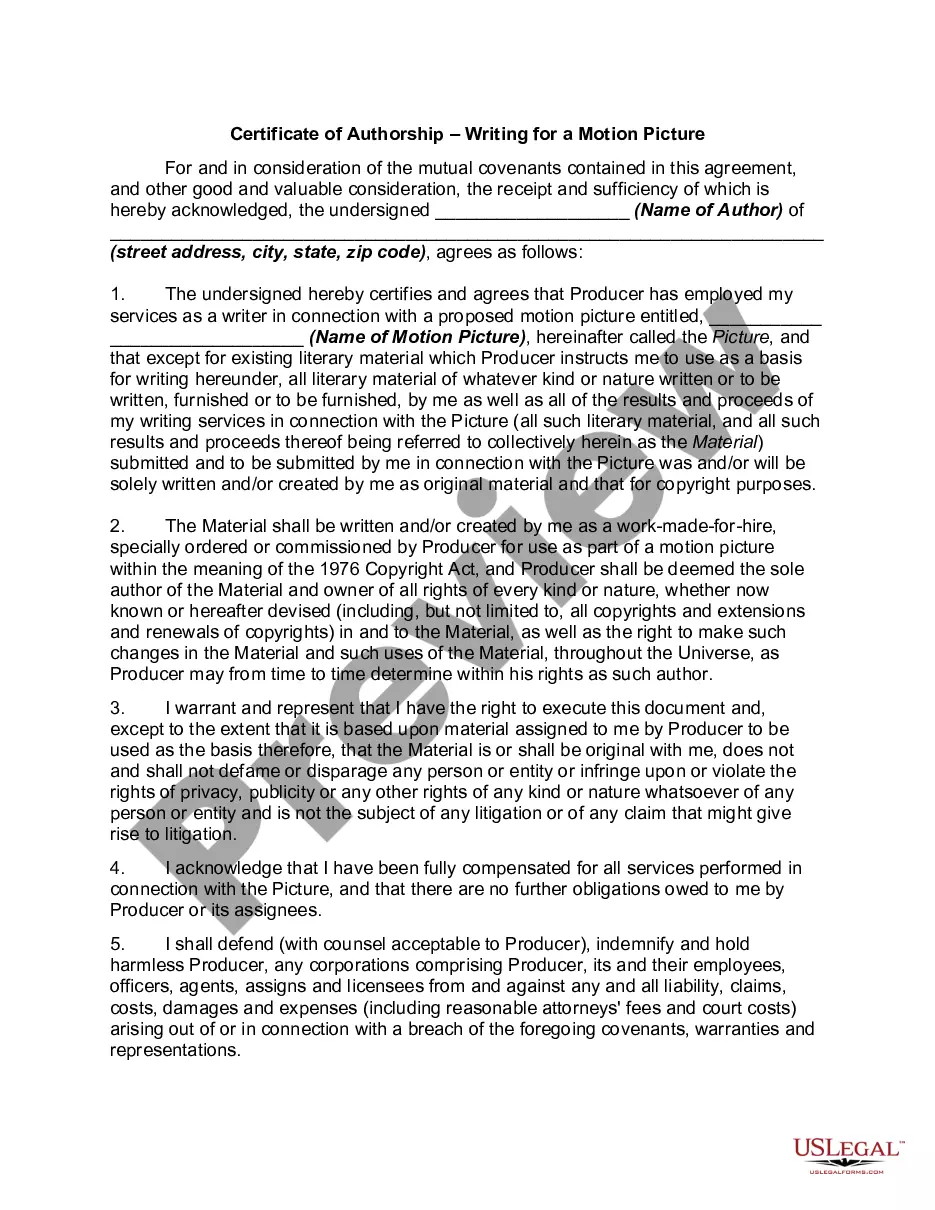
How to fill out Certificate Of Authorship - Writing For A Motion Picture?
Legal administration can be exasperating, even for the most adept professionals.
When you are looking for a Writing For Motion Withdraw and lack the opportunity to invest time searching for the correct and current version, the process can be anxiety-inducing.
Utilize innovative tools to finalize and manage your Writing For Motion Withdraw.
Access a collection of articles, guides, and reference materials pertinent to your predicament and requirements.
Confirm that the template is recognized in your state or county before selecting Buy Now when ready.
- Conserve time and effort searching for the needed documents, and use US Legal Forms’ sophisticated search and Review tool to locate Writing For Motion Withdraw and download it.
- If you hold a membership, Log In to your US Legal Forms account, search for the form, and download it.
- Review your My documents tab to find the documents you previously saved and organize your folders as needed.
- If you are new to US Legal Forms, create an account and gain unrestricted access to all the benefits of the library.
- Here are the steps to follow after accessing the desired form.
- Ensure it is the correct form by previewing it and reviewing its details.
- Leverage a robust online form repository, which can be transformational for anyone wanting to manage these matters proficiently.
- US Legal Forms stands out as a frontrunner in the realm of online legal documents, with over 85,000 state-specific legal forms available to you at any time.
- With US Legal Forms, you can address any needs you may have, from personal to corporate documents, all in one convenient platform.
Form popularity
FAQ
Writing for motion withdraw requires clarity and precision. Begin by stating your intention to withdraw clearly and specify the case or matter you are addressing. Include any necessary details such as case numbers and involved parties to ensure there is no confusion. Finally, close the letter professionally, expressing gratitude for the court's attention to your request and providing your contact information for any follow-up.
To write a letter disengaging from a lawyer, start by addressing the attorney professionally. State your decision to terminate the relationship and briefly explain your reasons. Include any necessary details about outstanding matters, and request the return of your files. Resources from uslegalforms can guide you in writing this letter effectively and professionally.
When writing a letter of withdrawal from a case, begin by addressing the appropriate court or party involved. Clearly indicate your intention to withdraw and provide a concise explanation. Including a reference to the specific case number can help clarify your request. For assistance, consider looking into templates available on platforms like uslegalforms when writing for motion withdraw.
Writing a motion to dismiss involves outlining the reasons you believe the case should be dismissed. Begin with a clear statement of facts and relevant laws that support your position. Make sure to format the document according to court requirements. Utilizing resources from uslegalforms can help you structure your motion effectively.
To ask to withdraw a motion, you should file a written request with the court. Clearly state your intention to withdraw and provide a brief explanation as necessary. Remember, writing for motion withdraw requires you to follow specific court rules, so check the local regulations. This ensures your request is processed smoothly.
To ask your attorney to withdraw, communicate your request clearly and directly. Discuss your reasons, and ensure you understand the implications of this decision. If you need legal documents, the uslegalforms platform can assist you in writing for motion withdraw, making the process smoother.
To withdraw a motion, you typically need to file a notice of withdrawal with the court. This document formally informs the court that you no longer wish to pursue the motion. Properly handling the procedural aspects of writing for motion withdraw ensures that you fulfill all legal requirements.
Proper grounds for a motion to dismiss often include lack of jurisdiction, insufficient service of process, or failure to state a claim upon which relief can be granted. By comprehensively addressing these elements in your writing for motion withdraw, you can support your case effectively.
A judge may deny a motion to withdraw for several reasons. Common reasons include if the withdrawal would unfairly prejudice the other party or if there are pending matters that need resolution. Understanding the nuances of writing for motion withdraw can help in crafting a more convincing request.
Yes, you can bill for a motion to withdraw in most cases. When you prepare and file a motion, your time and effort can be compensated through legal fees. It's essential to document the work you perform while writing for motion withdraw, as this helps in justifying your charges.