Sample Reference Document With Footnotes
Description
Get your form ready online
Our built-in tools help you complete, sign, share, and store your documents in one place.
Make edits, fill in missing information, and update formatting in US Legal Forms—just like you would in MS Word.
Download a copy, print it, send it by email, or mail it via USPS—whatever works best for your next step.
Sign and collect signatures with our SignNow integration. Send to multiple recipients, set reminders, and more. Go Premium to unlock E-Sign.
If this form requires notarization, complete it online through a secure video call—no need to meet a notary in person or wait for an appointment.
We protect your documents and personal data by following strict security and privacy standards.

Make edits, fill in missing information, and update formatting in US Legal Forms—just like you would in MS Word.

Download a copy, print it, send it by email, or mail it via USPS—whatever works best for your next step.

Sign and collect signatures with our SignNow integration. Send to multiple recipients, set reminders, and more. Go Premium to unlock E-Sign.

If this form requires notarization, complete it online through a secure video call—no need to meet a notary in person or wait for an appointment.

We protect your documents and personal data by following strict security and privacy standards.
Looking for another form?
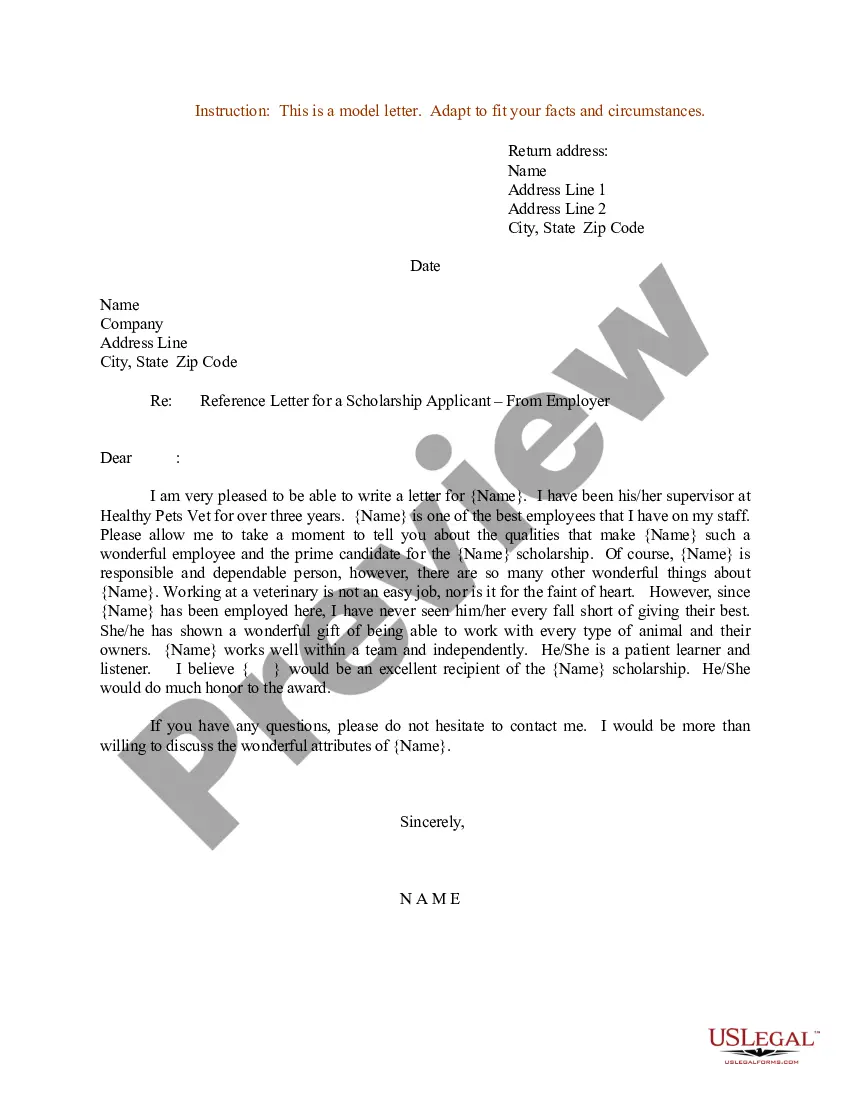
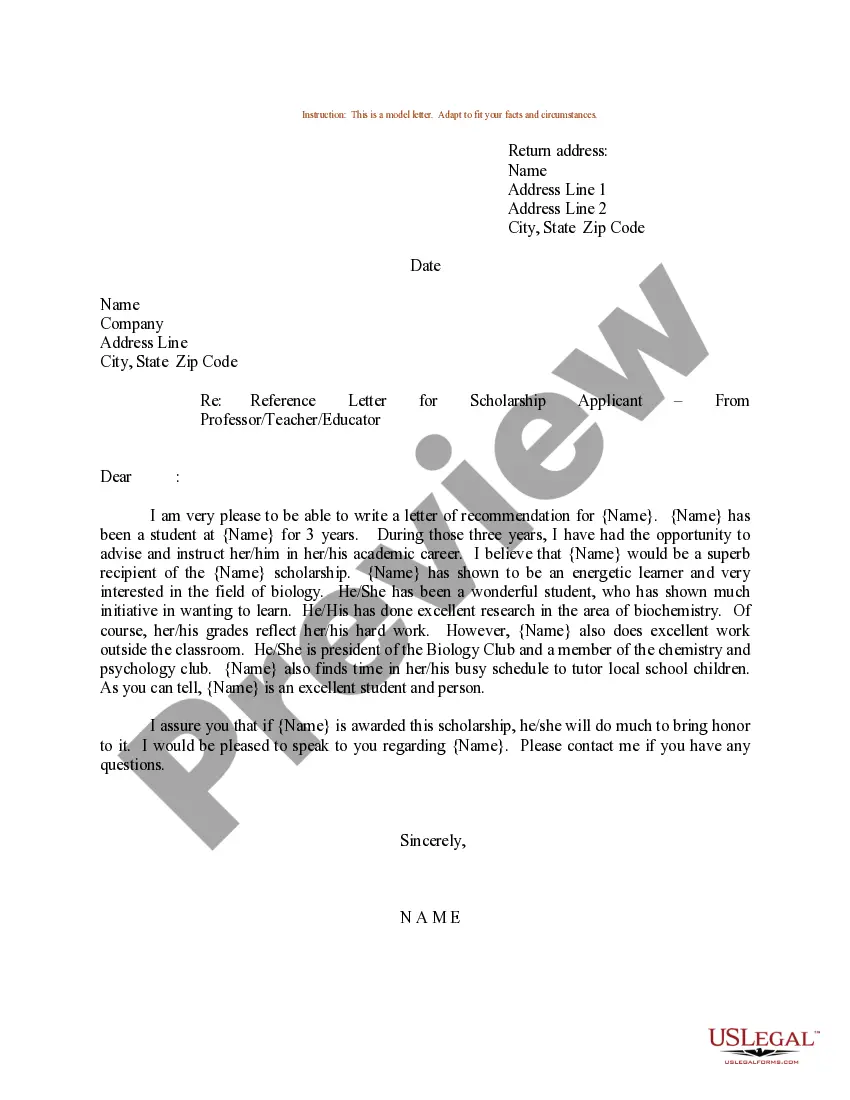
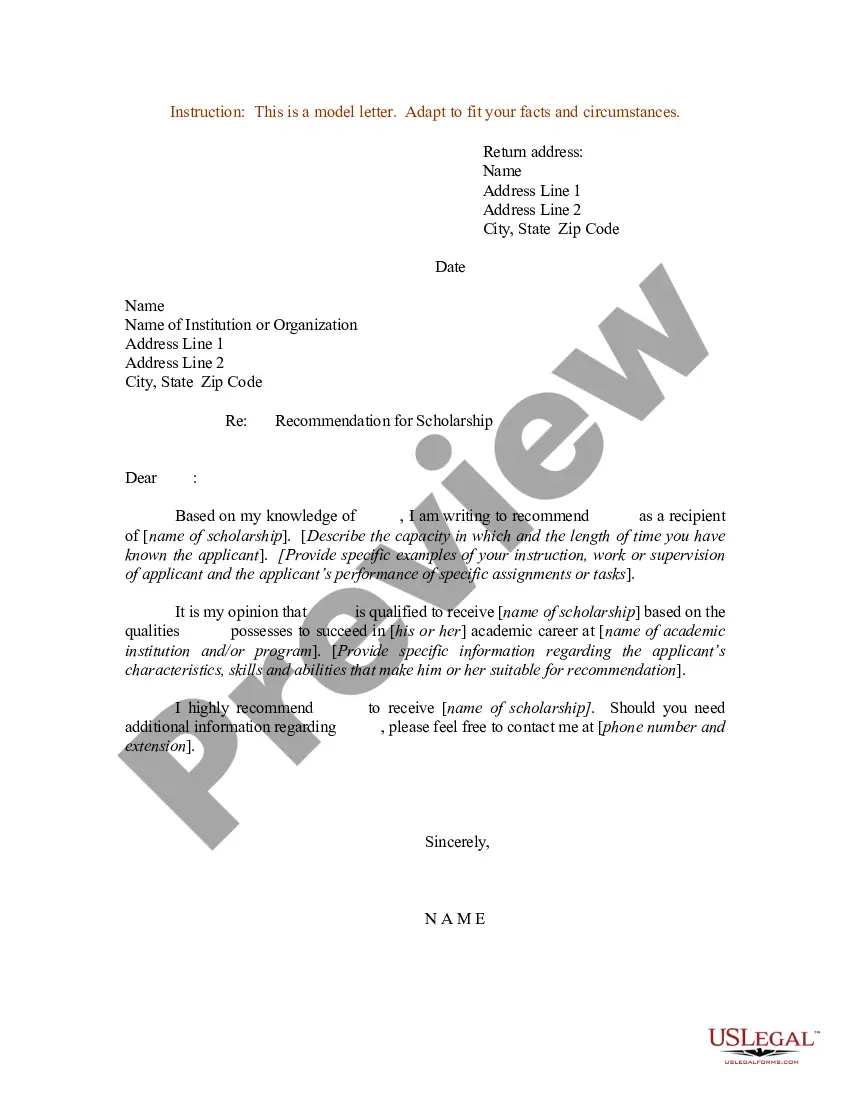
How to fill out Sample Letter For Reference Letter For A School Or College Scholarship Applicant - From Employer?
Whether for commercial reasons or personal affairs, everyone must deal with legal circumstances at some point in their lives.
Filling out legal documents demands meticulous focus, beginning with choosing the appropriate form template.
With a vast US Legal Forms library available, you won’t have to waste time searching for the correct template online. Use the library’s easy navigation to find the suitable template for any circumstance.
- For instance, if you choose an incorrect version of the Sample Reference Document With Footnotes, it will be rejected upon submission.
- Thus, it is crucial to have a reliable source of legal documents such as US Legal Forms.
- If you need to acquire a Sample Reference Document With Footnotes template, follow these straightforward steps.
- Locate the template you require by using the search bar or catalog browsing.
- Review the form’s description to confirm it aligns with your case, state, and county.
- Click on the form’s preview to inspect it.
- If it is the incorrect document, return to the search feature to find the Sample Reference Document With Footnotes template you need.
- Obtain the template if it satisfies your requirements.
- If you possess a US Legal Forms account, click Log in to access previously saved templates in My documents.
- If you lack an account, you can download the form by clicking Buy now.
- Choose the appropriate pricing option.
- Complete the account registration form.
- Select your payment method: you can use a credit card or PayPal account.
- Choose the document format you prefer and download the Sample Reference Document With Footnotes.
- Once it is saved, you can complete the form using editing software or print it and finish it by hand.
Form popularity
FAQ
The footnote/endnote begins with the same superscript number as the one that appears in the paper and is followed by a period. Footnotes/endnotes always include a specific page number or numbers where the cited information can be found. The first footnote/endnote to a source provides the full publishing information.
In both MLA and APA, a footnote example includes the citation found at the bottom, or foot, of the page corresponding to the superscript number found in the body of the work. The footnote might consist of the type of work and author's name along with other information related to the type of citation.
Insert footnotes and endnotes Click where you want to reference to the footnote or endnote. On the References tab, select Insert Footnote or Insert Endnote. Enter what you want in the footnote or endnote. Return to your place in the document by double-clicking the number or symbol at the beginning of the note.
In the MHRA system, references to sources used in your work are set out in full in notes, either at the bottom of each page (footnotes) or at the end of the piece of work (endnotes). In a book-length piece, a new series of notes should begin with each chapter.
Add a footnote Click where you want to add the footnote. Click Insert > Insert Footnote. Word inserts a reference mark in the text and adds the footnote mark at the bottom of the page. Type the footnote text.