Discharge Mortgage Form Nsw
Description
Get your form ready online
Our built-in tools help you complete, sign, share, and store your documents in one place.
Make edits, fill in missing information, and update formatting in US Legal Forms—just like you would in MS Word.
Download a copy, print it, send it by email, or mail it via USPS—whatever works best for your next step.
Sign and collect signatures with our SignNow integration. Send to multiple recipients, set reminders, and more. Go Premium to unlock E-Sign.
If this form requires notarization, complete it online through a secure video call—no need to meet a notary in person or wait for an appointment.
We protect your documents and personal data by following strict security and privacy standards.

Make edits, fill in missing information, and update formatting in US Legal Forms—just like you would in MS Word.

Download a copy, print it, send it by email, or mail it via USPS—whatever works best for your next step.

Sign and collect signatures with our SignNow integration. Send to multiple recipients, set reminders, and more. Go Premium to unlock E-Sign.

If this form requires notarization, complete it online through a secure video call—no need to meet a notary in person or wait for an appointment.

We protect your documents and personal data by following strict security and privacy standards.
Looking for another form?








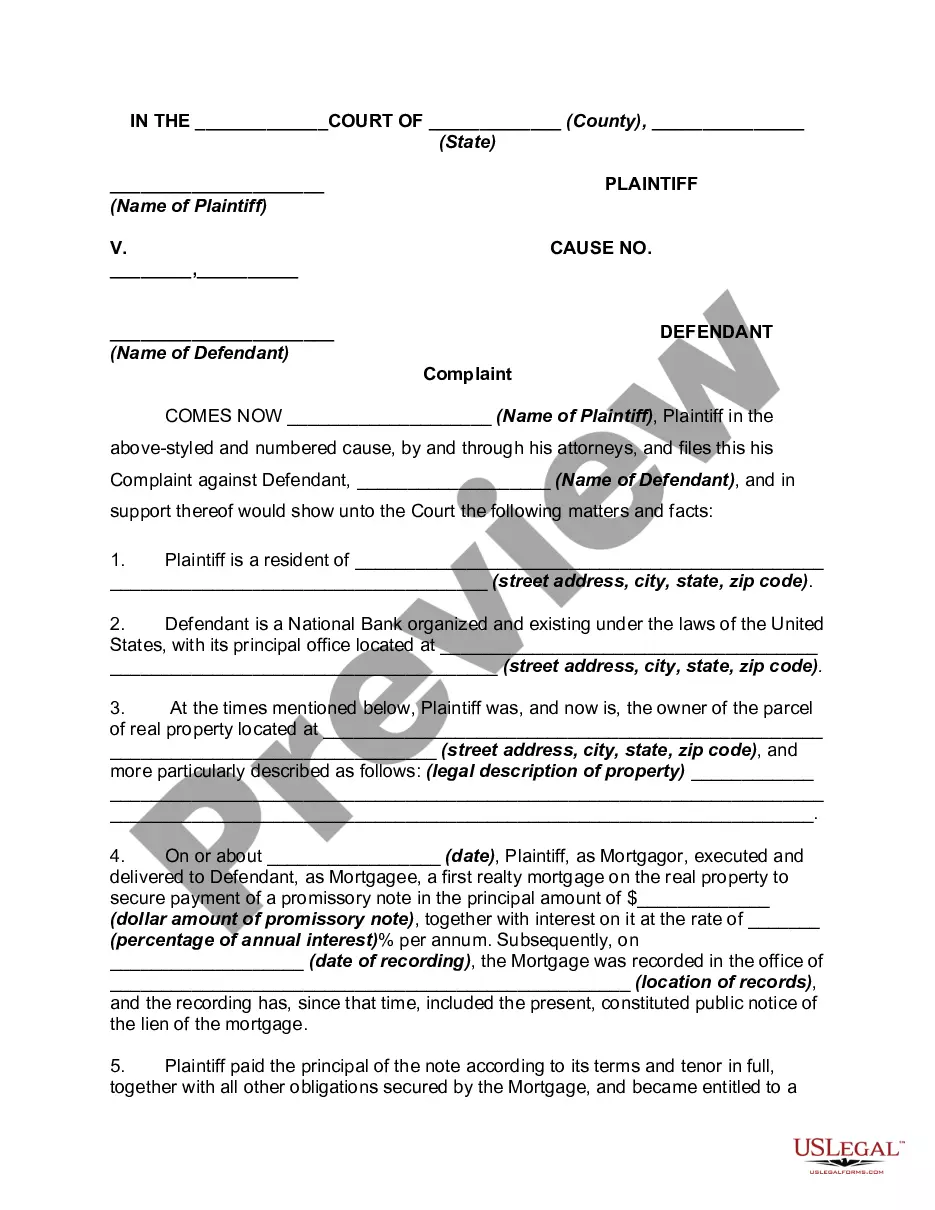
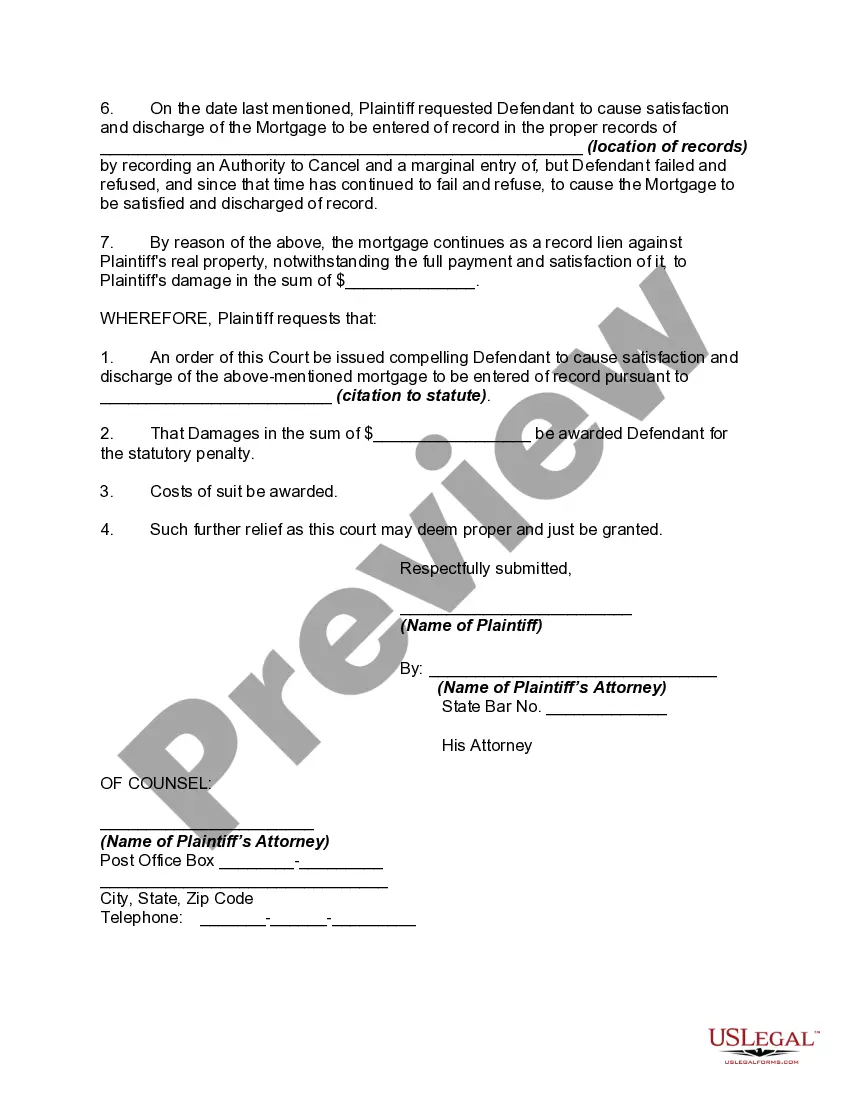
How to fill out Complaint To Compel Mortgagee To Execute And Record Satisfaction And Discharge Of Mortgage?
Acquiring legal document samples that comply with federal and local laws is crucial, and the internet provides a multitude of options to select from.
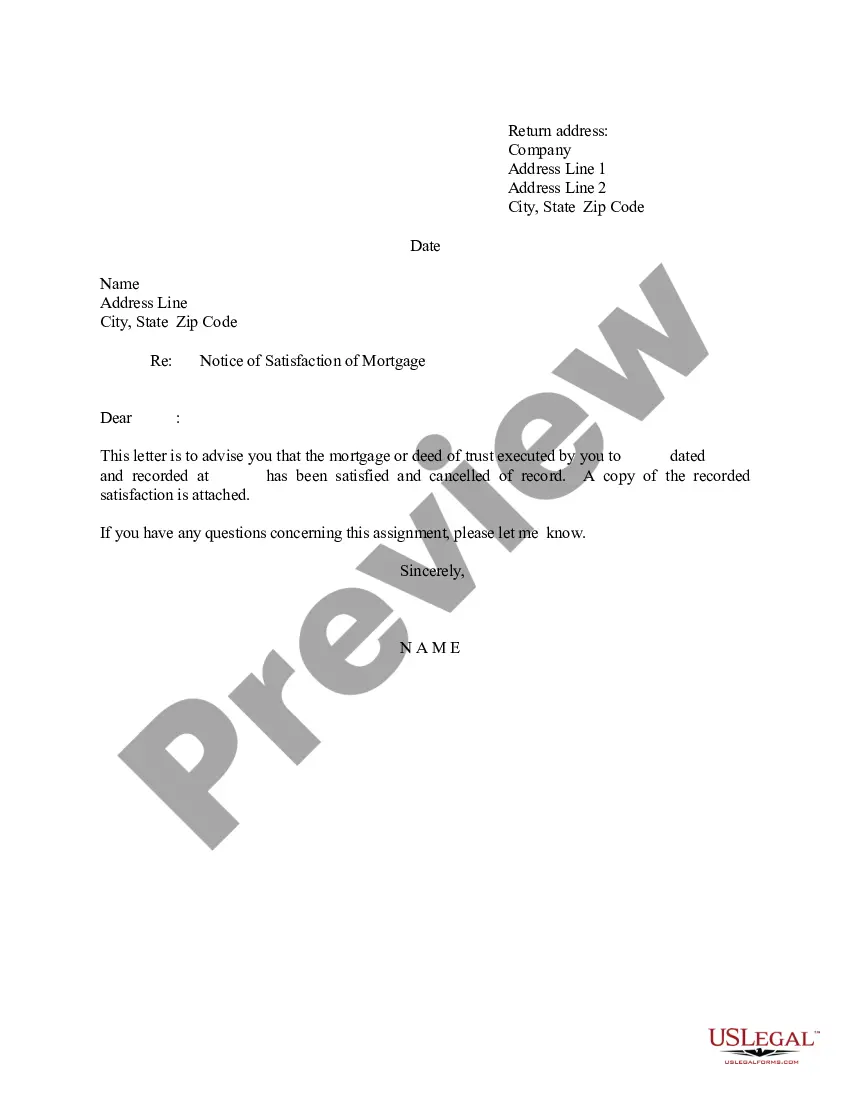
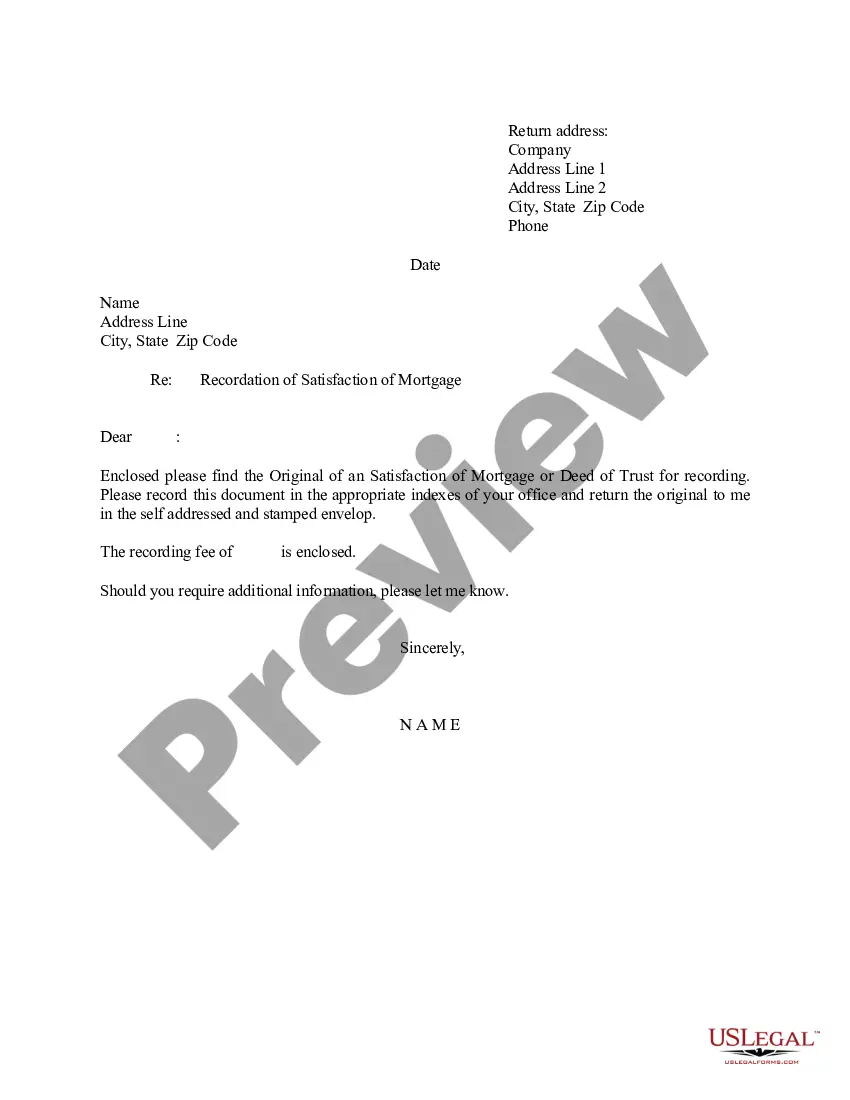
However, what is the purpose of spending time searching for the appropriate Discharge Mortgage Form Nsw sample online when the US Legal Forms digital library already has these templates compiled in one location.
US Legal Forms represents the largest online legal library with more than 85,000 fillable templates created by attorneys for various business and personal situations. They are simple to navigate, with all documents categorized by state and intended use. Our experts stay updated with legislative changes, ensuring your paperwork remains current and compliant when acquiring a Discharge Mortgage Form Nsw from our site.
Click Buy Now once you find the correct form and select a subscription plan. Create an account or Log In, and make a payment via PayPal or credit card. Choose the desired format for your Discharge Mortgage Form Nsw and download it. All templates available through US Legal Forms are reusable. To re-download and fill out previously acquired forms, navigate to the My documents tab in your profile. Enjoy the benefit of the most extensive and user-friendly legal document service!
- Obtaining a Discharge Mortgage Form Nsw is straightforward and fast for both existing and new users.
- If you already possess an account with a valid subscription, sign in and download the document sample you require in your preferred format.
- If you are new to our platform, follow the steps listed below.
- Examine the template using the Preview feature or through the text outline to confirm it satisfies your needs.
- If necessary, search for another sample using the search function at the page's top.
Form popularity
FAQ
6 Ways to Deal With Debt Collectors Check Your Credit Report. ... Make Sure the Debt Is Valid. ... Know the Statute of Limitations. ... Consider Negotiating. ... Try to Make the Payments You Owe. ... Send a Cease and Desist Letter.
If you don't pay a debt collector or collection agency, you'll likely face increasing efforts to collect the debt via phone calls, letters, or even social media contact. Not paying a debt in collections will also hurt your credit score. If you don't pay, the collection agency can sue you to try to collect the debt.
If you are struggling with debt and debt collectors, Farmer & Morris Law, PLLC can help. As soon as you use the 11-word phrase ?please cease and desist all calls and contact with me immediately? to stop the harassment, call us for a free consultation about what you can do to resolve your debt problems for good.
To take legal action to collect a debt, the creditor (the person or company owed money) files a lawsuit against the debtor (the person who owes the money). Once a debt collection lawsuit is filed with the court, the creditor must give the debtor notice of the lawsuit (service).
When a debt collector contacts you about a debt, they are legally required to provide information about that debt, including the name of the creditor, the amount owed, and your right to dispute it. There are some limited exceptions to this rule.
You can sue the debt collector for violating the FDCPA. If you sue under the FDCPA and win, the debt collector must generally pay your attorney's fees and may also have to pay you damages. If you're having trouble with debt collection, you can submit a complaint with the CFPB.