Extra Wages For Overtime Section 59
Description
Get your form ready online
Our built-in tools help you complete, sign, share, and store your documents in one place.
Make edits, fill in missing information, and update formatting in US Legal Forms—just like you would in MS Word.
Download a copy, print it, send it by email, or mail it via USPS—whatever works best for your next step.
Sign and collect signatures with our SignNow integration. Send to multiple recipients, set reminders, and more. Go Premium to unlock E-Sign.
If this form requires notarization, complete it online through a secure video call—no need to meet a notary in person or wait for an appointment.
We protect your documents and personal data by following strict security and privacy standards.

Make edits, fill in missing information, and update formatting in US Legal Forms—just like you would in MS Word.

Download a copy, print it, send it by email, or mail it via USPS—whatever works best for your next step.

Sign and collect signatures with our SignNow integration. Send to multiple recipients, set reminders, and more. Go Premium to unlock E-Sign.

If this form requires notarization, complete it online through a secure video call—no need to meet a notary in person or wait for an appointment.

We protect your documents and personal data by following strict security and privacy standards.
Looking for another form?

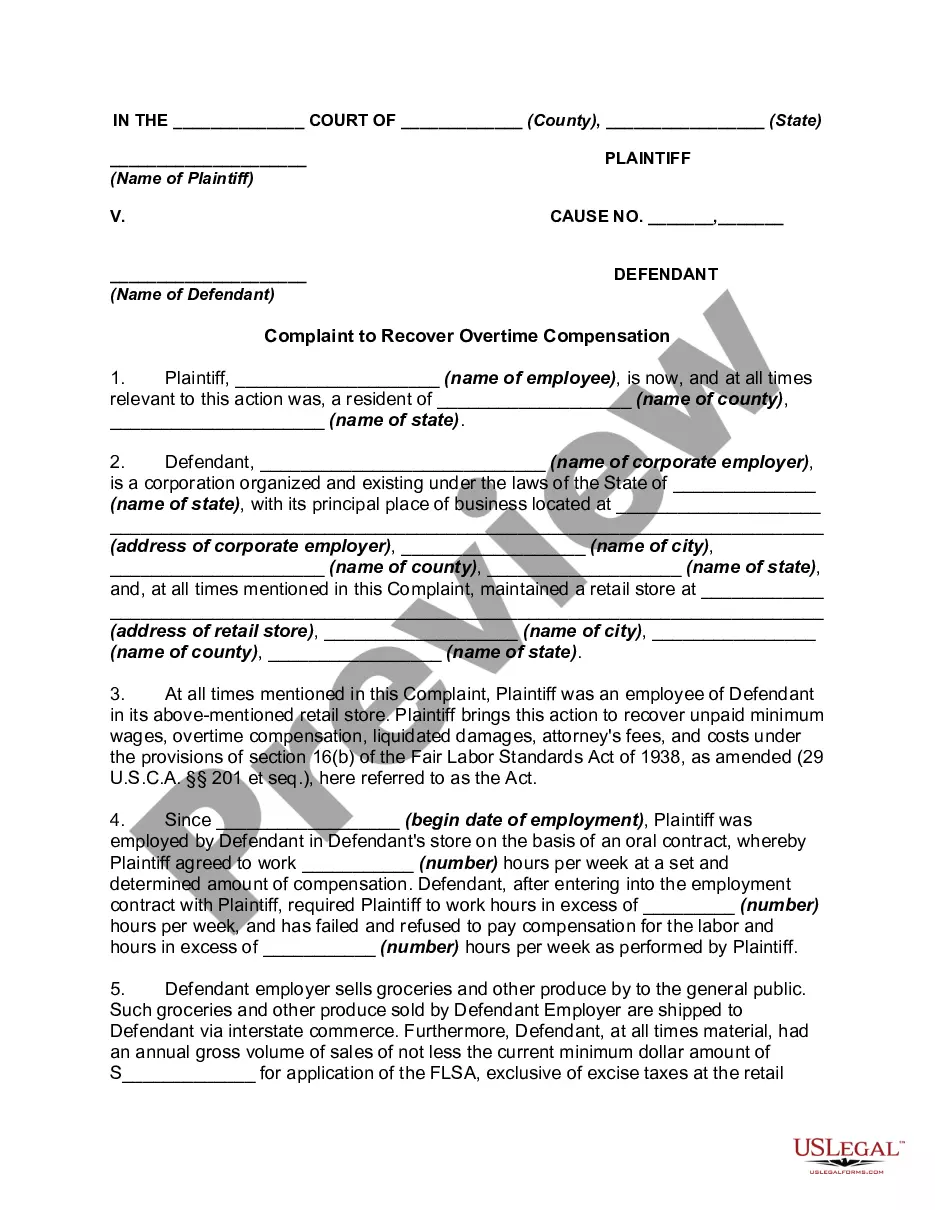
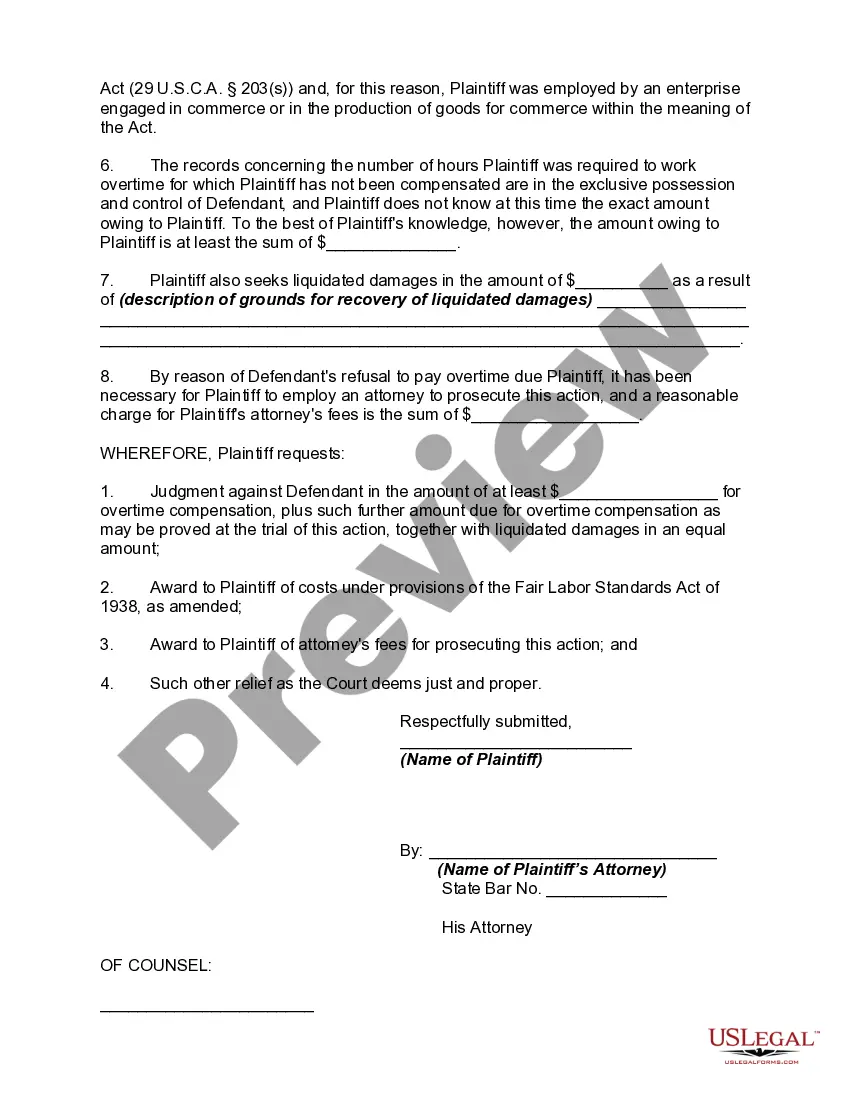
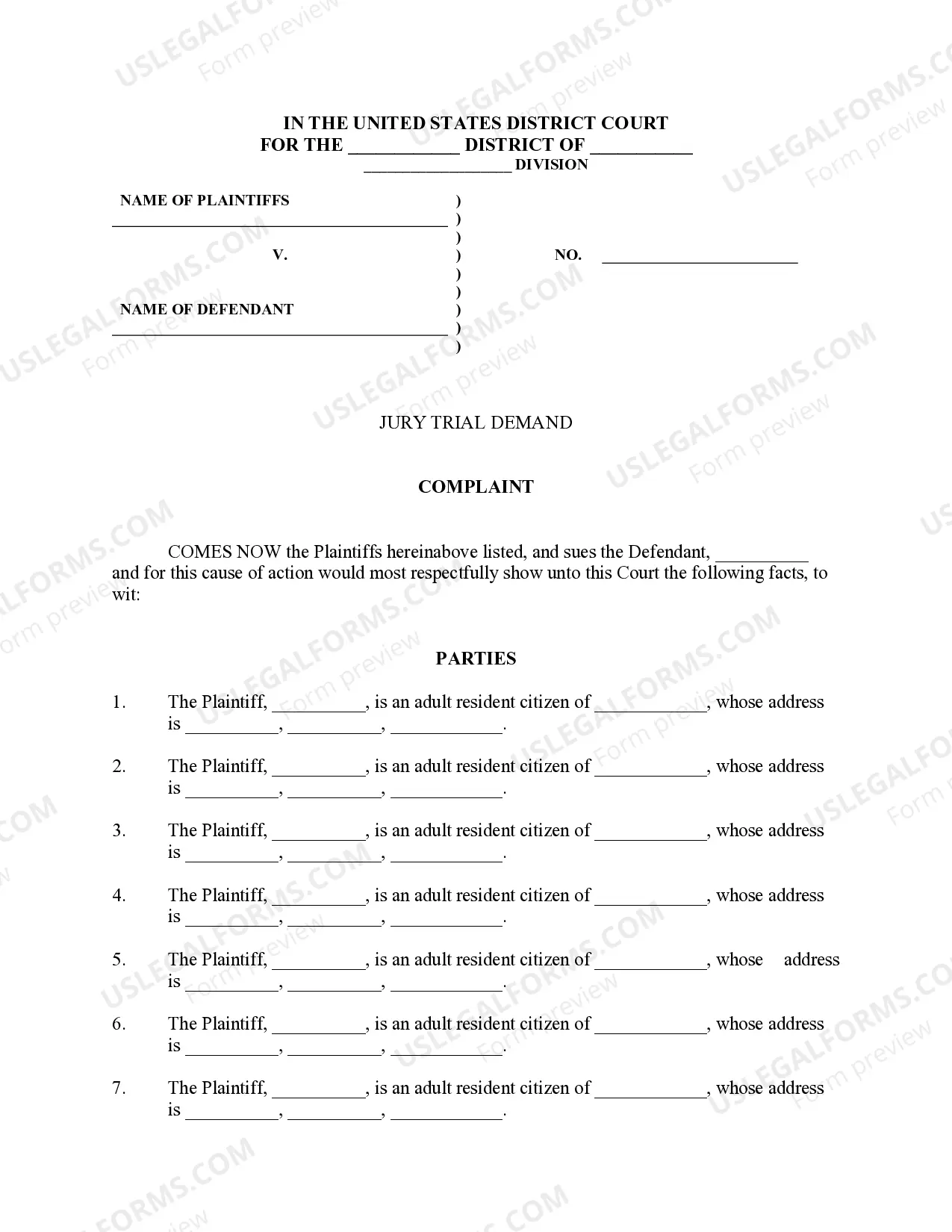
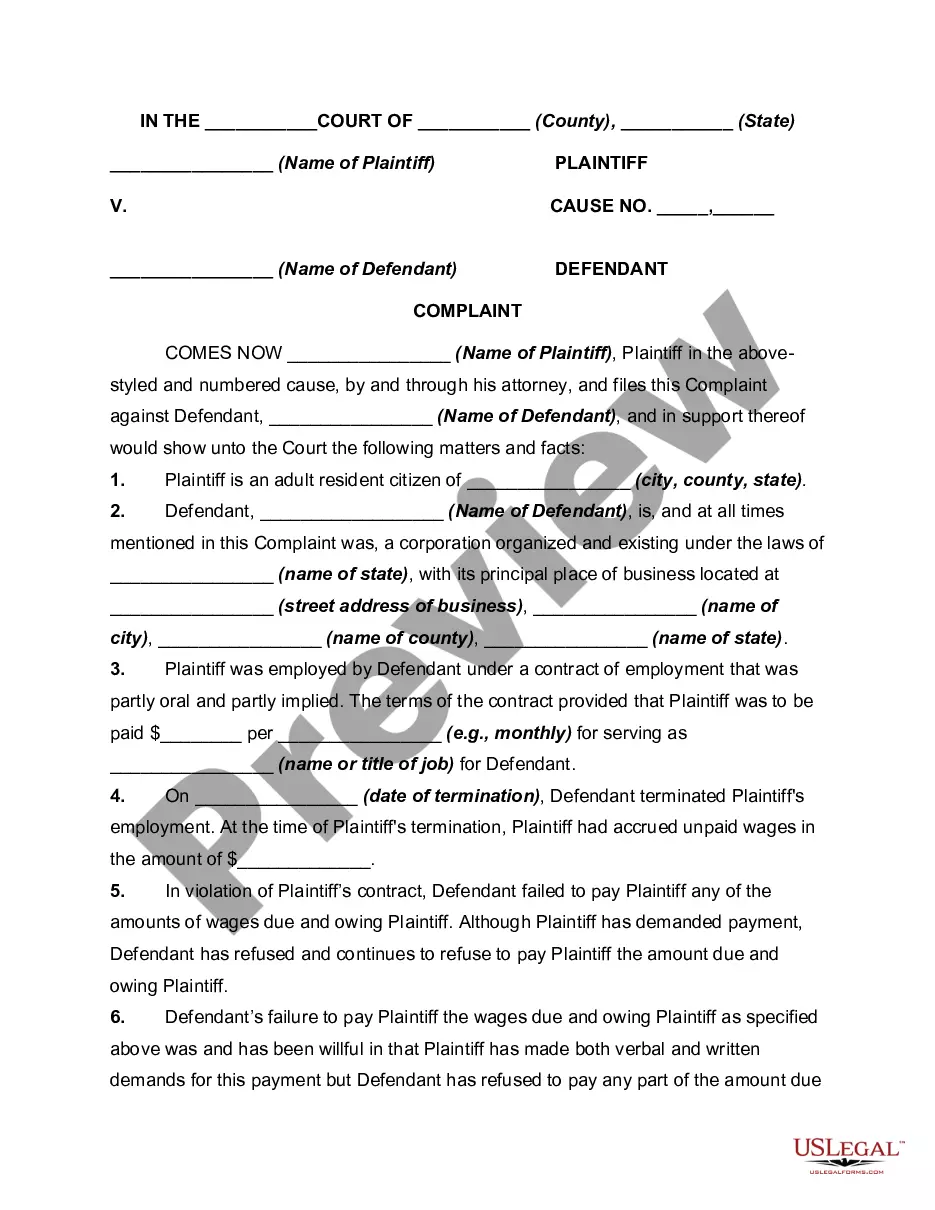
How to fill out Complaint To Recover Overtime Compensation Or Wages In State Court Under Section 16(b) Of Fair Labor Standards Act?
- If you are a returning user, log in to your account. Ensure your subscription is active, and click the Download button for your needed template.
- For first-time users, begin by reviewing the form in Preview mode. Confirm it aligns with your requirements and local jurisdiction.
- If further templates are needed, use the Search tab to find the appropriate form that suits your needs.
- Once you select a document, click on the Buy Now button and choose your preferred subscription plan. You’ll need to create an account to access the full library.
- Proceed to checkout by providing your payment information via credit card or PayPal to complete your purchase.
- Download the completed form to your device for use, and you can also access it anytime through the My Forms section in your profile.
By utilizing US Legal Forms, individuals and attorneys can swiftly execute legal documents from an extensive library of over 85,000 editable forms. This platform not only offers a robust collection of forms but also connects users with premium experts for guidance, ensuring documents are accurate and compliant.
Get started with US Legal Forms today to streamline your legal documentation process and secure your extra wages for overtime section 59 efficiently!
Form popularity
FAQ
Federal overtime rules are regulations established by the Fair Labor Standards Act that dictate how employers should compensate employees for overtime work. According to these rules, most eligible employees must receive time-and-a-half for hours worked over 40 in a workweek. In addition, these rules also detail requirements for record-keeping and exemptions. For more insights about navigating federal overtime regulations and ensuring proper claims for extra wages for overtime section 59, consider visiting the US Legal Forms platform, where you can find tailored resources.
Controlling overtime in construction requires careful planning and monitoring of project schedules. Start by setting clear deadlines and communicating them to all team members. You can also implement a time tracking system to monitor hours worked. Utilizing the Extra wages for overtime section 59 helps ensure compliance with regulations and can prevent unexpected wage costs.
Calculating overtime wages involves identifying your standard hourly rate and multiplying it by 1.5 for each hour over 40 worked in a week. For example, if you earn $20 an hour and work 45 hours, your calculation would be $20 x 1.5 x 5 hours of overtime. Resources from uslegalforms can guide you through the nuances of calculating extra wages for overtime section 59.
The maximum overtime an employee can work is generally dictated by company policy rather than federal law. While the FLSA mandates that anything over 40 hours is considered overtime, employers may have their limits or regulations in place. Always check with your HR department for details specific to your workplace regarding extra wages for overtime section 59.
There are no federal limits on the total overtime you can work, but state laws may impose restrictions. Additionally, companies often have policies that can affect how much overtime employees can clock in. Understanding these rules is vital, and tools from uslegalforms can help clarify your rights regarding extra wages for overtime section 59.
In India, an employer can require employees to work overtime, provided they compensate with extra wages for overtime section 59. However, this mandate is subject to certain conditions outlined by the labor laws. It's crucial for employees to understand their rights and the terms of their employment contracts.
The maximum limit of overtime generally depends on company policies and state laws. Under federal law, there is no specific limit, but employees who work beyond 40 hours in a workweek are entitled to extra wages for overtime section 59. Businesses may impose additional constraints, so it's essential to check your employer's guidelines for any specific limits.
For employees who work 20 hours a week, the overtime rate is calculated based on their regular hourly wage. In most cases, the overtime rate is time and a half, meaning if an employee earns $15 per hour, their overtime rate would be $22.50. This calculation is crucial as it directly impacts the extra wages for overtime section 59. Knowing the correct overtime wage can help employees ensure they are fairly compensated.