Estate For Beneficiary
Description
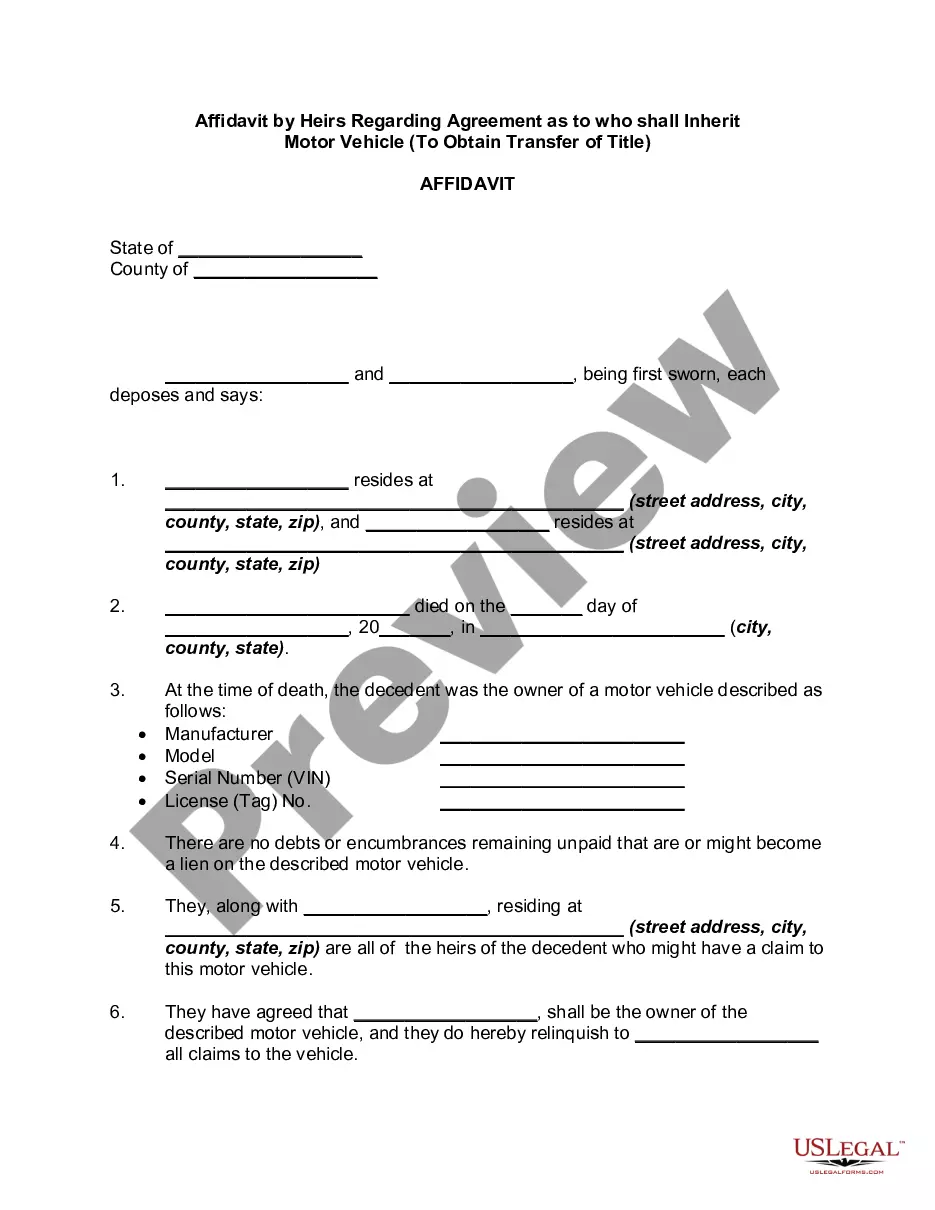
How to fill out Sworn Statement Of Beneficiary Of Estate And Consent To Close Estate - Uniform Probate Code?
Managing legal documentation and processes can be a lengthy addition to your day.
Forms such as Estate For Beneficiary often necessitate searching for them and grasping how to fill them out accurately.
Consequently, whether you are handling financial, legal, or personal issues, utilizing a detailed and user-friendly online directory of forms as needed will greatly assist you.
US Legal Forms stands out as the premier online service for legal documents, providing over 85,000 state-specific templates along with a range of tools to help you manage your paperwork with ease.
Is this your first time using US Legal Forms? Register and create a complimentary account within minutes to gain access to the form directory and Estate For Beneficiary. Then, follow the steps outlined below to complete your document.
- Explore the directory of relevant documents accessible with just one click.
- US Legal Forms offers you state- and county-specific templates that can be downloaded at any time.
- Streamline your document management with exceptional support that enables you to fill out any form in minutes without any extra or concealed fees.
- Simply Log In to your account, find Estate For Beneficiary, and obtain it immediately from the My documents section.
- You can also retrieve forms you have saved previously.
Form popularity
FAQ
Generally, it is not better to name an estate as a beneficiary due to potential delays and complications. Directly naming individuals can streamline the inheritance process, allowing beneficiaries to receive assets more swiftly and with fewer legal hurdles. If you are unsure of the best approach, consider consulting with a legal expert or using resources like US Legal Forms to guide you in making informed decisions for your estate planning.
When we talk about an 'estate' as a beneficiary, we refer to the legal entity representing a deceased person’s assets. This means that instead of assets going to specific individuals, they go to the estate itself, which will settle debts and distribute remaining assets. This process can complicate asset distribution and extend the time it takes for beneficiaries to receive their inheritance. It’s crucial to weigh these factors when considering your beneficiary designations.
For beneficiaries, an estate refers to all the assets and liabilities of a deceased person. It includes property, bank accounts, investments, and debts. When an estate is named as a beneficiary, it means that these assets will be managed and distributed according to the deceased's will or state laws. Understanding this helps beneficiaries navigate the inheritance process more effectively.
An inheritance letter for a beneficiary is a formal document that notifies them of their entitlement to a portion of the estate for beneficiary. This letter should include details such as the name of the deceased, the relationship to the beneficiary, and a description of the assets involved. It is important to convey this information clearly and professionally. Using templates available at uslegalforms can help you draft an effective inheritance letter.
To fill out a beneficiary form, start by carefully reading the instructions provided. Next, enter the required information, which typically includes the estate for beneficiary, the names of the beneficiaries, and their respective shares. Be thorough and double-check your entries for accuracy. If you encounter difficulties, uslegalforms offers user-friendly templates to guide you through the process.
When filling in beneficiary details, you need to provide accurate personal information, such as full names, contact information, and relationship to the deceased. It is crucial to include their Social Security numbers for proper identification in the estate for beneficiary. If applicable, specify whether the beneficiary is an individual or an organization. This ensures smooth processing and minimizes potential disputes.
Filling out beneficiary paperwork involves providing essential information about both the estate for beneficiary and the individuals entitled to inherit. Typically, you will need to include names, addresses, and Social Security numbers of the beneficiaries. Additionally, be sure to specify the percentage of the inheritance each beneficiary will receive. Using uslegalforms can simplify this process by providing templates and guidance.
The 3-year rule for estate refers to the period during which gifts made by the deceased may be subject to estate tax considerations. If gifts were given within this timeframe, they may be included in the estate's total value, affecting the inheritance beneficiaries receive. It is important to be aware of this rule when planning an estate. Our resources at uslegalforms can assist you in understanding how to manage your estate effectively.
The 3-year rule works by enabling tax authorities to assess gifts made by the deceased within three years of death as part of the taxable estate. This can impact the overall value of the estate for beneficiaries, potentially leading to higher taxes owed. Effective estate planning can mitigate these risks. Uslegalforms offers tools to help you structure your estate for beneficiary efficiency.
The 3-year clawback rule allows the government to recover gifts made by the deceased within three years of their passing, which can affect the estate. This means that if substantial gifts were given shortly before death, those amounts could be included in the taxable estate. Understanding this rule is vital when planning an estate for beneficiaries. Uslegalforms provides information to help you navigate these regulations.