Psychotherapy Form Template For Patient Experience
Description
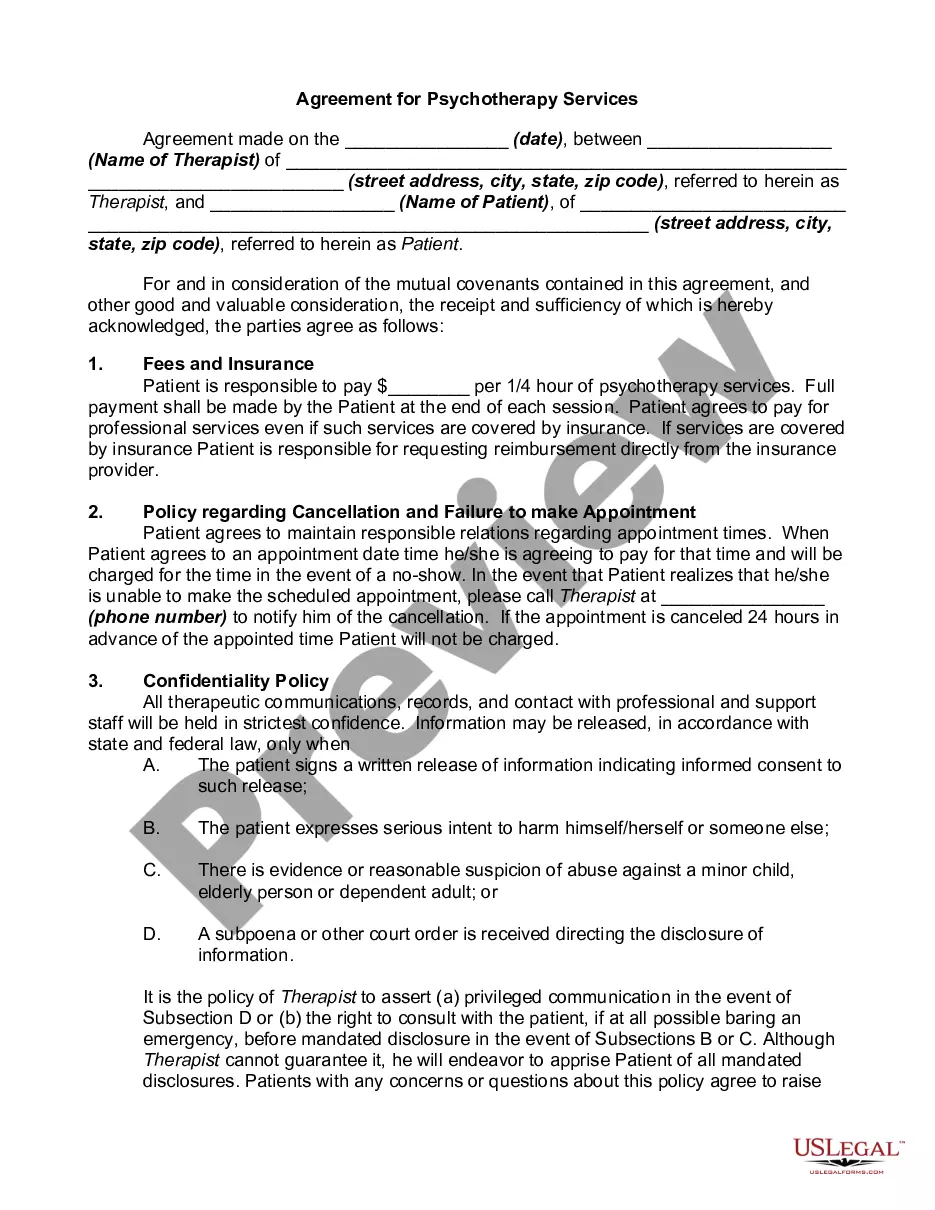
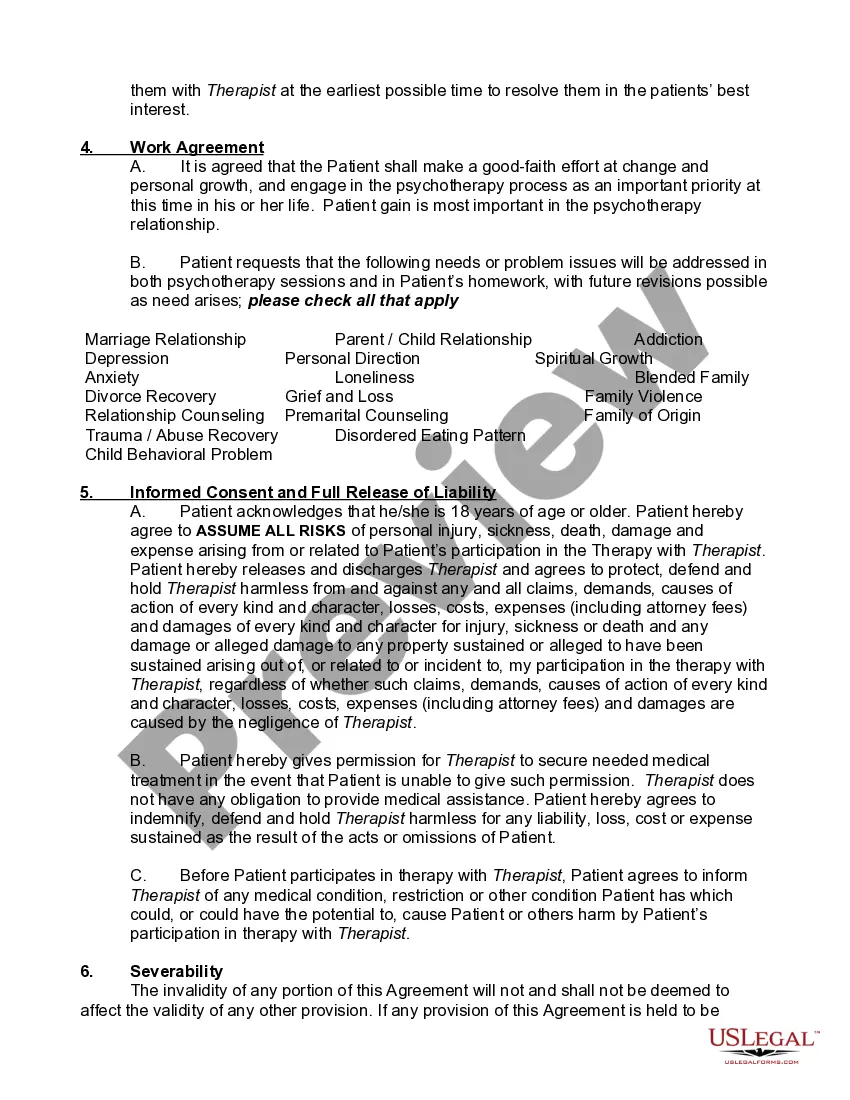


Get your form ready online
Our built-in tools help you complete, sign, share, and store your documents in one place.
Make edits, fill in missing information, and update formatting in US Legal Forms—just like you would in MS Word.
Download a copy, print it, send it by email, or mail it via USPS—whatever works best for your next step.
Sign and collect signatures with our SignNow integration. Send to multiple recipients, set reminders, and more. Go Premium to unlock E-Sign.
If this form requires notarization, complete it online through a secure video call—no need to meet a notary in person or wait for an appointment.
We protect your documents and personal data by following strict security and privacy standards.

Make edits, fill in missing information, and update formatting in US Legal Forms—just like you would in MS Word.

Download a copy, print it, send it by email, or mail it via USPS—whatever works best for your next step.

Sign and collect signatures with our SignNow integration. Send to multiple recipients, set reminders, and more. Go Premium to unlock E-Sign.

If this form requires notarization, complete it online through a secure video call—no need to meet a notary in person or wait for an appointment.

We protect your documents and personal data by following strict security and privacy standards.
Looking for another form?








How to fill out Agreement For Psychotherapy Services?
- Log in to your US Legal Forms account if you're a returning user. Verify your subscription is up to date before proceeding.
- If you’re new to the platform, start by browsing the vast library. Use the search function to find the specific psychotherapy form template that fits your requirements.
- Examine the preview and description of the selected template to guarantee it aligns with your local regulations.
- If the chosen form doesn’t meet your needs, return to the search feature to find a suitable alternative.
- Once you find the right document, click on the 'Buy Now' button and select your preferred subscription plan. You will need to create an account for full access.
- Complete your purchase securely using a credit card or PayPal to unlock the document.
- Download the template to your device and access it anytime through the 'My Forms' section in your profile.
By following these straightforward steps, you will seamlessly acquire the necessary psychotherapy form template tailored for an optimal patient experience.
Don’t wait to enhance your practice—explore US Legal Forms today and start benefiting from our extensive library of legal templates.
Form popularity
FAQ
To write psychotherapy process notes, concentrate on the therapeutic process during the session, including techniques used and the patient’s reactions. Detail any breakthroughs or challenges encountered. Using a structured psychotherapy form template for patient experience can enhance the clarity and utility of your process notes.
Psychotherapy notes should include the date of the session, the focus of the session, relevant patient statements, and therapist observations. Additionally, document any treatment adjustments and future plans. A psychotherapy form template for patient experience can simplify this process, making it easier to capture all necessary details.
Progress notes primarily focus on the patient's improvement and ongoing treatment, documenting the progression towards the goals. Psychotherapy notes, on the other hand, include personal insights and thoughts of the therapist, which are typically kept separate for privacy. A solid psychotherapy form template for patient experience can help delineate between both types effectively.
Documenting psychotherapy notes involves recording details about the sessions, the patient’s emotional state, and any significant events that occurred. Ensure to maintain confidentiality and use professional language. A well-designed psychotherapy form template for patient experience can assist in keeping notes clear and comprehensive.
A treatment summary for psychotherapy should include the reason for referral, treatment methods used, and the patient's response to these methods. Highlight the progress made towards the goals set at the beginning of therapy. Utilizing a psychotherapy form template for patient experience can help in organizing this information effectively.
To write a psychotherapy report, start by documenting the patient's background, treatment goals, and details of each session. Make sure to include observations, the patient's progress, and adjustments to the treatment plan. Using a comprehensive psychotherapy form template for patient experience can streamline this process, ensuring no important information gets overlooked.
Documenting psychotherapy notes requires clarity and conciseness. Use a structured format to outline the session's key points, interventions used, and the client's progress. Incorporate a psychotherapy form template for patient experience to maintain consistency and organization in your notes, facilitating effective tracking and ensuring you address all critical aspects of the therapy journey.
Creating a custom intake form involves identifying the specific information you need from clients. Start by delineating sections for personal details, medical history, and therapy goals. Utilizing a psychotherapy form template for patient experience can help streamline this process and ensure you cover all necessary areas while tailoring the form to fit your practice's unique style.
To create a client intake form in Word, open a new document and set up a clear layout with sections for personal details and health history. You can use a psychotherapy form template for patient experience to simplify this process, ensuring you include essential questions and checkboxes where needed. Once finished, save and customize the form based on your practice's needs for effortless patient onboarding.
To fill out a therapy intake form, start by providing your personal information, such as your name and contact details. Then, share information regarding your mental health history, including any previous therapy experiences. A well-designed psychotherapy form template for patient experience will guide you through these sections, ensuring you provide the necessary insights for your therapist.