Counseling Form For College Students 2022
Description


Get your form ready online
Our built-in tools help you complete, sign, share, and store your documents in one place.
Make edits, fill in missing information, and update formatting in US Legal Forms—just like you would in MS Word.
Download a copy, print it, send it by email, or mail it via USPS—whatever works best for your next step.
Sign and collect signatures with our SignNow integration. Send to multiple recipients, set reminders, and more. Go Premium to unlock E-Sign.
If this form requires notarization, complete it online through a secure video call—no need to meet a notary in person or wait for an appointment.
We protect your documents and personal data by following strict security and privacy standards.

Make edits, fill in missing information, and update formatting in US Legal Forms—just like you would in MS Word.

Download a copy, print it, send it by email, or mail it via USPS—whatever works best for your next step.

Sign and collect signatures with our SignNow integration. Send to multiple recipients, set reminders, and more. Go Premium to unlock E-Sign.

If this form requires notarization, complete it online through a secure video call—no need to meet a notary in person or wait for an appointment.

We protect your documents and personal data by following strict security and privacy standards.
Looking for another form?





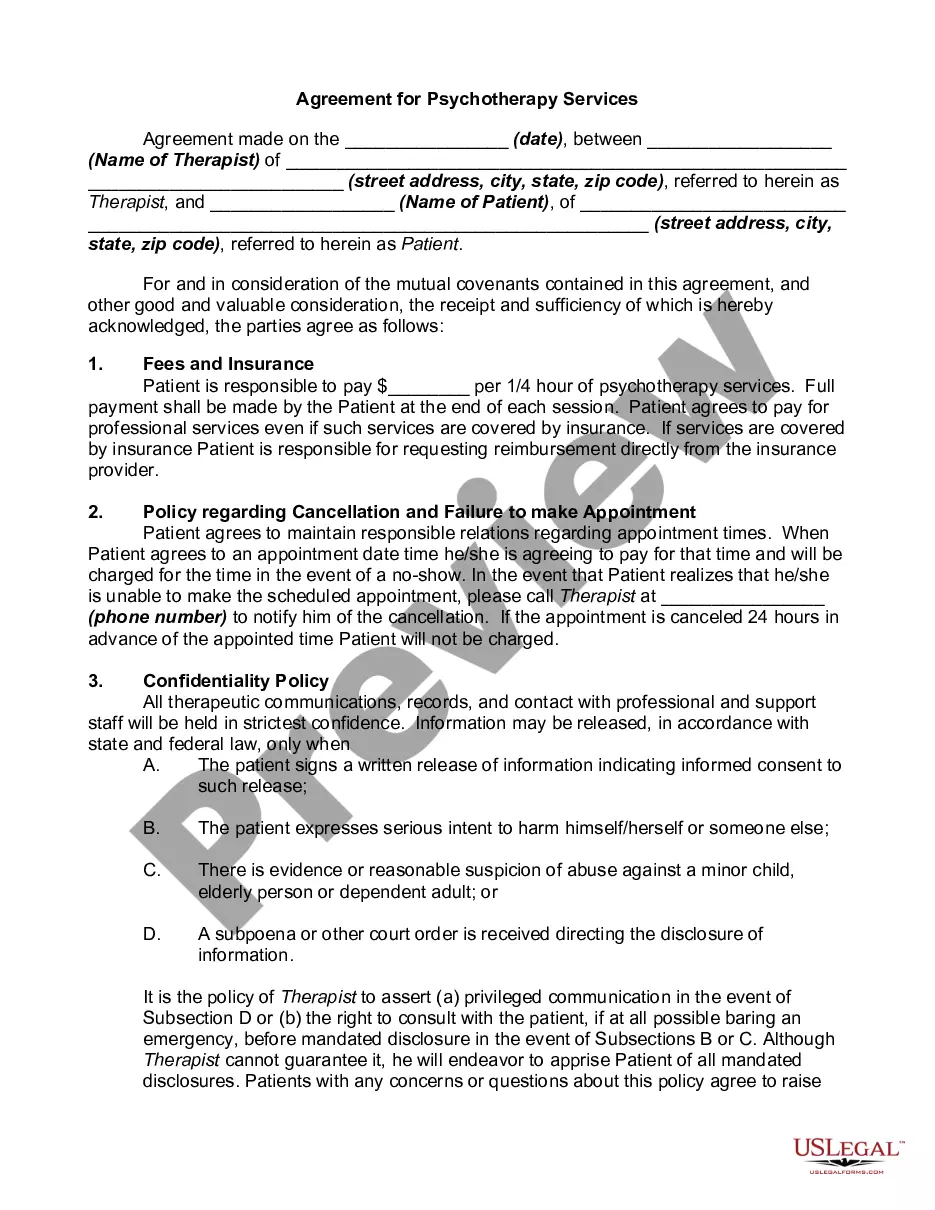
How to fill out Agreement For Psychotherapy Services?
It’s widely acknowledged that you cannot instantly become a legal specialist, nor can you swiftly learn how to draft a Counseling Form For College Students 2022 without a specific educational foundation.
Drafting legal documents is a lengthy endeavor that necessitates specialized training and expertise.
So why not entrust the creation of the Counseling Form For College Students 2022 to the experts.
You can revisit your documents from the My documents section at any time. If you are an existing customer, you can simply Log In, and find and download the template from the same section.
Regardless of the intention behind your documents—whether they are financial, legal, or personal—our website has you covered. Try US Legal Forms today!
- Locate the document you require by utilizing the search function at the top of the page.
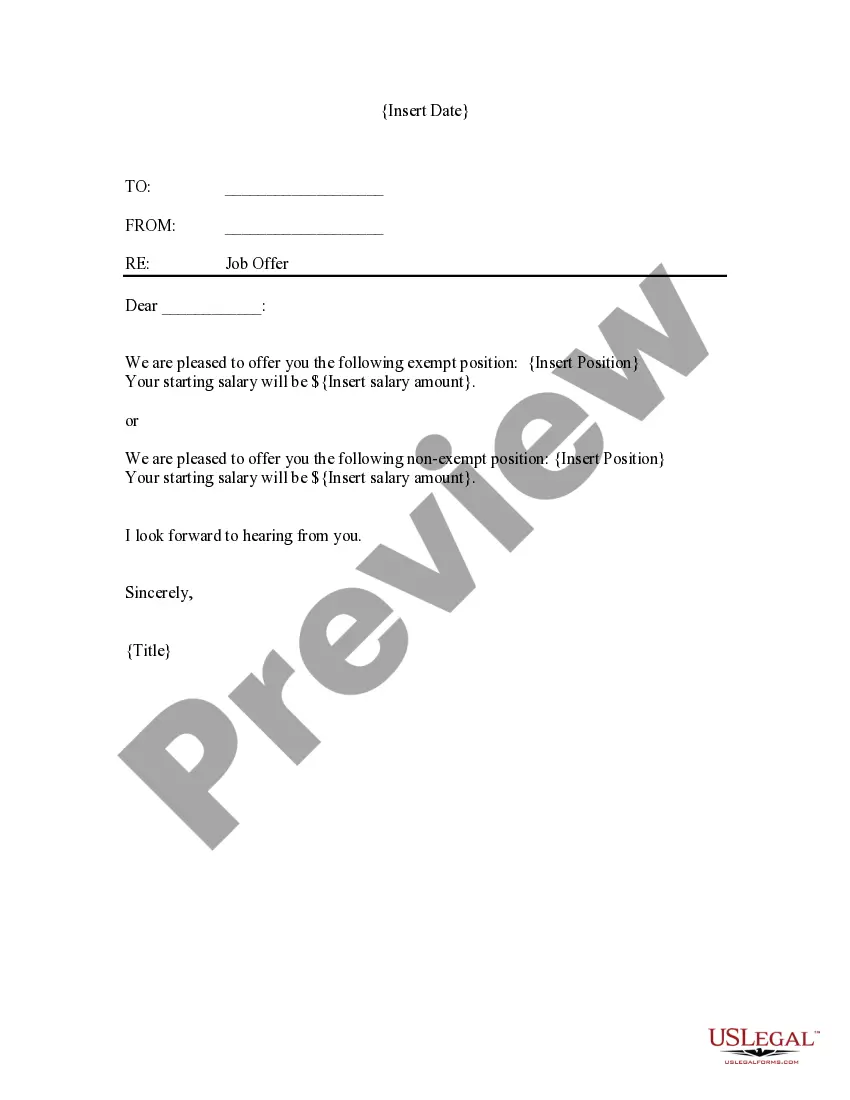
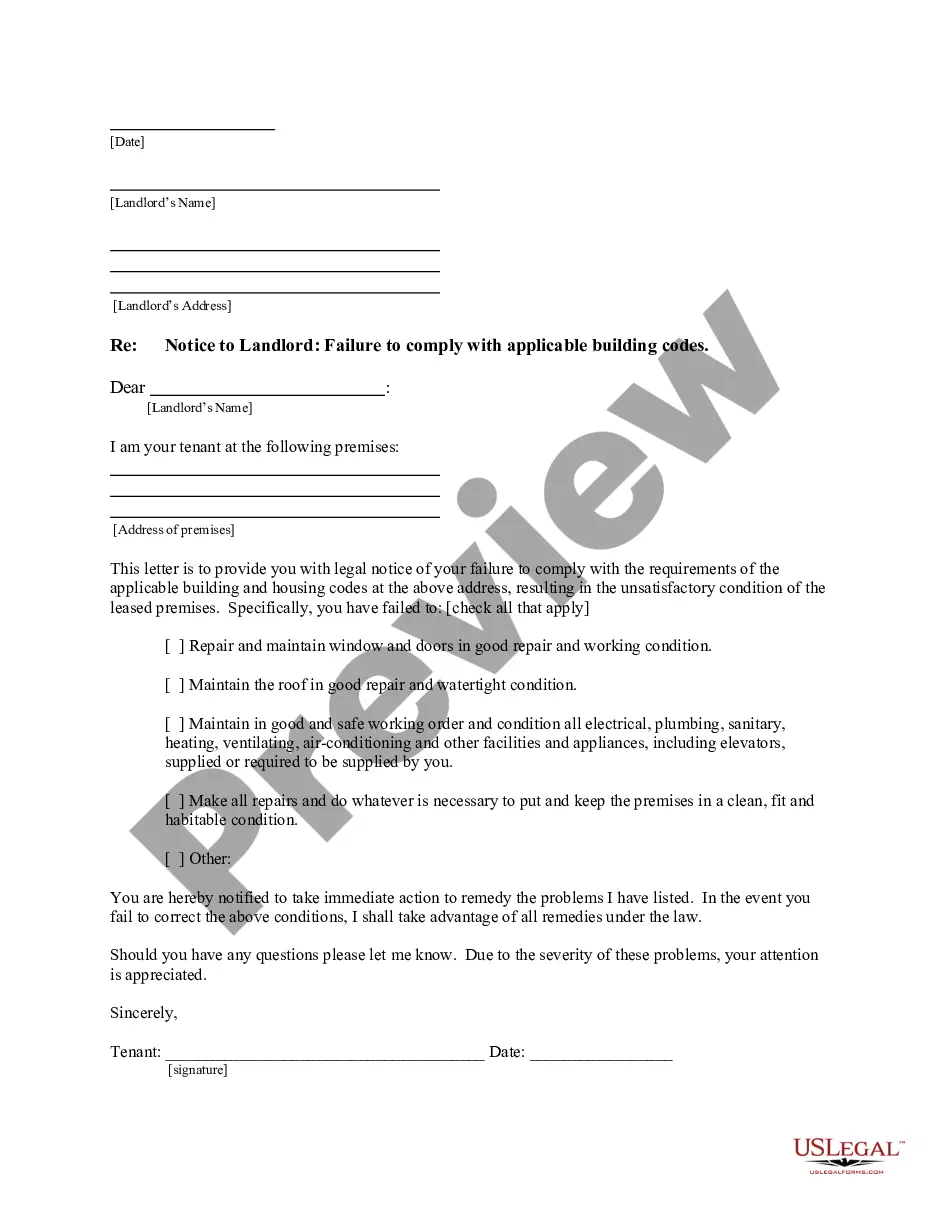
- Preview it (if available) and review the accompanying description to determine if the Counseling Form For College Students 2022 fits your needs.
- Initiate your search anew if you require a different document.
- Create a complimentary account and select a subscription plan to purchase the template.
- Click Buy now. Once the payment has been processed, you may download the Counseling Form For College Students 2022, fill it out, print it, and send it or mail it to the relevant parties or organizations.
Form popularity
FAQ
Counseling begins with some form of evaluation?often before the client attends their first session and may include the client's history, symptoms, and current situation to determine an appropriate counseling approach to treatment.
The techniques are: (1) Directive Counselling, (2) Non-Directive Counselling, and (3) Eclectic Counselling. 1. Directive Counselling: In this counselling the counsellor plays an active role as it is regarded as a means of helping people how to learn to solve their own problems.
Counselling is a talking therapy that involves a trained therapist listening to you and helping you find ways to deal with emotional issues. Sometimes the term "counselling" is used to refer to talking therapies in general, but counselling is also a type of therapy in its own right.
The Different Counselling Formats are; The client can choose to have counselling on a one to one basis that is face to face. You will have an appointment with your counsellor at a set location and meet them to discuss your issue. Group counselling is also an option.
Below are some examples of what students can gain from personal counseling: improved communication and interpersonal skills. greater self-acceptance and self-esteem. ability to change self-defeating behaviors/habits.