Garnishee Order With Example
Description
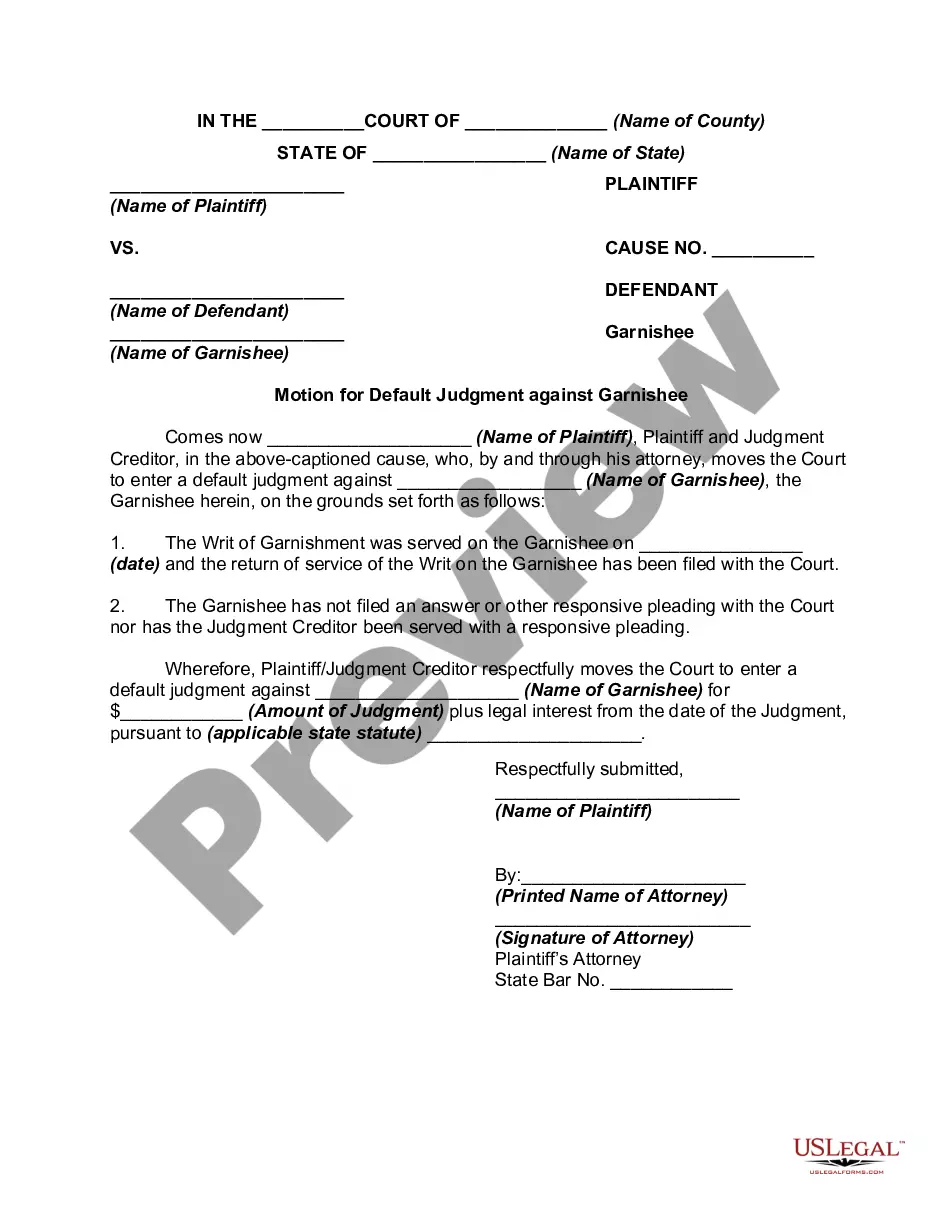
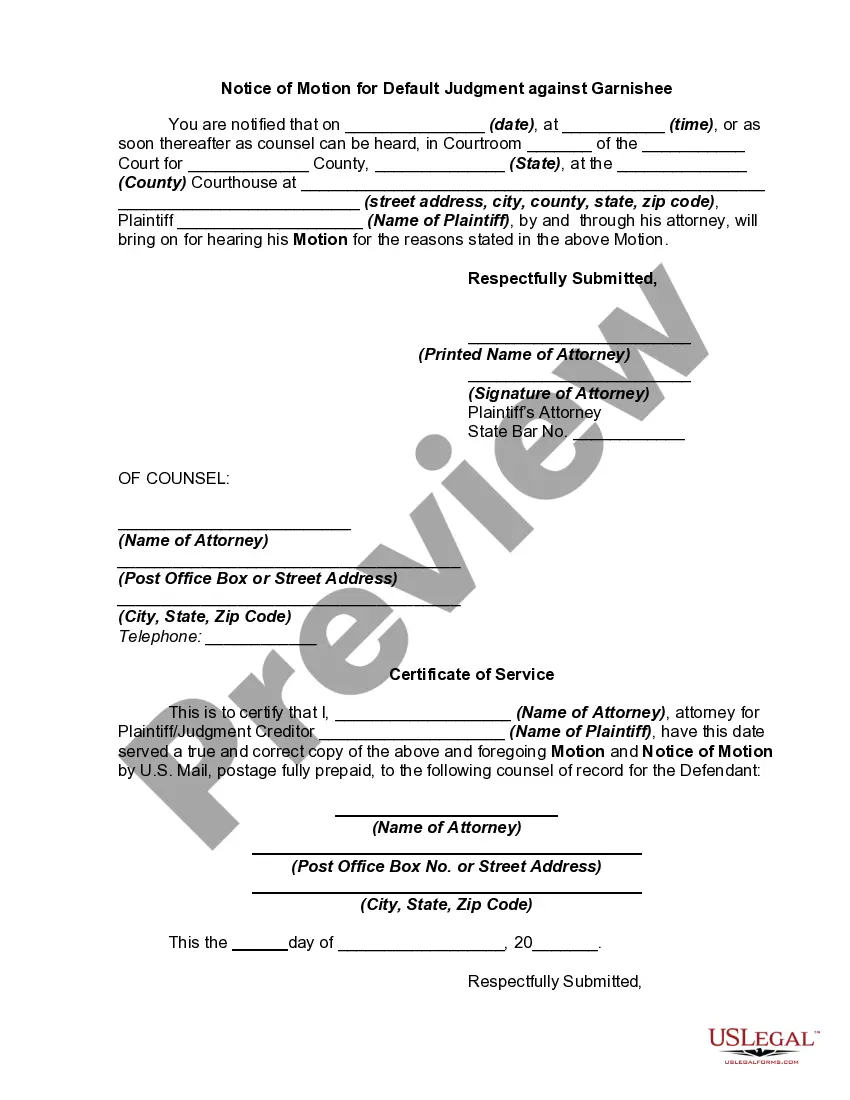
Get your form ready online
Our built-in tools help you complete, sign, share, and store your documents in one place.
Make edits, fill in missing information, and update formatting in US Legal Forms—just like you would in MS Word.
Download a copy, print it, send it by email, or mail it via USPS—whatever works best for your next step.
Sign and collect signatures with our SignNow integration. Send to multiple recipients, set reminders, and more. Go Premium to unlock E-Sign.
If this form requires notarization, complete it online through a secure video call—no need to meet a notary in person or wait for an appointment.
We protect your documents and personal data by following strict security and privacy standards.

Make edits, fill in missing information, and update formatting in US Legal Forms—just like you would in MS Word.

Download a copy, print it, send it by email, or mail it via USPS—whatever works best for your next step.

Sign and collect signatures with our SignNow integration. Send to multiple recipients, set reminders, and more. Go Premium to unlock E-Sign.

If this form requires notarization, complete it online through a secure video call—no need to meet a notary in person or wait for an appointment.

We protect your documents and personal data by following strict security and privacy standards.
Looking for another form?
How to fill out Motion For Default Judgment Against Garnishee?
The Garnishee Order With Example presented on this page is a reusable legal template crafted by expert attorneys adhering to federal and local regulations.
For over 25 years, US Legal Forms has supplied individuals, businesses, and lawyers with more than 85,000 verified, state-specific documents for any professional and personal event. It’s the quickest, most straightforward, and most trustworthy method to acquire the paperwork you require, as the service ensures bank-level data protection and anti-malware safeguards.
Choose the format you desire for your Garnishee Order With Example (PDF, DOCX, RTF) and download the document onto your device.
- Look for the document you require and review it.
- Browse the sample you searched for and preview it or examine the form description to verify it meets your requirements. If it does not, utilize the search bar to find the correct one. Click Buy Now when you have found the template you need.
- Subscribe and sign in.
- Select the pricing option that fits you and create an account. Use PayPal or a credit card for a swift payment. If you already possess an account, Log In and verify your subscription to proceed.
- Obtain the editable template.
Form popularity
FAQ
To determine the garnishment amount, first, calculate the debtor's disposable income. Then, apply the appropriate percentage based on legal guidelines or the specific requirements outlined in the garnishee order with example. If you're unsure, consulting a legal expert or using a platform like US Legal Forms can provide clarity and assistance.
To file for a wage garnishment, you typically need to obtain a court judgment against the debtor. After securing this judgment, you can submit a garnishee order with example to the court, detailing the debtor's employer and the amount owed. Remember, following your state’s specific procedures is essential to ensure compliance.
To find out the reason behind your wage garnishment, you should contact your employer's payroll department or review any official notices you received. Often, the garnishee order with example will specify the debt type and creditor involved. Understanding the cause can help you address the issue more effectively.
To calculate a garnishment, start by determining your disposable income, which is your earnings after required deductions. Next, apply the relevant percentage based on your state's laws or federal guidelines, which may vary depending on the type of debt. Using a garnishee order with example can guide you through this process accurately.
Generally, a court can issue a garnishee order with example, allowing creditors to take up to 25% of your disposable earnings. However, federal law protects a portion of your income, ensuring you retain enough for essential living expenses. It's crucial to understand these limits to manage your finances effectively.
The amount that can be garnished from your paycheck depends on federal and state laws. Generally, federal law allows creditors to garnish up to 25% of your disposable earnings, which is your after-tax income. However, some states may have stricter limits, ensuring that you retain enough income for living expenses. Understanding these limits is crucial, and using resources like US Legal Forms can provide you with templates and guidance on garnishee orders with example scenarios to help you navigate this financial aspect effectively.
Typically, a garnishee order is issued by a court following a creditor's request. The creditor must first obtain a judgment against the debtor, proving that the debt is valid and owed. Once the judgment is secured, the court can issue the garnishee order, directing the employer or bank to withhold funds. It's essential to understand this process, as it emphasizes the importance of legal documentation; for example, the garnishee order with example illustrates how the court mandates financial institutions to comply with the ruling.
A garnishee order is a legal procedure that allows a creditor to collect a debt directly from a debtor's earnings or bank account. There are primarily two types of garnishee orders: wage garnishment and bank account garnishment. Wage garnishment involves withholding a portion of the debtor's paycheck, while bank account garnishment allows creditors to seize funds directly from a debtor's account. For a clear understanding, consider a garnishee order with example; if a creditor obtains a wage garnishment, they can take a specific percentage of the debtor's paycheck until the debt is settled.