Account Estate Form For Company
Description
Get your form ready online
Our built-in tools help you complete, sign, share, and store your documents in one place.
Make edits, fill in missing information, and update formatting in US Legal Forms—just like you would in MS Word.
Download a copy, print it, send it by email, or mail it via USPS—whatever works best for your next step.
Sign and collect signatures with our SignNow integration. Send to multiple recipients, set reminders, and more. Go Premium to unlock E-Sign.
If this form requires notarization, complete it online through a secure video call—no need to meet a notary in person or wait for an appointment.
We protect your documents and personal data by following strict security and privacy standards.

Make edits, fill in missing information, and update formatting in US Legal Forms—just like you would in MS Word.

Download a copy, print it, send it by email, or mail it via USPS—whatever works best for your next step.

Sign and collect signatures with our SignNow integration. Send to multiple recipients, set reminders, and more. Go Premium to unlock E-Sign.

If this form requires notarization, complete it online through a secure video call—no need to meet a notary in person or wait for an appointment.

We protect your documents and personal data by following strict security and privacy standards.
Looking for another form?










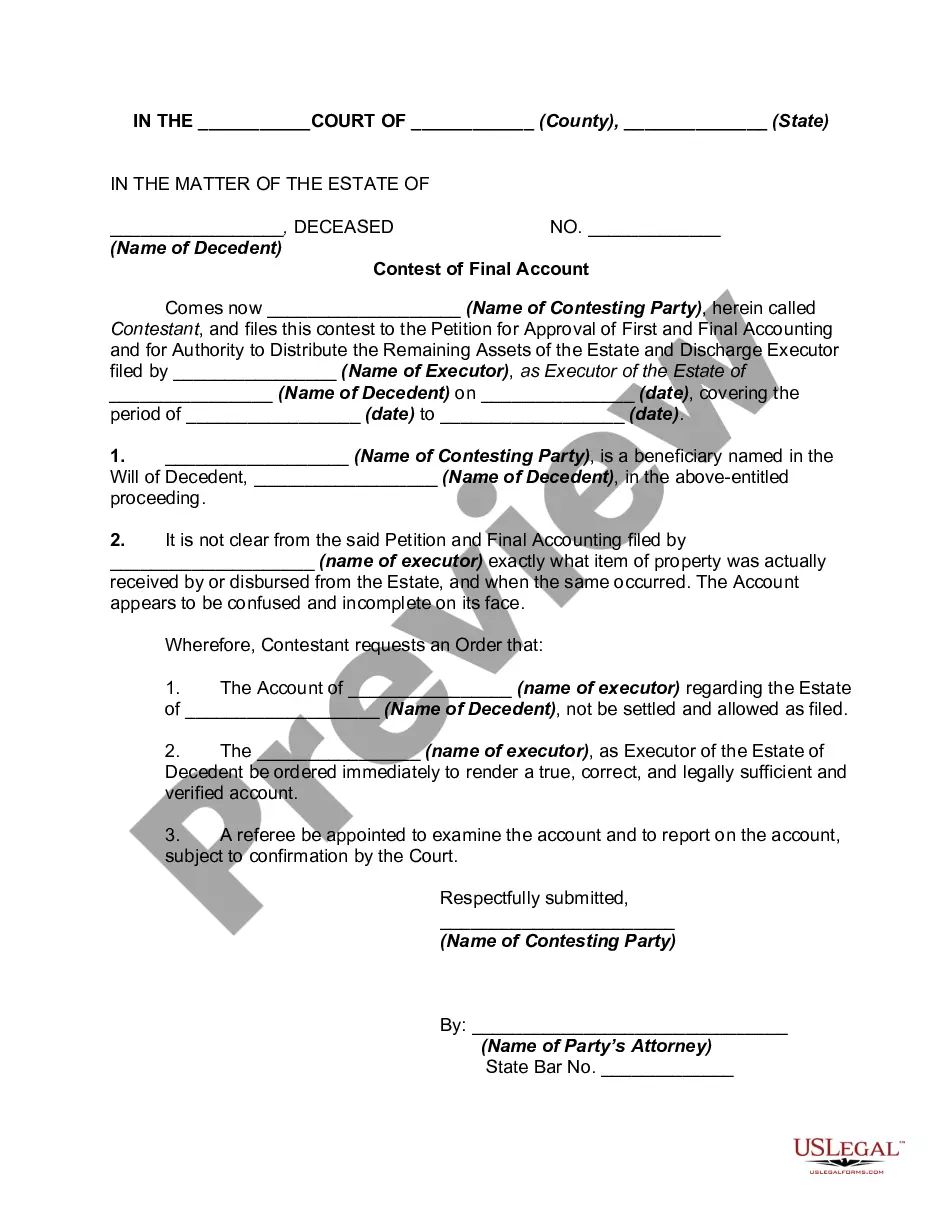
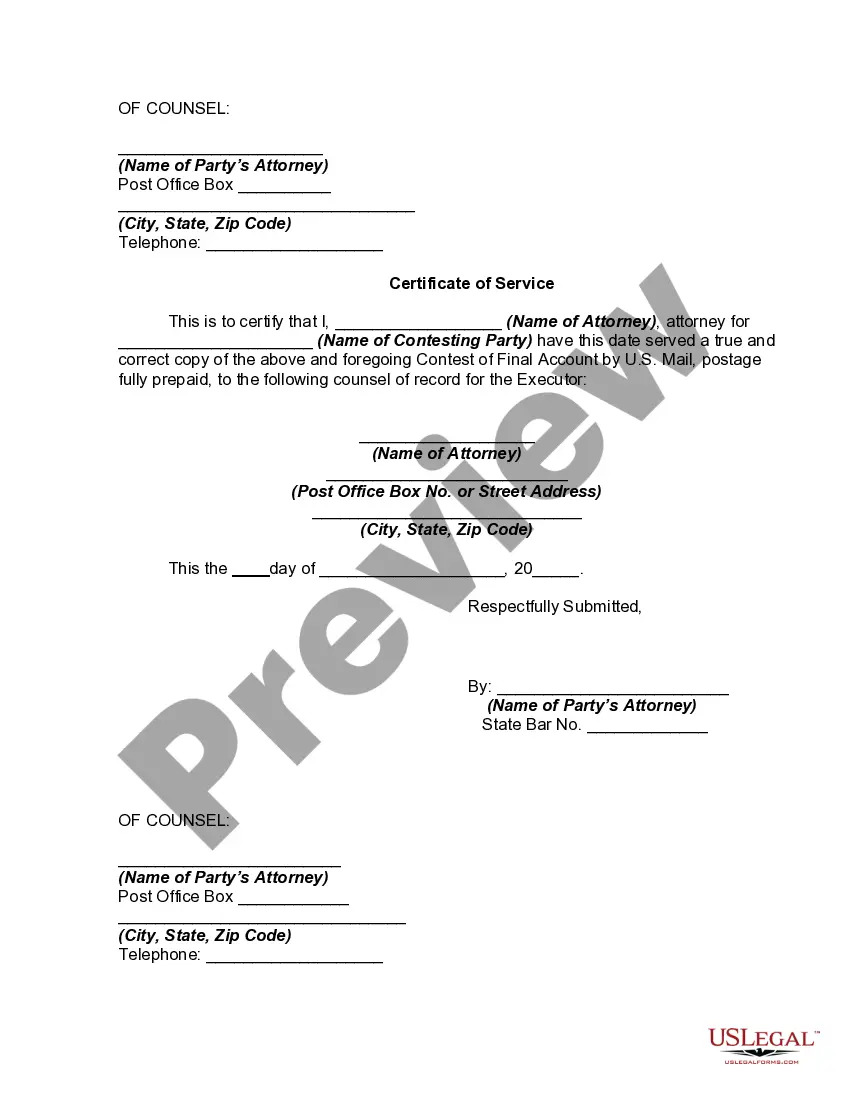
How to fill out Contest Of Final Account And Proposed Distributions In A Probate Estate?
It’s well-known that you can’t become a legal expert instantly, nor can you swiftly learn how to draft an Account Estate Form For Company without a specialized background.
Assembling legal paperwork is a lengthy process that necessitates specific education and competencies. So why not entrust the creation of the Account Estate Form For Company to the experts.
With US Legal Forms, one of the most extensive legal template collections, you can access everything from court documents to templates for internal communication.
You can regain access to your documents from the My documents section at any time.
If you’re an existing customer, you can simply Log In, and find and download the template from the same section.
- Identify the document you require using the search bar at the top of the page.
- View it (if this option is available) and review the accompanying description to see if the Account Estate Form For Company is what you need.
- If you're searching for a different template, start your search once more.
- Create a free account and select a subscription plan to acquire the template.
- Click Buy now. Once the payment is completed, you can download the Account Estate Form For Company, complete it, print it, and send or mail it to the intended recipients or organizations.
Form popularity
FAQ
So call us today! Create an Inventory of Your Possessions. ... Consider Your Family's Needs After Your Death. ... Decide Who Your Beneficiaries Will Be. ... Indicate How You Want Your Estate Divided. ... Store Your Documents Properly. ... Update Your Estate Plan Regularly. ... Seek Help from a Trusted Estate Planning Lawyer.
The executor statement of account should include: List of all debts and assets submitted with the application for probate. List of every cent that went out of and came into the estate, including the date. Reconciliation of current amount in bank account with everything that went out of and came into the estate.
Before you can go to a bank to open an estate bank account, you need to obtain an estate EIN or estate employer identification number. It may seem bizarre to you that a person's estate needs an EIN, but when you think about what an estate actually is, it makes a bit more sense.
Once you've been appointed executor or personal representative by the probate court, you'll probably want to open a bank account in the name of the estate. Usually, an account for an estate is registered in this or a similar way: "Estate of Gerald S. Smith, Deceased, Pamela S. Smith, executor."
You should add together the totals for assets, changes, and income, then take away the totals for liabilities and expenses. This final figure should then be divided into the appropriate portions and then assigned to the list of beneficiaries.