Account Estate Application Form Ontario
Description
Get your form ready online
Our built-in tools help you complete, sign, share, and store your documents in one place.
Make edits, fill in missing information, and update formatting in US Legal Forms—just like you would in MS Word.
Download a copy, print it, send it by email, or mail it via USPS—whatever works best for your next step.
Sign and collect signatures with our SignNow integration. Send to multiple recipients, set reminders, and more. Go Premium to unlock E-Sign.
If this form requires notarization, complete it online through a secure video call—no need to meet a notary in person or wait for an appointment.
We protect your documents and personal data by following strict security and privacy standards.

Make edits, fill in missing information, and update formatting in US Legal Forms—just like you would in MS Word.

Download a copy, print it, send it by email, or mail it via USPS—whatever works best for your next step.

Sign and collect signatures with our SignNow integration. Send to multiple recipients, set reminders, and more. Go Premium to unlock E-Sign.

If this form requires notarization, complete it online through a secure video call—no need to meet a notary in person or wait for an appointment.

We protect your documents and personal data by following strict security and privacy standards.
Looking for another form?






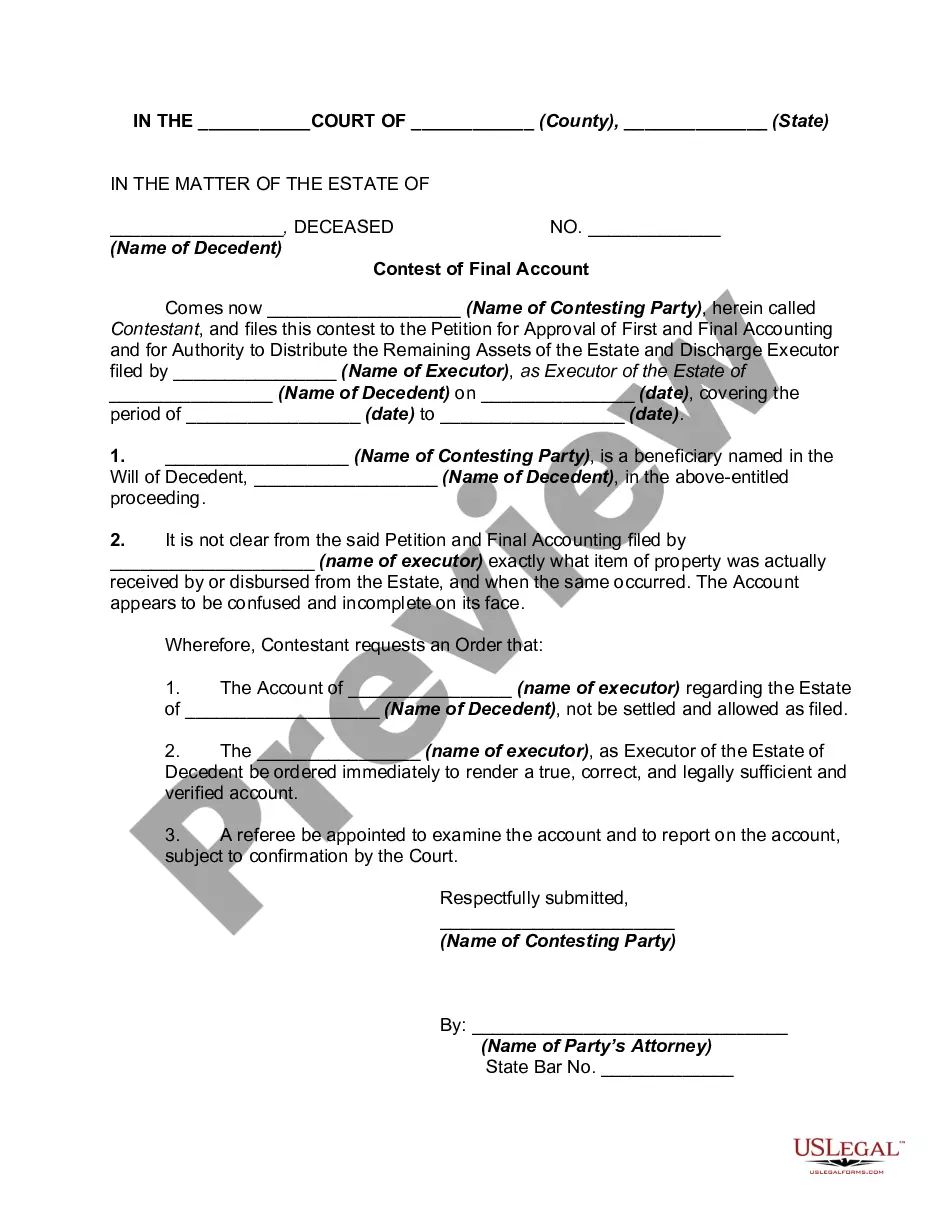
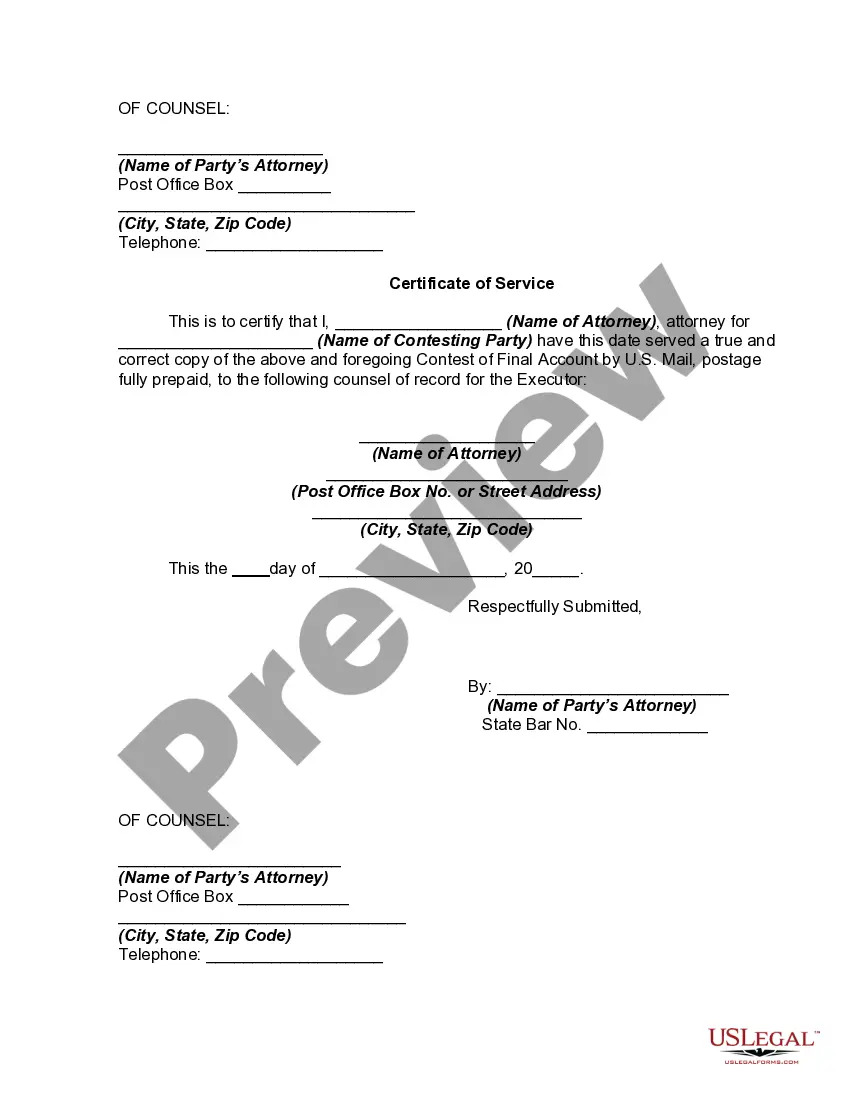
How to fill out Contest Of Final Account And Proposed Distributions In A Probate Estate?
The Account Estate Application Form Ontario displayed on this page is a reusable official template created by experienced attorneys in compliance with national and local laws.
For over 25 years, US Legal Forms has offered individuals, companies, and legal experts with more than 85,000 validated, state-specific documents for any business and personal situation. It is the fastest, most direct, and most reliable method to acquire the paperwork you require, as the service ensures the utmost level of data protection and malware resistance.
Select the format you prefer for your Account Estate Application Form Ontario (PDF, DOCX, RTF) and save the document on your device.
- Search for the document you need and review it.
- Scan the sample you looked for and preview it or examine the form description to verify it meets your requirements. If it does not, use the search feature to find the correct one. Click Buy Now when you have located the template you need.
- Register and sign in.
- Choose the pricing plan that fits you and set up an account. Use PayPal or a credit card to make an immediate payment. If you already possess an account, Log In and verify your subscription to proceed.
- Obtain the editable template.
Form popularity
FAQ
The executor must provide proper accounting, in Court format, to beneficiaries in a timely manner. Note, however, that as a general rule the executor is not obliged to provide a) 'minute by minute' on-going reporting to beneficiaries, or b) all back up documentation (as in photocopies of expenses etc.
You should add together the totals for assets, changes, and income, then take away the totals for liabilities and expenses. This final figure should then be divided into the appropriate portions and then assigned to the list of beneficiaries.
If an estate is under $150,000 probate can be applied for through the small estate court process, otherwise, an estate must be probated through the more extensive application for estate certificate process.
All beneficiaries do not need to formally approve estate accounts; however, it is best practice for the Executor(s) and main beneficiaries to sign the estate accounts to show a legal agreement across all parties. Nevertheless, the beneficiaries are entitled to receive a copy of them and review the information.
In Ontario, probate is required when a deceased person's assets are held in their sole name. This includes assets such as real estate, bank accounts, investments, and personal property. If the assets are jointly held with someone else, probate may not be required.