Vivos Donors Purchase For Business
Description
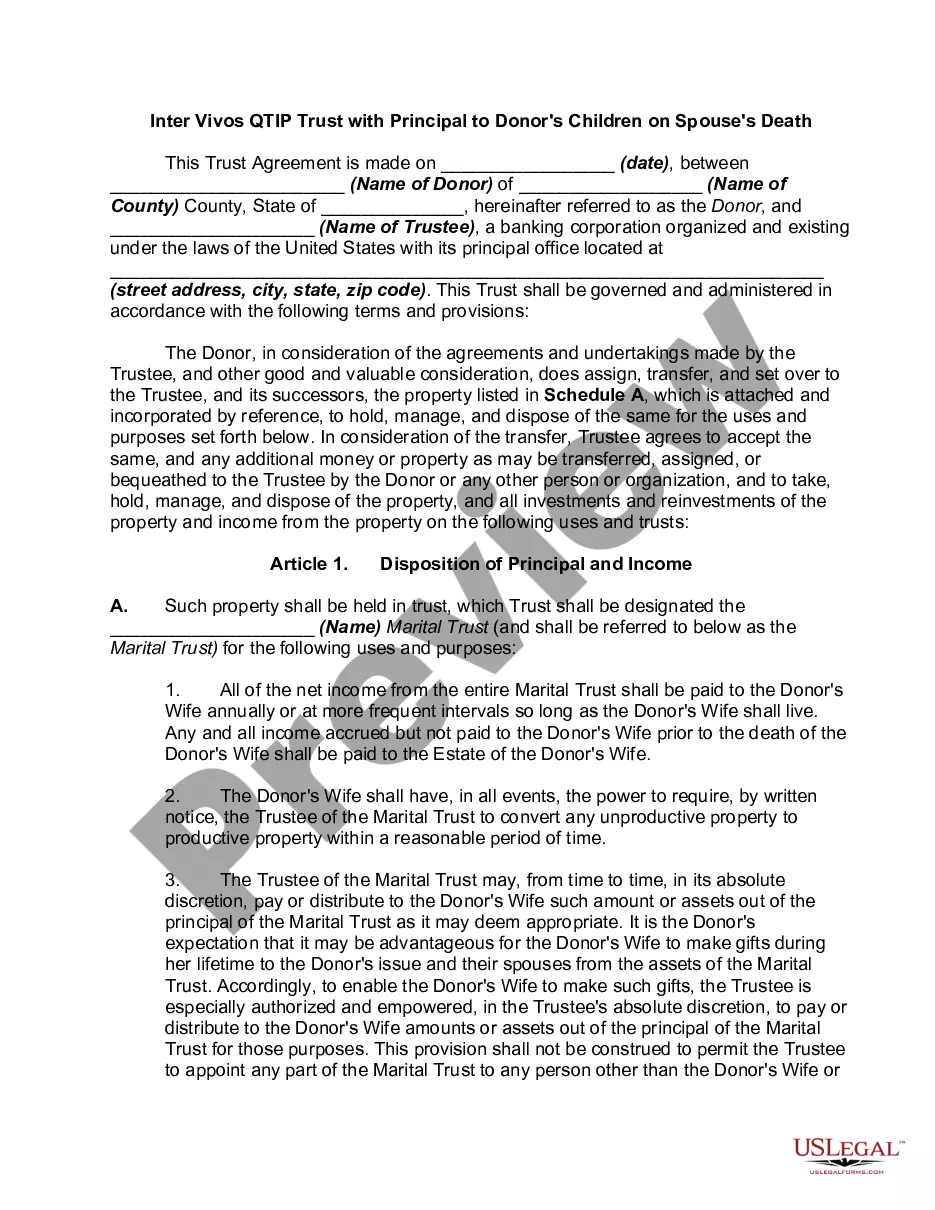
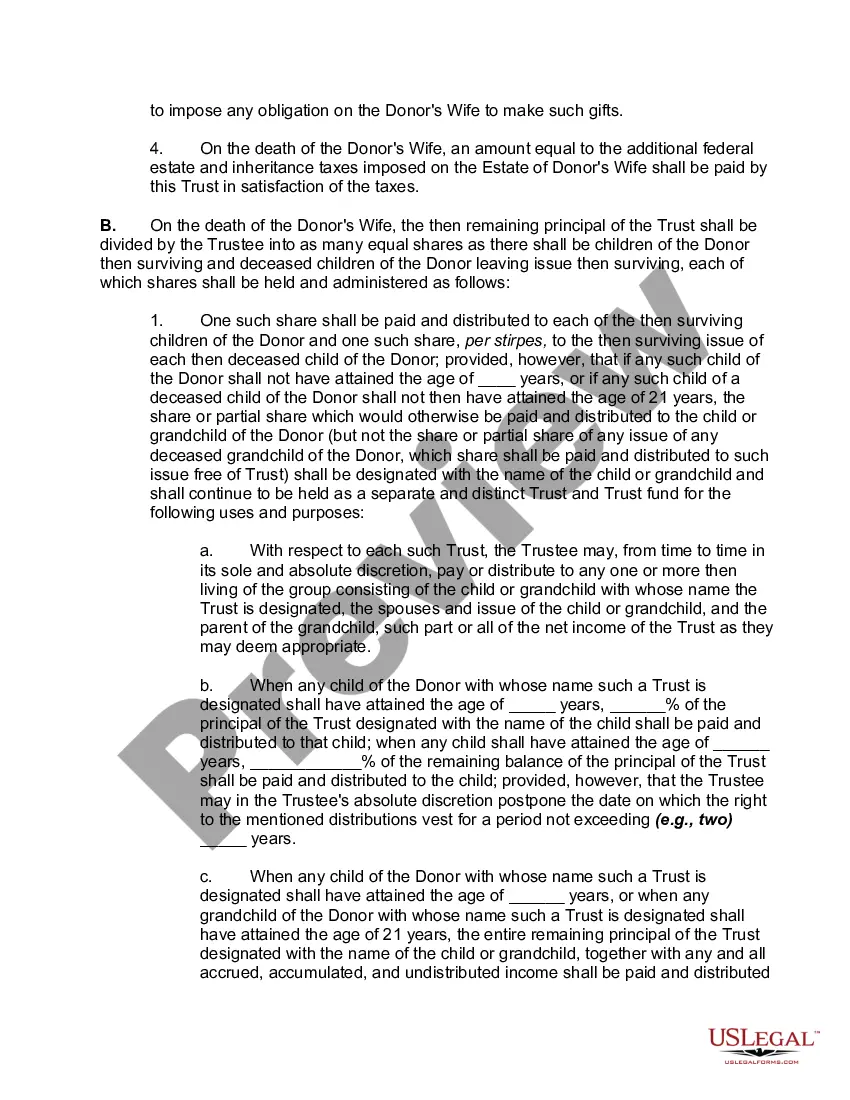
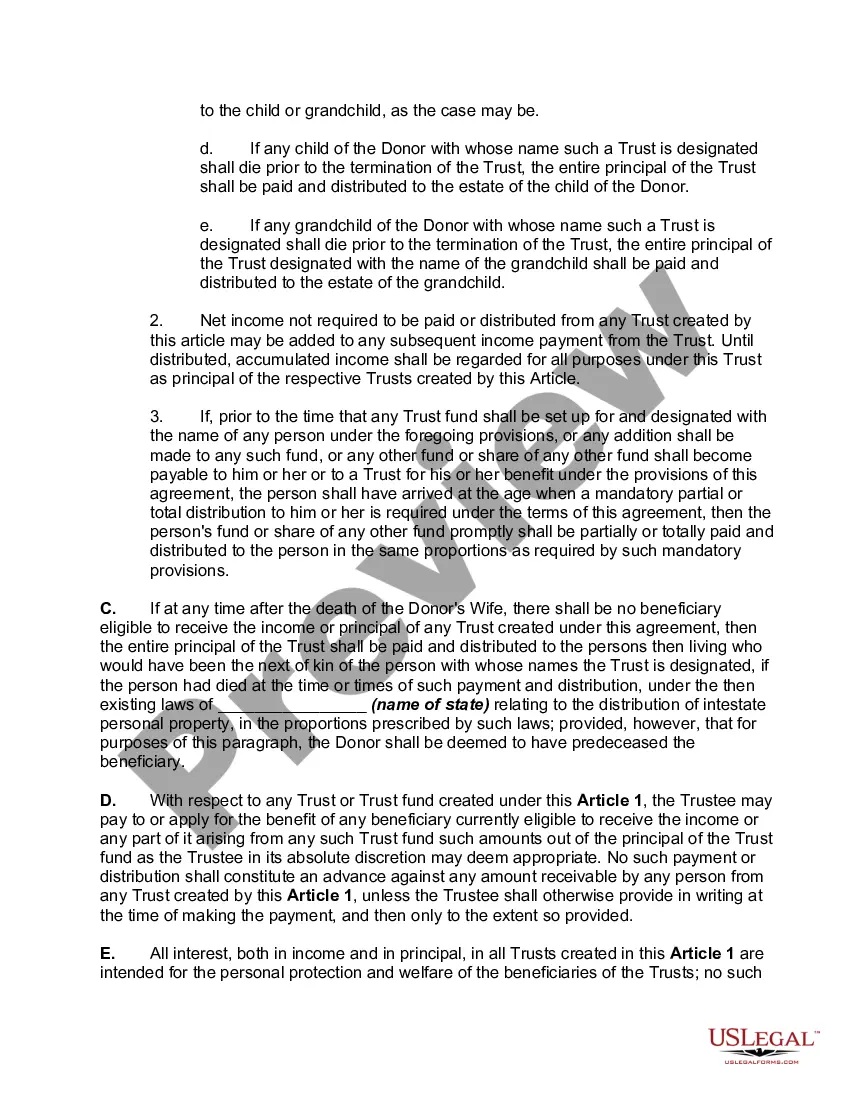
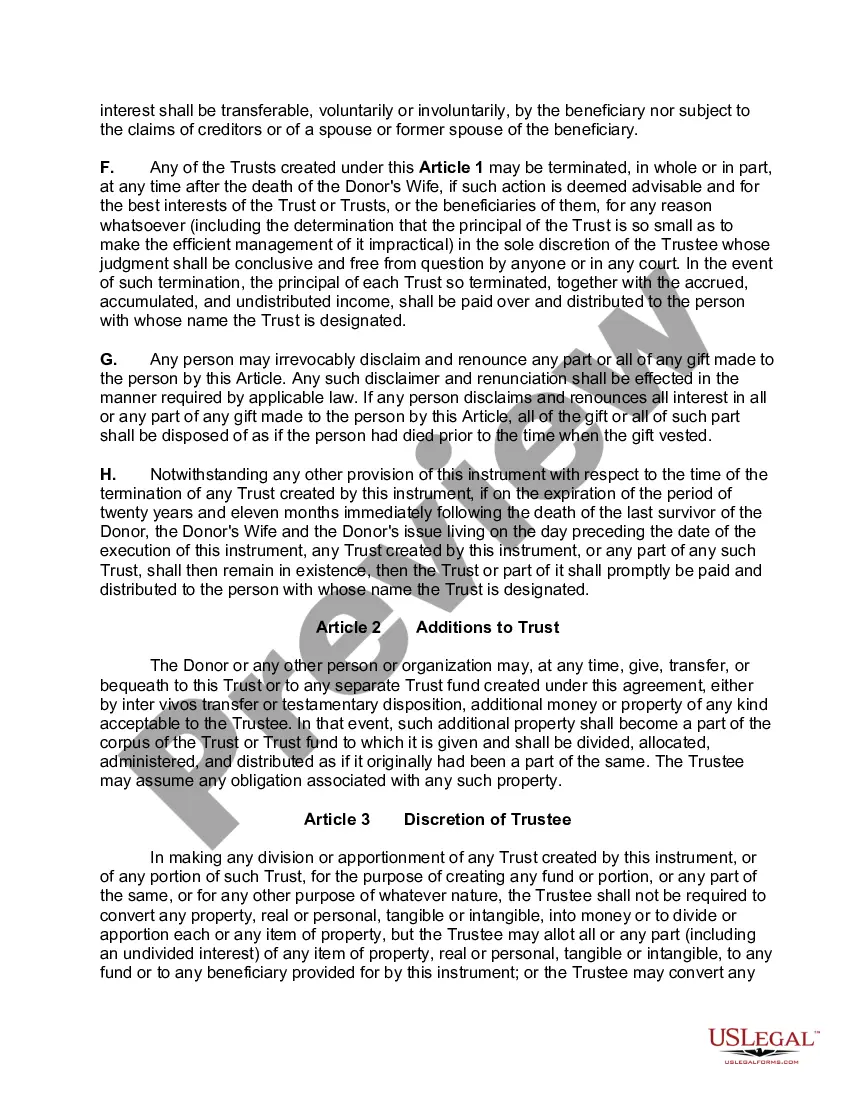

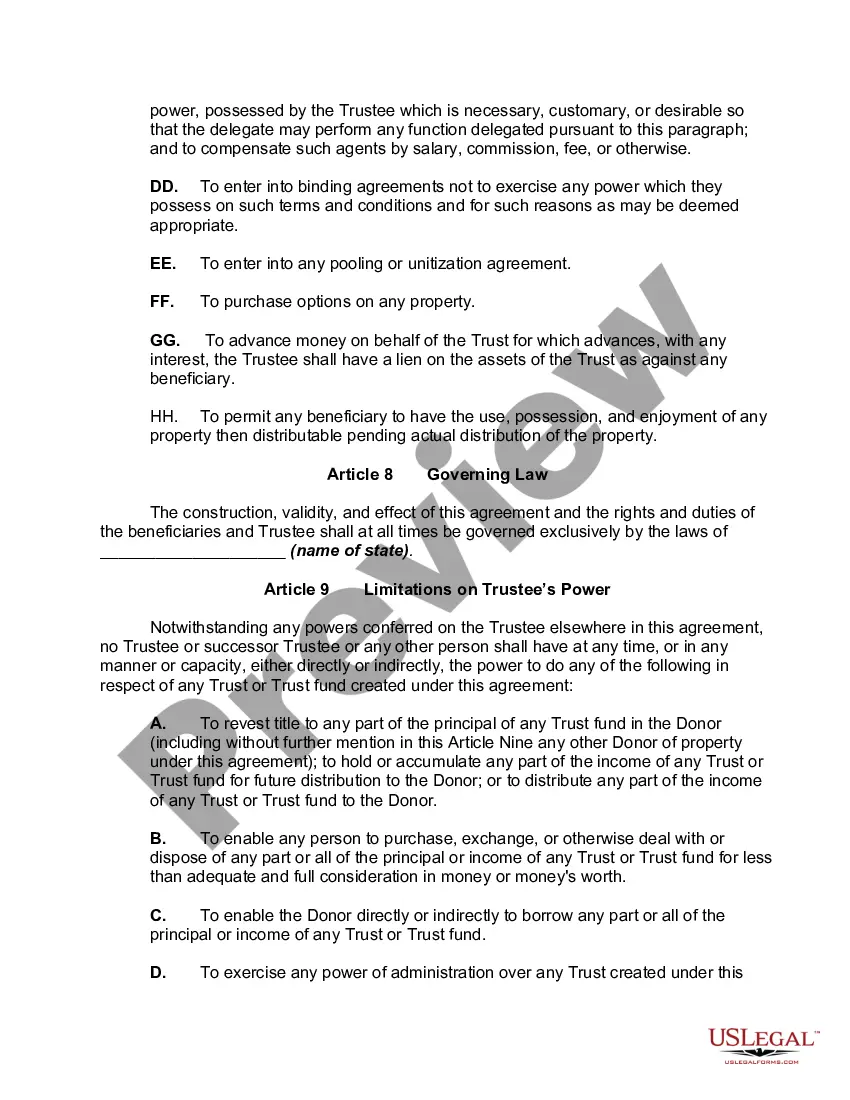

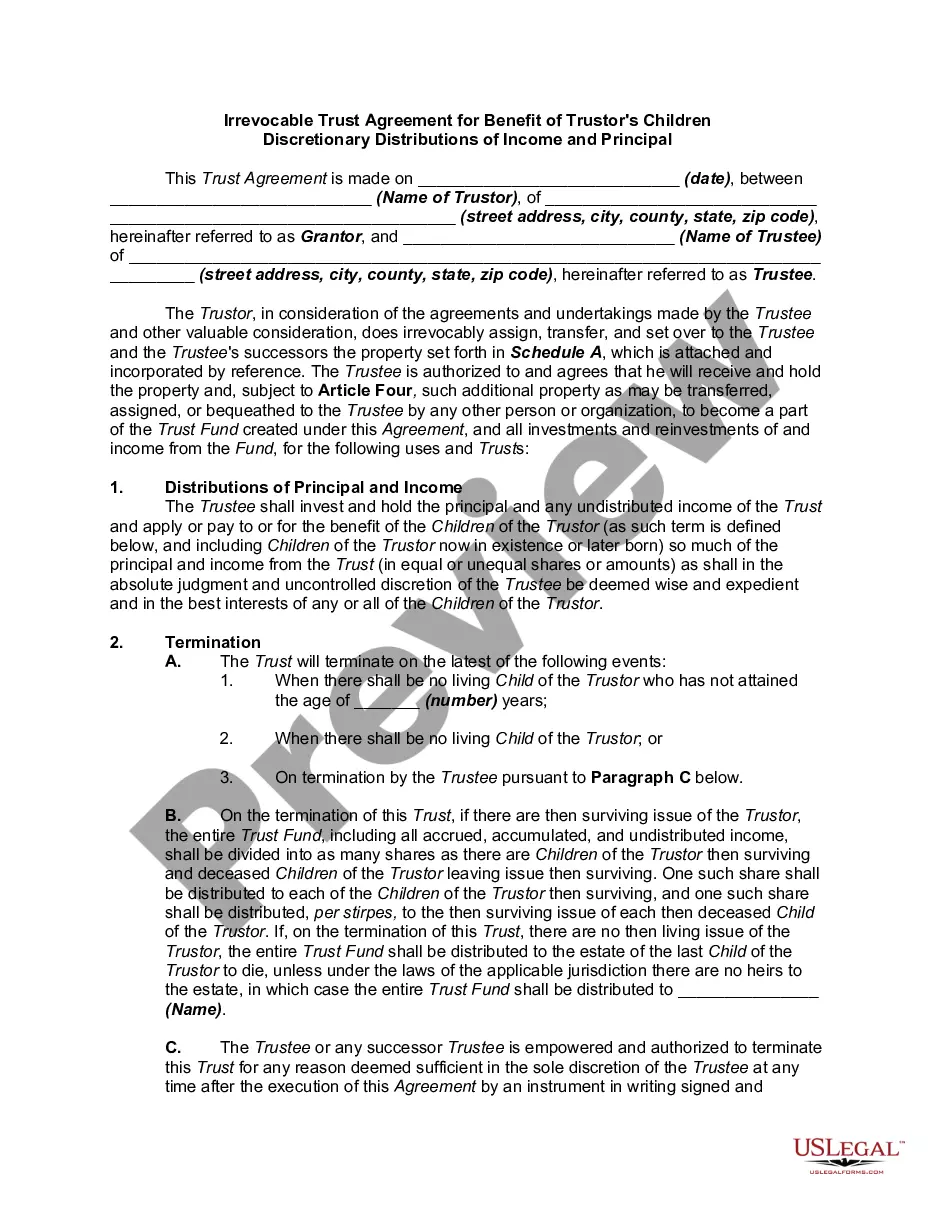
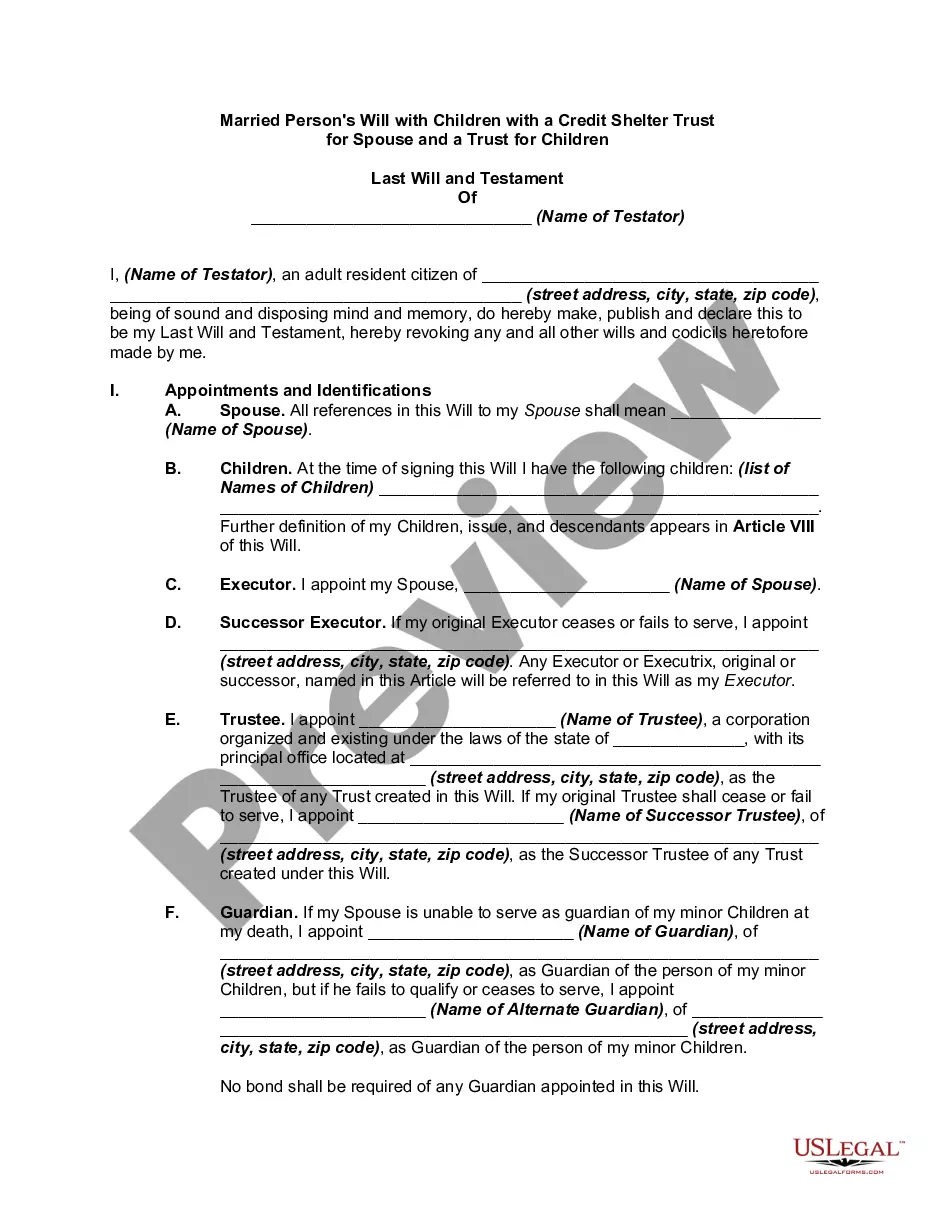
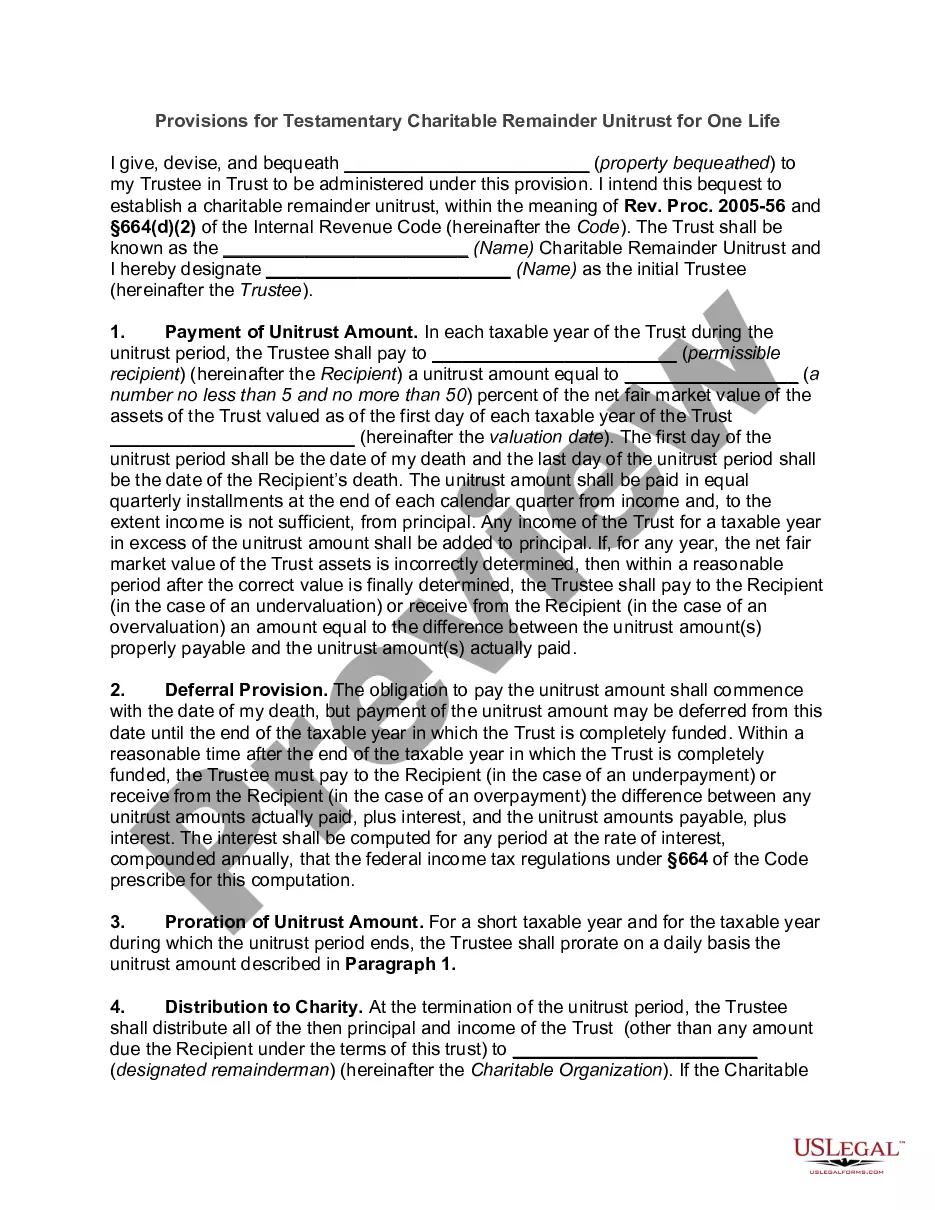

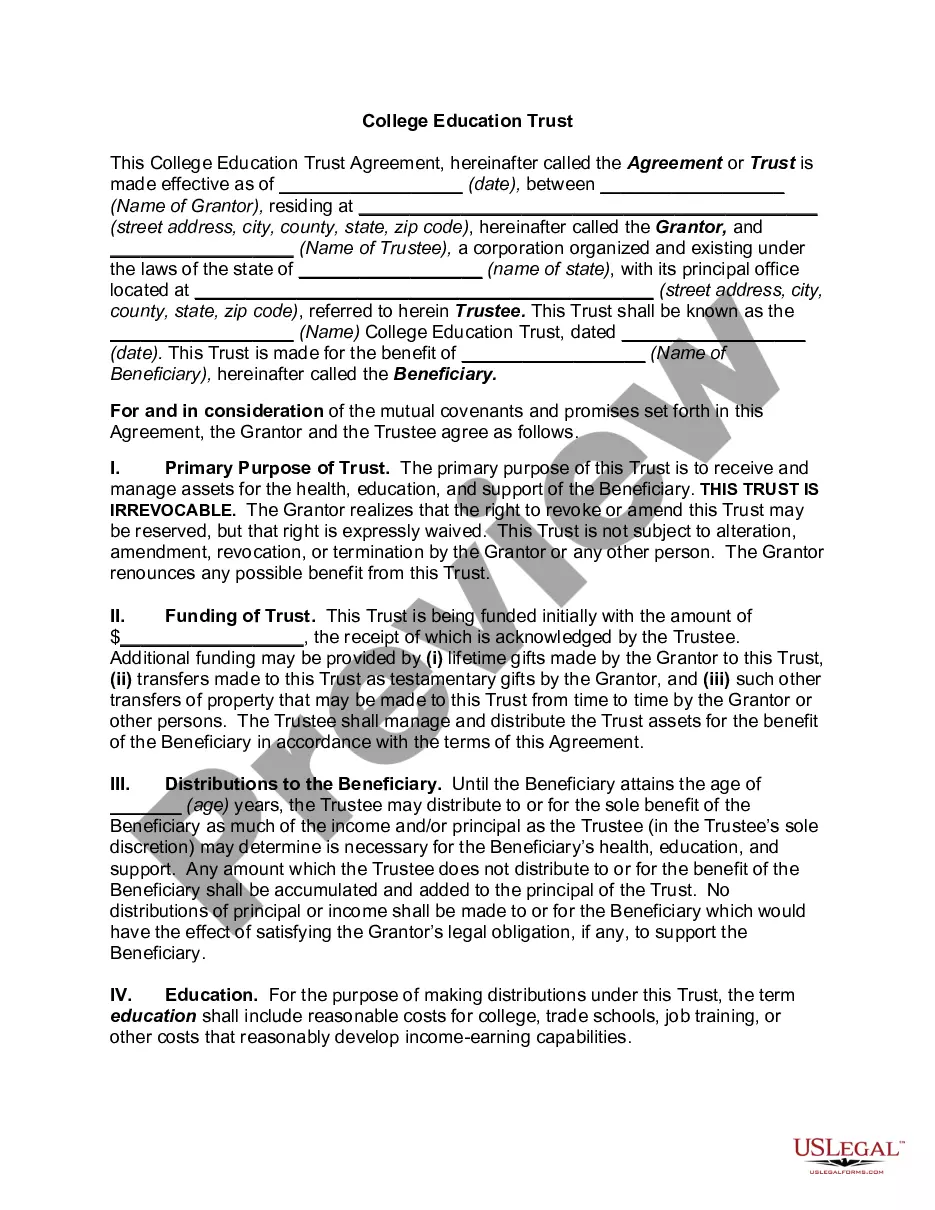


How to fill out Inter Vivos QTIP Trust With Principal To Donor's Children On Spouse's Death?
Whether for corporate reasons or personal issues, everyone must confront legal circumstances at some point in their life.
Completing legal paperwork requires meticulous consideration, starting with selecting the right form template.
Once it is saved, you can complete the form using editing software or print it and finish it by hand. With an extensive US Legal Forms catalog available, you will never have to waste time searching for the appropriate template online. Take advantage of the library’s straightforward navigation to find the right form for any situation.
- Obtain the form you require using the search bar or catalog navigation.
- Review the form’s details to confirm it aligns with your circumstances, state, and county.
- Click on the form’s preview to inspect it.
- If it is the incorrect document, return to the search option to locate the Vivos Donors Purchase For Business sample you need.
- Download the template if it meets your specifications.
- If you possess a US Legal Forms account, click Log in to access previously saved documents in My documents.
- If you don’t have an account yet, you may acquire the form by clicking Buy now.
- Choose the suitable pricing option.
- Fill out the account registration form.
- Choose your payment method: you can utilize a credit card or PayPal account.
- Choose the file format you prefer and download the Vivos Donors Purchase For Business.
Form popularity
FAQ
Form 709 is filed annually if you made gifts exceeding the annual exclusion amount. For Vivos donors purchasing for business, timely filing helps you stay compliant with tax laws. By keeping track of any gifts made throughout the year, you can prepare your Form 709 accurately. Regularly reviewing your gifting activities will make the process smoother during tax season.
You do not file Form 709 with your regular income tax return. Instead, Form 709 is submitted separately to report gifts made during the year, which is essential for Vivos donors purchasing for business. This separation helps maintain clarity in your financial records and ensures that all tax matters are handled correctly. It is wise to keep copies for your records and consult with a tax professional if needed.
In the Philippines, donor's tax is filed with the Bureau of Internal Revenue (BIR). You must submit your forms and payment at your local BIR office to comply with tax regulations related to Vivos donors purchasing for business. It is essential to gather all necessary documents and information beforehand to ensure a smooth filing process. Additionally, using dedicated platforms can provide guidance and assistance with your tax obligations.
Yes, Form 709 can be filed electronically, which streamlines the process for Vivos donors purchasing for business. E-filing offers convenience and efficiency, allowing you to complete your submission securely online. Just ensure you follow all the required steps to avoid any potential issues. Utilizing online platforms can enhance your experience and maintain accurate records.
An example of an inter vivos gift would be a parent transferring the title of a house to their child while both are alive. This act exemplifies immediate ownership and use, distinct from estate planning gifts. In the context of Vivos donors purchase for business, such examples serve to illustrate the operational benefits and practices that can affect strategic asset management.
Another term often used to describe inter vivos is 'living gift' or 'living transfer.' These terms highlight the concept of transferring assets and properties during one’s lifetime rather than through a will or testament. For Vivos donors purchase for business, grasping this terminology ensures clarity and ease during discussions surrounding asset transfers.
Inter vivos conveyance refers to the transfer of property or rights between living parties through a legal instrument, such as a deed. This conveys ownership effectively between the parties involved and negates the need for posthumous approval. For a smooth Vivos donors purchase for business, understanding this process is vital in ensuring compliant transactions.
The two main types of inter vivos trusts are revocable and irrevocable trusts. A revocable trust allows the grantor to retain control and modify the trust during their lifetime, while an irrevocable trust removes that control and cannot be altered once established. Understanding these types is crucial for Vivos donors purchase for business, as they affect how assets are managed and owned.
A gift inter vivos is a transfer of property or assets from one living person to another, executed without any exchange of consideration. This kind of gift is meant to be permanent and is not contingent on future events, such as death. In business contexts, Vivos donors purchase for business can significantly impact asset distribution and tax implications.
Inter vivos is a Latin term that translates to 'between the living.' It refers to legal transactions or gifts that occur while both the giver and recipient are alive. This concept is particularly relevant in the context of Vivos donors purchase for business, as it emphasizes the direct transfer of assets and obligations without waiting for a successor to assume ownership.