Qtip Trust Principal Donors Spouses For The Environment
Description

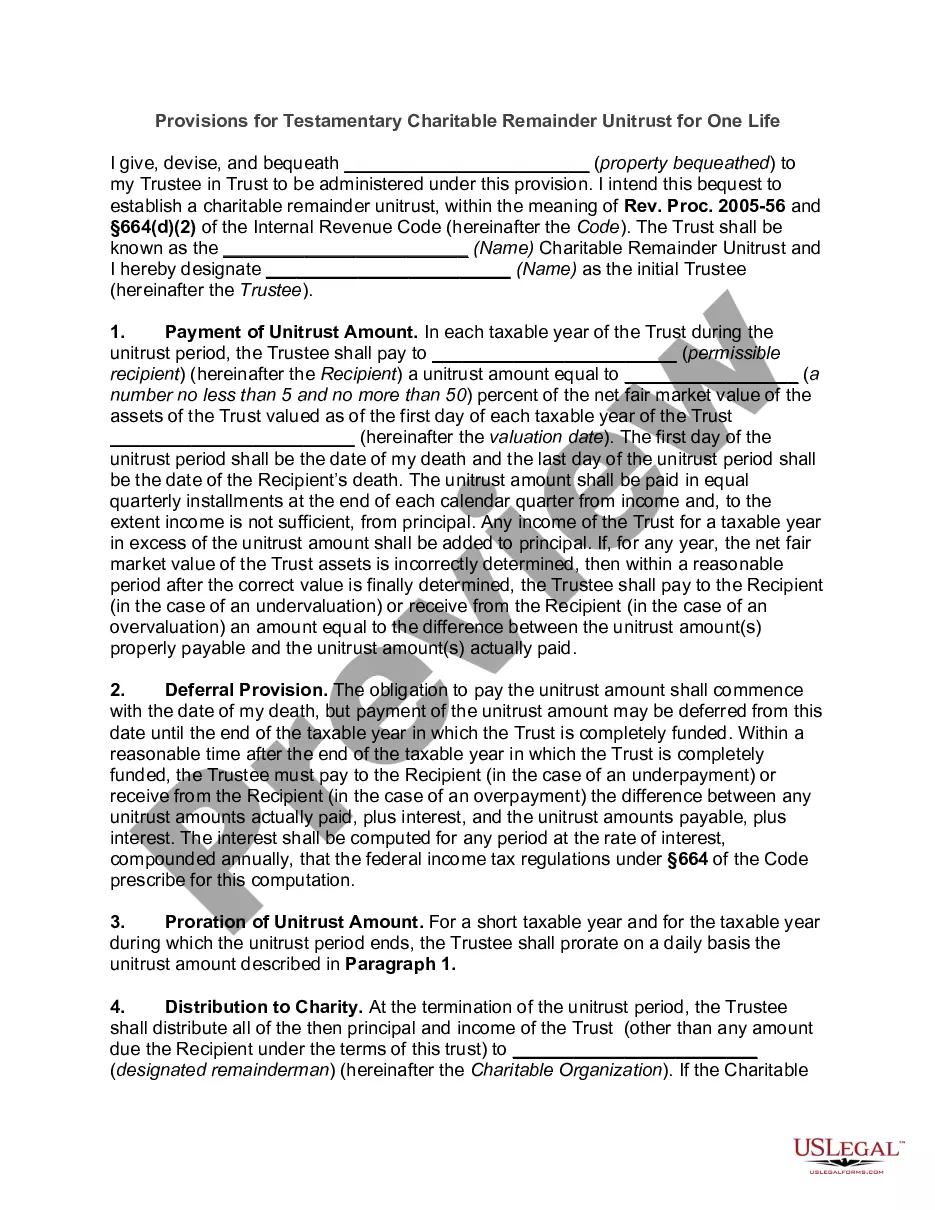
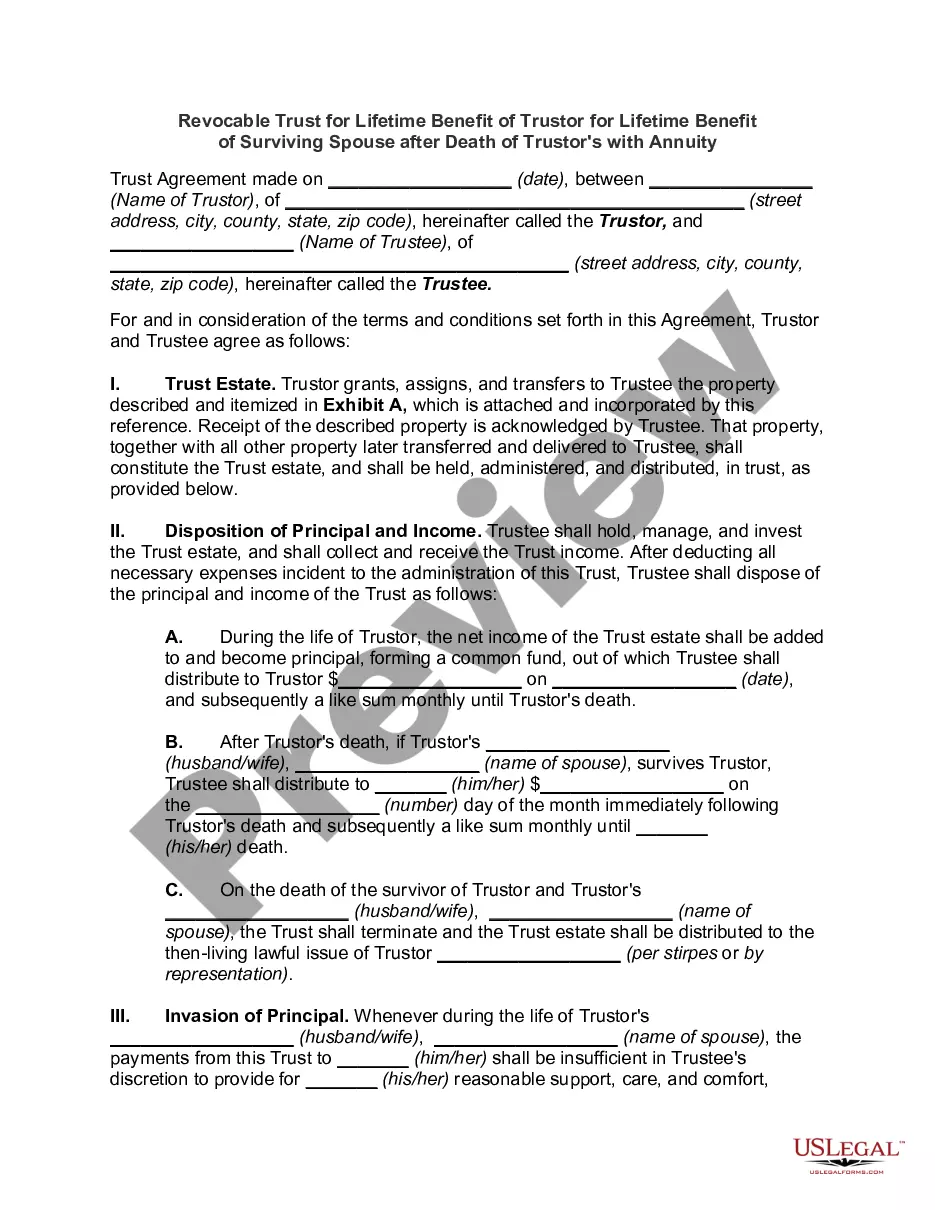
Get your form ready online
Our built-in tools help you complete, sign, share, and store your documents in one place.
Make edits, fill in missing information, and update formatting in US Legal Forms—just like you would in MS Word.
Download a copy, print it, send it by email, or mail it via USPS—whatever works best for your next step.
Sign and collect signatures with our SignNow integration. Send to multiple recipients, set reminders, and more. Go Premium to unlock E-Sign.
If this form requires notarization, complete it online through a secure video call—no need to meet a notary in person or wait for an appointment.
We protect your documents and personal data by following strict security and privacy standards.

Make edits, fill in missing information, and update formatting in US Legal Forms—just like you would in MS Word.

Download a copy, print it, send it by email, or mail it via USPS—whatever works best for your next step.

Sign and collect signatures with our SignNow integration. Send to multiple recipients, set reminders, and more. Go Premium to unlock E-Sign.

If this form requires notarization, complete it online through a secure video call—no need to meet a notary in person or wait for an appointment.

We protect your documents and personal data by following strict security and privacy standards.
Looking for another form?


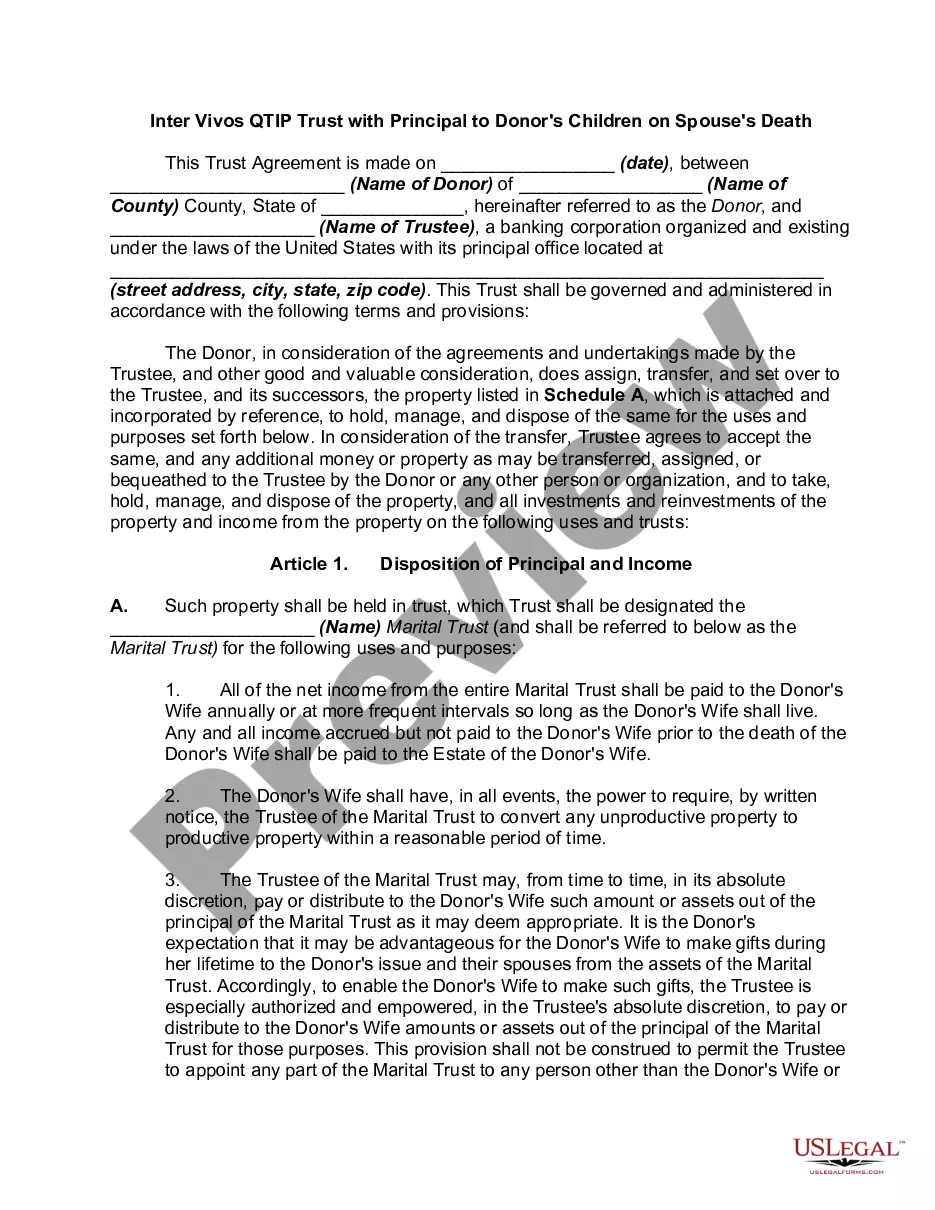
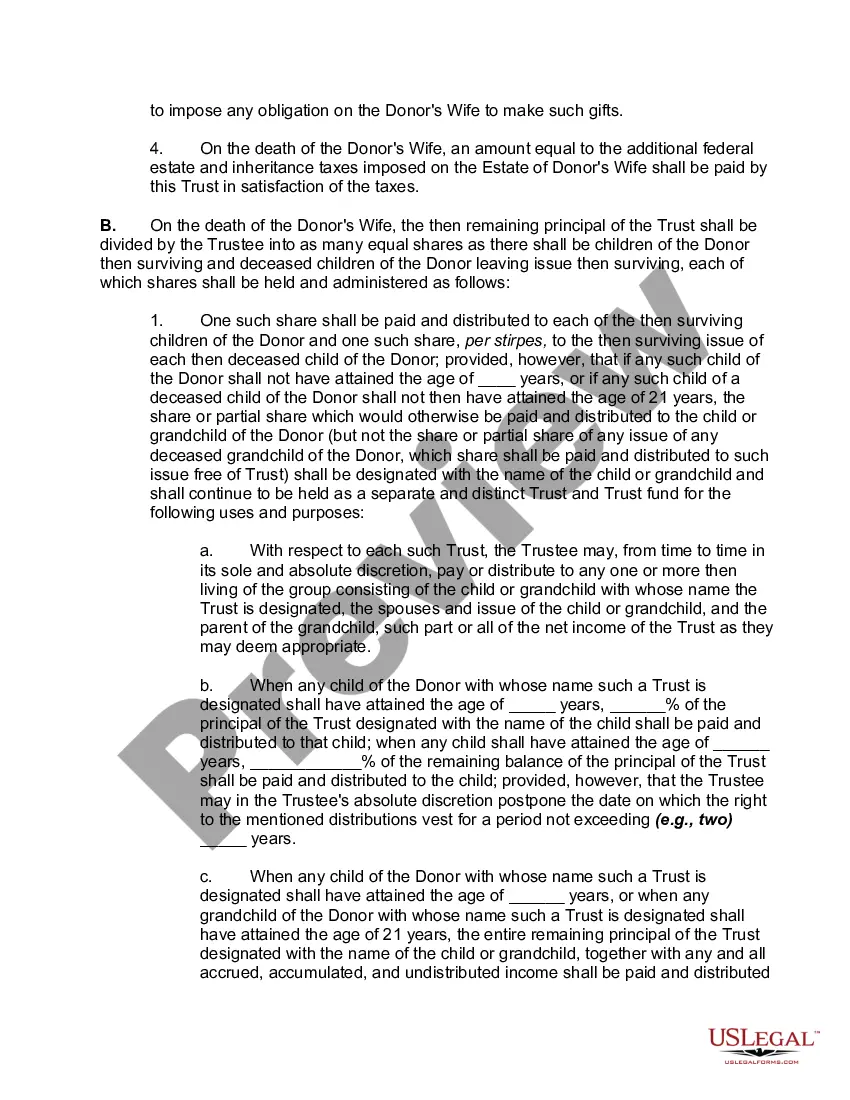
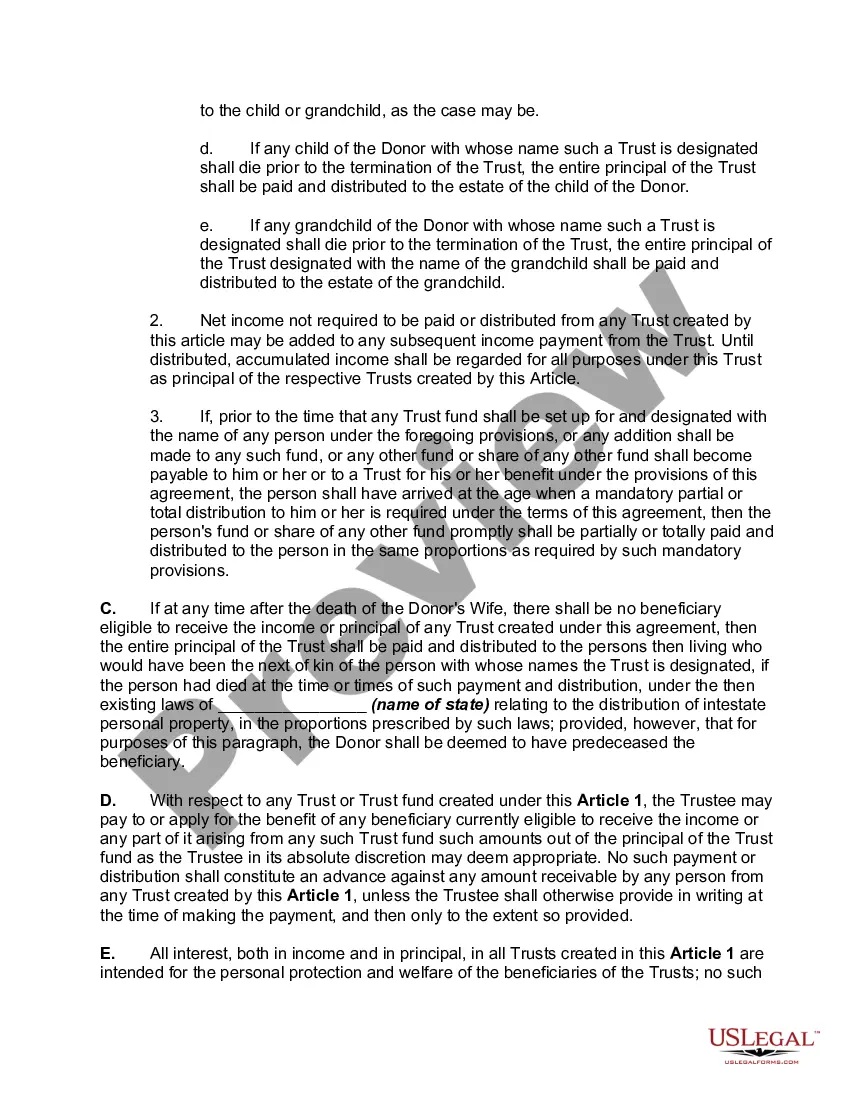
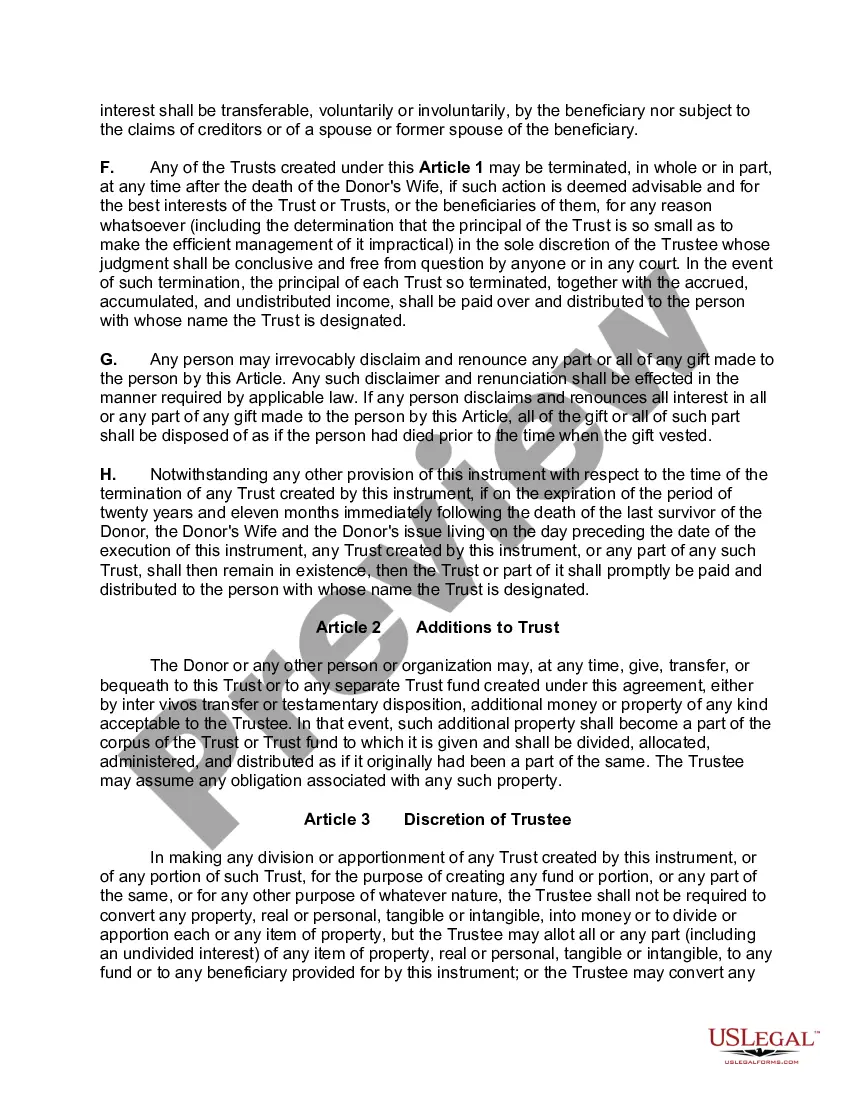
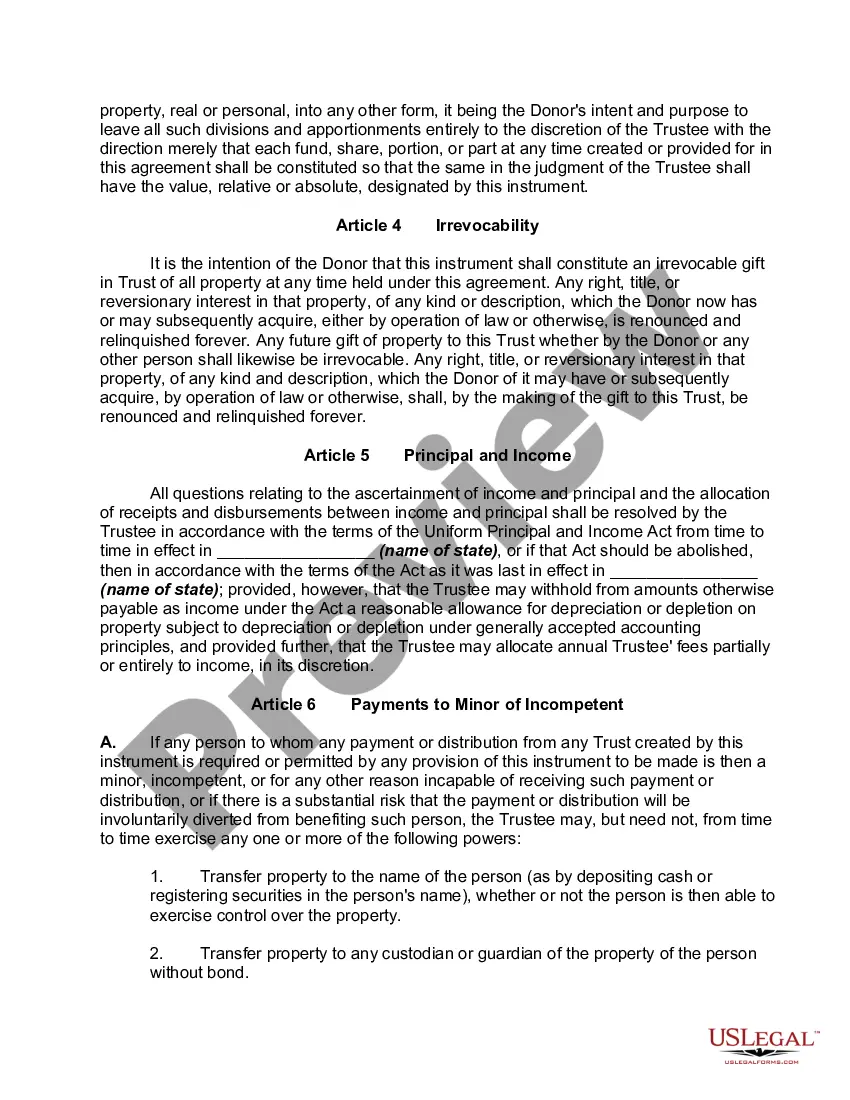
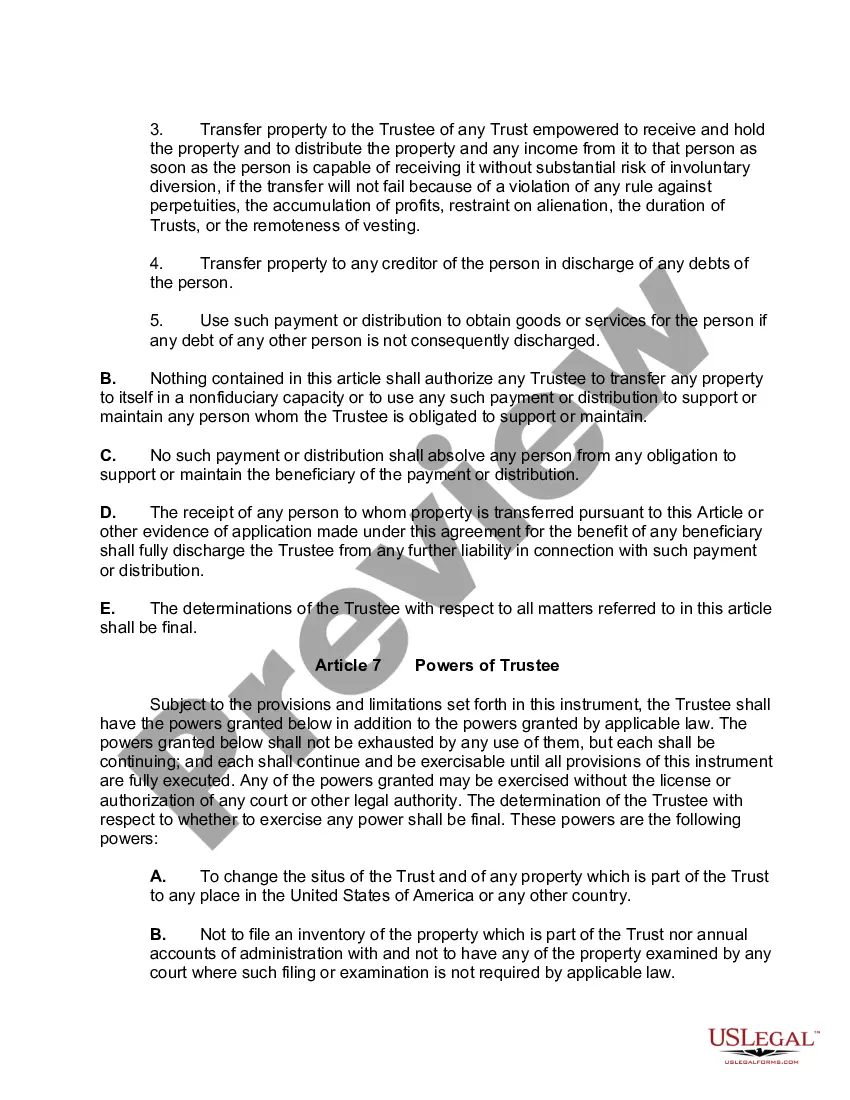
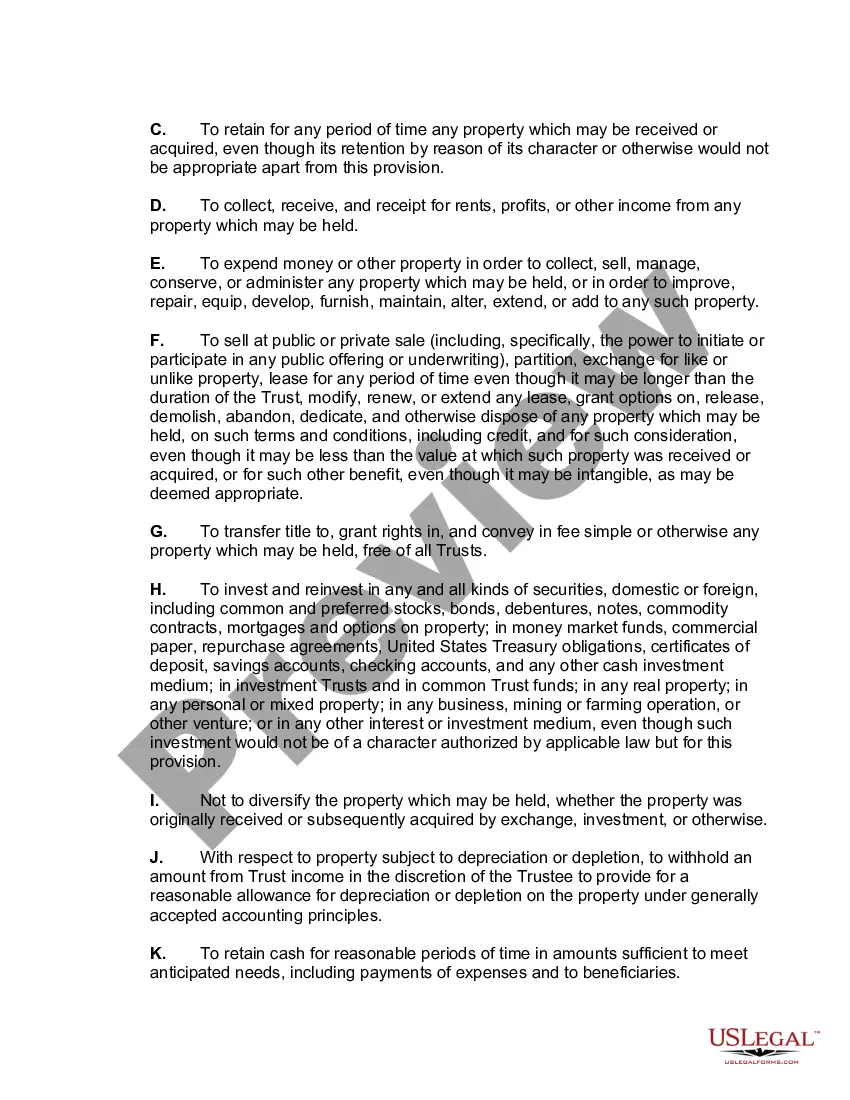
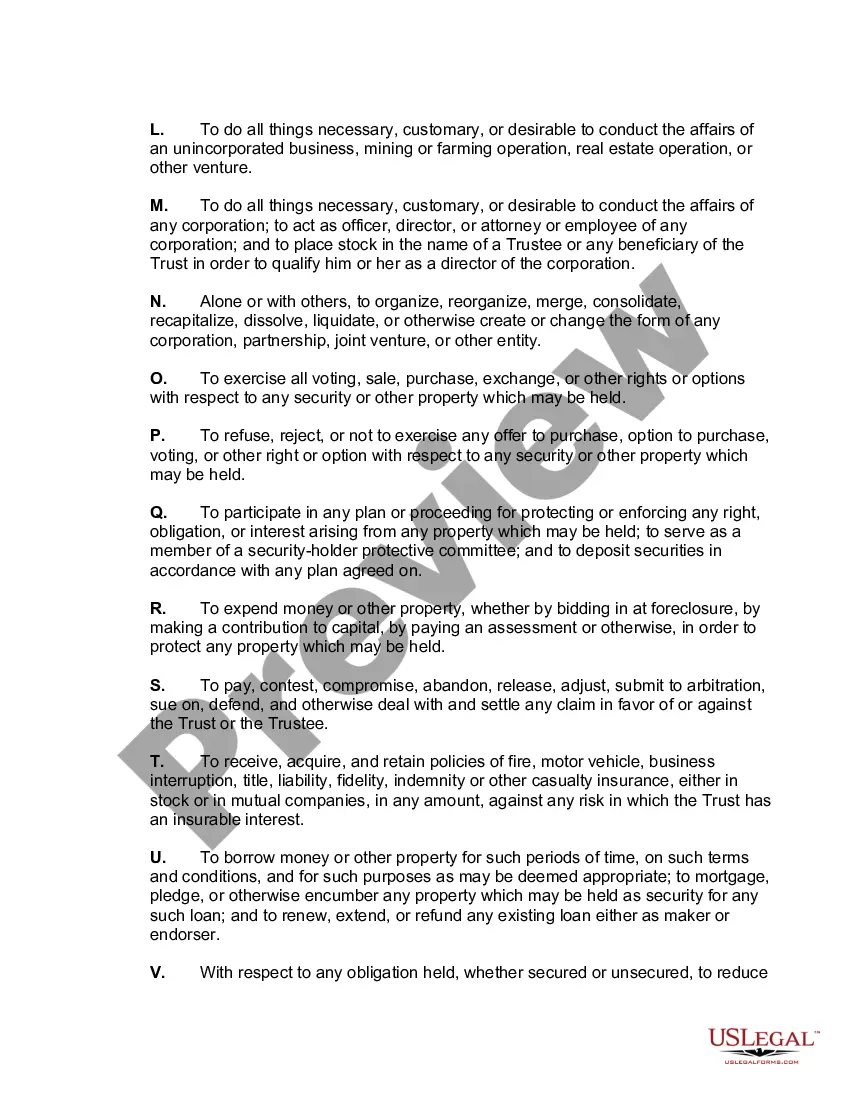
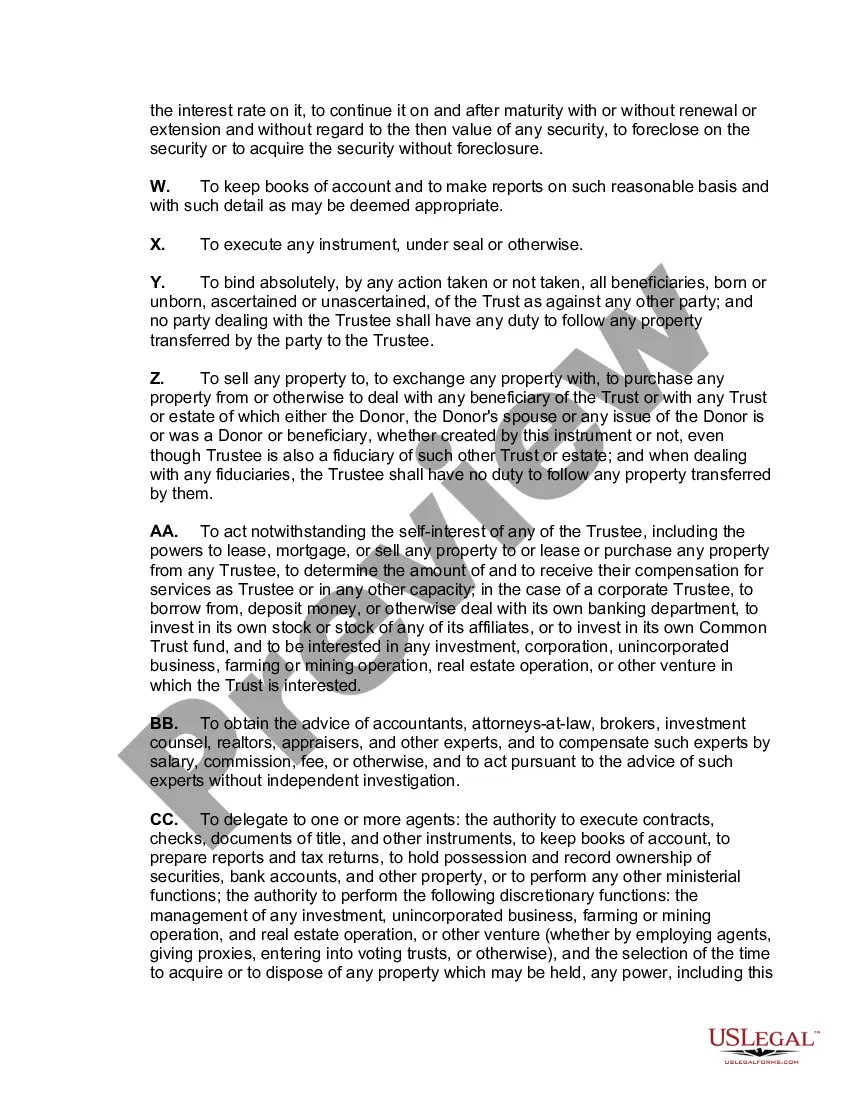
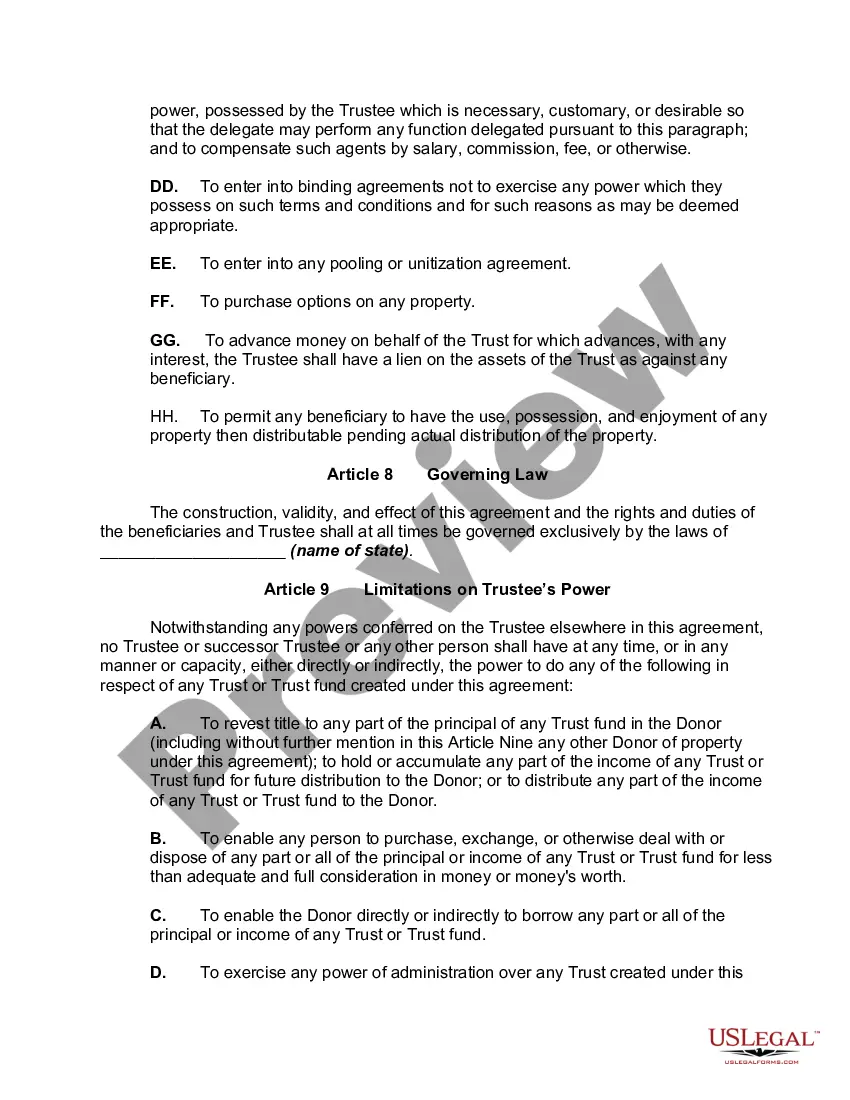
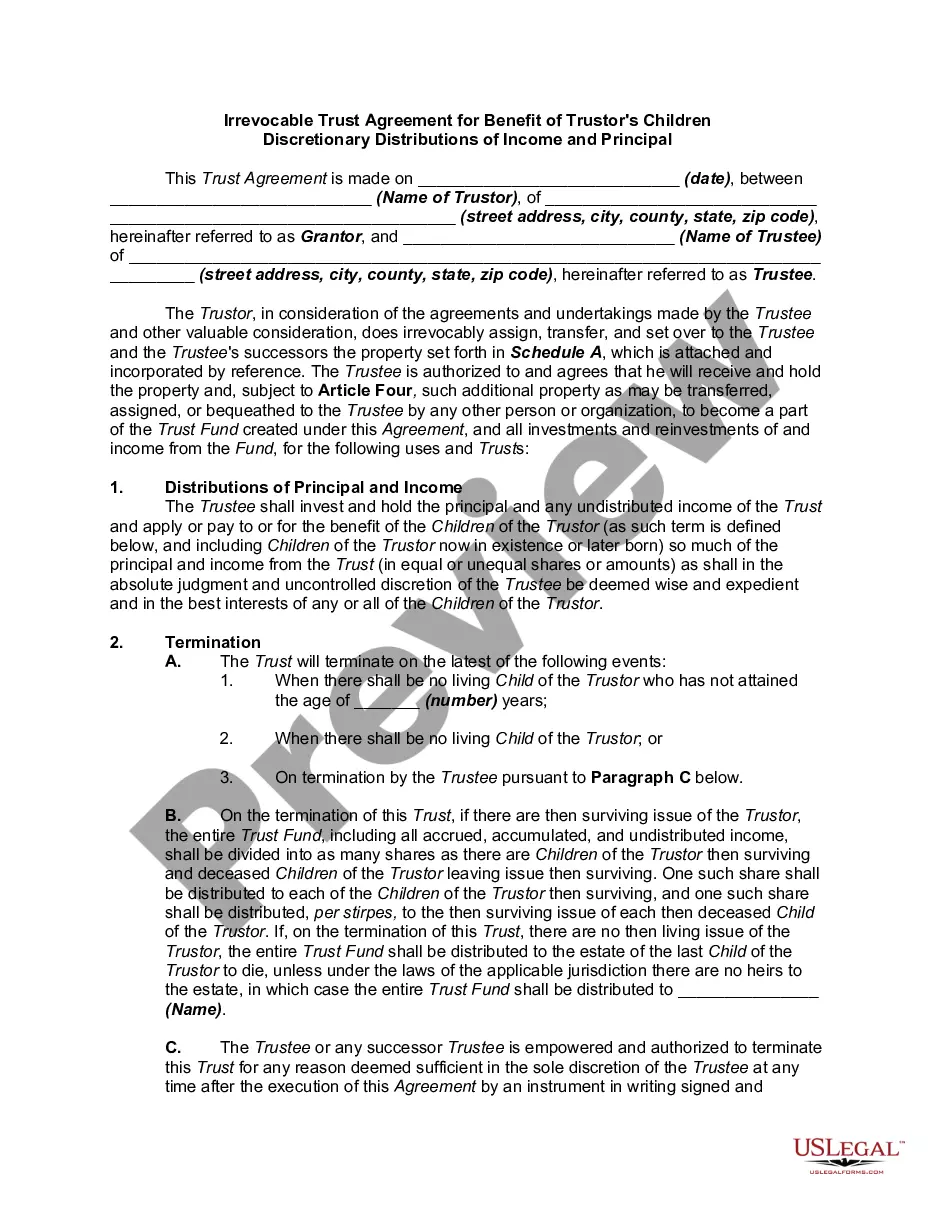
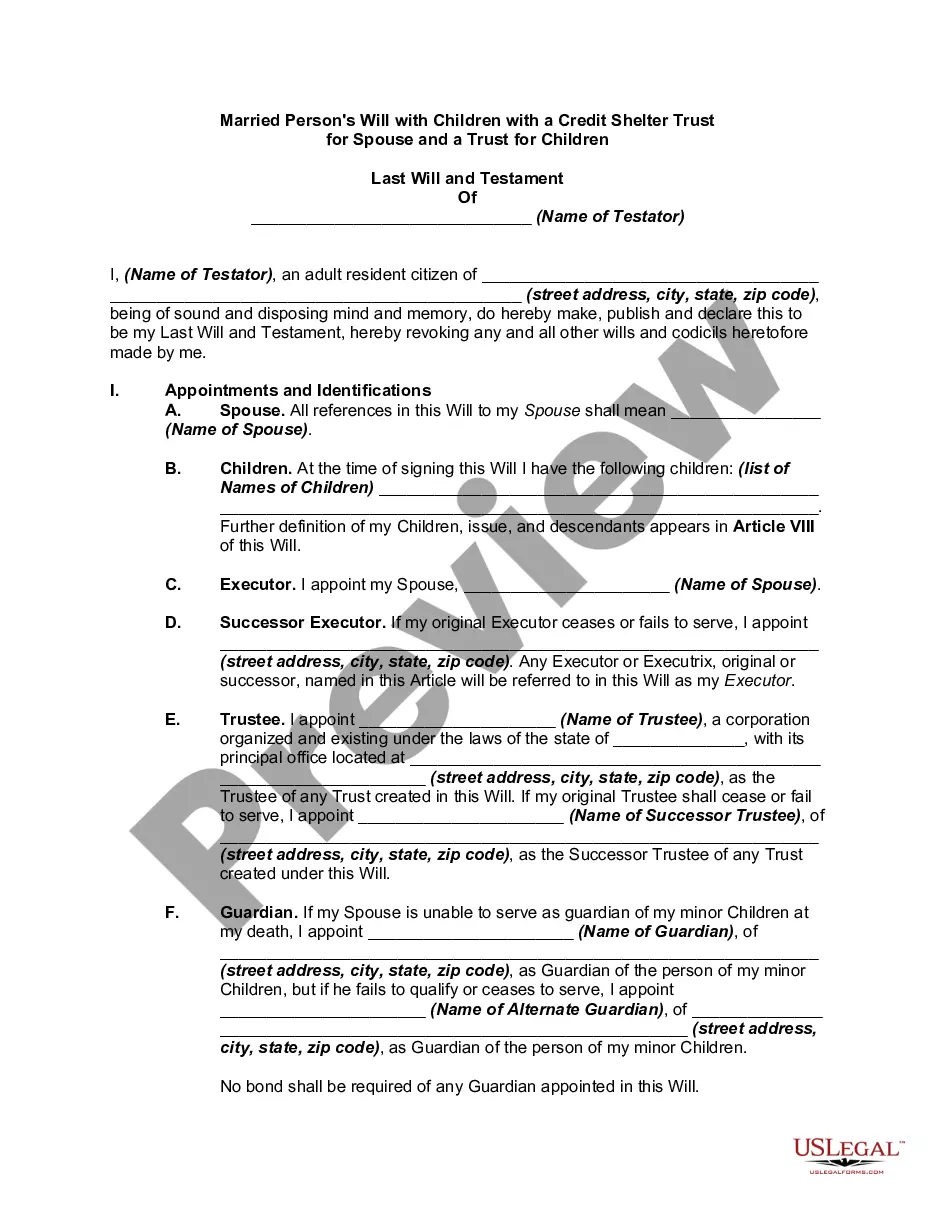
How to fill out Inter Vivos QTIP Trust With Principal To Donor's Children On Spouse's Death?
- Log in to your US Legal Forms account if you're a returning user. Make sure to check the status of your subscription to avoid any interruptions.
- If this is your first visit, explore the comprehensive form library and input your requirements in the Search bar to find the appropriate document.
- Preview the selected form and review its description to confirm it aligns with your local regulations and needs.
- Once you identify the correct form, proceed to purchase. Click on the 'Buy Now' button and choose the subscription plan that best suits you.
- Complete the transaction by entering your payment details or using your PayPal account for a seamless checkout process.
- After completing your order, download the document to your device. Access it anytime through the 'My Forms' section in your profile.
In conclusion, US Legal Forms simplifies the daunting task of legal document acquisition by providing a robust library and expert assistance tailored to your needs. This service empowers you to focus on your environmental objectives without getting bogged down by paperwork.
Start utilizing US Legal Forms today to ensure your environmental trust paperwork is completed accurately and efficiently!
Form popularity
FAQ
A QTIP trust allows a spouse to receive income from the trust during their lifetime, with the principal distributed to other beneficiaries after their passing. For instance, a principal donor might create a QTIP trust to provide for an environmentally-oriented organization while ensuring their spouse benefits during their lifetime. This setup helps with estate planning, allowing flexibility and adherence to the donor's wishes. You can leverage uslegalforms to create a QTIP trust template tailored to your specific needs.
Yes, a spouse can serve as the trustee of a spousal lifetime access trust (SLAT). In the context of a QTIP trust, principal donors spouses for the environment may choose their partner as trustee to manage trust assets effectively. This arrangement can enhance financial flexibility and ensure that the trust adheres to the donor’s intention while benefiting the environment. Using platforms like uslegalforms, you can easily draft necessary documents to establish a SLAT with your spouse as trustee.
Indeed, a QTIP trust is included in the estate of the surviving spouse when they pass away. This inclusion is crucial for calculating the taxable estate, which can impact overall financial planning. Consulting with professionals experienced in QTIP trust structuring can greatly benefit those involved, especially when prioritizing environmental contributions and ensuring that estate goals are met effectively.
Yes, a QTIP trust is typically included in the estate of the surviving spouse at their death. This means that all relevant trust assets can be part of the total value assessed for estate taxes. By considering the implications of a QTIP trust, especially when involving principal donors and spouses focused on the environment, it is advisable to have clear legal documentation to avoid complications.
One disadvantage of a marital trust is that it can complicate estate planning for both spouses. The necessity for careful management involving the QTIP trust principal donors and spouses may create some administrative burdens. Additionally, the surviving spouse may have limited control over the principal, which can restrict their access to funds when needed for environmental initiatives or personal use.
Yes, a marital trust, including a QTIP trust, can be included in the estate of the surviving spouse upon their death. The QTIP trust allows for the income generated to go to the surviving spouse, while the principal remains under control of its donors for environmental purposes. Understanding how these trusts operate is essential for proper estate planning, and it can help to consult a legal expert to navigate these details efficiently.
A trust generally creates a separate legal entity to hold assets, which may not be included in the estate of the individual who established it. However, when it comes to a QTIP trust, principal donors, and spouses for the environment, certain assets may still be subject to estate taxes depending on how the trust is structured. It is important to consult legal advice to understand your specific situation and ensure that all estate planning is properly addressed.
Yes, a trust can distribute capital to beneficiaries, depending on how it is structured. Capital distributions might be allowed in a QTIP trust but generally depend on the terms set by the trust agreement. This capability provides principal donors and spouses for the environment the opportunity to support their heirs or charitable initiatives when appropriate.
Yes, a QTIP trust can distribute principal, but this is typically governed by the terms outlined in the trust agreement. Distribution of principal may occur based on specific conditions, ensuring the surviving spouse has access to necessary funds while adhering to the donor's wishes. This flexibility can be advantageous for principal donors and spouses for the environment.
A significant disadvantage of a QTIP trust is its limited flexibility in distributing assets. The trust’s income first goes to the spouse, which might not align with the principal donors' intentions for other heirs or charitable causes. As such, it’s vital for individuals to consider how this structure fits into their broader estate planning goals, particularly concerning environmental causes.