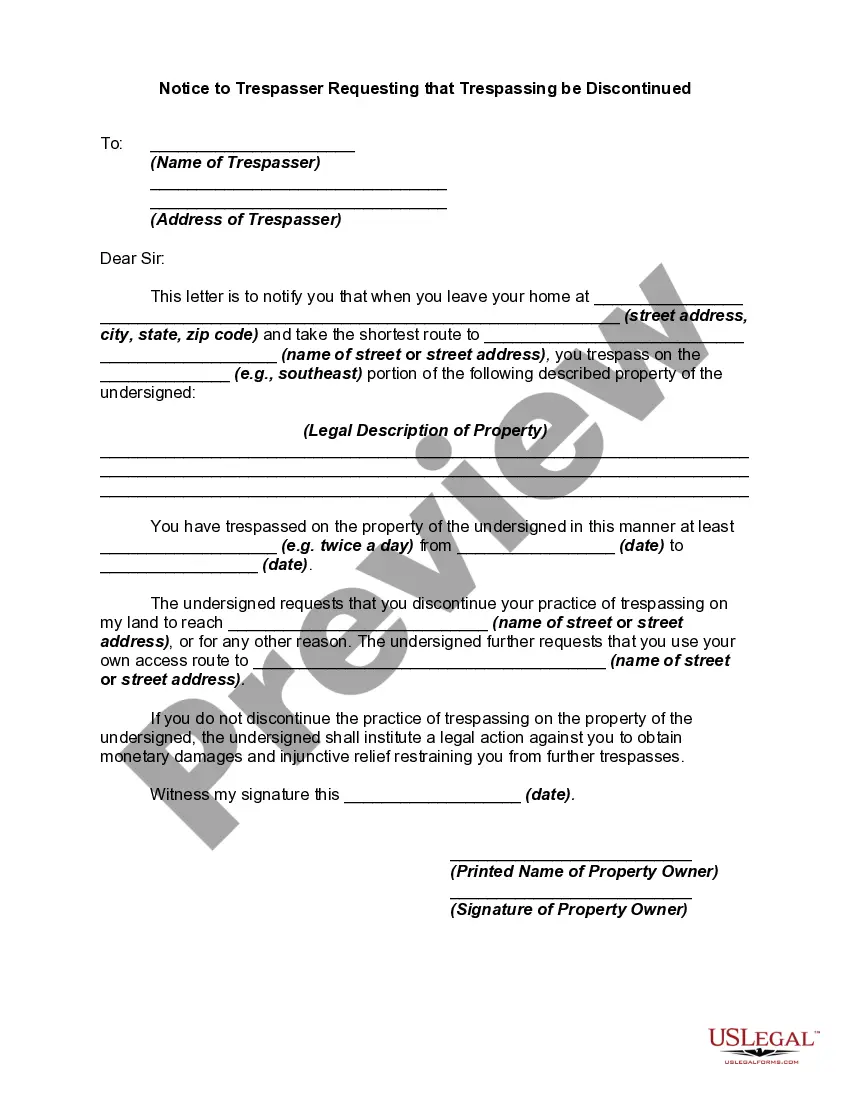
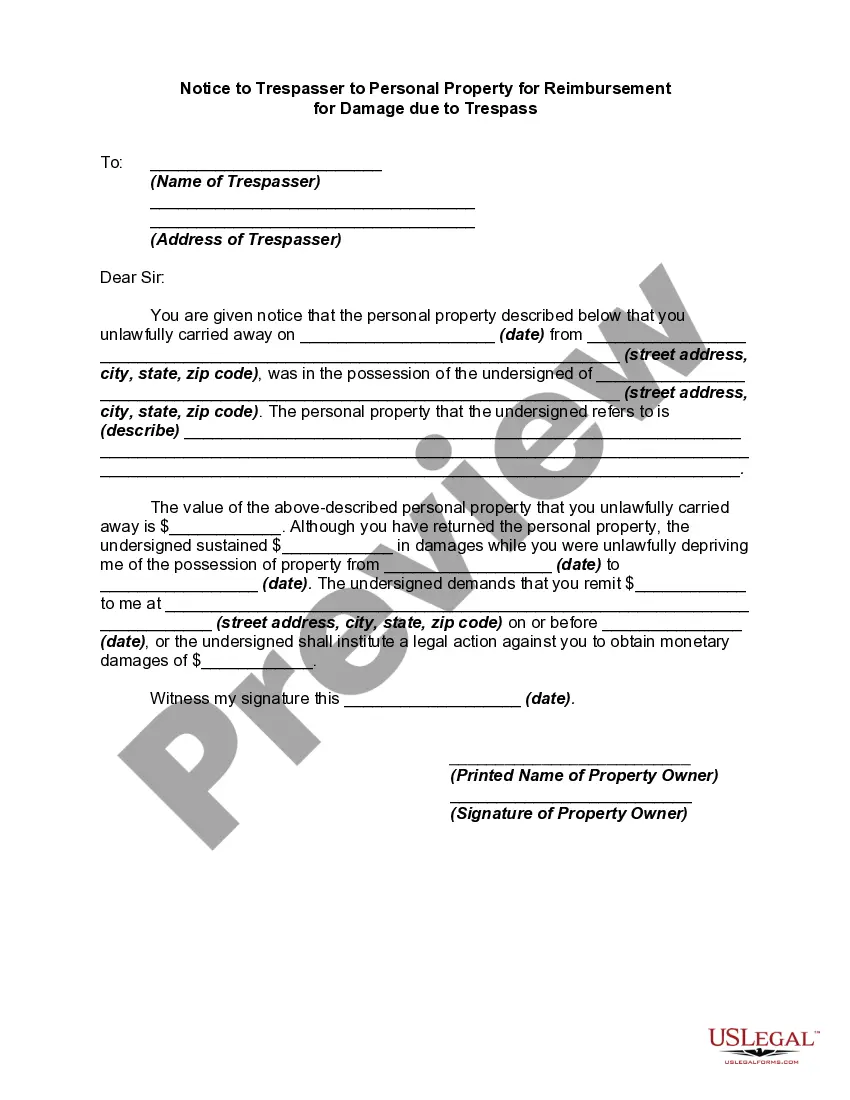
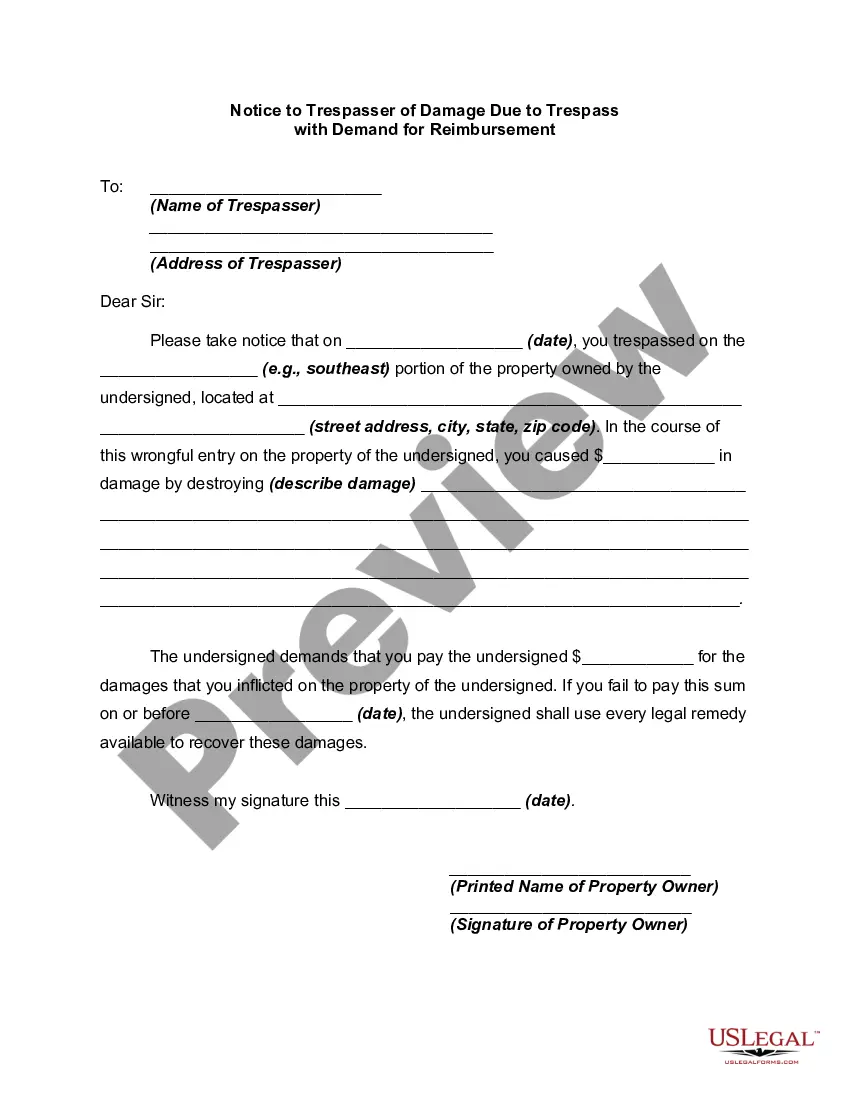
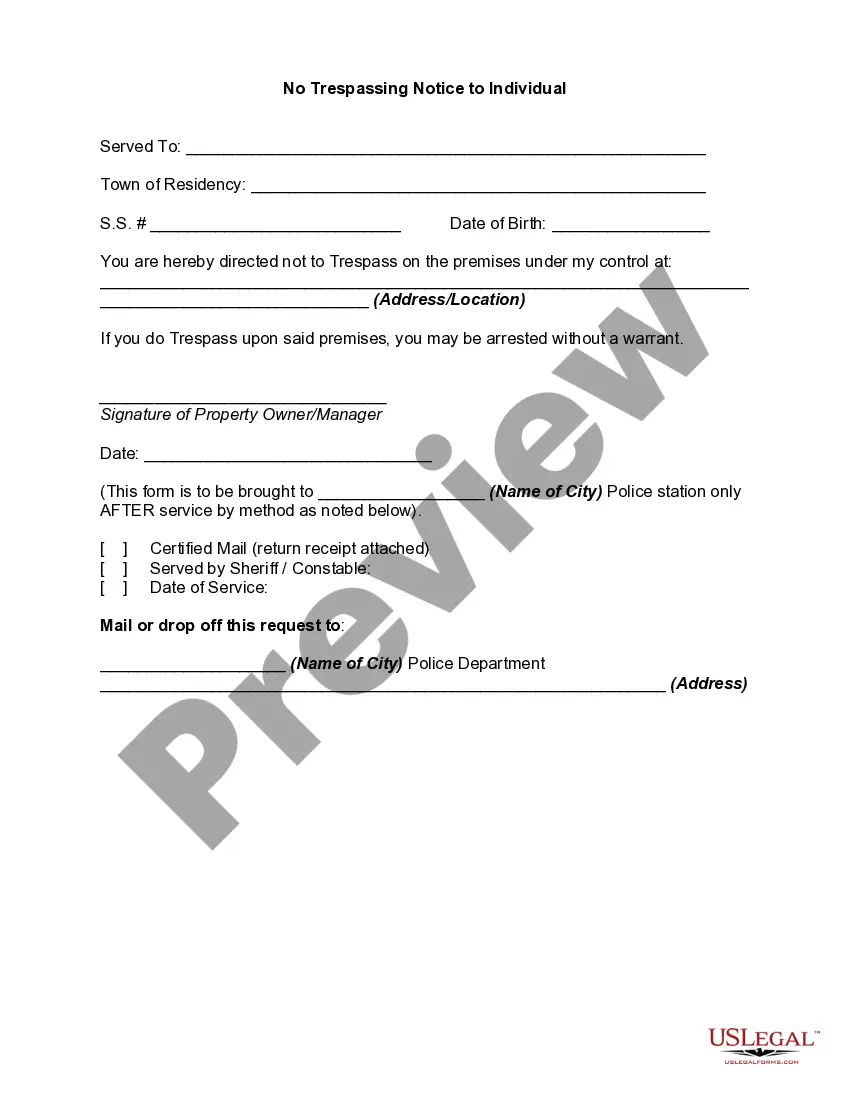
Trespassing Form For The Law
Description
Get your form ready online
Our built-in tools help you complete, sign, share, and store your documents in one place.
Make edits, fill in missing information, and update formatting in US Legal Forms—just like you would in MS Word.
Download a copy, print it, send it by email, or mail it via USPS—whatever works best for your next step.
Sign and collect signatures with our SignNow integration. Send to multiple recipients, set reminders, and more. Go Premium to unlock E-Sign.
If this form requires notarization, complete it online through a secure video call—no need to meet a notary in person or wait for an appointment.
We protect your documents and personal data by following strict security and privacy standards.

Make edits, fill in missing information, and update formatting in US Legal Forms—just like you would in MS Word.

Download a copy, print it, send it by email, or mail it via USPS—whatever works best for your next step.

Sign and collect signatures with our SignNow integration. Send to multiple recipients, set reminders, and more. Go Premium to unlock E-Sign.

If this form requires notarization, complete it online through a secure video call—no need to meet a notary in person or wait for an appointment.

We protect your documents and personal data by following strict security and privacy standards.
Looking for another form?

How to fill out Notice To Trespasser Requesting That Trespassing Be Discontinued?
- Start by checking the Preview mode and form description to ensure the chosen form meets your requirements and complies with local jurisdiction.
- If you encounter any discrepancies or need a different template, utilize the Search tab to find the appropriate form.
- Once you've settled on the right document, click the Buy Now button and select your desired subscription plan, creating an account to access the library.
- Proceed to checkout by entering your payment details, either via credit card or PayPal, to complete your purchase.
- Finally, download your form and save it to your device. You can access it anytime from the My Forms menu in your profile.
US Legal Forms offers a remarkable advantage with its extensive collection of over 85,000 legal templates, ensuring you find precisely what you need. Additionally, the platform provides access to premium experts who assist in completing your forms accurately.
In conclusion, obtaining a trespassing form for the law is straightforward with US Legal Forms. Visit the website today to streamline your legal documentation process!
Form popularity
FAQ
Absolutely, as the property owner, you have the right to ask someone to leave your property at any time. If the person refuses to comply, it's recommended to maintain a safe distance and contact law enforcement if needed. Additionally, having a trespassing form for the law can assist you in understanding your rights and formalizing your request, should you need to escalate the situation legally.
In New York, trespassing laws prohibit individuals from entering or remaining on someone else's property without permission. The law outlines various circumstances in which trespassing can occur and may include both civil and criminal consequences. If you encounter a trespasser, utilizing a trespassing form for the law can help you document the violation and take the appropriate legal steps to address the issue.
To keep unwanted people off your property, you can start by clearly marking your boundaries with signs indicating that entry is prohibited. Additionally, consider implementing security measures, such as fencing or surveillance cameras. If necessary, a trespassing form for the law can formalize your stance against trespassers and provide a legal basis for further action if individuals continue to intrude.
Yes, you can seek a legal order to keep someone off your property, commonly known as a restraining order or injunction. This process often involves filing specific paperwork, which may include a trespassing form for the law, to establish your grounds for the request. Consulting with a legal professional can help ensure that you take the appropriate steps to protect your property rights.
If someone refuses to leave your property, it is important to remain calm and address the situation directly. You should clearly and politely ask them to leave, stating that they are trespassing. If they ignore your request, consider documenting the situation and contacting law enforcement for assistance. Utilizing a trespassing form for the law can also help in formally addressing and resolving the issue.
When writing a trespass letter, start with your name and the date, followed by the recipient's name. Clearly outline the details of the incidents, and specify the property involved. Utilize a trespassing form for the law to ensure you include all relevant legal references for better effectiveness.
Winning a trespassing case often involves providing clear evidence that the individual entered your property without permission. Documentation, such as notices sent, photographs, or witness statements, can bolster your case. It's advisable to use a trespassing form for the law to maintain consistency and legality in your claims.
To write a cease and desist letter for trespassing, start with your contact information and date. Specify the individual and their conduct, clearly stating that they must stop entering your property. Using a trespassing form for the law can simplify the process and ensure you include all necessary legal language.
Generally, yes, you may need to provide your name to law enforcement when issuing a trespass warning. This helps establish your authority over the property. Being clear about your identity can aid in enforcement actions. For further assistance, consult a trespassing form for the law that can outline the process.
An example of a trespassing letter typically includes a clear statement of intent, your name, and the recipient's information. It should outline the specific property in question, and the request for the individual to refrain from entering. For a more structured approach, consider using a trespassing form for the law to guide your wording.