Bylaws For Nonprofit For Nonprofit
Description



Get your form ready online
Our built-in tools help you complete, sign, share, and store your documents in one place.
Make edits, fill in missing information, and update formatting in US Legal Forms—just like you would in MS Word.
Download a copy, print it, send it by email, or mail it via USPS—whatever works best for your next step.
Sign and collect signatures with our SignNow integration. Send to multiple recipients, set reminders, and more. Go Premium to unlock E-Sign.
If this form requires notarization, complete it online through a secure video call—no need to meet a notary in person or wait for an appointment.
We protect your documents and personal data by following strict security and privacy standards.

Make edits, fill in missing information, and update formatting in US Legal Forms—just like you would in MS Word.

Download a copy, print it, send it by email, or mail it via USPS—whatever works best for your next step.

Sign and collect signatures with our SignNow integration. Send to multiple recipients, set reminders, and more. Go Premium to unlock E-Sign.

If this form requires notarization, complete it online through a secure video call—no need to meet a notary in person or wait for an appointment.

We protect your documents and personal data by following strict security and privacy standards.
Looking for another form?



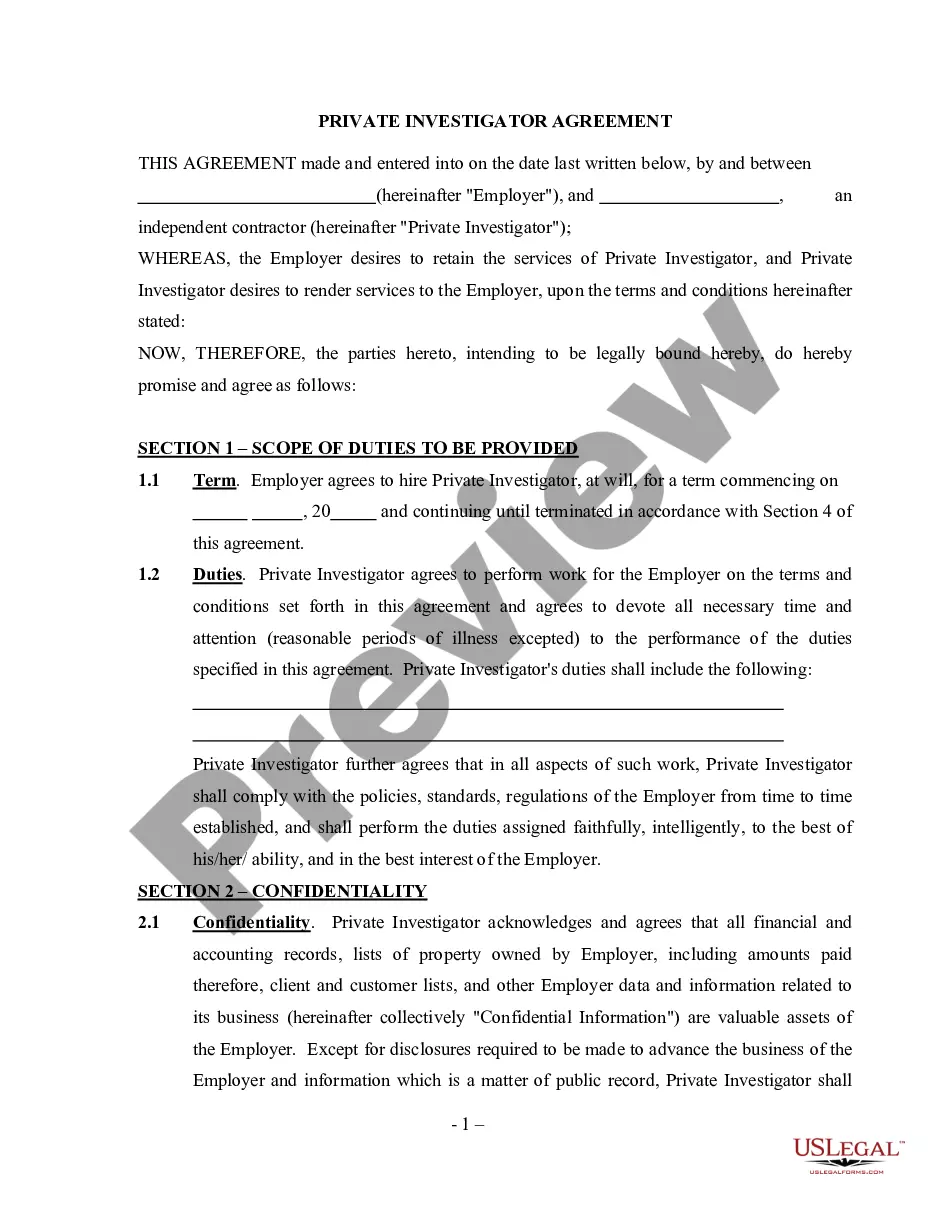
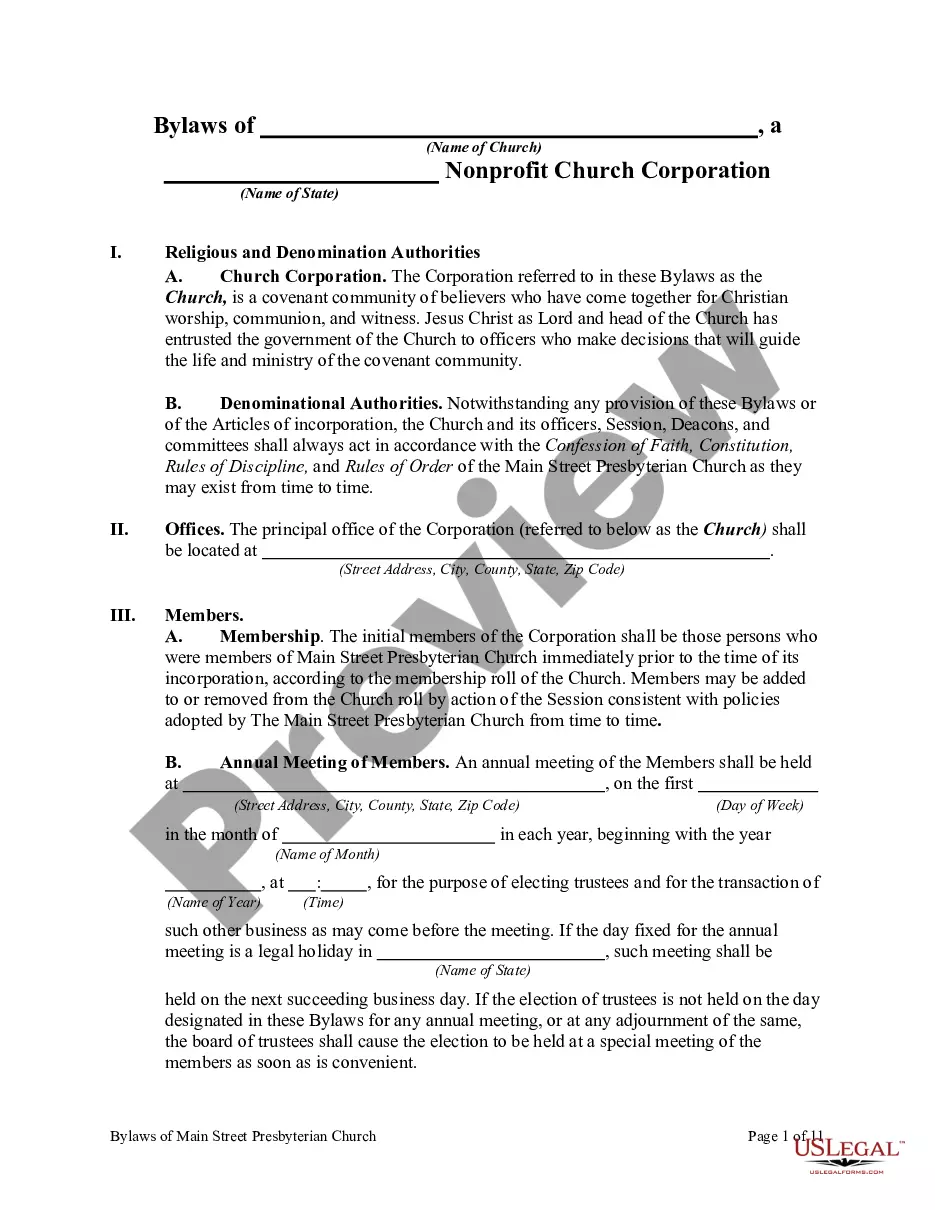
How to fill out Bylaws Of A Nonprofit Organization - Multistate?
Legal documentation management can be exasperating, even for the most experienced professionals.
When you are looking for Bylaws For Nonprofit For Nonprofit and don’t have the opportunity to invest time searching for the correct and current version, the procedures can be anxiety-inducing.
US Legal Forms meets all your needs, whether they involve personal or organizational documentation, all in one location.
Utilize sophisticated tools to complete and manage your Bylaws For Nonprofit For Nonprofit.
Here are the steps to follow after downloading the necessary form: Validate that this is the correct form by previewing it and reviewing its description. Ensure that the sample is accepted in your state or county. Click Buy Now when you are ready. Choose a monthly subscription plan. Select the format you need, and Download, complete, sign, print, and submit your documents. Take advantage of the US Legal Forms online library, supported by 25 years of experience and trustworthiness. Transform your daily document management into a straightforward and user-friendly process today.
- Access a resource repository of articles, guides, handbooks, and materials pertinent to your situation and needs.
- Save time and effort searching for the documents you require, and utilize US Legal Forms’ advanced search and Review tool to locate Bylaws For Nonprofit For Nonprofit and download it.
- If you hold a subscription, Log In to your US Legal Forms account, search for the required form, and download it.
- Check your My documents tab to see the documents you have previously downloaded and manage your folders as desired.
- If this is your first experience with US Legal Forms, create an account to gain unlimited access to all the benefits of the platform.
- A comprehensive online form library could be a significant advantage for anyone aiming to navigate these situations efficiently.
- US Legal Forms is a leading provider in the realm of online legal forms, with over 85,000 state-specific legal forms available at any time.
- With US Legal Forms, you can access legal and business forms that are specific to your state or county.
Form popularity
FAQ
You can find sample bylaws for nonprofit for nonprofit organizations through various online resources, including legal websites and nonprofit associations. Additionally, US Legal Forms offers tailored templates that you can customize for your specific needs. Reviewing existing bylaws from similar organizations can also provide valuable insights. Ultimately, it’s essential to adapt any found bylaws to fit your nonprofit's unique mission and requirements.
Typically, the board of directors or a designated committee drafts the bylaws for a nonprofit. Involving legal professionals can also enhance the quality of the bylaws for nonprofit for nonprofit organizations. They ensure that the bylaws align with both state law and the organization's mission. Once drafted, the board reviews and approves the bylaws to ensure they meet the organization's needs.
Nonprofits need bylaws as they serve as the foundational document for the organization. Bylaws for nonprofit for nonprofit groups define the roles of board members, the process for decision-making, and guidelines for operations. Without these bylaws, your organization may face confusion and challenges in governance. They provide a clear framework that helps ensure smooth functioning and compliance with state regulations.
Yes, California law requires nonprofits to have bylaws. Bylaws for nonprofit for nonprofit organizations govern the internal structure and procedures. They outline essential aspects, such as how meetings are conducted, how directors are elected, and membership rights. Having bylaws not only complies with the law but also promotes transparency and consistency within your organization.
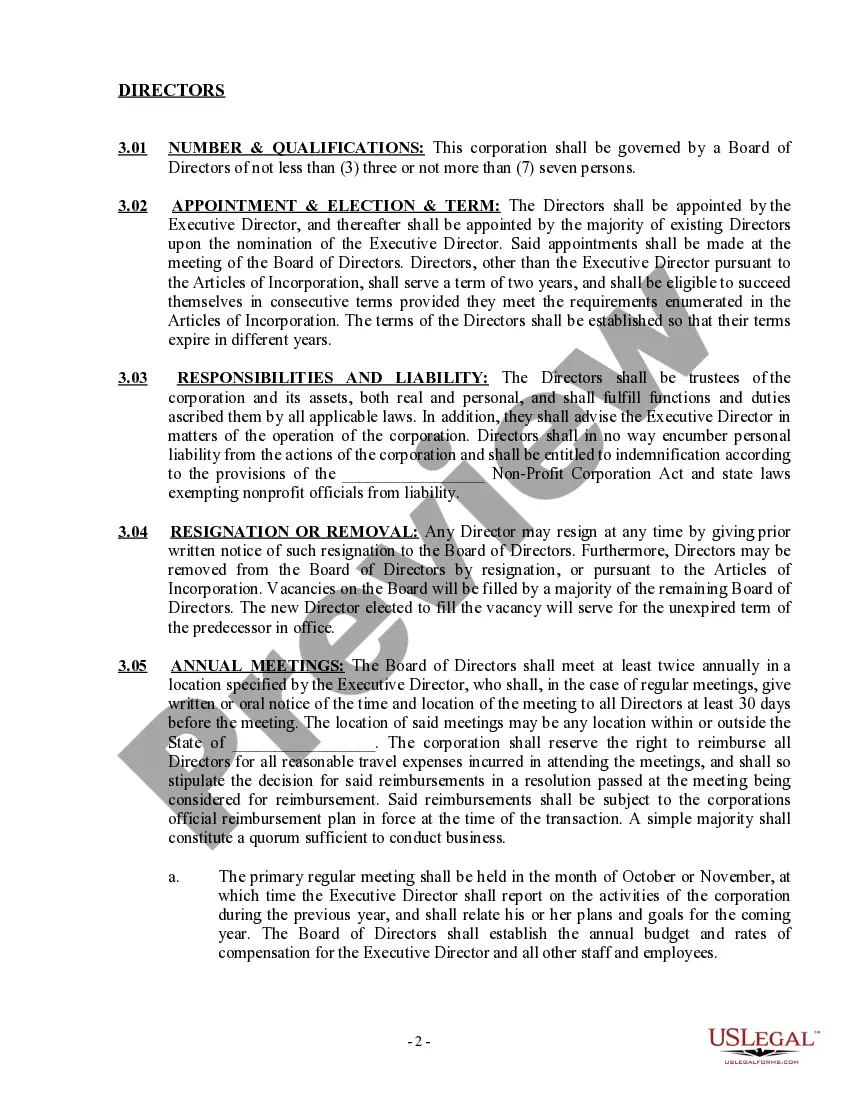
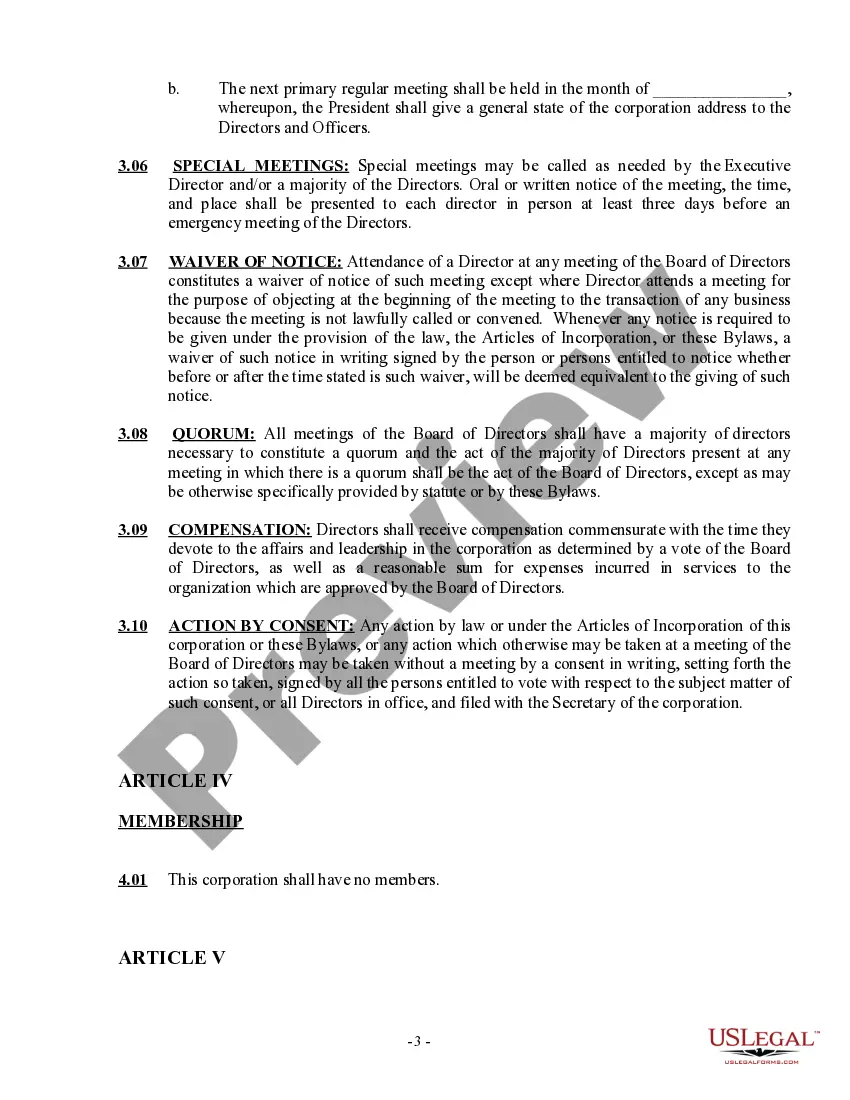
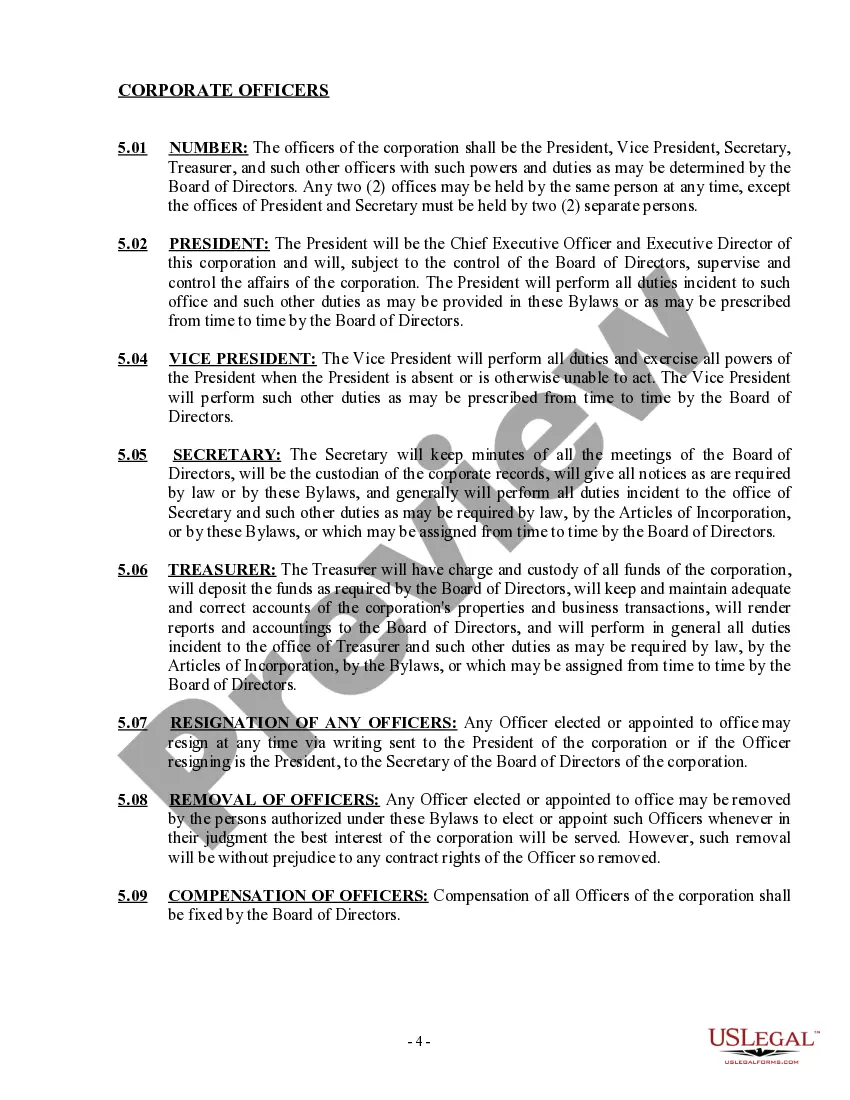
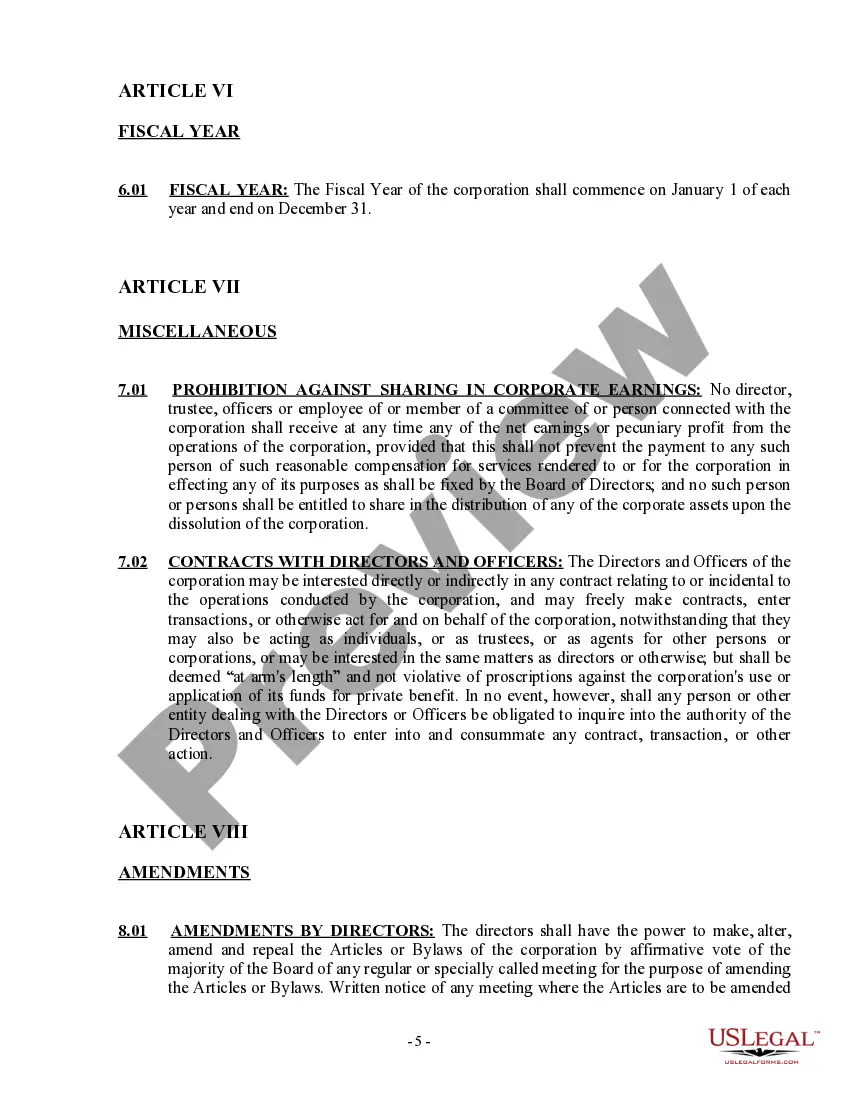
Writing bylaws for a nonprofit organization involves several key steps. First, you need to define the purpose of your nonprofit, including its mission and vision. Next, outline the governance structure, detailing the roles and responsibilities of board members and officers. Additionally, ensure you include procedures for meetings, voting, and amendments to the bylaws. Utilizing a platform like US Legal Forms can simplify this process, providing templates and guidance tailored specifically for creating bylaws for nonprofit organizations.
To develop nonprofit bylaws, begin by researching best practices and examples from similar organizations. Collaborate with your founding members to identify essential governance elements that reflect your mission and values. Draft the bylaws using clear language, and consult with legal professionals to ensure compliance with applicable laws. Utilizing resources from platforms like uslegalforms can also help streamline this process, ensuring you create effective bylaws for nonprofit for nonprofit.
Yes, a 501c3 organization is required to have bylaws as part of its foundational documents. Bylaws outline the governance structure, operational procedures, and rules for managing the organization. They are essential for maintaining compliance with both state and federal regulations. Having well-structured bylaws for nonprofit for nonprofit can also enhance organizational credibility.
Common bylaw mistakes include failing to outline a clear conflict of interest policy, neglecting to define the roles of board members, and not specifying the process for amending the bylaws. Additionally, some organizations overlook the importance of detailing membership rights and responsibilities. These mistakes can lead to confusion and governance issues, so careful attention during the drafting process is crucial for bylaws for nonprofit for nonprofit.
To establish bylaws for nonprofit for nonprofit, start by gathering a group of founding members who understand the mission and values of the organization. Next, draft the bylaws, ensuring they cover essential elements such as membership, board structure, meetings, and decision-making processes. Once drafted, review the bylaws with legal counsel to ensure compliance with state and federal laws. Finally, hold a meeting to approve the bylaws formally.
When drafting bylaws for nonprofit for nonprofit, avoid including overly detailed operational procedures, as these can create confusion and limit flexibility. Additionally, do not include personal information about board members or specific budgets, as these details may change frequently. Instead, focus on core governance structures and processes. Clear and concise bylaws help maintain focus on the organization’s mission.