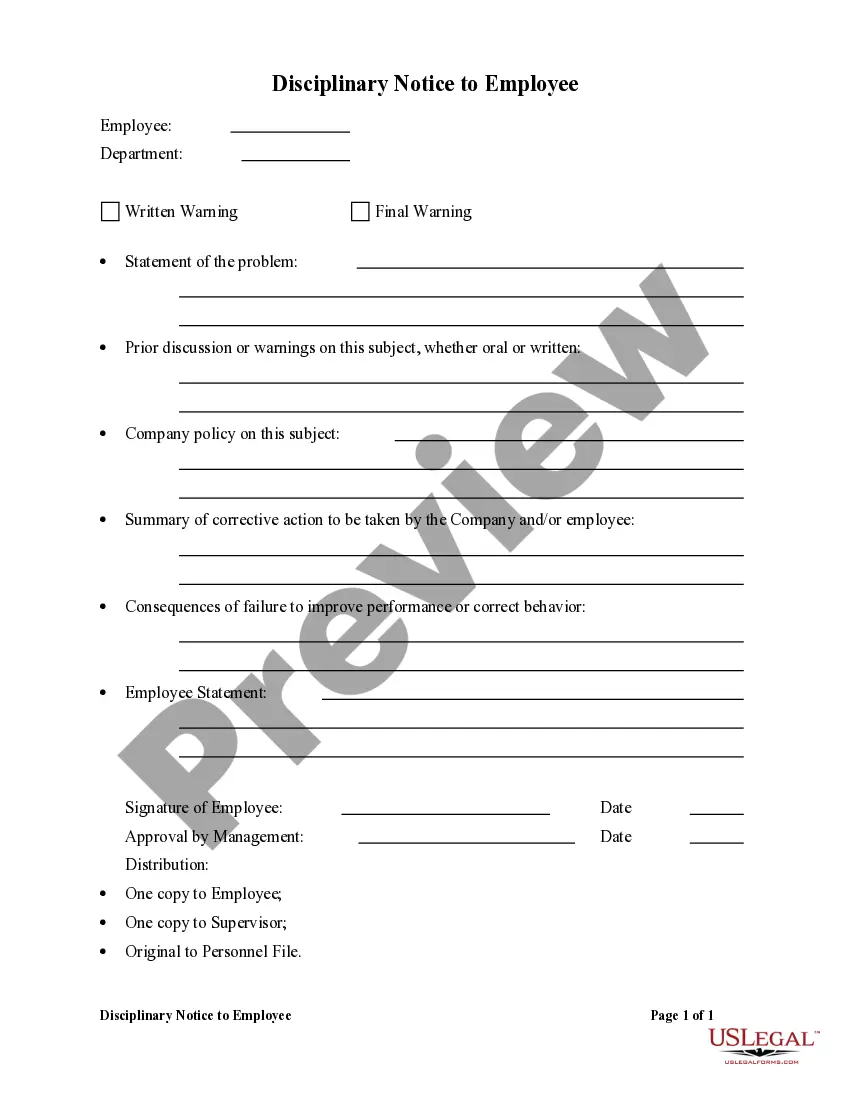
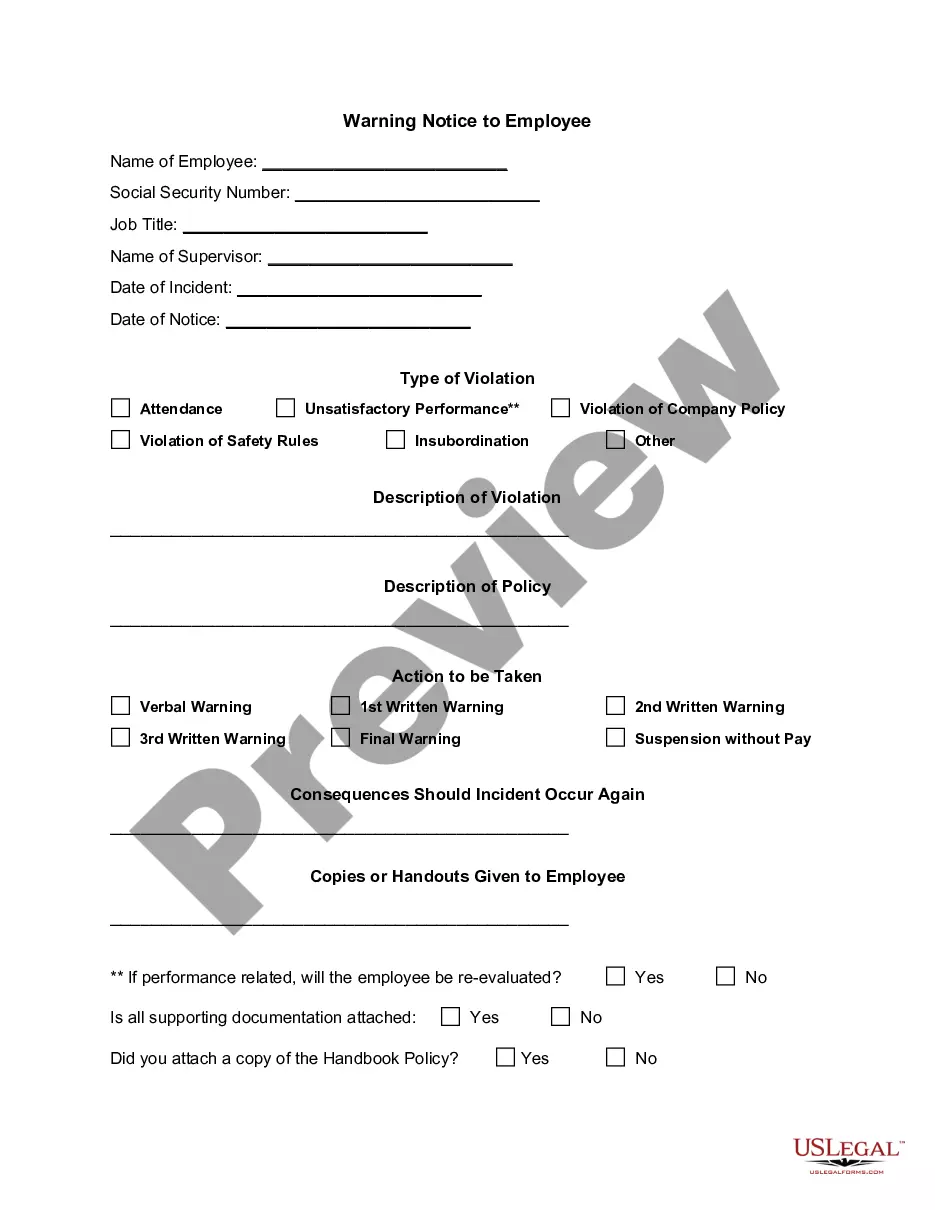
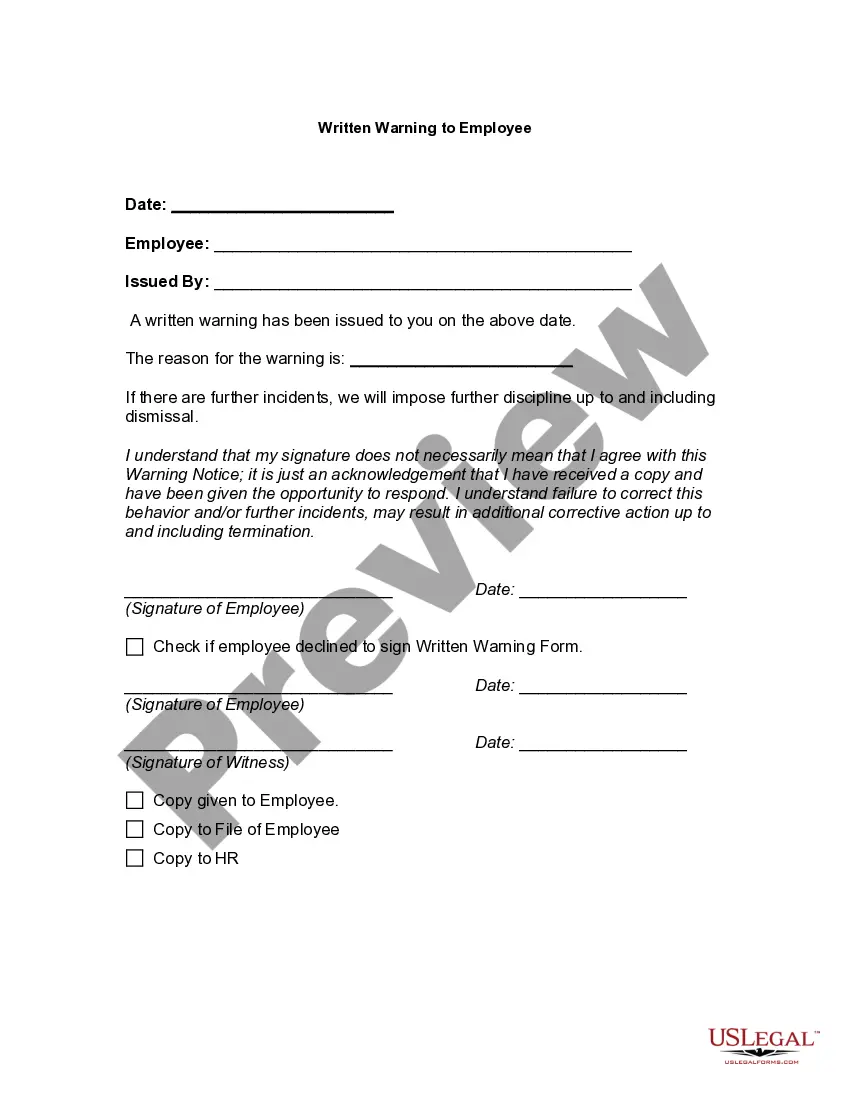
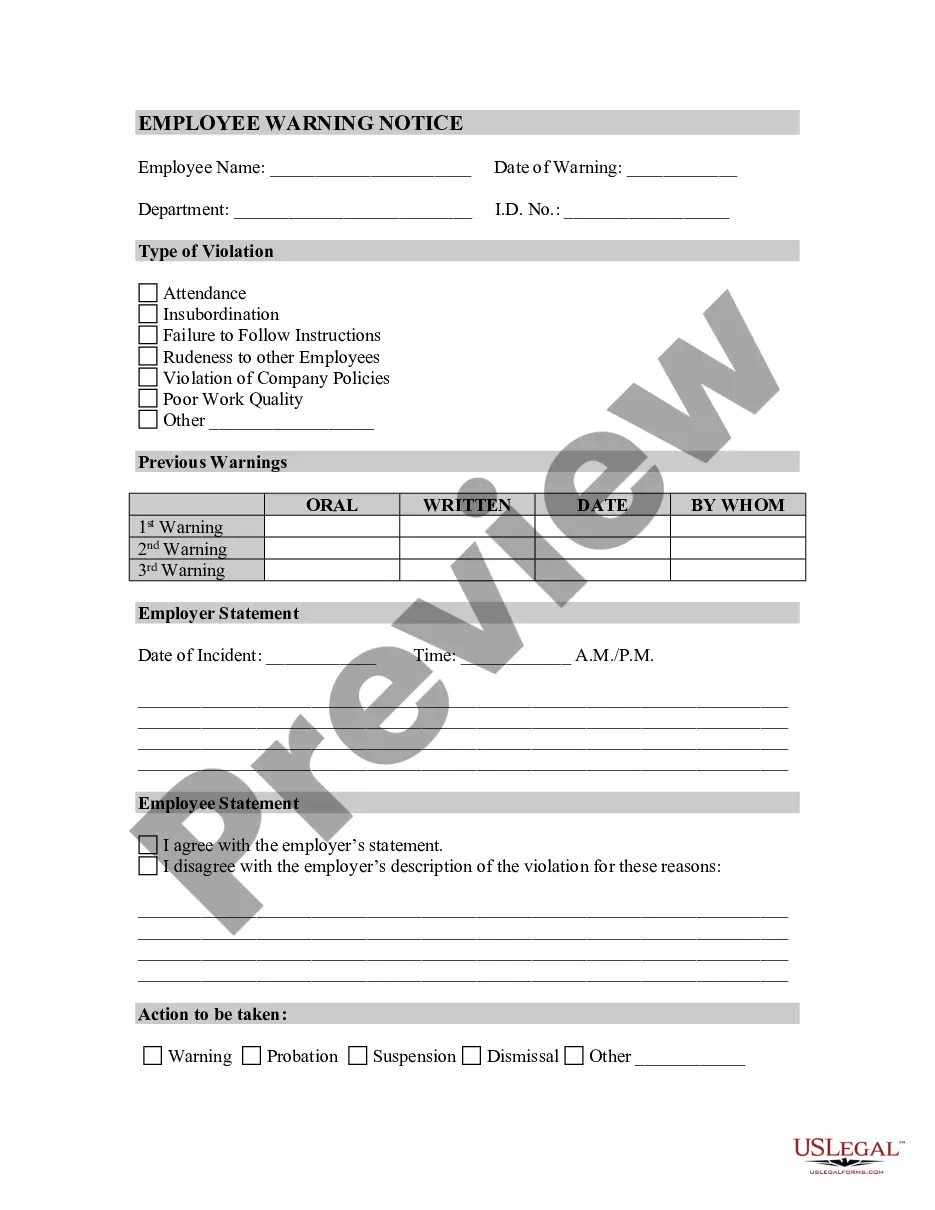
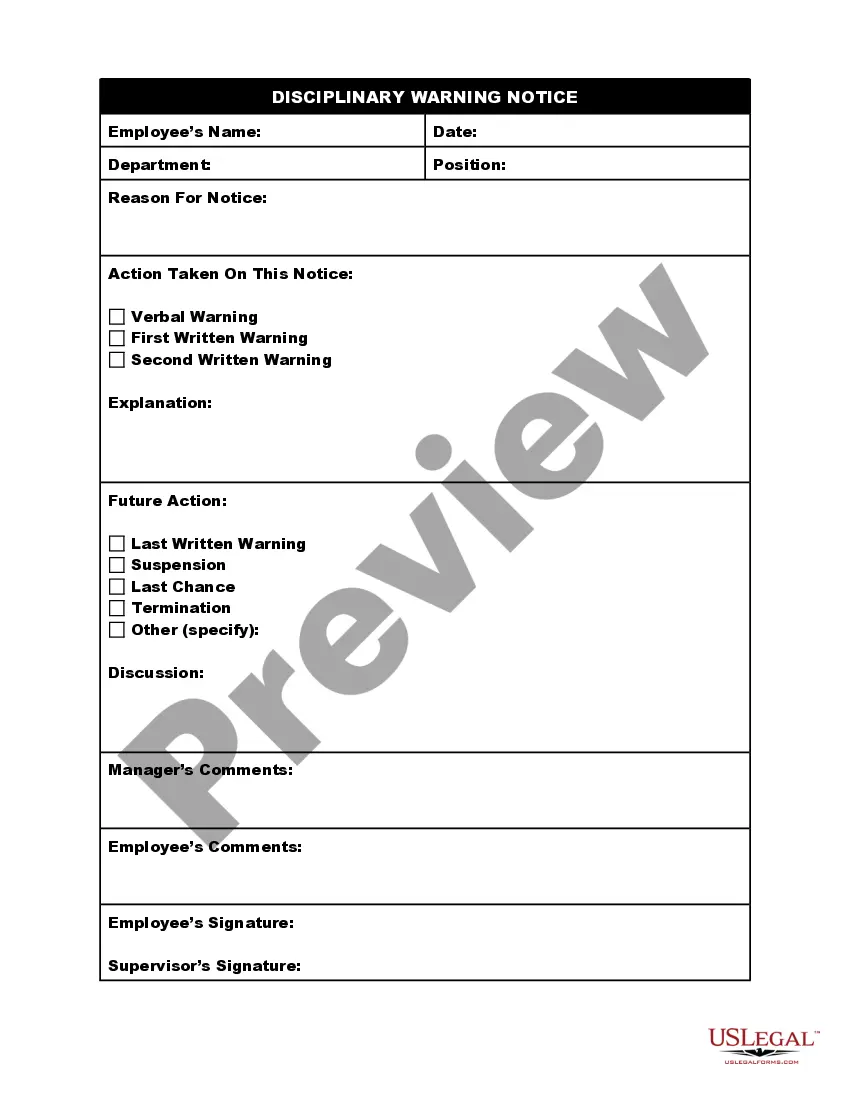
Warning Letter For Employee Misbehavior
Description
Get your form ready online
Our built-in tools help you complete, sign, share, and store your documents in one place.
Make edits, fill in missing information, and update formatting in US Legal Forms—just like you would in MS Word.
Download a copy, print it, send it by email, or mail it via USPS—whatever works best for your next step.
Sign and collect signatures with our SignNow integration. Send to multiple recipients, set reminders, and more. Go Premium to unlock E-Sign.
If this form requires notarization, complete it online through a secure video call—no need to meet a notary in person or wait for an appointment.
We protect your documents and personal data by following strict security and privacy standards.

Make edits, fill in missing information, and update formatting in US Legal Forms—just like you would in MS Word.

Download a copy, print it, send it by email, or mail it via USPS—whatever works best for your next step.

Sign and collect signatures with our SignNow integration. Send to multiple recipients, set reminders, and more. Go Premium to unlock E-Sign.

If this form requires notarization, complete it online through a secure video call—no need to meet a notary in person or wait for an appointment.

We protect your documents and personal data by following strict security and privacy standards.
Looking for another form?






How to fill out Disciplinary Notice To Employee?
Legal documents handling can be exasperating, even for the most seasoned professionals.
When you are seeking a Warning Letter For Employee Misconduct and lack the time to find the suitable and current version, the processes might be taxing.
Access a repository of articles, tutorials, guides, and resources related to your circumstances and requirements.
Save time and effort searching for the documents you need, and use US Legal Forms' advanced search and Preview feature to find Warning Letter For Employee Misconduct and obtain it.
Select Buy Now when you are prepared, choose a subscription plan, select the desired file format, and Download, fill out, sign, print, and send your document. Enjoy the US Legal Forms web library, supported by 25 years of knowledge and reliability. Simplify your daily document management into a straightforward and user-friendly process today.
- If you have a monthly subscription, Log In to your US Legal Forms account, search for the form, and obtain it.
- Check the My documents tab to see the documents you have previously saved and to manage your files as needed.
- If this is your first experience with US Legal Forms, create a free account and enjoy unlimited access to all the features of the library.
- After downloading the form you want, follow the steps listed below.
- Confirm this is the correct form by previewing it and reviewing its details.
- Ensure that the document is recognized in your state or county.
- Obtain state- or county-specific legal and business documents.
- US Legal Forms addresses any requirements you might have, ranging from personal to company documents, all in one location.
- Employ cutting-edge tools to complete and oversee your Warning Letter For Employee Misbehavior.
Form popularity
FAQ
To write a written warning for behavior, start with a formal greeting and provide a clear statement of the behavior in question. Follow up with details about the impact of the behavior and reiterate relevant policies. This format not only documents the issue but also aids the employee in understanding the consequences and necessary changes.
Delivering a warning for someone's behavior should be done in a private and calm setting. Present the warning letter clearly, discussing the specific behaviors that prompted the warning. Maintaining a constructive tone helps foster an environment where the employee can acknowledge their actions and commit to improvement.
An example of a misconduct warning letter typically includes the employee's name, the specific misconduct, and the company policies that were violated. Clearly outline the consequences of continued behavior and offer suggestions for improvement. This document serves both as a warning and an opportunity for the employee to reflect and change.
To write a letter about employee behavior, focus on specific incidents that warrant attention. Include factual details such as dates and observed behaviors. This clarity helps the employee understand the context of their actions and serves as a pivotal moment to encourage behavioral change.
When writing a warning letter for disrespectful behavior, begin by detailing the specific incident and its impact on the workplace. Use clear language to convey the expectation for respectful conduct and the repercussions of continued misbehavior. A well-structured letter not only addresses the issue but sets a path for improvement.
An example of a warning letter for employee misbehavior may include details such as the date of the incident, description of the behavior, and consequences if it continues. Highlight the importance of adhering to company policies and offer resources for improvement. This structure fosters understanding and encourages positive change.
To write a warning letter for employee misbehavior due to rule violations, start by clearly stating the violation. Specify the applicable rules and the date of the incident. This approach ensures that the employee understands the seriousness of their actions and the expectations for future behavior.
Yes, you can issue a written warning for bad attitude under the category of a warning letter for employee misbehavior. It is crucial to document specific instances of negative behavior. This written record can help in addressing patterns that may impact teamwork and productivity.
Begin your warning email for employee misbehavior by clearly stating the purpose of the message. Use a professional tone to describe the unacceptable behavior and provide specific examples. Additionally, clearly outline the consequences if the behavior does not change, reaffirming the importance of a positive work environment. This email should serve as both a warning and a guide to better behavior in the future.
When emailing about inappropriate behavior, start with a polite yet direct subject line indicating the purpose. In the body, briefly describe the behavior in question, provide context, and specify why it is inappropriate. End the email with an invitation for a discussion to clarify expectations. This format reinforces the need for professional conduct while remaining open to dialogue.