Buy My Promissory Note With Personal Guarantee
Description
Get your form ready online
Our built-in tools help you complete, sign, share, and store your documents in one place.
Make edits, fill in missing information, and update formatting in US Legal Forms—just like you would in MS Word.
Download a copy, print it, send it by email, or mail it via USPS—whatever works best for your next step.
Sign and collect signatures with our SignNow integration. Send to multiple recipients, set reminders, and more. Go Premium to unlock E-Sign.
If this form requires notarization, complete it online through a secure video call—no need to meet a notary in person or wait for an appointment.
We protect your documents and personal data by following strict security and privacy standards.

Make edits, fill in missing information, and update formatting in US Legal Forms—just like you would in MS Word.

Download a copy, print it, send it by email, or mail it via USPS—whatever works best for your next step.

Sign and collect signatures with our SignNow integration. Send to multiple recipients, set reminders, and more. Go Premium to unlock E-Sign.

If this form requires notarization, complete it online through a secure video call—no need to meet a notary in person or wait for an appointment.

We protect your documents and personal data by following strict security and privacy standards.
Looking for another form?







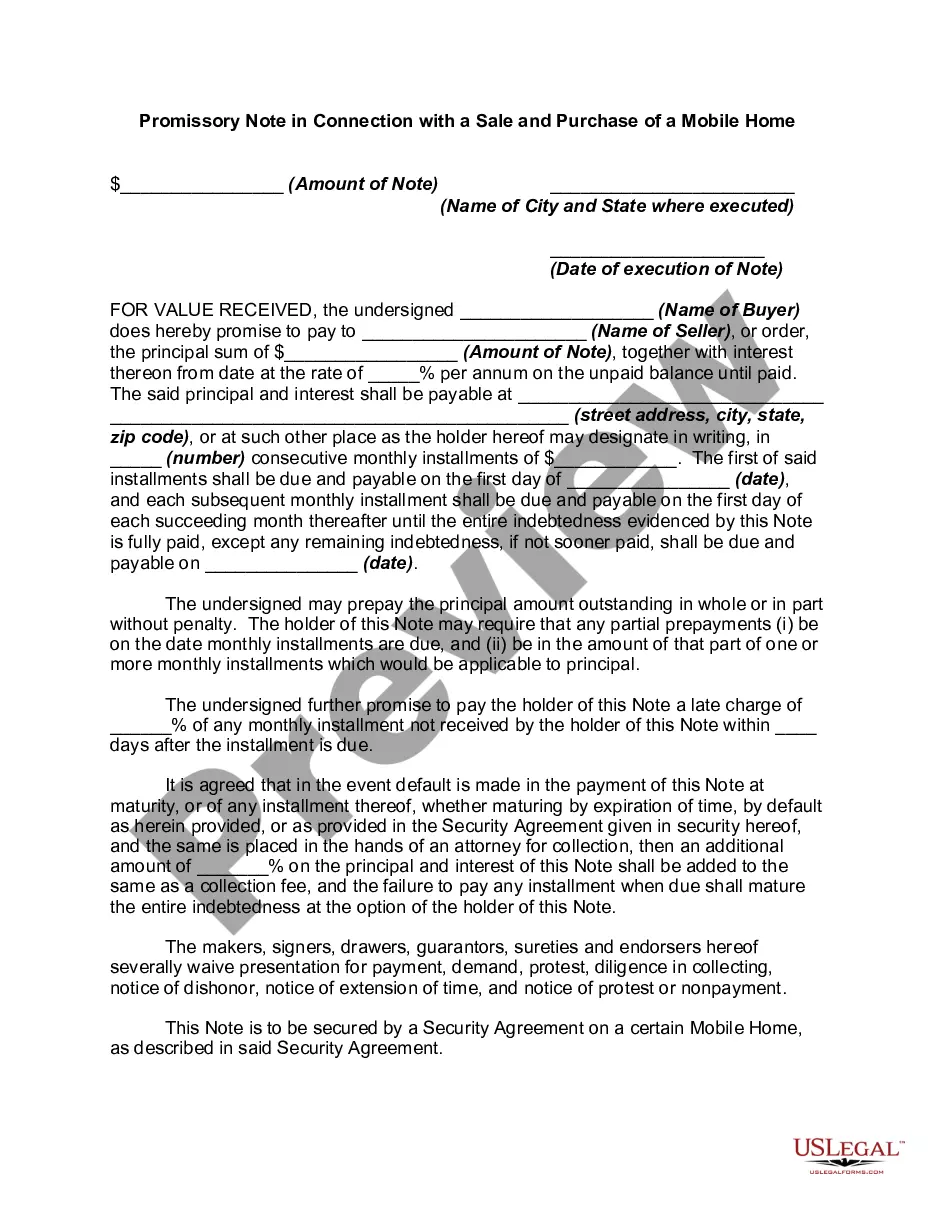
How to fill out Promissory Note In Connection With A Sale And Purchase Of A Mobile Home?
Whether for commercial reasons or personal issues, everyone encounters legal circumstances at some point in their lives.
Filling out legal documents requires meticulous care, beginning with choosing the correct form template.
With an extensive catalog from US Legal Forms available, you won't waste time searching for the right template online. Make use of the library’s user-friendly navigation to locate the appropriate template for any scenario.
- Obtain the template you require using the search box or by browsing the catalog.
- Review the form’s description to confirm it aligns with your needs, jurisdiction, and region.
- Click on the form’s preview to examine it.
- If it’s the incorrect document, return to the search feature to find the Buy My Promissory Note With Personal Guarantee template you need.
- Acquire the template once it satisfies your criteria.
- If you possess a US Legal Forms account, simply click Log in to access previously saved templates in My documents.
- If you do not yet have an account, you can download the form by clicking Buy now.
- Select the suitable pricing option.
- Complete the account registration form.
- Choose your payment method: you can opt for a credit card or PayPal.
- Select the document format you require and download the Buy My Promissory Note With Personal Guarantee.
- After saving it, you can complete the form using editing software or print it to finish manually.
Form popularity
FAQ
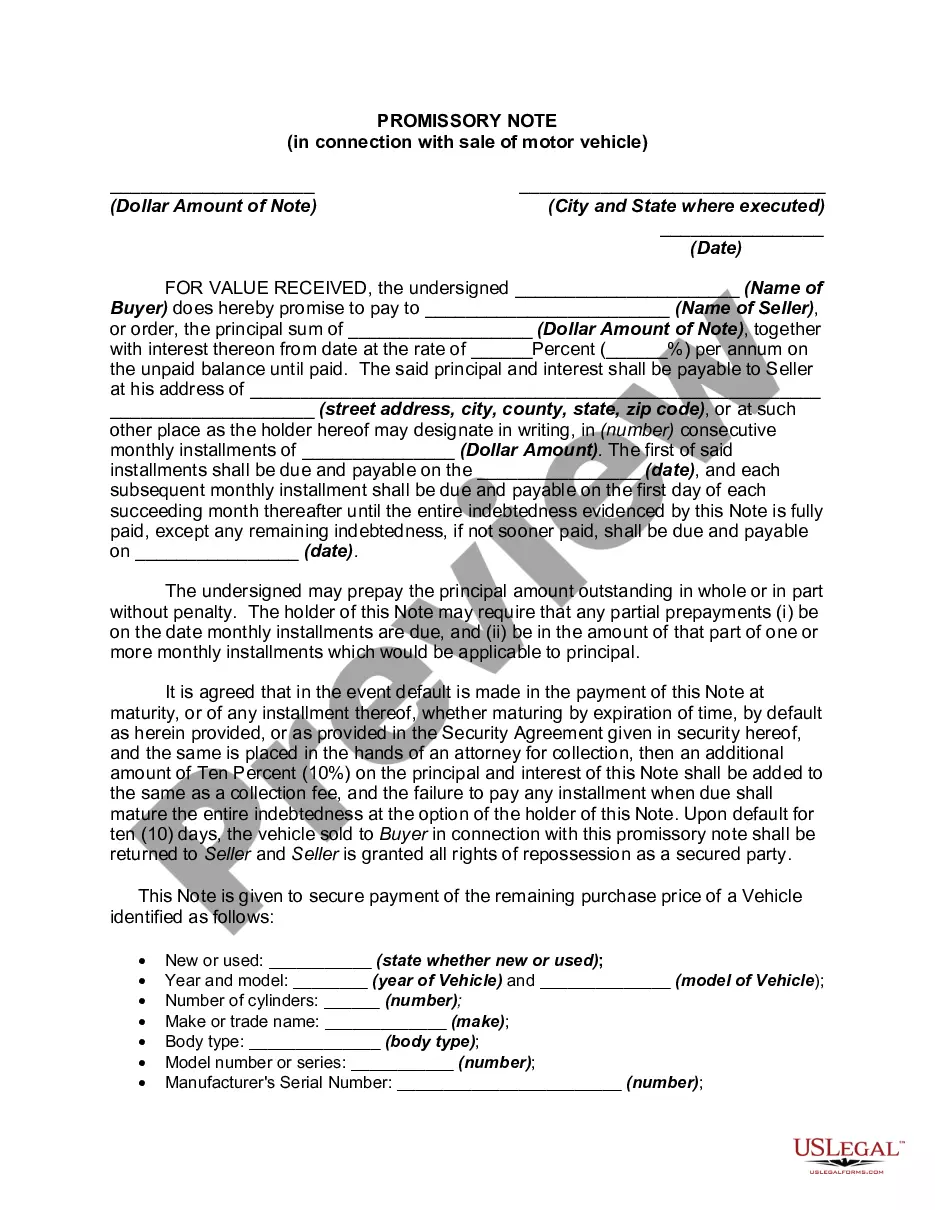
At its most basic, a promissory note should include the following things: Date. Name of the lender and borrower. Loan amount. Whether the loan is secured or unsecured. If it's secured with collateral: What is the collateral? ... Payment amount and frequency. Payment due date. Whether the loan has a cosigner, and if so, who.
A promissory note guaranty may serve as added security to guarantee a personal loan. The third party who signs as guarantor then assumes full responsibility for the loan, should the original borrower(s) default.
A personal guarantee is a provision a lender puts in a business loan agreement that requires owners to be personally responsible for their company's debt in case of default. Lenders often ask for personal guarantees because they have concerns over the credit history, age or financial stability of your business.
A promissory note entails an individual's commitment to the business to make payments on a specific date. On the other hand, a personal guarantee entails a contract an individual signs up for to stand in for the company's debt if they fail to repay the loans within a given period.
Corporate credit cards that are issued to an individual are another example of a personal guarantee. The individual or employee is responsible for the debt that the organization takes on and the overall spending on the credit card. Here, the cardholder takes the role of a guarantor.